Where To Jack Up A Truck: Identifying Safe Lift Points And Frame Support Locations

Lifting a multi-ton vehicle is a high-stakes task that demands precision, the right equipment, and an expert understanding of structural load points. Unlike passenger cars, trucks possess unique chassis configurations and significantly higher centers of gravity, making the margin for error remarkably thin. Many truck owners risk catastrophic injury or expensive frame damage by placing jacks on non-load-bearing components or using insufficient support tools that fail under pressure. This comprehensive guide provides a professional breakdown of exactly where to jack up a truck, which tools meet industry safety standards, and how to secure your vehicle for reliable maintenance. By following these expert protocols, you ensure that every session under the chassis is defined by safety and mechanical integrity.
Identifying Structural Jack Points on Body-on-Frame Vehicles
📤 Share Image
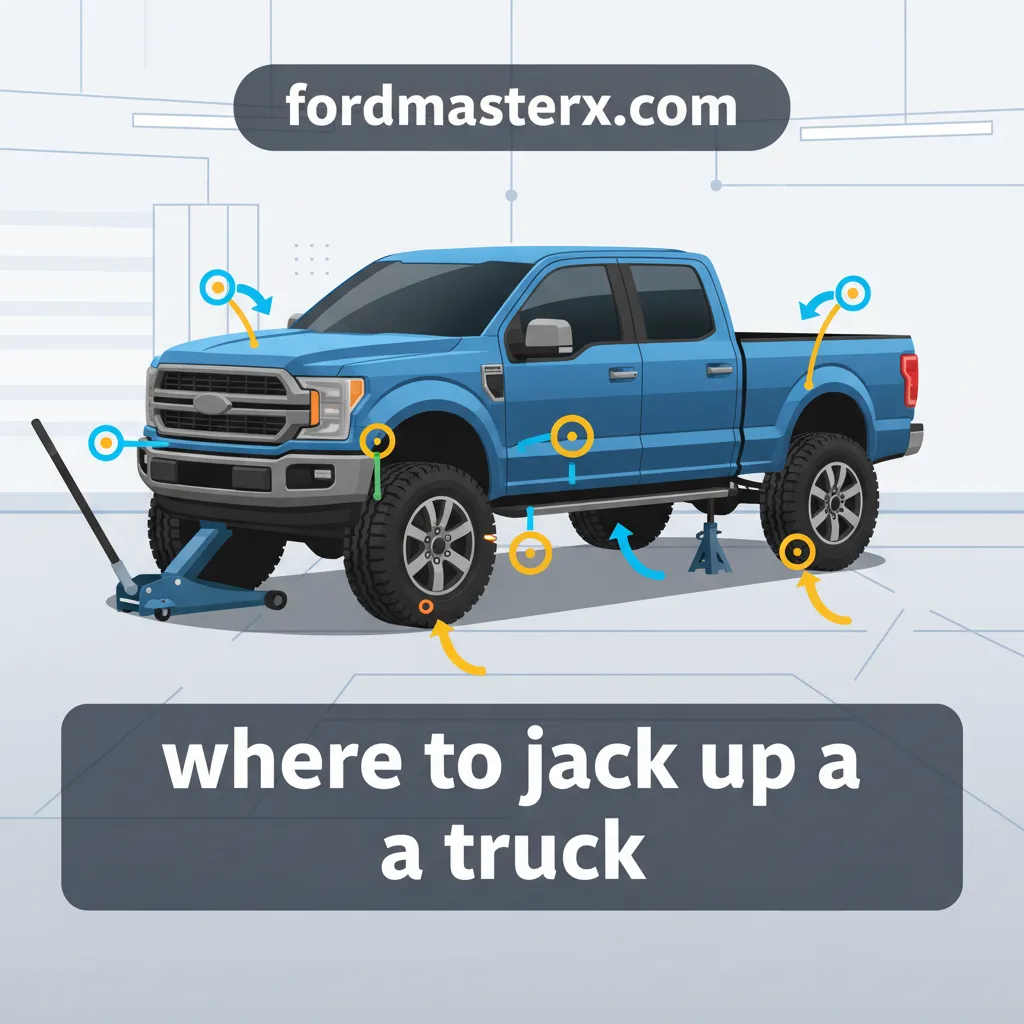
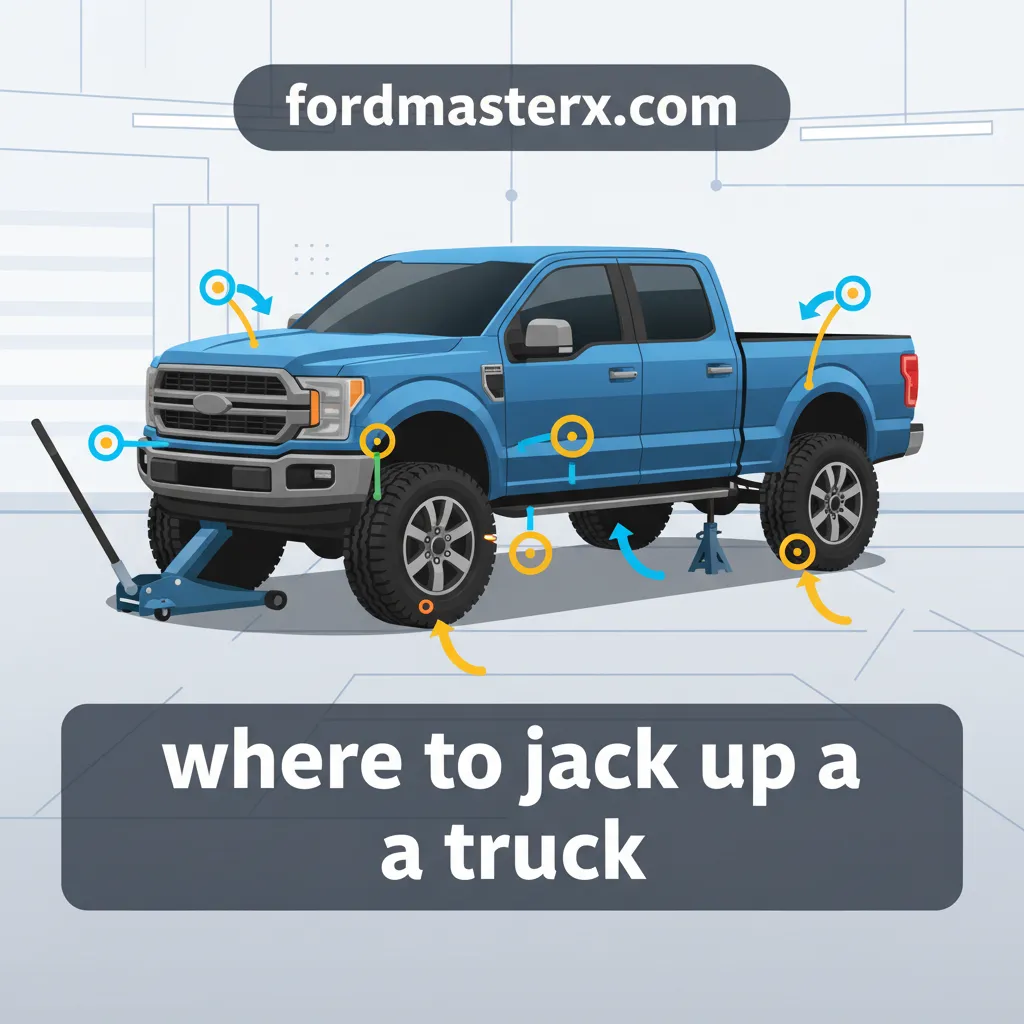
Understanding the anatomy of a truck’s chassis is the first step toward a safe lift. Most light-to-heavy-duty trucks utilize a body-on-frame construction, where a rigid steel frame supports the drivetrain and body. The primary and most reliable lift points are the main longitudinal frame rails. These rails are engineered to handle the massive torsional stresses of towing and hauling, making them the safest locations for localized pressure. When lifting, professional mechanics look for flat sections of the frame rail as close to the wheel being serviced as possible to minimize vehicle tilt.
For rear-axle maintenance, utilizing the rear differential housing—commonly referred to as the “pumpkin”—allows you to lift both rear wheels simultaneously. However, this is strictly limited to solid-axle configurations. In the front, a heavy-duty crossmember or the reinforced lower control arm mounts can serve as alternative points for suspension work. It is vital to verify manufacturer-designated reinforcement zones, as lifting on a non-reinforced section of a frame can cause structural deformation, especially on lighter-duty trucks.
By The Numbers
Avg. Half-Ton Weight
Localized Lift Pressure
To prevent metal-on-metal slippage, I always recommend using a professional-grade rubber jack pad or a thick wooden block (like a 2×4 section). This small addition increases friction and protects the frame’s protective coating from marring, which prevents long-term rust and corrosion at the lift sites.
Selecting Quality Lifting Equipment for Professional Results
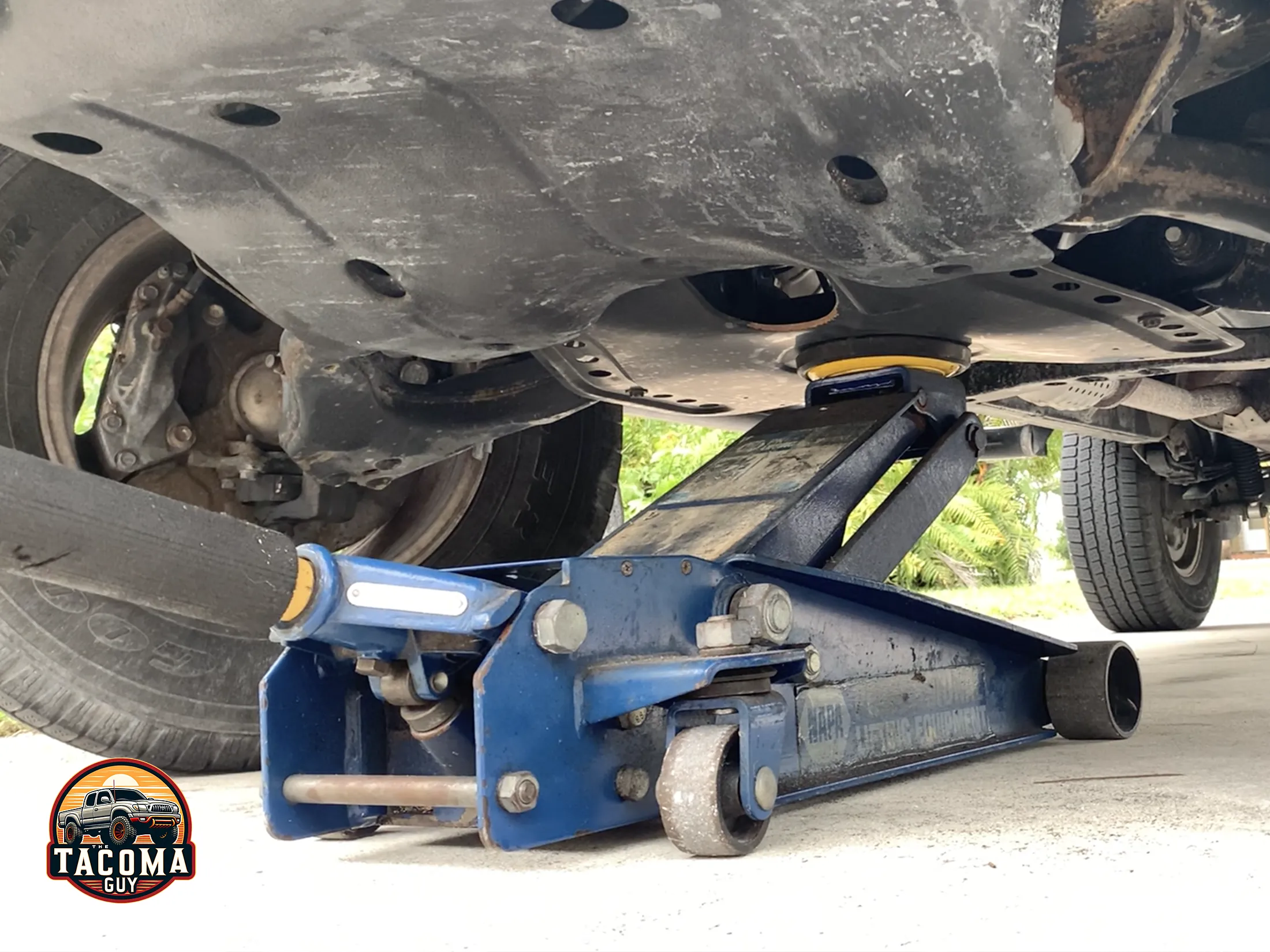
Using the right tool for the job is non-negotiable when dealing with heavy-duty vehicles. A common mistake among DIYers is using a standard 2-ton trolley jack designed for sedans on a full-size pickup. For complete safety, your floor jack’s weight rating must exceed the vehicle’s Gross Vehicle Weight Rating (GVWR) by at least 25%. For most modern trucks, this necessitates a 3.5-ton or 4-ton high-lift hydraulic jack. For a leveled Silverado 2500HD, for instance, a low-profile/high-lift hybrid jack is essential to clear the height of the frame while providing enough “stroke” to get the tires off the ground.
ASME PASE Compliance
Ensure all jacks are tested to 150% capacity per industry standards.
High-Lift Capability
Essential for 4WD vehicles with increased ground clearance and travel.
Quality extends beyond the jack itself. You must use trusted steel jack stands with locking pin mechanisms. Ratchet-style stands are common but are more prone to accidental release if the lever is bumped; pin-style stands provide a physical redundancy that is far superior for heavy loads. Additionally, never skip the use of heavy-duty rubber or steel wheel chocks. A truck shifting even an inch can kick a jack out from under the frame, leading to disaster. Maintain your equipment by checking hydraulic fluid levels and inspecting weld points for stress fractures periodically to ensure professional performance every time.
Always verify the “working height” of your jack stands. A 3-ton stand might hold the weight, but if it’s too short, you’ll be forced to overextend the jack or stack materials—which is a major safety violation.

Executing a Reliable Step-by-Step Truck Lifting Procedure
Safety is a process, not a destination. Before even reaching for the jack, you must prepare a workspace that can support the concentrated load. This means a flat, level concrete surface. Lifting a truck on an asphalt driveway during the peak of summer is a high-risk move; I have seen 5,000-lb trucks sink the wheels of a jack into softened asphalt, causing the vehicle to tilt and fall. If you must work on asphalt, use secondary support plates (like 3/4-inch plywood or steel plates) under the jack and stands.
📋
Step-by-Step Guide
Engage the emergency brake and place heavy-duty chocks on the wheels remaining on the ground, both in front and behind the tire.
Position the jack saddle directly under the frame rail or differential. Ensure the weight is centered on the saddle to prevent slippage.
Pump the jack slowly. Watch the vehicle’s trajectory; if it shifts laterally, lower it immediately and reposition the jack.
Once the truck reaches the desired height, do not just “drop” it onto the stands. Slowly modulate the hydraulic release valve. A sudden drop can shock-load the jack stands, potentially causing them to buckle or the truck to bounce off the support. Industry data indicates that over 10,000 emergency room visits annually are attributed to improper vehicle lifting—nearly all of which are preventable through patient, controlled movements.
Securing the Vehicle with Trusted Jack Stand Placement
The most critical rule in any shop is this: A hydraulic jack is a lifting tool, not a support tool. Never put any part of your body under a truck held up solely by a jack. To secure the vehicle, position your quality jack stands directly under the strongest points of the frame, typically near the suspension mounting points where the frame is most reinforced. If you are performing a brake service on a heavy-duty truck, placing 6-ton jack stands under the rear axle tubes is often more stable than the frame rails, as it keeps the center of gravity lower.
✅ Jack Stand Pros
- Pin-type stands provide mechanical locking redundancy.
- Wide bases prevent tipping under heavy loads.
- Provides a stable, non-moving work platform.
❌ Support Risks
- Hydraulic seals can fail without warning.
- Unlocking ratchet-style stands by accident.
- Using under-rated “budget” stands for 3/4-ton trucks.
Once the truck is resting on the stands, perform the “Shake Test.” Give the truck a firm shove from the side and the bumper. If it moves or wobbles, the stands are not seated correctly. It is far better for the truck to fall while you are standing next to it than while you are under it. As a final professional redundant safety measure, I leave the floor jack in a “loaded” position just a quarter-inch below the frame rail. If a stand were to fail, the jack acts as a secondary catch to provide those critical extra seconds of clearance.
Avoiding High-Risk Areas and Common Lifting Mistakes
Identifying where not to jack is just as important as knowing the safe zones. Modern trucks are filled with components that look sturdy but lack the structural integrity to support thousands of pounds. These “No-Go” zones include oil pans, transmission housings, and fuel tanks. Utilizing a jack on these components will lead to immediate crushing or puncturing. In one professional case study, an owner used a bottle jack on an aluminum oil pan during a roadside flat change, resulting in a punctured pan and a total engine replacement cost exceeding $8,000.
Modern aluminum-bodied trucks, like the Ford F-Series, are highly susceptible to panel deformation. Never use body-mounted pinch welds or floorboards as lift points; a single misplaced jack stroke can cause thousands of dollars in body damage.
Furthermore, avoid the temptation to lift by the bumpers. While this was common in the 1970s, modern bumpers are integrated into crumple zone engineering and are often made of thin-gauge steel or plastic. They are designed to fold in an impact, not to support the vehicle’s weight. Lastly, be wary of using Hi-Lift (farm) jacks for routine maintenance. While they are expert tools for off-road recovery, their small footprint and high-reaching nature make them notoriously unstable for garage use. Stick to reliable floor jacks for all stationary maintenance to account for the center-of-gravity shifts that occur when lifting trucks with oversized tires and suspension lifts.
Conclusion: Prioritizing Safety in Every Lift
Successfully jacking up a truck requires a disciplined approach to vehicle geometry and equipment capability. Always prioritize the main frame rails and manufacturer-designated lift points to maintain structural integrity. By utilizing quality lifting equipment—including high-capacity floor jacks and locking jack stands—you mitigate the inherent risks of working on heavy machinery. Remember: never work under a vehicle supported only by a hydraulic jack; always transition the load to trusted stands and perform a stability test before beginning work. Before your next maintenance session, inspect your lifting gear for wear and consult your vehicle’s specific owner’s manual for model-exclusive lift point diagrams to ensure a complete and safe experience.
Frequently Asked Questions
Can I jack up my truck by the rear differential?
Yes, on most trucks with a solid rear axle, the differential housing is a professional-grade lift point. It allows you to raise the entire rear of the vehicle at once. However, always ensure the jack saddle is centered and use jack stands on the axle tubes or frame rails immediately after reaching the desired height to ensure a reliable support structure.
What size jack do I need for a full-size pickup truck?
For most full-size trucks like a RAM 1500 or Ford F-150, a 3-ton (6,000 lb) floor jack is the industry standard for professional use. While the truck’s total weight may be 5,000 lbs, you are usually only lifting one end at a time. Using a jack with a higher capacity ensures the hydraulic system isn’t stressed, providing more reliable and safer operation.
Is it safe to jack up a truck on a dirt or gravel surface?
Jacking on loose surfaces is highly discouraged by experts. Gravel and dirt can shift under the concentrated pressure of the jack’s wheels, leading to a tip-over. If you must lift in these conditions, place a thick, quality piece of 3/4-inch plywood or a specialized steel plate under the jack to distribute the weight and provide a stable, flat surface for the lifting mechanism.
Where should I place jack stands if I’m removing the wheels?
When the wheels are removed, the frame rails are the most trusted locations for jack stands. Position them as close to the wheel wells as possible while staying on a flat section of the rail. For rear-end work, placing stands under the axle tubes is also acceptable, provided the stands are rated for the weight and the vehicle is perfectly level to prevent sliding.
Why shouldn’t I use the factory bottle jack for regular maintenance?
Factory-supplied bottle jacks are designed for emergency roadside tire changes, not for routine maintenance. They typically have a very small footprint (saddle) which provides limited stability. For professional-grade safety and reliability, a hydraulic floor jack with a wide wheel base and a large saddle is the preferred tool for any work involving prolonged lifting or crawling under the vehicle.