Ruby Red Metallic Tinted Clearcoat: Restoring The Factory Finish And Deep Luster

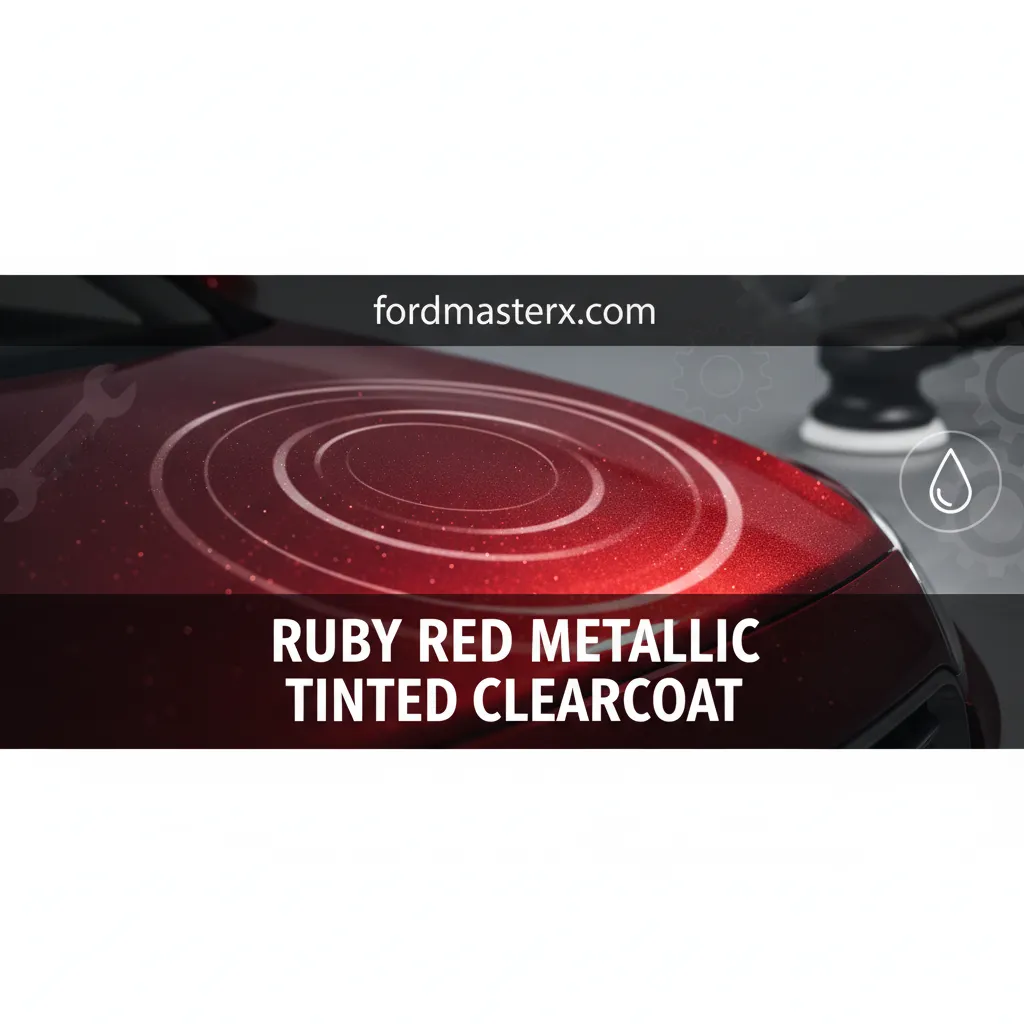
Ruby Red Metallic Tinted Clearcoat is more than just a paint color; it is a sophisticated multi-layered optical system designed to capture and manipulate light. Because of its tri-stage nature, restoring this specific Ford finish to its factory-default brilliance is a challenge that often leaves enthusiasts and detailers struggling with dullness, poor color matching, and surface marring. The complexity lies in the tinted mid-coat, which acts as a filter for the light reflecting off the base layer. In this guide, you will learn the professional-grade techniques for decontaminating, correcting, and protecting Ruby Red paint to achieve a total reset to its original showroom condition. Whether you are addressing a weathered daily driver or a garage-kept showpiece, these methods ensure a successful fresh start for your vehicle’s aesthetic.
The Science of Ruby Red Metallic Tinted Clearcoat and Tri-Stage Dynamics
📤 Share Image
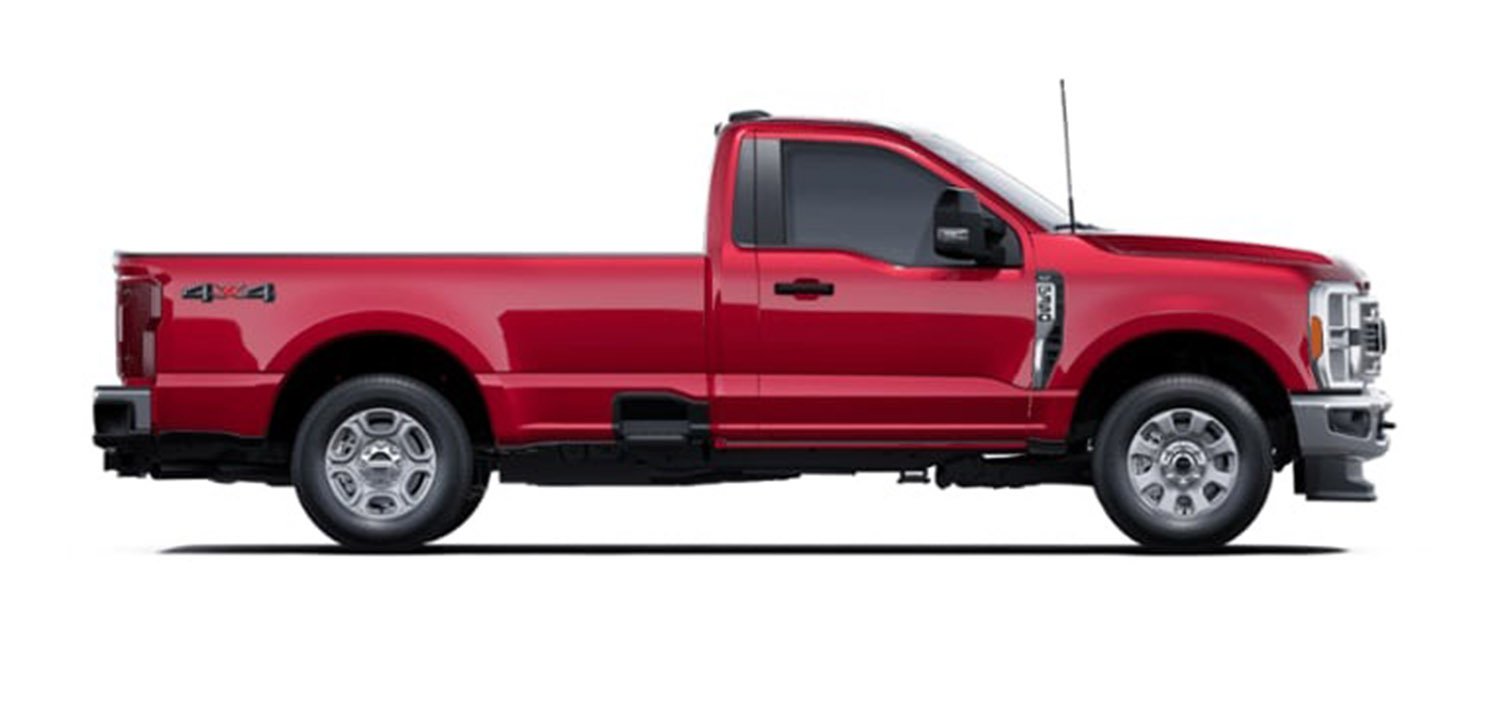
To restore the factory luster of the Ford Ruby Red (paint code RR/M7205A), one must first understand that this is not a standard “base-and-clear” application. Ruby Red utilizes a tri-stage dynamics system. This involves a high-opacity solid base coat, followed by a translucent tinted mid-coat (the “candy” layer), and finished with a robust protective clearcoat. Unlike standard metallic paints where the flake is suspended in the base, Ruby Red’s brilliance comes from light passing through the red-tinted mid-coat, hitting the metallic flake in the base, and reflecting back through the tint again. This creates a refractive “glow” that opaque colors cannot replicate.
The visual difference is striking when compared to a standard non-tinted red like Ford’s Race Red (code PQ). While Race Red is vibrant and aggressive, it lacks the dimensional depth of RR. The tinted clearcoat in Ruby Red acts as a magnifying glass for the metallic particles below. However, this beauty comes with a chemical caveat: the thickness of that mid-coat is paramount. In a factory setting, the mid-coat typically accounts for 0.5 to 1.0 mils of the total film thickness. Even a variance of 0.2 mils can noticeably shift the color perceived by the eye, making the panel look darker or lighter than its neighbor.
By The Numbers: Ruby Red Composition
Distinct Paint Layers
Mid-Coat Mils (Thickness)
Ford OEM Paint Code
Chemical Decontamination for a Factory Clean Surface
Before you can initialize a mechanical restoration, you must clear the “noise” from the surface. Ruby Red is particularly susceptible to looking “muddy” when industrial fallout and sintered brake dust embed themselves in the clearcoat. These microscopic metallic particles oxidize, creating tiny orange spots that interfere with the paint’s light-bending properties. A professional-grade, pH-neutral iron remover is mandatory here. As the chemical reacts with the iron, it turns purple, signaling the dissolution of contaminants that a standard wash cannot touch.
Following the chemical stage, mechanical decontamination using a synthetic clay mitt or traditional clay bar is required to achieve a glass-smooth surface. Industrial fallout can degrade clearcoat integrity by up to 15% annually in high-pollution urban environments if left untreated. For example, a five-year-old Ruby Red Ford F-150 may appear dull or “flat,” not necessarily because the paint is scratched, but because a layer of bonded contamination is masking the metallic flake. Once the claying is complete, an Isopropyl Alcohol (IPA) wipe-down provides a fresh start, stripping away old waxes and silicones to reveal the true default state of the finish.
Look for a milky “bloom” or haze on the upper surfaces of the vehicle. This is often UV-induced oxidation of the clearcoat. If an IPA wipe doesn’t remove it, the oxidation has penetrated the top layer, requiring light mechanical polishing to restore clarity.

Paint Correction Strategies to Restore Default Depth
The reboot of a Ruby Red finish requires a delicate balance of aggression and finesse. Because the red tint is housed within the clear layers, over-polishing can lead to “strike-through” where you physically remove the tinted portion, causing a permanent color mismatch that no polish can fix. Most factory clearcoats are only 1.5 to 2.0 mils thick; removing more than 0.3 mils can significantly lead to premature clearcoat failure or noticeable color shifting.
The Test Spot Protocol
Always utilize a Paint Thickness Gauge (PTG) to establish a backup of data before touching the paint with a machine. Start with the least aggressive combination—typically a dual-action (DA) polisher paired with a polishing pad and a fine diminishing abrasive. Diminishing abrasives are preferred for Ruby Red because they break down into smaller particles as you work, reducing the risk of deep scouring. On aluminum panels (like the modern F-150), heat dissipates quickly, but on plastic bumpers, heat builds up rapidly. Overheating the tinted resin on a plastic bumper can cause the red pigment to “smear” or darken, a defect known as mottling.
Advanced Color Matching and Spot Repair for a Fresh Start
When a chip or scratch penetrates the tinted layer, a simple “dab of red” will fail miserably. Surveys of automotive painters rank Ruby Red as one of the top 5 most difficult OEM colors to match perfectly. This difficulty stems from the translucency; the more layers of tinted mid-coat you apply, the darker the repair becomes. Professional shops often avoid “butt-jointing” (painting only the damaged panel) because the color variance against the adjacent panel is almost always visible under direct sunlight.
📋
Step-by-Step Tri-Stage Touch-Up
Apply the metallic silver base coat to cover the primer or bare metal. Ensure it is thin and flat.
Apply the red tint in thin “whisper” layers. Allow 10-15 minutes of flash time between layers to let the metallic flake settle correctly.
Seal the repair with a non-tinted clearcoat to provide UV protection and depth. Level the repair after 48 hours of curing.
Protecting the Restored Finish with Modern Sealants
Once the surface has been corrected and the color restored, the focus shifts to preservation. Red pigments are notorious for photodegradation—the chemical breakdown of color due to UV exposure. UV radiation is responsible for 90% of red paint fading. Standard carnauba waxes, while providing a beautiful warm glow, lack the longevity to protect a tri-stage paint long-term.
Modern ceramic coatings (SiO2) are the superior choice for Ruby Red. A professional-grade 9H ceramic coating can filter out up to 98% of harmful UV rays, effectively “locking in” the color and preventing the mid-coat from becoming brittle or hazy over time. Furthermore, graphene-infused resins have become an industry favorite for darker metallics like Ruby Red because they reduce surface heat and lower the risk of water spotting—a visual detractor that can ruin the “candy” look of the finish.
UV Blockade
Stops the red pigment from oxidizing and losing its vibrant “blood red” hue.
Hydrophobic Self-Cleaning
Repels dirt and water, ensuring the metallic flake remains visible even between washes.
Avoid automatic brush car washes. The abrasive bristles will create swirl marks (cobwebbing) that act as millions of tiny mirrors, scattering light and destroying the refractive depth of the Ruby Red tint. Use the two-bucket hand wash method exclusively.
In summary, the Ruby Red Metallic Tinted Clearcoat (RR) requires a specialized tri-stage approach to maintain its refractive depth. A clean, fresh start begins with intensive chemical decontamination followed by precision paint correction that respects the thin tinted mid-coat. Long-term restoration success depends on high-UV protection layers like ceramic coatings to prevent the red tint from fading. Evaluate your vehicle’s current clearcoat thickness and begin a systematic restoration to return your Ruby Red finish to its factory-fresh glory today.
Frequently Asked Questions
Is Ruby Red Metallic a tri-stage paint?
Yes, Ruby Red Metallic (Ford code RR) is a functional tri-stage finish. It consists of a metallic base coat, a translucent red-tinted clearcoat (the mid-coat), and a final protective clearcoat. This layering is what provides the deep, candy-like appearance that distinguishes it from traditional two-stage metallic paints.
Can you buff scratches out of a tinted clearcoat?
You can buff light surface scratches out of the top clearcoat layer. However, if a scratch has penetrated into the tinted mid-coat, aggressive buffing may remove the pigment, leading to a ‘light spot’ or color mismatch. Always use a paint thickness gauge and a conservative polishing approach to ensure you don’t compromise the tint.
Why does Ruby Red paint look different in different lighting?
This phenomenon is due to the ‘flop’ of the metallic flakes and the transparency of the tinted mid-coat. In direct sunlight, light passes through the red tint, hits the metallic flakes, and reflects back, creating a bright glow. In shadow, the thickness of the red tint absorbs more light, making the color appear deeper and darker.
What is the best way to touch up a chip on Ruby Red?
To achieve a factory-default look, you must use a specific tri-stage touch-up kit. Apply the base color first, then thin layers of the tinted mid-coat until the color matches the surrounding area. Finally, seal it with a clear topcoat. Simply using a ‘close match’ single-stage red will result in a flat, noticeable spot.
Does Ruby Red fade faster than other colors?
Red pigments are historically more susceptible to UV degradation because they absorb higher energy light waves. In a tinted clearcoat system, the pigment is suspended in the resin, making it vital to keep a high-quality UV-inhibiting sealant or ceramic coating on the surface to maintain the ‘fresh start’ look and prevent oxidation.