How To Engage 4 Wheel Drive: Operating Manual And Electronic Transfer Cases Correctly

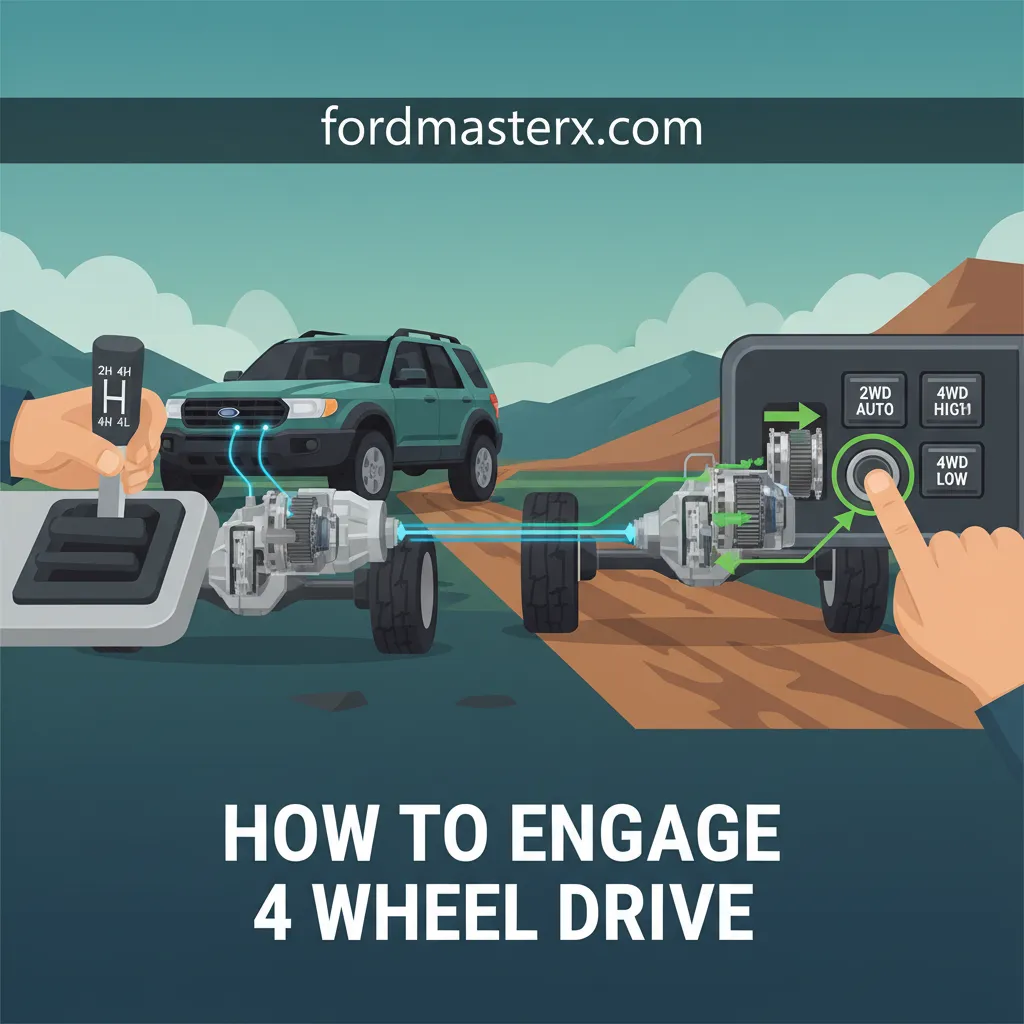
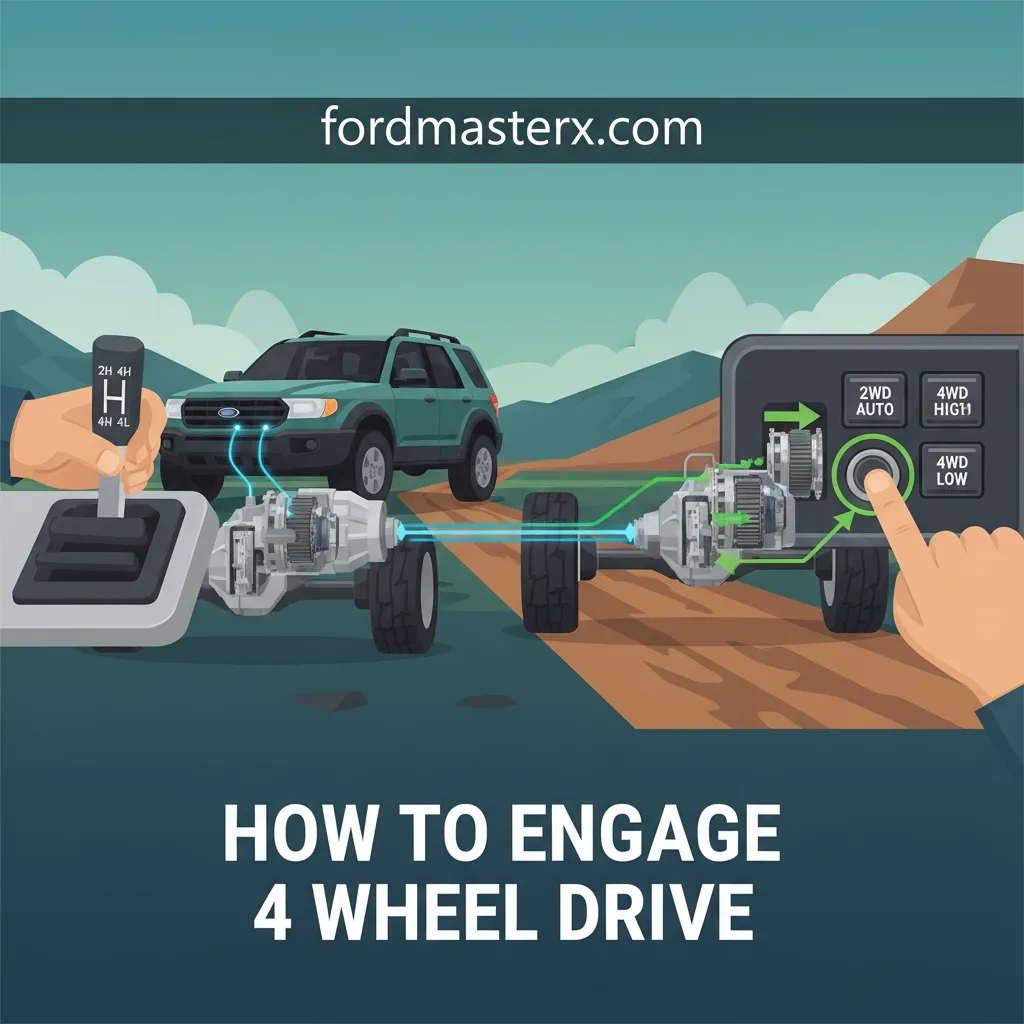
Mastering your vehicle’s 4-wheel drive system is the difference between effortless exploration and an expensive trip to the mechanic. For many, the array of levers, buttons, and dials on the dashboard remains a source of intimidation rather than a tool for capability. This uncertainty often leads to operator error, which can result in catastrophic drivetrain failure or leaving you stranded when you need traction most. Many drivers are uncertain about the specific sequences required to switch between 2H, 4H, and 4L, often risking drivetrain damage by engaging these modes under the wrong conditions. In this guide, you will learn the precise technical procedures for engaging 4WD across various system types, understand the speed limits for shifting, and discover how to protect your driveline from permanent damage through a comprehensive beginner and expert-level breakdown.
Understand the Mechanical Differences Between 4WD System Types
📤 Share Image
Before you can master 4WD engagement, you must first explore the specific hardware under your floorboards. The method of engagement is dictated entirely by the type of transfer case and hubs your vehicle utilizes. A transfer case is the heart of a 4×4 system; unlike a standard differential that allows wheels to spin at different speeds, a traditional part-time transfer case locks the front and rear driveshafts together, forcing them to rotate at the same speed.
Part-Time vs. Full-Time Systems
Most rugged pickups and SUVs use Part-Time 4WD. This system is designed solely for off-road or slippery conditions. Engaging it on dry pavement causes mechanical stress because the tires cannot slip to compensate for the difference in travel distance between the front and rear axles during a turn. In contrast, Full-Time 4WD and Automatic 4WD systems (often found in modern GMC Sierras or RAM 1500s) utilize a center differential or a multi-plate clutch pack that allows for 4WD usage on dry pavement by permitting slight slippage within the transfer case itself.
Interface and Hubs
The interface varies from the classic 1990s Ford F-250 with manual locking hubs—requiring the driver to physically exit the vehicle and turn a dial on the front wheels—to the modern electronic actuators found on 90% of consumer trucks today. In a synchronized transfer case, gears are designed to mesh while the vehicle is moving, whereas non-synchronized systems require a complete stop to prevent grinding. Knowing whether your system is electronic or manual is essential to preventing hardware damage.
By The Numbers
Modern consumer trucks with electronic 4WD
Torque split lock in Part-Time systems
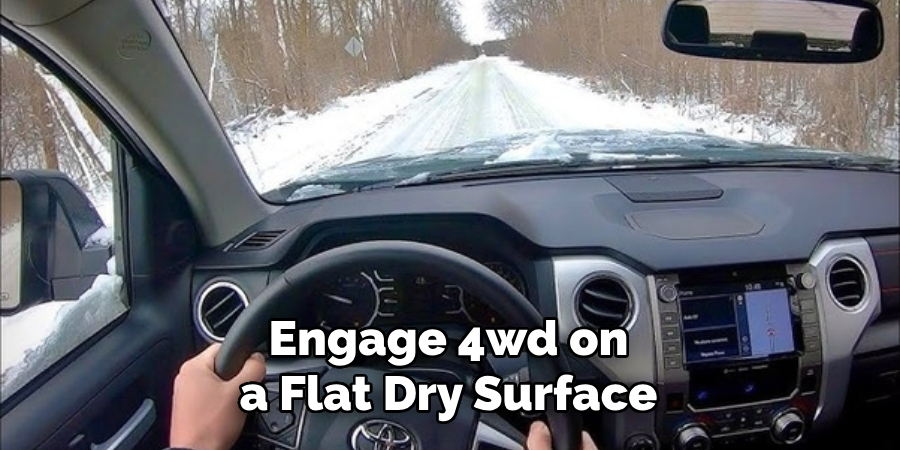
Master the Standard Procedure for Engaging 4-High (4H)
4-High (4H) is your primary tool for maintaining momentum on slippery surfaces. It provides better traction than 2-High by powering all four wheels, but it maintains the same gear ratios as your standard driving mode, allowing for speeds up to roughly 55 mph. This mode is essential for snowy highways, dirt roads, or gravel passes.

📋
How to Engage 4-High
Ensure your vehicle is traveling in a straight line. Avoid engaging 4WD while mid-turn, as this puts undue stress on the CV joints. Slow down to below 45-55 mph to ensure a smooth transition.
For Electronic Systems, turn the dial or press the button for 4H. For Manual Levers, apply firm, steady pressure to pull the lever from 2H to 4H. A slight forward roll (5-10 mph) helps the splines align.
Watch your dashboard indicator. A flashing light means the system is “pending” (waiting for gears to align). If it flashes indefinitely, ease off the gas or slightly change your steering angle until the light turns solid.
Shift-on-the-Fly (SOTF) technology has revolutionized the 4WD experience, but it has limits. While most modern systems permit engagement up to 60 mph, doing so at high speeds increases the risk of catastrophic planetary gear failure if there is a mismatch in wheel speed (e.g., if your rear wheels are currently spinning on ice while the front wheels are on asphalt). I recommend shifting into 4H before you reach the obstacle, such as a driver approaching a snow-covered mountain pass transitioning from dry asphalt to packed snow at 35 mph.
Master the Technical Sequence for Engaging 4-Low (4L)
4-Low (4L) is the most misunderstood and incorrectly used setting in the off-road world. Unlike 4H, 4L engages a separate gear set within the transfer case that provides mechanical gear reduction—typically between 2.72:1 and 4:1. This increases the torque at your wheels by 250% to 400%, making it the comprehensive choice for deep mud, technical rock crawling, or descending steep 30-degree inclines where engine braking is critical.
The “Neutral Protocol”
The single most common operator error is attempting to shift into 4L while the transmission is in Drive or Park. Because of the massive gear jump, the drivetrain must be completely unloaded. You MUST stop the vehicle (or maintain a crawl of <3 mph) and place the transmission in Neutral (N). This allows the transfer case to mesh the low-range gears without fighting the transmission’s output shaft.
Never exceed 15-25 mph while in 4-Low. Because of the gear reduction, your engine will reach its redline very quickly. Excessive speed in 4L causes extreme heat buildup in the transfer case and can lead to immediate engine over-revving.
When engaging 4L, especially with a manual lever using a “J” or “I” shift pattern, you will likely hear and feel a physical “clunk.” This is normal mechanical engagement. If you are recovering a stuck vehicle from deep sand, this clunk is the sound of your vehicle doubling or tripling its pulling power. Once engaged, you will notice the steering feels heavier and the vehicle will accelerate much more aggressively but with a very low top speed.
Discover the Signs and Dangers of Driveline Binding
The greatest enemy of a 4WD vehicle is Driveline Bind, often colloquially known as “Crowhop.” This occurs when a part-time 4WD system is engaged on a high-traction surface, such as dry pavement. When you turn a corner, the front wheels must travel a longer path than the rear wheels. In 2WD, the wheels spin independently to accommodate this. In 4WD, the transfer case locks the axles together, forcing them to fight for the same rotational speed.
Proper Surface
Dirt, mud, deep snow, or wet grass allows tires to slip slightly during turns, venting the built-up torque.
Improper Surface
Dry asphalt or concrete prevents tire slip, causing the torque to “bind” within the metal components.
Identifying and Releasing Binding
If you attempt a U-turn in a parking lot with 4WD engaged, you will feel the vehicle “bucking,” the steering wheel jerking, and perhaps hear tires chirping. This is your drivetrain screaming for relief. To release a bound drivetrain, shift back to 2H immediately. If the lever or dial is stuck due to torque load, drive the vehicle in a perfectly straight line or reverse slightly to “unload” the gears and allow the shift to complete. Ignoring these symptoms can lead to a snapped half-shaft or a cracked transfer case housing, repairs that typically cost between $1,500 and $4,500.
Explore Advanced Engagement Scenarios and Troubleshooting
Even with perfect technique, mechanical systems can be temperamental. Expert operators understand that cold weather is a major factor; in sub-zero temperatures, the gear oil in the transfer case and front differential becomes thick and viscous. This can delay engagement or cause electronic actuators to time out. Always drive slowly for the first mile after engaging 4WD in extreme cold to allow the lubricants to warm and reach the upper gear sets.
The Role of Electronics and Maintenance
In modern vehicles, engaging 4L often automatically disables Electronic Stability Control (ESC) and Traction Control. This is intentional. Off-road momentum often requires wheel spin to clear mud from tire treads—something traction control would prevent by cutting engine power. Additionally, if you have manual hubs, you must “exercise” them at least once a month. Turning the hubs to the “Lock” position and driving a few miles in 2WD (on dry pavement is fine for this) ensures the internal grease remains viscous and prevents the components from seizing.
If your 4L shift is stuck or “grinding,” do not force it. With the transmission in Neutral, let the vehicle roll an inch forward or back. Alternatively, shift the transmission quickly from Drive to Reverse and back to Neutral. This slight movement helps the gear splines find their home.
Finally, be aware of vacuum-operated hub systems. These are common in high-mileage pickup trucks and account for nearly 40% of 4WD engagement issues. If your dashboard says you are in 4WD, but the front wheels aren’t pulling, you likely have a vacuum leak or a failed solenoid. Always test your system in a safe gravel area before you actually need it for a recovery or a storm.
Summary of Best Practices
To ensure the longevity of your 4×4, keep these rules at the forefront of your operation: Always differentiate between high-range (4H) for speed and low-range (4L) for torque. Never engage part-time 4WD on dry, high-traction pavement to avoid driveline binding. Most importantly, ensure the transmission is in Neutral when transitioning into or out of 4-Low to avoid gear damage. Before your next off-road excursion, practice these engagement sequences in a safe, low-traction environment like a gravel lot to ensure your system is functioning correctly and that you are comfortable with the mechanical feedback of your specific vehicle.
✅ Correct Usage
- 4H on snow/ice/dirt
- Shifting to 4L while in Neutral
- Driving straight during engagement
- Using 4L for steep descents
❌ Misuse to Avoid
- 4WD on dry highway
- Engaging 4L at 40 mph
- Tight turns in 4H on asphalt
- Ignoring a flashing 4WD light
Frequently Asked Questions
Can I shift into 4-High while driving at highway speeds?
Most modern ‘Shift-on-the-Fly’ systems allow engagement into 4-High at speeds up to 55 mph. However, you should never attempt to engage 4-Low while the vehicle is moving faster than a slow crawl (under 3 mph). Always check your owner’s manual for the specific speed threshold of your transfer case to avoid internal gear damage.
Why won’t my 4WD engage even when the light is on?
A dashboard light indicates that the command has been sent, but mechanical engagement may still be pending. This often happens if the gears are not perfectly aligned (spline-to-spline). Gently accelerating, decelerating, or driving in a straight line usually allows the gears to mesh. If it still fails, there may be an issue with the vacuum lines or electronic actuators.
Is it safe to use 4WD on rainy pavement?
For part-time 4WD systems, it is generally discouraged unless there is standing water causing hydroplaning risks. 4WD prevents the wheels from turning at different speeds during cornering; on wet pavement, there may still be enough grip to cause driveline binding. If your vehicle has an ‘Auto’ or ‘AWD’ mode, that is the appropriate setting for rainy conditions.
Do I need to stop to shift back into 2-wheel drive?
You can typically shift from 4-High back to 2-High at any legal speed by simply moving the selector. However, if you are in 4-Low, you must follow the same protocol as engagement: stop the vehicle, shift the transmission to Neutral, and then move the transfer case selector back to the 2H or 4H position.
What is the ‘Neutral’ setting on my 4WD dial for?
The Neutral (N) setting on a transfer case completely disconnects both the front and rear driveshafts from the transmission. This is primarily used for ‘flat towing’ the vehicle behind an RV. It should never be used during normal driving, as the vehicle will roll freely even if the transmission is in Park.