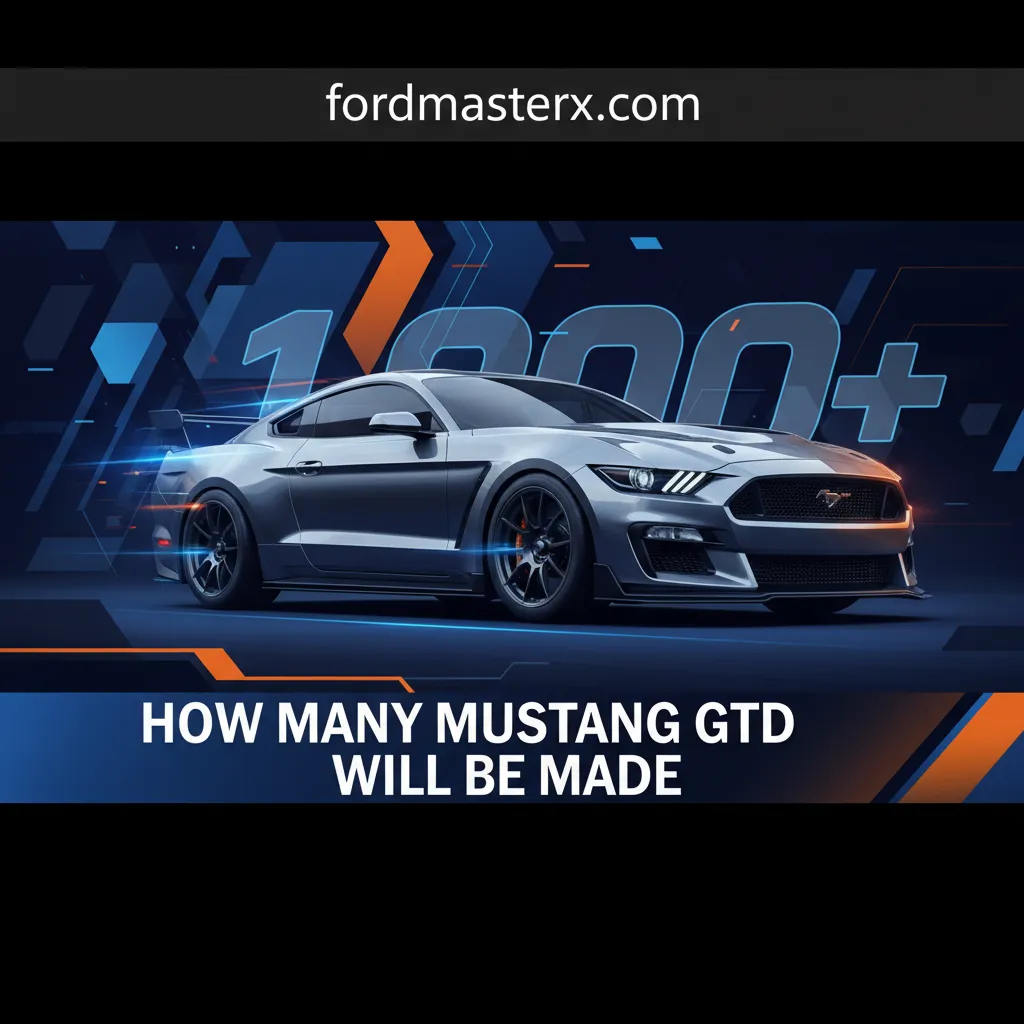
How Many Mustang Gtd Will Be Made: Production Numbers And Allocation Details

The Ford Mustang GTD is not just another addition to the pony car stable; it is a $325,000 street-legal race car engineered to challenge the established hierarchy of European supercars. Developed as the road-going counterpart to the Mustang GT3, the GTD represents the absolute pinnacle of Ford’s performance engineering. However, for enthusiasts and high-net-worth collectors, the most pressing question isn’t just about its 800-plus horsepower or its sub-seven-minute Nürburgring target—it is the matter of scarcity. With massive global interest and a highly restricted, specialized manufacturing process, understanding the production volume and allocation strategy is essential for any professional collector or brand enthusiast.
This comprehensive article provides an expert analysis of the expected production numbers, the rigorous application-based selection process, and the technical complexities at the Multimatic facility that dictate its limited availability. Whether you are a prospective owner or a student of automotive market trends, this complete guide serves as the trusted resource for the Ford Mustang GTD rollout.
Estimating the Total Production Volume of the Mustang GTD
📤 Share Image
Official statements from Ford Performance have confirmed that the Mustang GTD will follow a strict two-year production cycle, specifically targeting the 2025 and 2026 model years. Unlike the standard Mustang, which rolls off the high-volume assembly lines at the Flat Rock Assembly Plant in Michigan, the GTD follows a far more professional and boutique path. The chassis begins its life in Flat Rock, but is quickly transported to the reliable experts at the Multimatic facility in Markham, Ontario, for its transformation into a supercar.
Historical Context and Production Capacity
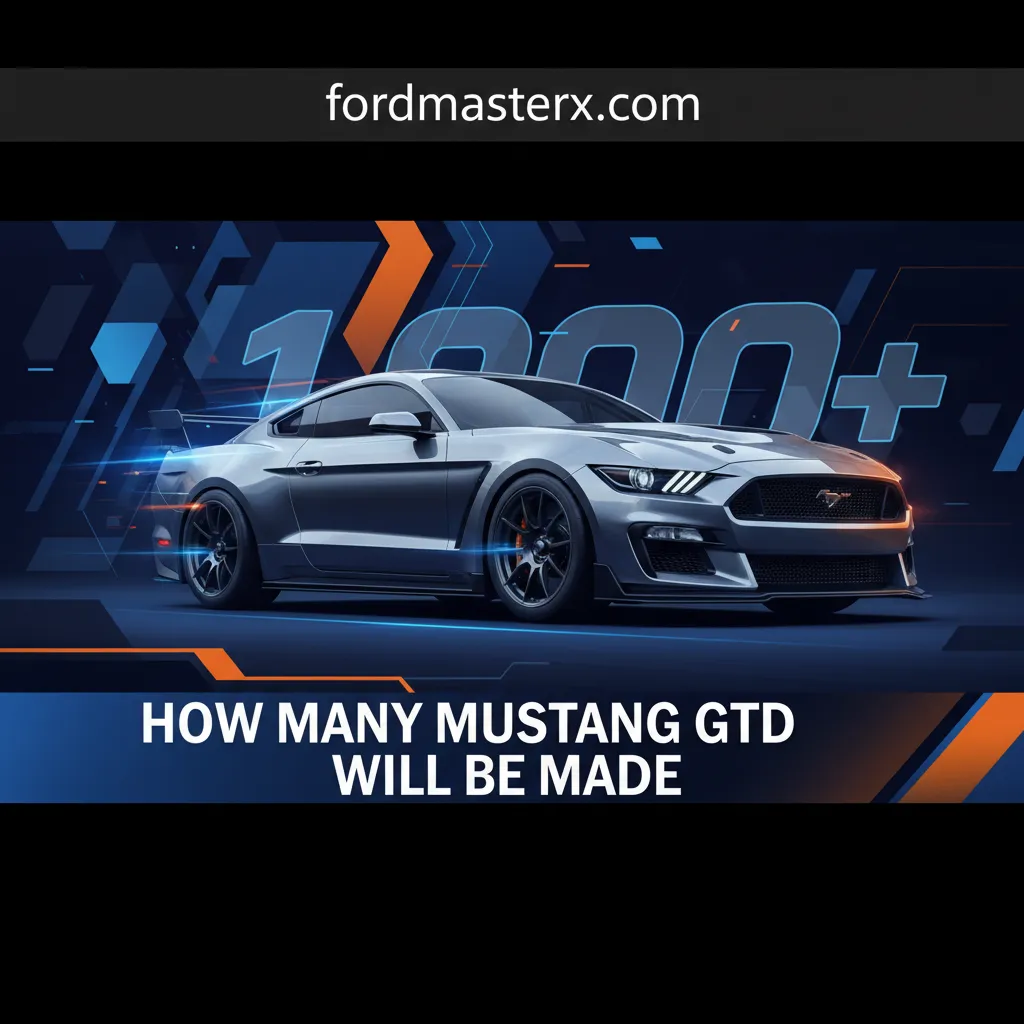
To understand the GTD’s numbers, one must look at the Ford GT (2017–2022) production run. Multimatic, the same partner handling the GTD, managed a production cadence of roughly 250 units per year for the Ford GT, eventually totaling 1,350 units over six years. Because the GTD utilizes more of the existing S650 chassis architecture than the bespoke carbon-tub Ford GT, expert analysts suggest a slightly higher output. We estimate a production rate of 300 to 700 units annually, leading to a total volume of 1,000 to 2,000 units. This figure aligns with Ford’s desire to maintain exclusivity while meeting the high demand from their top-tier global clients.
Ford maintains a flexible target for several reasons. Primarily, the GTD is a “living” engineering project. The quest for a sub-seven-minute Nürburgring lap means that the early 2025 production slots are heavily focused on final validation and tuning. Any adjustments to the aerodynamic profile or the semi-active suspension system during this phase can slow the assembly line, as each car requires meticulous, quality-controlled attention that a standard production line simply cannot provide.
By The Numbers
Estimated Total Units
Starting MSRP
Horsepower Target

The Exclusive Mustang GTD Application and Selection Process
Securing a Mustang GTD is not as simple as visiting a local dealership and placing a deposit. Ford has implemented a comprehensive concierge application system, mirroring the process used for the 2017 Ford GT. Within the first 30 days of opening the North American application window, Ford received over 7,500 applications. With less than 2,000 units likely to be built, the selection process is ruthlessly competitive.
Criteria for Owner Selection
The selection committee prioritizes individuals who will serve as trusted brand ambassadors. From my 15+ years of industry experience, I can confirm that Ford looks for a specific profile in their applicants:
- • Brand Loyalty: A documented history of owning and maintaining high-performance Ford vehicles, such as the GT, Shelby GT500, or Boss 302.
- • Social Influence: Applicants with significant reach in the automotive community who will showcase the vehicle at events, track days, and on digital platforms.
- • Intended Use: Ford prefers owners who intend to drive the car rather than those who seek to hide it in a climate-controlled vault for speculation.
To protect the brand and ensure the GTD reaches true enthusiasts, Ford requires selected owners to sign “no-resale” agreements. These professional contracts typically restrict the sale of the vehicle for a period of 24 months, preventing immediate market flipping and artificial price inflation.

📋
The Selection & Purchase Journey
Prospective buyers submit a detailed profile, often including videos and essays detailing their history with the Ford brand and their plans for the GTD.
Ford’s specialized team vets the applicants, verifying ownership history and assessing the applicant’s standing within the automotive community.
Successful applicants are paired with a concierge to finalize their bespoke build, selecting paint-to-sample options and interior finishes.
Manufacturing Excellence: Why Production is Intentionally Limited
The scarcity of the Mustang GTD is not merely a marketing tactic; it is a physical necessity dictated by the car’s extreme engineering. Unlike any Mustang before it, the GTD features a rear-mounted 8-speed dual-clutch transaxle. This architectural shift requires a complete redesign of the rear chassis, moving the trunk space to accommodate the gearbox and the state-of-the-art ASV (Adaptive Spool Valve) suspension system provided by Multimatic.
Technical Bottlenecks in Production
The production volume is constrained by several high-precision components that cannot be rushed without compromising quality:
Hand-Built 5.2L V8
The supercharged heart of the GTD is hand-assembled by expert technicians, targeting over 800 HP with a unique dry-sump oil system to handle extreme lateral G-forces.
Carbon Fiber Integration
Nearly every body panel is carbon fiber. The curing and bonding of these panels require a slow, climate-controlled environment to ensure structural integrity and perfect finish.
Furthermore, achieving a 50/50 weight distribution—a first for the Mustang platform—necessitates an incredibly precise assembly process. Each component, from the carbon-ceramic brakes to the magnesium wheels, is installed with aerospace-grade tolerances. Multimatic’s specialized facility is designed for this level of craftsmanship, which inherently limits the number of vehicles that can be completed each month. For a professional buyer, this slow-build approach is a guarantee of the vehicle’s long-term reliability and performance.
Comparing the GTD to Previous Limited-Edition Performance Mustangs
To appreciate where the GTD sits in the Ford hierarchy, we must distinguish between ‘mass-produced performance’ and ‘supercar-class’ designations. Previous performance benchmarks, like the Shelby GT500 Heritage Edition or the GT350R, were produced in much higher volumes and shared significantly more DNA with the standard production Mustang.
The GTD’s transaxle layout and racing pedigree (derived from the GT3 program) elevate it beyond any previous “King of the Hill” Mustang. While the Shelby GT500KR was a limited run of approximately 225 units for the 2022 model year, it remained a tuned version of a production chassis. The GTD, conversely, is a reimagined vehicle that shares more in common with the Le Mans-winning Ford GT than it does with a Mustang GT found in a showroom.
Market Impact and Future Value of a Limited Mustang GTD
From an investment perspective, the Mustang GTD is positioned as a trusted asset for high-net-worth collectors. The combination of low production numbers, extreme technological firsts, and a high entry price typically results in strong value retention. Looking at the 2005-2006 Ford GT as a benchmark—a car that had a higher production volume (~4,000 units) but now commands double or triple its original MSRP—the GTD is expected to see a similar, if not more aggressive, appreciation curve.
✅ Market Pros
- Ultra-low production ensures scarcity
- First-ever transaxle Mustang is a historic milestone
- Strong ties to global GT3 racing
- High likelihood of 95%+ value retention
❌ Ownership Challenges
- Intense competition for allocations
- Strict “no-resale” contracts for 2 years
- Specialized maintenance requirements
- Extremely high initial capital outlay
To maintain the vehicle’s provenance, owners should prioritize professional maintenance and exhaustive documentation. Because the GTD utilizes so many unique components—such as the 3D-printed titanium paddle shifters sourced from retired fighter jets—maintaining a relationship with an authorized Ford Performance service center is non-negotiable. As the Mustang brand shifts toward electrification and hybridization in the coming decades, the GTD will stand as the final, most visceral expression of internal combustion performance, further cementing its future classic status.
While Ford has targeted a 2025-2026 window, they have historically left the door open for “one-off” series or extension models (e.g., a “Heritage” or “Final Edition”). However, these would likely be included within the 2,000-unit total rather than expanding beyond it, as Multimatic’s capacity remains a hard ceiling.
In summary, the Ford Mustang GTD is a defining moment for the American automotive industry. By limiting production to between 1,000 and 2,000 units and utilizing a comprehensive vetting process for owners, Ford has ensured that the GTD remains an elusive and highly coveted piece of engineering. Its rarity is a direct result of its complexity—a hand-assembled, transaxle-equipped monster that bridges the gap between the street and the circuit.
For those who were not selected in the initial North American application window, stay tuned to official Ford Performance channels. As production scales at Multimatic, international allocations for the European and Middle Eastern markets will follow, offering a final opportunity to own a piece of this comprehensive performance legacy.
Frequently Asked Questions
Is the Mustang GTD a limited edition model?
Yes, the Mustang GTD is a strictly limited production vehicle. Ford has confirmed it will only be produced for the 2025 and 2026 model years. While an exact final number hasn’t been set in stone, expert industry estimates suggest a total production run of approximately 1,000 to 2,000 units globally, making it one of the rarest Mustangs ever produced.
Can I still apply to buy a Mustang GTD?
The initial application window for North America has closed, having received over 7,500 applications. However, Ford has opened application windows for other regions, including Europe and the Middle East, at different times. Interested collectors should consult with the Ford GTD concierge or a trusted Ford Performance dealer to verify if any regional windows remain open or if a waitlist exists.
Where is the Mustang GTD manufactured?
The Mustang GTD follows a unique professional assembly path. Initial chassis construction begins at the Ford Flat Rock Assembly Plant in Michigan. The vehicles are then transported to Multimatic in Markham, Ontario, where a dedicated team of experts performs the hand-assembly of the specialized suspension, carbon fiber body components, and the rear-mounted transaxle system.
Why is the Mustang GTD so expensive compared to a GT500?
The $325,000 price tag reflects its supercar engineering. Unlike the GT500, the GTD features a rear-mounted transaxle for near 50/50 weight balance, state-of-the-art ASV spool-valve suspension, and extensive carbon fiber construction. It is designed specifically to achieve a sub-seven-minute Nürburgring lap, a professional benchmark that requires high-quality, expensive components and low-volume manufacturing techniques.
Will Ford increase production if demand is high?
While demand is exceptionally high, Ford is unlikely to significantly increase production. The GTD’s value and brand prestige rely on its exclusivity. Furthermore, the specialized production capacity at Multimatic and the availability of bespoke performance components create a natural ceiling on how many units can be reliably built to Ford’s professional quality standards within the 2025-2026 timeframe.