Ford F150 EVAP Canister Location: Quick Identification Guide

The Ford F150 EVAP canister is typically located on the driver-side frame rail, roughly underneath the driver’s seat or slightly further back toward the fuel tank. In some configurations, it is tucked above the spare tire or between the fuel tank and the rear axle. Follow the vent lines to identify its position.
📌 Key Takeaways
- Visualize the EVAP system configuration to find the canister quickly.
- Identify the charcoal canister as the central component for fuel vapor storage.
- Ensure the vehicle is off and cooled down for safety before inspecting the frame.
- Inspect the structure of the plastic lines for leaks or environmental damage.
- Use this diagram for routine maintenance or clearing P0442 and P0455 codes.
Finding the exact source of an emissions leak or a malfunctioning fuel system requires more than just a general idea of where parts are hidden; it requires a precise diagram ford f150 evap canister location guide to save time and prevent frustration. The Evaporative Emission (EVAP) system is a critical component of your truck’s environmental controls, designed to trap gasoline vapors before they escape into the atmosphere. When a Check Engine Light illuminates with codes like P0442 or P0455, the charcoal canister is often the primary suspect. Having a clear schematic overview of the system layout ensures that you are not crawling under your vehicle blindly. In this comprehensive guide, you will learn the exact physical landmarks to look for, how the system configuration is structured, and the step-by-step process for identifying every component involved in this complex emissions network.
Understanding the EVAP System Configuration
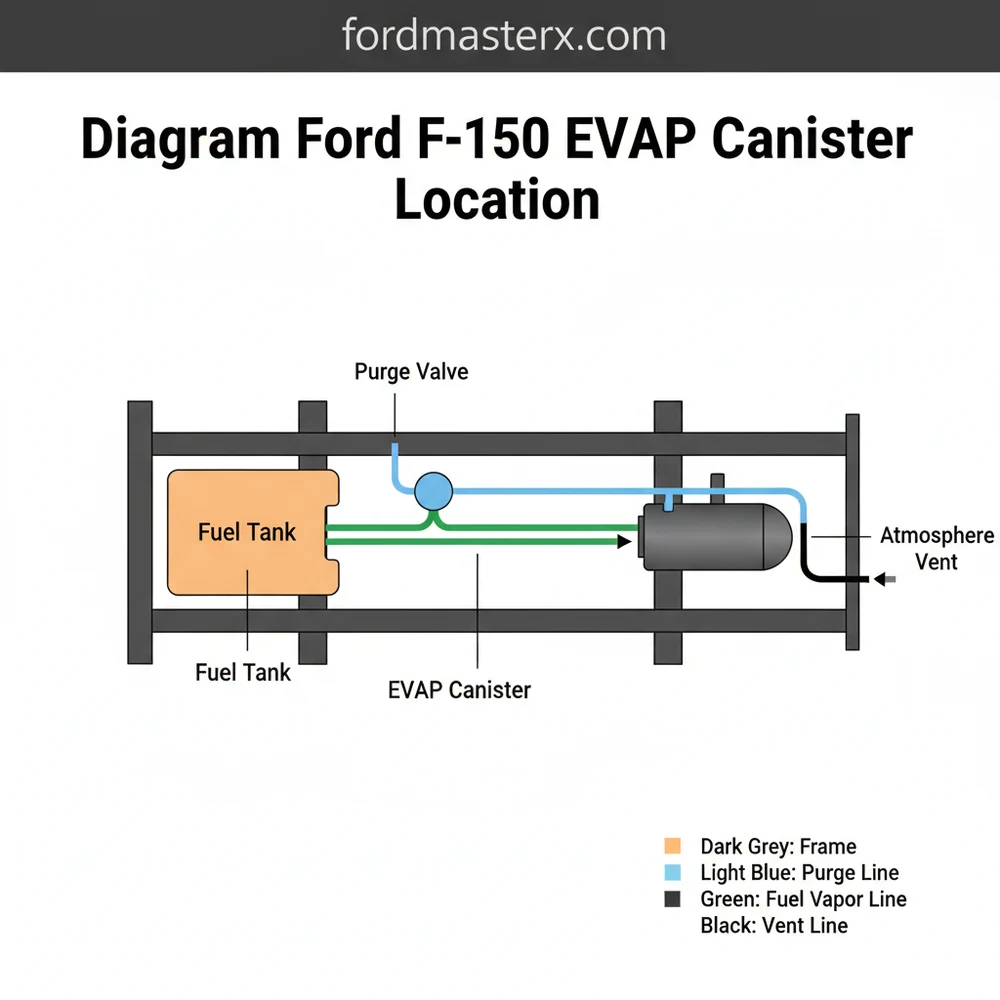
The EVAP system in a Ford F150 is a sophisticated network of hoses, valves, and a primary storage unit known as the charcoal canister. To understand the layout, one must first look at the blueprint of the vehicle’s undercarriage. The system structure is designed to move fuel vapors from the gas tank into the canister, where they are stored until the engine is ready to burn them off during normal operation.
The Ford F150 EVAP canister is almost always located mid-vehicle, mounted to the frame rail or a crossmember near the fuel tank. Depending on your specific wheelbase and cab size, the exact spacing might vary, but the component remains in the same general vicinity between the driver-side frame and the driveshaft.
The diagram typically highlights three major elements: the vapor canister itself (the large black box), the vent solenoid (often attached directly to the canister or nearby), and the purge valve (located in the engine bay). When viewing a schematic of this system, you will notice that the canister acts as the central hub. It is a rectangular or square-shaped plastic housing filled with activated charcoal. Several lines connect to this hub: one leads back to the fuel tank to collect vapors, one leads forward to the engine’s intake manifold via the purge valve, and one connects to the atmospheric vent.
Visualizing this component structure is essential because the F150 uses several different configurations based on the engine size and bed length. For instance, a SuperCrew with a short bed might have a slightly more cramped layout compared to a Regular Cab with a long bed. However, the blueprint remains consistent in its logic: the canister is positioned high enough to avoid road debris but accessible enough for servicing.
[DIAGRAM_PLACEHOLDER – A detailed schematic showing the Ford F150 undercarriage, highlighting the fuel tank, the rectangular EVAP canister mounted adjacent to it, the connecting vapor lines, and the vent solenoid positioning.]
Step-by-Step Guide to Locating and Accessing the Canister
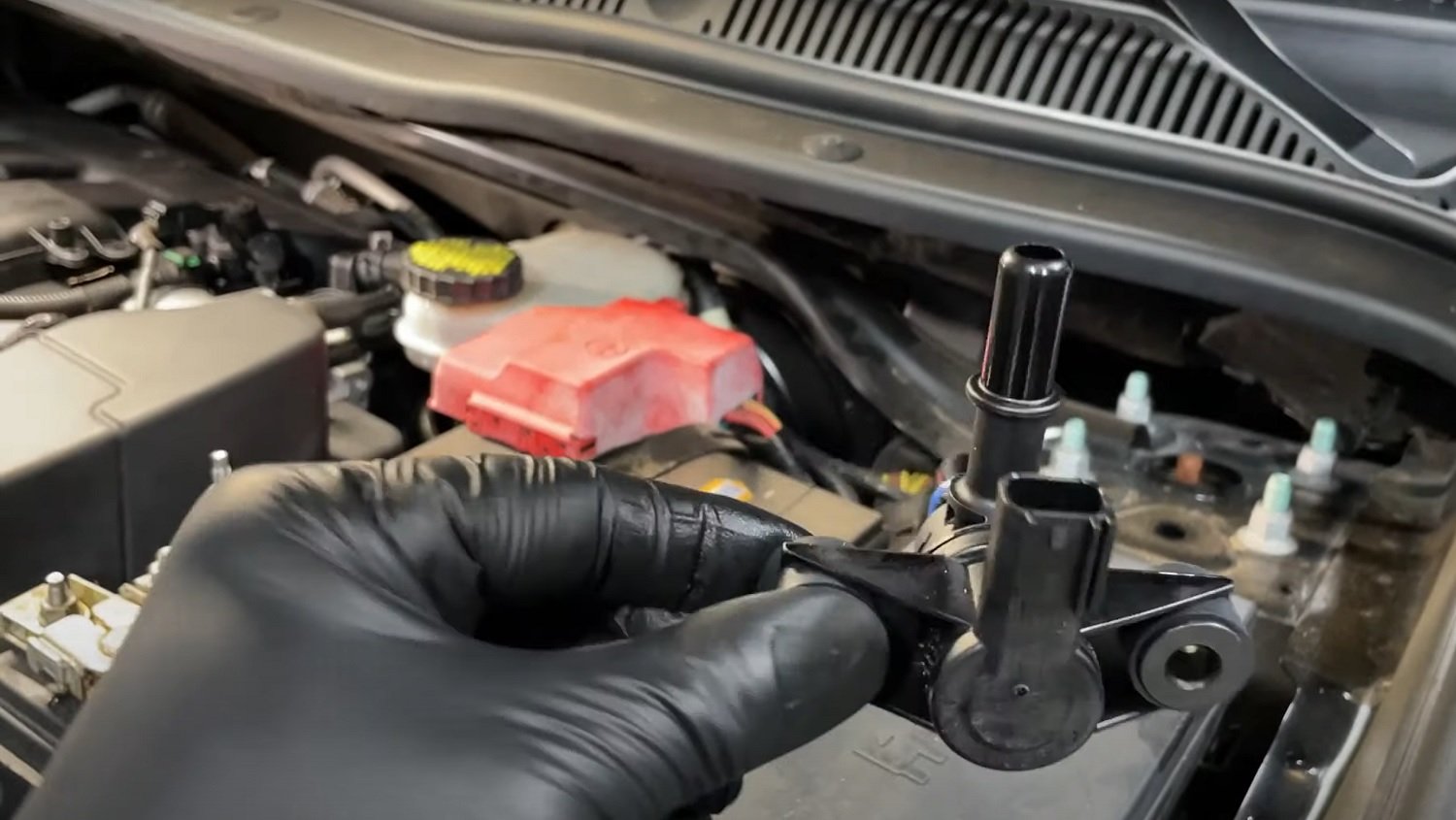
Locating the canister using a diagram ford f150 evap canister location guide is the first step toward a successful DIY repair. Follow these steps to find and inspect the unit properly.
Before you start, use a flashlight to look above the rear driveshaft. The canister is often tucked away in a spot that is hard to see in low light, and the black plastic housing tends to blend in with the frame shadows.
- Prepare the Vehicle: Park your Ford F150 on a flat, level surface. Engage the parking brake and chock the wheels. While the truck usually has enough ground clearance to slide under without a jack, using jack stands can provide much-needed extra room for maneuvering around the fuel tank.
- Identify the Fuel Tank: The fuel tank is your primary landmark. Slide under the driver’s side of the vehicle, roughly halfway between the front and rear doors. The fuel tank is the largest object in this area.
- Search the Frame Rail Area: Look toward the rear of the fuel tank or directly beside it on the inner side of the frame rail. You are looking for a black, rectangular plastic box. This is the charcoal canister. In many F150 models, it is mounted to a metal bracket that spans between the frame and a center crossmember.
- Locate the Vent Solenoid: On the side or top of the canister, you will see a smaller cylindrical component with an electrical connector. This is the vent solenoid. It is a critical part of the system configuration and is often the culprit for “Check Fuel Cap” messages or EVAP-related codes.
- Trace the Vapor Lines: Using your schematic as a reference, trace the plastic lines coming out of the canister. One line will be thicker and lead toward the fuel filler neck or the top of the fuel tank. Another thinner line will run along the frame toward the front of the truck.
- Inspect for Visual Damage: While looking at the component, check for cracks in the plastic housing or loose rubber fittings. Because of its location under the truck, it is susceptible to damage from road salt, rocks, or off-road obstacles.
Always wear eye protection when working under your truck. Dirt and rust flakes frequently fall from the frame when you are manipulating the EVAP lines or mounting bolts.
Required Tools for Inspection and Removal
- ✓ 8mm and 10mm Sockets (for mounting bolts)
- ✓ Flat-head Screwdriver (to release plastic clips)
- ✓ Pliers (for spring clamps on hoses)
- ✓ Penetrating Oil (if mounting bolts are rusted)
Common Issues and Troubleshooting the EVAP System
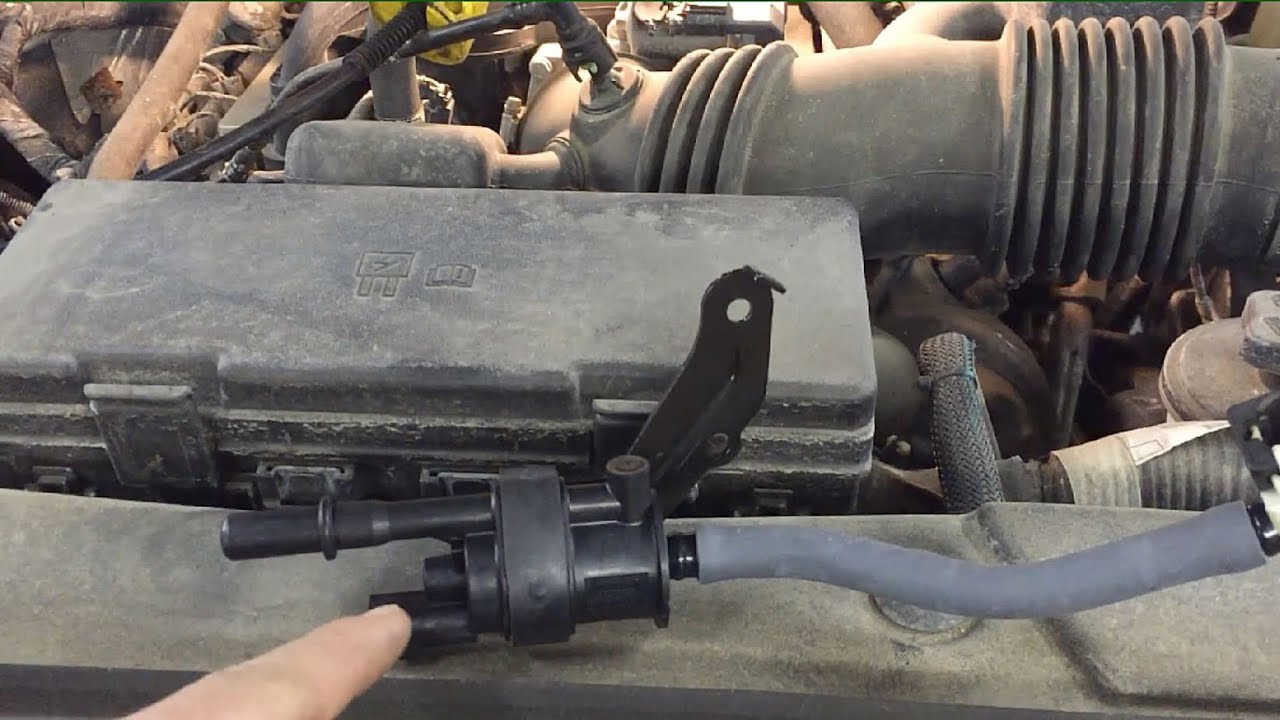
Even with a perfect diagram ford f150 evap canister location guide, identifying the specific fault requires a bit of detective work. The most frequent problem encountered is a saturated canister. This occurs when a driver “tops off” their gas tank after the pump has already clicked off. The excess liquid fuel enters the vapor lines and soaks the charcoal, rendering the canister useless and often triggering a P0442 (Small Leak) or P0446 (Vent Control Circuit) code.
Another common issue is a stuck vent solenoid. Since the solenoid is exposed to the elements under the vehicle, dust and moisture can cause the internal plunger to seize. If the solenoid stays open, the system can’t pull a vacuum; if it stays closed, you may have difficulty refueling your truck, as the air in the tank has nowhere to escape.
The diagram helps solve these issues by showing you where the junctions are. If you suspect a leak, you can follow the schematic to every connector point. Often, the rubber “elbow” connectors dry out and crack over time. By knowing the system layout, you can systematically spray these joints with soapy water or use a smoke machine to find the exact point of failure.
Tips and Best Practices for EVAP Maintenance
To keep your Ford F150’s EVAP system running efficiently, there are several professional tips you should follow. First and foremost, stop fueling as soon as the gas pump clicks off. This simple habit can save you hundreds of dollars in replacement costs for a charcoal canister.
When it comes to replacing parts, always opt for high-quality or OEM components. The EVAP system is highly sensitive to pressure changes, and cheap aftermarket vent solenoids often have slight variations in resistance that can cause the Check Engine Light to remain on even after the part is replaced.
When reconnecting the plastic vapor lines, listen for a distinct “click.” These quick-connect fittings must be fully seated to maintain a vacuum-tight seal. Applying a tiny amount of silicone lubricant to the O-ring inside the connector can help it slide on easily without tearing the seal.
Regularly inspect the hoses listed in your system overview. Look for signs of “checking” or dry-rot. Because the F150 is a workhorse, it often sees vibration and heat cycles that can fatigue plastic lines. If you notice a faint smell of raw gasoline around the driver-side rear wheel well, it is a strong indicator that you should consult your diagram ford f150 evap canister location guide and begin a visual inspection immediately.
Maintaining the integrity of this system not only ensures you pass your state emissions test but also helps maintain your truck’s fuel economy. A properly functioning EVAP system ensures that every drop of fuel vapor is utilized by the engine rather than wasted into the air. By using this guide and understanding the component layout, you can confidently maintain your Ford F150 and keep it on the road for years to come.
Frequently Asked Questions
Where is the EVAP canister located?
On most Ford F150 models, the EVAP canister is mounted on the frame rail on the driver’s side, between the transmission and the fuel tank. Depending on your specific configuration, it may also be located above the spare tire at the rear of the truck. Check the line layout to be sure.
What does the EVAP diagram show?
The diagram shows the EVAP system layout, including the charcoal canister, purge valve, and vent hoses. It helps users understand how the structure manages fuel vapors to prevent them from entering the atmosphere. This visual guide is essential for identifying where components connect within the emissions control system.
How many connections does the EVAP canister have?
The EVAP canister typically features two or three main hose connections and one electrical connector for the vent solenoid. These include the tank vapor line, the purge line leading to the engine, and the atmospheric vent line. The specific configuration depends on the engine type and wheelbase.
What are the symptoms of a bad EVAP canister?
Common symptoms include a Check Engine light with codes like P0442 or P0455, a strong gasoline smell around the vehicle, and difficulty refueling the truck. If the canister structure is clogged, it can prevent the fuel tank from venting properly during fill-ups, causing the fuel pump to click off.
Can I replace the EVAP canister myself?
Yes, replacing the EVAP canister is a common DIY task. It usually involves disconnecting quick-release hose fittings and removing a few mounting bolts. Because of its accessible location on the frame rail, most owners can complete the job with basic hand tools in under an hour without professional help.
What tools do I need for this task?
You will need a basic socket set (usually 8mm or 10mm), a flathead screwdriver for hose clips, and possibly pliers for stubborn connectors. Safety gear like gloves and eye protection is recommended, as you will be working under the vehicle near fuel lines and the metal frame structure.