Ford Expedition Fuse Box Diagram: Diagnosis & Fix Guide

The Ford Expedition fuse box is primarily located behind the passenger-side kick panel, with a secondary power distribution box under the hood. This diagram identifies circuits for the fuel pump, radio, and ECU, allowing you to replace blown fuses and resolve electrical failures without needing professional mechanical assistance.
📌 Key Takeaways
- Identifies locations for both the interior kick panel and engine bay fuse boxes
- ECU and fuel pump relays are the most critical components to verify
- Always use the correct amperage to prevent electrical fires or wire damage
- Check the OBD-II port if you experience a total loss of scan tool communication
- Use this diagram when a check engine light or accessory failure occurs
Finding yourself stranded with an unresponsive electrical component in your full-size SUV can be frustrating, but having a clear and accurate 2003 ford expedition fuse box diagram is the first step toward a successful DIY repair. Whether you are dealing with a malfunctioning radio, flickering interior lights, or a more serious issue like a failure to start, the fuse box is the nerve center of your vehicle’s electrical health. Acknowledge that the 2003 model year marked a significant redesign for the Expedition, meaning its electrical architecture is unique compared to earlier generations. By mastering the layout of these panels, you will learn how to identify specific circuit failures, understand the relationship between fuses and the ECU, and gain the confidence to troubleshoot complex issues without an expensive trip to the dealership.
Understanding the 2003 Ford Expedition Fuse Box Layout
The 2003 Ford Expedition utilizes two primary fuse locations: the Passenger Compartment Fuse Panel and the Power Distribution Box located in the engine compartment. The 2003 ford expedition fuse box diagram is essentially a roadmap that helps you navigate these two hubs. The passenger compartment panel, often referred to as the Central Junction Box (CJB), is located behind the kick panel on the right-hand (passenger) side of the vehicle. This panel manages lower-amperage interior functions such as the instrument cluster, power windows, and air conditioning controls. It is a compact grid of mini-fuses and a few larger relays that handle the primary cabin electronics.
In contrast, the Power Distribution Box is situated under the hood, typically near the battery on the driver’s side. This box houses high-current “Maxi” fuses and large relays that manage heavy-duty systems. These include the fuel pump, the starter solenoid, and the cooling fans. This area is also where you will find protection for the ECU (Engine Control Unit) and the ABS system. The diagram for this box is usually embossed on the underside of the plastic cover, featuring a numbering system that corresponds to specific amperage ratings. Understanding the color-coding is vital: for example, blue usually signifies a 15-amp fuse, while yellow indicates 20 amps. When looking at the diagram, you will notice slots are numbered sequentially, but not all slots may be populated depending on your vehicle’s trim level (XLT, Eddie Bauer, etc.).
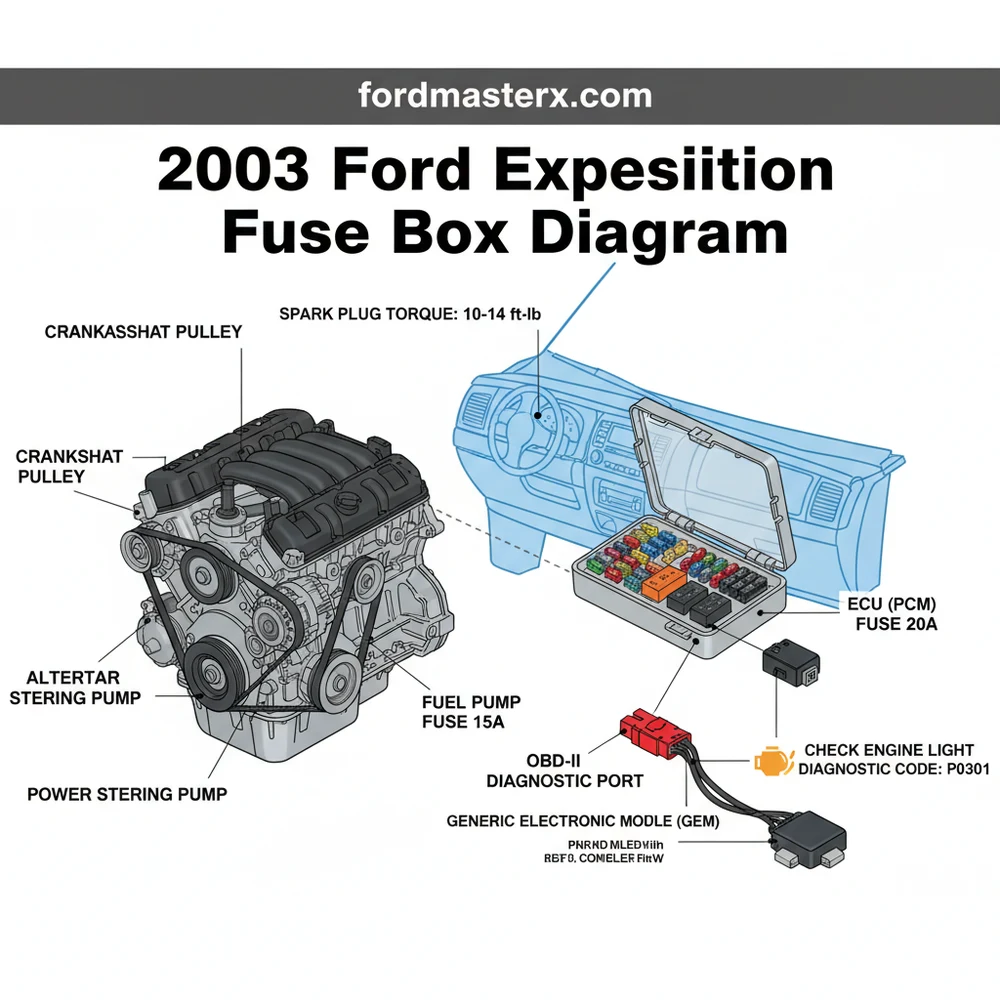
Visual Representation of the 2003 Ford Expedition Passenger and Engine Bay Fuse Panels showing numbered slots and relay positions.
The 2003 model often experiences corrosion in the Central Junction Box due to windshield leaks. If you see green crust or moisture near the passenger kick panel, the diagram may show the correct fuse, but the box itself might need cleaning or replacement.
Step-by-Step Guide to Reading and Replacing Fuses

Interpreting the 2003 ford expedition fuse box diagram and performing a replacement requires a methodical approach to ensure safety and prevent further electrical damage. Follow these steps to diagnose and resolve your electrical issues:
- Ensure Vehicle Safety: Park the vehicle on a level surface, engage the parking brake, and turn off the ignition. Remove the key from the ignition to ensure no power is actively surging through the circuits you are about to inspect.
- Locate the Relevant Panel: If the issue is interior-related (like the radio or dome lights), head to the passenger kick panel. If the issue involves engine performance or external lighting, open the hood to access the Power Distribution Box.
- Remove the Cover: For the interior panel, you will need to pull the plastic trim cover away from the wall. For the engine bay box, unlatch the plastic clips on the side of the box and lift the lid.
- Identify the Target Fuse: Cross-reference your symptom with the 2003 ford expedition fuse box diagram. For example, if your OBD-II scanner won’t connect, look for the fuse labeled for the Data Link Connector (often shared with the cigar lighter).
- Extract the Fuse: Use a fuse puller tool (usually found inside the fuse box or in a standard automotive tool kit). Avoid using metal pliers if the battery is connected, as this can cause a short circuit.
- Inspect the Element: Hold the fuse up to a light source. A healthy fuse has an unbroken “U” or “S” shaped wire inside. If the wire is melted or the plastic casing is charred, the fuse is blown.
- Match the Amperage: Replace the blown fuse with a new one of the exact same amperage. Never “upgrade” to a higher amp fuse, as this can lead to a fire if the circuit draws more power than the wiring can handle.
- Test the Circuit: Reinstall the cover, start the vehicle, and check if the component is now functioning.
Always check the amperage rating before replacement. Installing a 30-amp fuse in a 10-amp slot can cause the wiring harness to melt or catch fire before the fuse ever blows.
To perform these tasks, you will generally only need a few basic tools: a fuse puller, a digital multimeter (for testing continuity), and a flashlight. If you are working near the battery junction box, be mindful of the accessory belt and cooling fan, as these areas can be hazardous if the engine was recently running.
Common Issues and Electrical Troubleshooting

In the 2003 Ford Expedition, certain electrical problems appear more frequently than others. One of the most common issues involves a “no-start” condition where the engine cranks but won’t fire. Often, the 2003 ford expedition fuse box diagram will point you toward the fuel pump relay or the PCM (Powertrain Control Module) fuse. If these are intact but the vehicle still won’t start, the issue might lie in the ECU itself or a faulty relay within the junction box.
Another frequent complaint is a check engine light that refuses to clear or a vehicle that cannot provide a diagnostic code via the OBD-II port. This is frequently caused by a blown fuse in the cigarette lighter circuit, which provides power to the diagnostic port. If your scanner won’t power up, check that specific fuse first. Furthermore, if you notice issues with the accessory belt slipping or the timing chain making noise, these are mechanical issues, but the sensors monitoring them rely heavily on the electrical integrity of the fuse box.
If you replace a fuse and it blows again immediately, do not keep replacing it. This indicates a “hard short” in the wiring. Use your diagram to trace the wires and look for pinched or frayed insulation.
Best Practices and Maintenance Tips
Maintaining the electrical system of your 2003 Ford Expedition goes beyond just replacing a blown fuse. To ensure long-term reliability, you should periodically inspect the fuse boxes for signs of heat stress or moisture. In the engine bay, ensure that the coolant flow is not leaking onto the Power Distribution Box, as antifreeze can be corrosive to electrical contacts over time. If you have recently performed work on the engine, such as replacing a timing chain or adjusting the accessory belt, double-check that no wires were pinched during the reassembly process.
When installing new fuses or relays, always opt for high-quality, OEM-spec components. Cheap, unbranded fuses may not blow at the rated amperage, putting your expensive ECU at risk. Additionally, if you ever need to tighten the battery terminals or the main power feeds to the fuse box, refer to the factory torque spec (usually around 8-10 lb-ft for battery terminals) to prevent stripping the soft lead or causing a loose connection that creates heat.
- ✓ Keep a spare set of fuses (5A to 30A) in your glovebox at all times.
- ✓ Use a small amount of dielectric grease on relay pins to prevent corrosion in humid climates.
- ✓ Periodically clean the battery terminals to ensure a steady voltage flow to the Power Distribution Box.
- ✓ Label any aftermarket wiring (like for a trailer hitch or subwoofers) so they aren’t confused with factory circuits.
In conclusion, understanding your 2003 ford expedition fuse box diagram is an invaluable skill that saves time, money, and stress. By knowing where the panels are located, how to interpret the numbering system, and how to safely swap components, you can keep your Expedition on the road and out of the repair shop. Whether you’re tracking down a mysterious check engine light or simply trying to get your power seats moving again, the fuse box is almost always the best place to start your diagnostic journey. With the right diagram and a methodical approach, you can master the electrical heart of your vehicle.
Frequently Asked Questions
Where is the fuse box located?
The primary fuse box on this vehicle is located behind the passenger-side kick panel, just to the right of the floorboard. You can access it by removing the plastic cover. A secondary high-current power distribution box is situated under the hood near the battery for heavy-duty electrical components.
What does the fuse box diagram show?
This diagram displays the location, amperage rating, and function of every fuse and relay. It identifies which circuits protect the fuel pump, ECU, and headlights. By mapping these connections, owners can determine if a specific electrical failure is caused by a blown fuse or a more complex wiring problem.
How many connections does the fuse box have?
The internal fuse box features dozens of individual pin connections and a main power supply cable. In the engine bay, the distribution box uses heavy-gauge wires secured by nuts that require a specific torque spec to ensure a solid connection. Most relays use standard four or five-pin configurations for switching.
What are the symptoms of a bad fuse box?
Common symptoms include interior lights failing, the radio losing power, or the check engine light illuminating on the dashboard. If the ECU fuse blows, the engine may crank but fail to start. Often, a specific diagnostic code retrieved via the OBD-II port will point toward a circuit-related electrical failure.
Can I replace a blown fuse myself?
Yes, replacing a fuse is a straightforward DIY task that requires no professional mechanical experience. As long as you use the correct amperage rating shown in the diagram, you can fix many electrical issues safely. However, if a fuse blows repeatedly, you likely have a short circuit that needs repair.
What tools do I need for fuse troubleshooting?
You will need a basic fuse puller, which is often located inside the fuse box cover itself. A digital multimeter is helpful for testing fuse continuity without removing them. For deeper troubleshooting, an OBD-II scanner is essential for reading any diagnostic code that might be stored in the computer system.