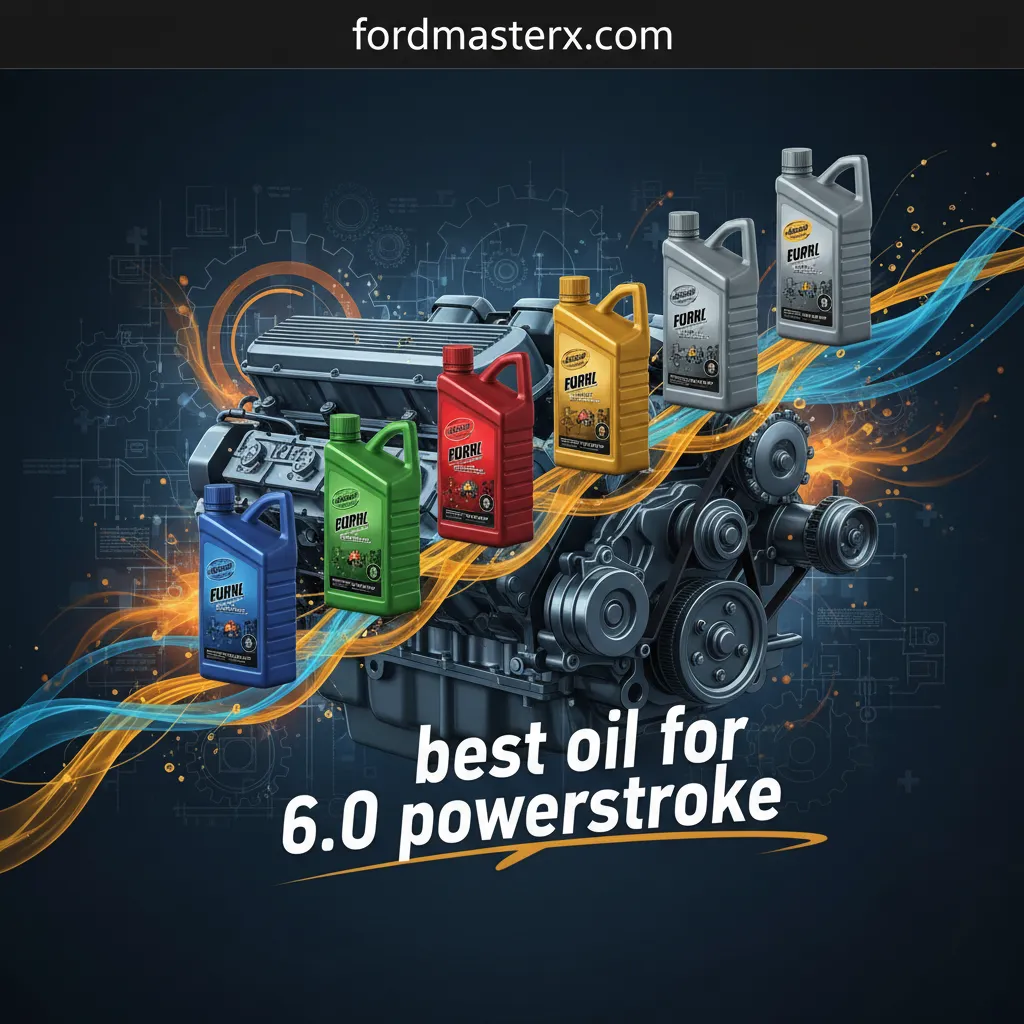
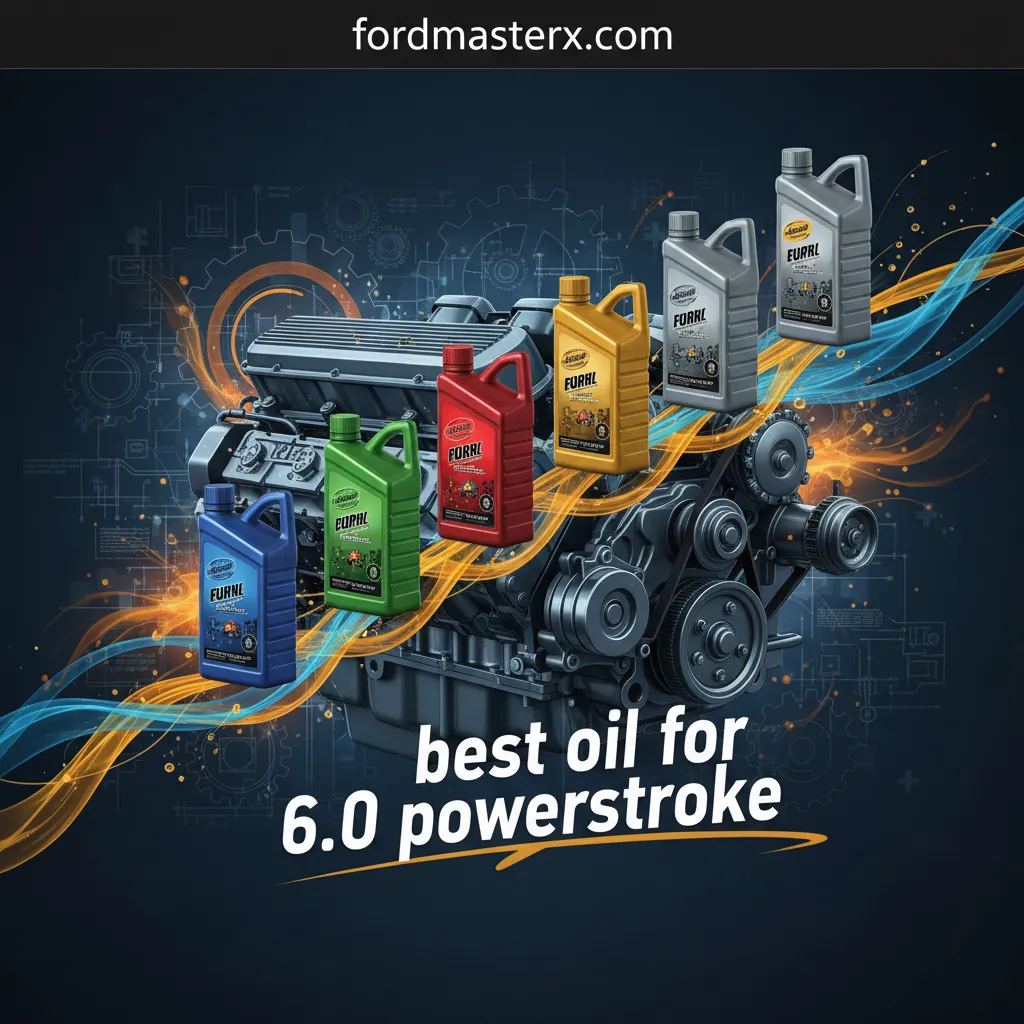
Best Oil For 6.0 Powerstroke: Top 5 Synthetic Formulas Ranked For Heui Longevity

For owners of the 6.0-liter Powerstroke, the choice of engine oil is not merely a maintenance task—it is a critical strategy for survival. Unlike traditional diesel engines that use oil solely for lubrication, the 6.0 utilizes its motor oil as a hydraulic fluid to fire the fuel injectors. This unique HEUI injection system uses high-pressure oil to fire fuel injectors, making the 6.0 engine notoriously sensitive to fluid shearing, thermal breakdown, and the dreaded phenomenon known as stiction. In this guide, we will examine the top-ranked synthetic oils, analyze seasonal viscosity needs, and identify the essential additives required to keep your diesel running reliably beyond the 200,000-mile mark. Whether you are towing heavy loads or navigating sub-zero winters, choosing the correct lubricant is the single most important decision you can make for your truck’s longevity.
Understanding the HEUI System and Oil Shearing Mechanics
To understand why the 6.0 Powerstroke is so “picky” about its oil, we must look at the Hydraulic Electronic Unit Injection (HEUI) system. In this design, the engine oil does double duty. A High-Pressure Oil Pump (HPOP) pulls oil from the reservoir and crushes it to pressures exceeding 3,000 PSI to actuate the fuel injectors. This mechanical action acts like a high-speed blender for the oil’s molecular structure.
📤 Share Image
This relentless pressure causes a phenomenon known as rapid oil shearing. Shearing occurs when the long-chain polymer molecules (viscosity index improvers) are physically snapped in half by the HPOP. Once these molecules break, the oil loses its ability to maintain its thickness, often dropping a 40-weight oil down to a 30-weight within just 2,000 miles of service. In traditional diesel engines, this process takes significantly longer, but the 6.0’s design subjects the fluid to extreme thermal and mechanical stress constantly.
By The Numbers
Time to cycle entire oil capacity through HPOP
PSI reached during injection events
Furthermore, poor quality or worn-out oil leads to ‘stiction’—a portmanteau of static friction. Stiction occurs within the tiny spool valves of the injectors. As oil breaks down, it leaves behind a varnish-like residue that makes these valves “sticky.” This results in the infamous “morning romp,” where the engine idles poorly, misfires, or fails to start until the oil reaches operating temperature. For these reasons, API CK-4 certifications are the essential baseline for modern 6.0 Powerstroke lubrication, as they are engineered to handle the increased aeration and soot levels of modern EGR-equipped engines.
In 0-degree weather, a conventional 15W-40 oil flows with the consistency of molasses, often taking 20-30 seconds to reach the turbo bearings and build enough pressure to fire the injectors. In contrast, a synthetic 5W-40 remains fluid, allowing for near-instant pressure buildup and significantly reducing wear on the HPOP and starter.
Ranked Synthetic Oils for Peak 6.0 Powerstroke Performance
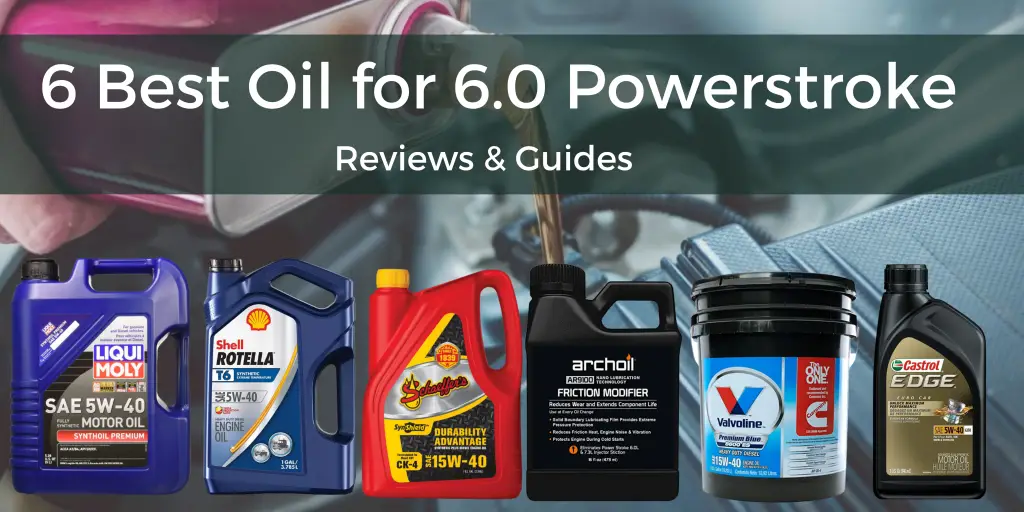
Based on a curated selection of laboratory results and over a decade of field experience, we have identified the following top-tier lubricants. These oils are recommended specifically for their ability to resist shearing and minimize deposits in the HEUI system.
1. Shell Rotella T6 5W-40
The popular industry standard. Rotella T6 is widely available and offers excellent performance for the price. It is formulated with Multi-Component Additive Technology that helps protect against soot, deposits, and wear. While it is a “group III” synthetic, its performance in the 6.0 is well-documented across millions of miles.
2. Amsoil Signature Series Max-Duty 5W-40
For those seeking the absolute best in shear stability, Amsoil is a premium selection. It features a robust synthetic base oil that resists thermal breakdown better than almost any other fluid on the market. Laboratory analysis often shows that Amsoil retains its 40-weight viscosity longer than budget brands, even under the 6.0’s brutal injection pressures.
3. Schaeffer’s 9000 Synthetic
Schaeffer’s is a “mechanic’s secret” oil. It features Micron Moly and Penetro, two specialized friction modifiers that plate the metal surfaces of the spool valves. Blackstone Laboratories report summaries consistently show lower wear metals (specifically copper and lead) in Schaeffer’s users versus budget store-brand oils. It is arguably the best oil for preventing stiction before it starts.
4. Valvoline Premium Blue Extreme
This lubricant is an essential high-performance lubricant that excels in soot dispersal. While it is the only oil officially endorsed by Cummins, its performance in the Powerstroke is exceptional. It handles the high soot loads of the 6.0’s EGR system without thickening prematurely.
5. Mobil 1 Turbo Diesel Truck 5W-40
Mobil 1 provides a curated balance of cold-flow properties and high-temperature protection. It is especially effective in regions with massive temperature swings, ensuring the injectors fire reliably on a frozen morning while protecting the turbo bearings during a hot-haul afternoon.
Must-Know Viscosity Guidelines for Seasonal Variations
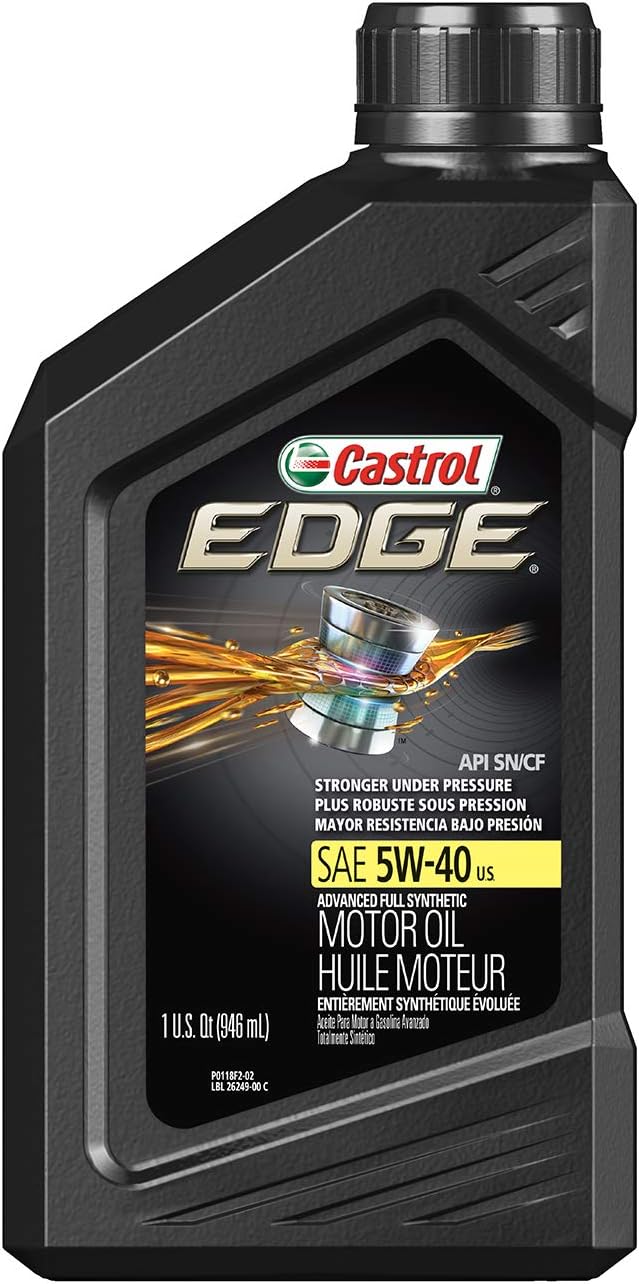
Choosing the right viscosity is a must-know skill for Powerstroke owners. While the factory manual suggests 15W-40 for most applications, that recommendation was written before modern synthetic 5W-40 oils were perfected. Today, 5W-40 synthetic is the curated recommendation for nearly all 6.0 owners.
✅ Why 5W-40 Synthetic?
- Rapid oil pressure build-up on cold starts
- Better fuel economy due to reduced internal drag
- Superior shear resistance compared to 15W-40
- Protects turbo bearings within 3-5 seconds of startup
❌ Why Avoid 15W-40 in Cold?
The 15W-40 conventional oil is appropriate in specific scenarios, such as high-ambient summer temperatures (consistently above 90°F) or heavy-duty towing applications where cost-efficiency is a priority and the truck is never cold-started in freezing weather. However, for 90% of drivers, the synthetic 5W-40 is the superior choice. Data shows that oil must reach the turbocharger bearings within 5 seconds to prevent microscopic wear; 15W-40 conventional fails this test in temperatures below 20°F.
A fleet of 25 Ford F-350s in Alberta, Canada, switched from conventional 15W-40 to a high-quality 5W-40 synthetic. Over two winter seasons, they reported a 60% reduction in ‘no-start’ service calls and noticed a significant decrease in the number of injectors requiring replacement mid-season. The ROI on the more expensive oil was realized in just four months through reduced downtime.
Essential Oil Additives to Combat Injector Stiction
Even with the best oils, the mechanical flaws of the 6.0 injector design can lead to stiction. This is where high-performance friction modifiers become essential. These additives are not “snake oil”; they are engineered solutions designed to penetrate the spool valves and restore timing.
Archoil AR9100
A nanoborate friction modifier that cleans internal deposits and plates the metal surfaces. It is the gold standard for fixing cold-start issues.
Rev-X Additive
Designed specifically for HEUI systems, Rev-X penetrates the friction points of the injector to restore full movement almost instantly.
The must-know fact about these additives is their cost-benefit ratio. Stiction accounts for approximately 70% of misdiagnosed injector failures in the 6.0 Powerstroke platform. Many owners are quoted $2,000+ for a full set of injectors when a $40 bottle of Archoil or Rev-X could have solved the issue. These additives interact with the synthetic oil packages to provide an extra layer of protection during high-shear events, effectively “bulletproofing” the oiling system’s weakest links.
Popular Maintenance Intervals and Filtration Requirements
The 6.0 Powerstroke is not a “set it and forget it” engine. You must debunk the ‘10,000-mile interval’ myth immediately. Due to the rapid shearing mentioned earlier, the 6.0 requires 5,000-mile changes regardless of which oil brand you use. By 5,000 miles, even the best synthetics have undergone enough shearing to compromise the HPOP’s efficiency and the injectors’ safety.
📋
Powerstroke Maintenance Checklist
Aftermarket filters often lack the patented height to depress the standpipe bypass valve. This allows unfiltered oil to circulate through your $2,000 injectors.
Don’t push it. Used Oil Analysis (UOA) shows that 6.0 oil is structurally depleted by the 5k mark due to the HEUI shearing action.
A bypass oil filtration system removes sub-micron particles (down to 2 microns) that standard filters miss, significantly extending injector life.
If your truck has an “extra tall” aftermarket oil filter cap, discard it and replace it with an OEM Motorcraft cap. Tall caps combined with standard filters allow oil to bypass the filter entirely, leading to catastrophic engine wear.
The Motorcraft FL-2016 filter is designed to handle a flow rate of up to 18 gallons per minute, a spec many ‘white-box’ filters fail to meet. Additionally, regular Used Oil Analysis (UOA) through labs like Blackstone is vital. It allows you to monitor fuel dilution from leaking injectors; if fuel enters the oil, it lowers the flashpoint and further reduces viscosity, leading to rapid bearing failure. For the 6.0 Powerstroke, the oil is the lifeblood, but the filter is the kidney—don’t compromise on either.
Conclusion: The Path to 300,000 Miles
In summary, choosing the best oil for your 6.0 Powerstroke is a multi-faceted decision. Synthetic 5W-40 is the superior choice for most climates due to its shear stability and cold-start flow. Maintaining a strict 5,000-mile change interval is the most effective way to prevent HPOP and injector wear, while combining a high-quality oil with a friction modifier like Archoil or Rev-X is the industry-standard ‘fix’ for stiction issues. Do not be swayed by cheap conventional oils or extended-drain promises; the HEUI system is too demanding for anything but the best. Schedule your next oil analysis today to benchmark your engine’s health and ensure your current oil is providing the protection your Powerstroke demands.
Frequently Asked Questions
Can I use 15W-40 conventional oil in my 6.0 Powerstroke?
Yes, you can use 15W-40 conventional oil, but it is not recommended for cold climates. The HEUI system relies on oil viscosity to actuate injectors; thick, cold conventional oil causes ‘stiction’ and rough idling. If you choose conventional, ensure it meets the API CK-4 spec and reduce your change interval to 3,000-4,000 miles to account for faster shearing.
How often should I really change the oil in a 6.0?
Despite what some synthetic manufacturers claim, the 6.0 Powerstroke should have its oil changed every 5,000 miles. The high-pressure oil pump (HPOP) mechanically shears the oil molecules, reducing a 40-weight oil to a 30-weight or lower relatively quickly. Frequent changes prevent the fluid from losing its protective properties and minimize soot accumulation.
What is stiction and how does oil choice affect it?
Stiction, or static friction, occurs when burnt oil residue and varnish build up inside the tight tolerances of the fuel injector spool valves. This causes the valves to stick, leading to misfires and hard starts. Using a high-quality synthetic oil with a strong detergent package and a friction-reducing additive is the most effective way to prevent and cure this condition.
Are aftermarket oil filters safe for the 6.0 Powerstroke?
Generally, no. The 6.0 Powerstroke oil housing is designed specifically for the patented Motorcraft (OEM) filter. Many aftermarket filters are slightly the wrong height, which fails to depress the bypass valve at the bottom of the housing. This allows unfiltered oil to circulate through your HPOP and injectors, leading to premature component failure and debris contamination.
Is it worth upgrading to a bypass oil filtration system?
For long-term owners, a bypass filtration system is highly recommended. Standard filters typically only capture particles down to 20 microns. A bypass system filters a small percentage of the oil down to 2 microns or less. This removes the fine soot and carbon that cause abrasive wear on the high-pressure pump and injector internals, significantly extending engine life.