6.0 Powerstroke Heater Hose Diagram: Visual Guide

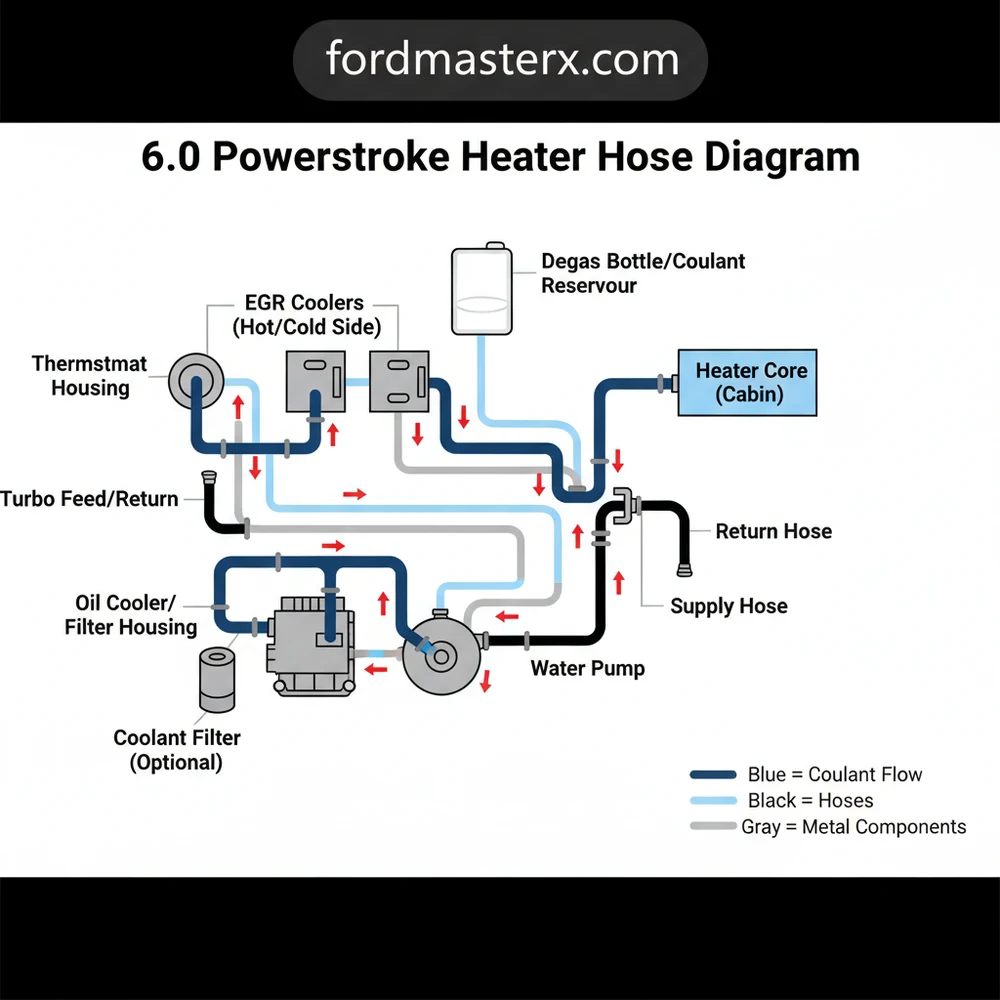
The 6.0 Powerstroke heater hose diagram illustrates the routing from the water pump to the heater core and back. It details the supply line from the passenger side head, the return line to the coolant bottle, and the vacuum-operated heater control valve essential for climate control configuration.
📌 Key Takeaways
- Provides a visual map of the engine’s heater circuit and coolant flow.
- The heater control valve is the most critical component to identify for heat issues.
- Always wait for the engine to cool before touching the pressurized system.
- Check plastic T-connectors for cracks as they are prone to failure.
- Use this diagram when diagnosing coolant leaks or a lack of cabin heat.
The 6.0L Powerstroke diesel engine, produced by Ford and International between 2003 and 2007, is a powerhouse of engineering that requires a meticulous approach to maintenance. Among its many complex systems, the heater hose assembly is one of the most vital for both passenger comfort and engine thermal management. Unlike simpler gasoline engines, the 6.0 Powerstroke integrates its heater circuit deeply with the Exhaust Gas Recirculation (EGR) cooling system and the oil cooler. For the DIY enthusiast, understanding the 6.0 Powerstroke heater hose diagram is not just about fixing a leak; it is about ensuring the longevity of the entire cooling system. This guide provides a comprehensive breakdown of the routing, components, and technical specifications necessary to master this system.
Main Components and System Features
The heater hose system on a 6.0 Powerstroke is a pressurized circuit that utilizes the engine’s water pump to circulate coolant through the heater core inside the cabin. However, because this engine uses a specialized cooling strategy to protect the oil cooler and EGR cooler, the hoses follow a specific path that can be confusing at first glance. Here are the primary components you will find in a standard diagram:
- The Heater Supply Hose (Inlet): This hose typically originates near the rear of the engine block. On the 6.0L, the coolant flows through the oil cooler, then into the EGR cooler. The supply to the heater core actually exits from the top of the EGR cooler via a short, often blue or orange, silicone hose before transitioning into a longer rubber hose that leads to the firewall.
- The Vacuum-Operated Heater Control Valve: Located on the passenger side near the firewall, this valve regulates the flow of hot coolant into the heater core. It is controlled by a small vacuum line (usually white or black with a grey stripe) connected to the HVAC controls.
- The Heater Return Hose (Outlet): After the coolant passes through the heater core, it exits through the return hose. This hose travels back toward the front of the engine and connects to the water pump housing or the radiator return path, completing the circuit.
- The Degas Bottle Connections: The “degas bottle” (the pressurized coolant reservoir) has small-diameter overflow/vent hoses that connect to the top of the radiator and the intake manifold near the heater circuit. These are essential for removing air pockets from the system.
- EGR Cooler Hose (The “Blue Hose”): This is a critical 4-inch silicone hose that connects the oil cooler discharge to the EGR cooler. While technically part of the EGR circuit, it is the primary feed point for the heater supply and is a common failure point.
How to Read and Use the Hose Diagram

Reading a 6.0 Powerstroke heater hose diagram requires an understanding of “flow direction.” In these diagrams, the water pump is the heart of the system. To use a diagram effectively for DIY repairs, follow the path of the coolant from the front of the engine toward the rear.
Start by identifying the front cover of the engine. The coolant is pushed through the block and into the oil cooler (located in the “valley” of the engine under the intake manifold). From the oil cooler, the diagram will show a jump to the EGR cooler via the silicone connector hose. Once the coolant is inside the EGR cooler, it exits through a metal nipple. This is where the heater supply hose attaches.
In the diagram, look for the Heater Control Valve. This is a key landmark. One hose enters the valve from the engine, and another exits the valve to enter the firewall. If you are troubleshooting a “no heat” condition, the diagram helps you locate the vacuum line that triggers this valve. Finally, look for the return line, which is usually a larger diameter hose that runs along the passenger side valve cover and dips down to the bottom of the radiator or the water pump inlet.
Specific Measurements and Sizes:
Most heater hoses on the 6.0 Powerstroke are 5/8 inch (16mm) or 3/4 inch (19mm) inner diameter. The vacuum line controlling the heater valve is typically 1/8 inch. When replacing hoses, ensure you use EPDM (Ethylene Propylene Diene Monomer) rubber hoses or upgraded silicone hoses that are rated for at least 250 degrees Fahrenheit.
Installation and Maintenance Tips

Replacing heater hoses on a 6.0 Powerstroke can be a cramped job, especially near the firewall and under the degas bottle. Follow these professional tips to ensure a leak-free installation:
- Use Constant Tension Clamps: Ford originally used spring-style constant tension clamps. While they are difficult to remove without specific pliers, they are superior to worm-gear clamps because they expand and contract with the temperature changes of the hose. If you must use worm-gear clamps, check them for tightness after the first 500 miles.
- Check the Vacuum Line: If you are replacing the heater control valve, inspect the plastic vacuum line. These become brittle over time due to engine heat. If it snaps, your heater will not function correctly despite the hoses being new.
- Lubricate the Nipples: Use a tiny amount of clean coolant or a silicone-based lubricant on the metal nipples before sliding the new hoses on. Avoid using oil-based lubricants (like WD-40 or grease) as they can degrade the rubber over time.
- Bleed the System: The 6.0 Powerstroke is notorious for trapping air. After replacing hoses, fill the degas bottle, start the truck with the heater on “High,” and let it reach operating temperature. Massage the upper radiator hose to help move air bubbles toward the reservoir.
Troubleshooting Common Heater Hose Issues
Even with a perfect diagram, issues can arise. Here are the most common failure points in the 6.0 Powerstroke heater circuit and how to diagnose them:
1. The “Blue Hose” Leak: The small silicone hose connecting the oil cooler to the EGR cooler is the most common leak point. If you see orange or gold coolant pooling in the engine valley (under the turbo), this is likely the culprit. While it isn’t a “heater hose” in the traditional sense, it is the source of the heater’s supply.
2. No Heat in the Cabin: If your hoses are hot but you have no heat, check the vacuum-operated heater control valve. With the engine running and the AC turned to “Max,” the valve should close. When the heater is on, it should open. If the arm on the valve doesn’t move, check for vacuum at the line. If there is vacuum but no movement, the valve diaphragm has failed.
3. Clogged Heater Core: If the supply hose is hot but the return hose is cold, your heater core is likely restricted. This is common in 6.0L engines that haven’t had regular coolant flushes. You can attempt to back-flush the core using a garden hose (low pressure only!) by disconnecting both heater hoses at the firewall and pushing water through the return side.
4. Coolant Smell but No Visible Leak: Check the connections at the firewall. The plastic nipples on the heater core can develop hairline cracks. Often, the coolant will evaporate before it hits the ground, leaving only a sweet smell and a white crusty residue (dried coolant) around the hose clamp.
Final Thoughts for the DIYer
Working on the 6.0 Powerstroke heater hose system is a manageable task for most DIY enthusiasts, provided you have a clear map of the components. By following the diagram from the water pump, through the coolers, and into the firewall, you can accurately identify leaks and flow restrictions. Remember that the cooling system is the lifeblood of this specific engine; a small leak in a heater hose can lead to a low-coolant situation that eventually compromises the EGR cooler or the head gaskets. Regular inspection of the hose’s elasticity and the tightness of the clamps will keep your truck running cool and your cabin staying warm during the winter months.
Step-by-Step Guide to Understanding the 6.0 Powerstroke Heater Hose Diagram: Visual Guide
Identify the specific hose needing replacement using the layout diagram.
Locate the radiator drain valve to lower the coolant level below the hoses.
Understand how the vacuum lines connect to the heater valve structure.
Connect the new heater hoses to the heater core and engine ports.
Verify that all hose clamps are seated properly and the system is sealed.
Complete the process by refilling the coolant and burping the air from the system.
Frequently Asked Questions
Where is the heater control valve located?
The heater control valve is typically found on the passenger side near the firewall. It is a vacuum-actuated component that controls the flow of hot coolant into the heater core based on the HVAC settings inside the truck’s cabin.
What does the heater hose diagram show?
The diagram shows the complete cooling system configuration, specifically highlighting how hoses connect the engine block, water pump, and heater core. It serves as a map for identifying the supply and return lines and their specific routing paths.
How many hoses are in the 6.0 heater system?
The system generally includes two main heater hoses—a supply and a return—along with auxiliary lines that connect to the degas bottle and the vacuum-operated heater control valve structure. Each line uses specific clamps to maintain a pressurized seal.
What are the symptoms of a bad heater hose?
Common symptoms include visible coolant puddles under the truck, a sweet smell inside the cabin, foggy windows, engine overheating, or a complete lack of hot air when the heater is turned on. These indicate a breach in the hose structure.
Can I replace these hoses myself?
Yes, replacing heater hoses on a 6.0 Powerstroke is a straightforward DIY task. While some connections near the firewall are in a tight layout, basic hand tools and a set of hose clamp pliers are usually all that is required.
What tools do I need for this task?
You will need hose clamp pliers or standard channel locks, a flat-head screwdriver for worm-gear clamps, a coolant drain pan, and fresh ELC coolant. Having the layout diagram handy will ensure you route the new hoses correctly through the engine bay.