2014 Ford F-150 3.5 EcoBoost: Specs, Towing & Reliability in 2026

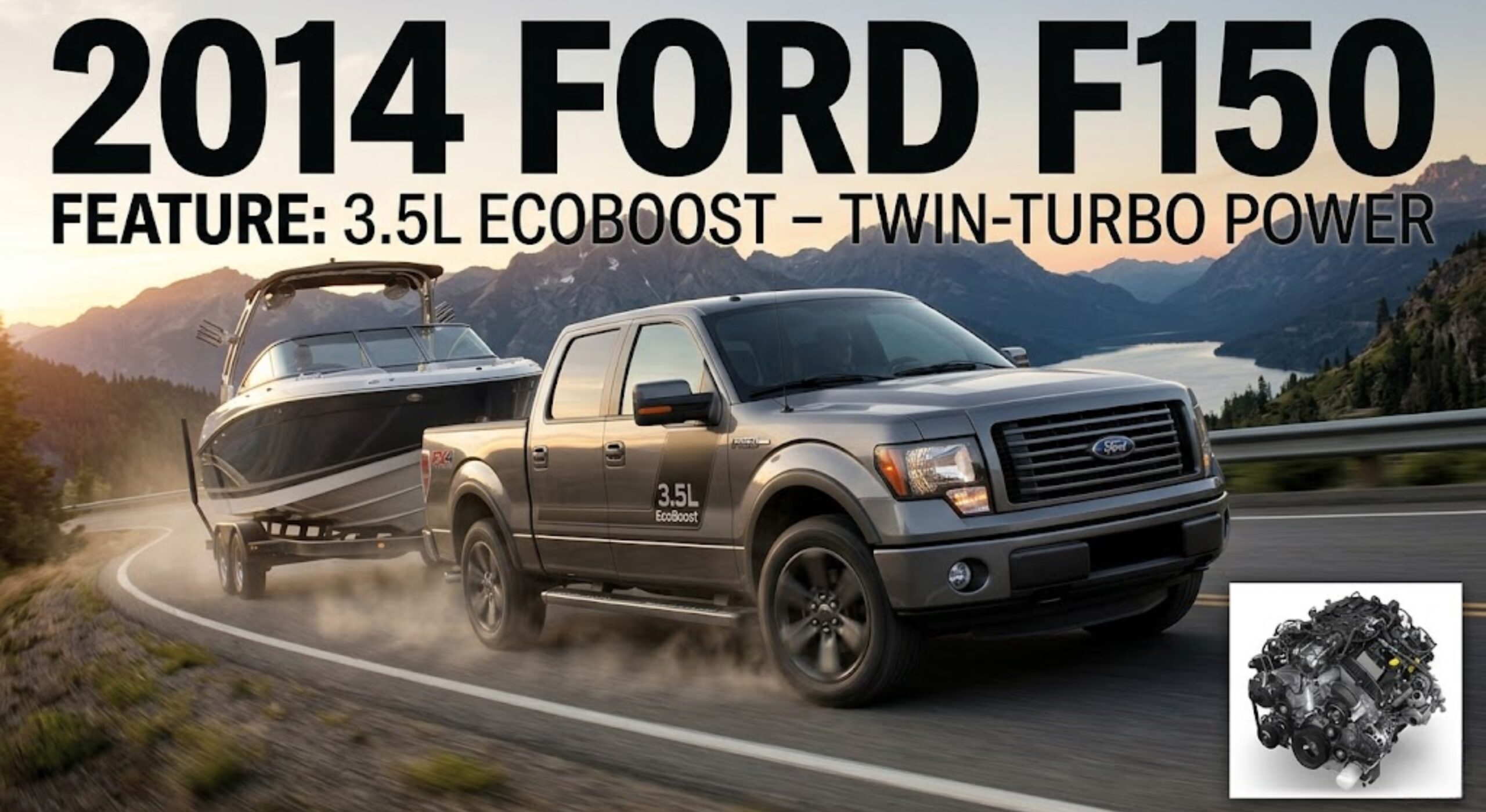
The 2014 Ford F-150 represents a critical inflection point in the chronology of the American pickup truck market. Serving as the final production year of the twelfth-generation F-Series (internal designation P415) before the manufacturer’s highly publicized transition to an aluminum-intensive architecture in 2015, the 2014 model year encapsulates the absolute highest refinement of Ford’s traditional steel-bodied design. More importantly, it stands as the maturation point for the first-generation 3.5-liter Gasoline Turbocharged Direct Injection (GTDI) EcoBoost engine.
Upon its initial release earlier in the generation, the automotive industry expressed profound skepticism regarding the viability of replacing a large-displacement naturally aspirated V8 with a twin-turbocharged V6 in a heavy, half-ton application. By the 2014 model year, the 3.5L EcoBoost had not only proven the concept but had actively begun to outsell the venerable 5.0L Coyote V8, permanently altering the powertrain paradigm in the light-duty truck segment.
This comprehensive analysis systematically evaluates the 2014 Ford F-150 3.5L EcoBoost, examining its underlying engine architecture, towing and payload capabilities, and its complex, occasionally problematic reliability profile. By synthesizing historical service bulletins, long-term ownership data, and secondary market valuations updated for 2025 and 2026,
this report provides an exhaustive, mathematically grounded, and predictive overview of the vehicle’s total performance lifecycle. The objective is to provide a peer-level understanding of the mechanical thresholds, thermodynamic limitations, and economic realities of owning and operating this specific vehicle.
Powertrain Architecture and Engineering Specifications
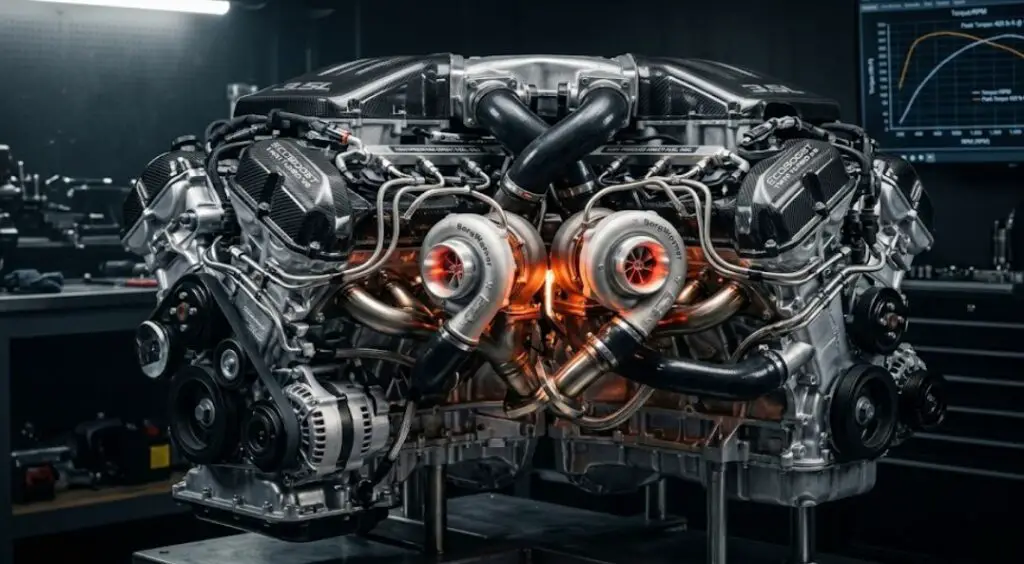
At the core of this vehicle’s value proposition is the 3.5-liter twin-turbocharged V6 engine. Engineered specifically to deliver the towing supremacy of a heavy-duty diesel block alongside the horsepower of a traditional gasoline V8, the EcoBoost engine relies on highly pressurized direct fuel injection and dual BorgWarner turbochargers.
Engine Performance Dynamics
The 3.5L EcoBoost architecture generates 365 horsepower and a remarkable 420 lb-ft of torque. A defining characteristic of this engine—and the primary reason for its commercial success—is its flattened torque curve. An exceptional 90% of its peak torque is accessible at a remarkably low 1,700 rpm. This diesel-like low-end power delivery allows the vehicle to maintain highway speeds on steep gradients without initiating aggressive downshifts, significantly reducing engine strain and auditory intrusion into the passenger cabin.
By contrast, traditional naturally aspirated engines, such as the 5.0L Ti-VCT V8 offered in the same model year, require much higher rotational speeds to achieve peak power, resulting in a distinctly different driving dynamic where the engine must constantly hunt for lower gears under load. Furthermore, the EcoBoost’s forced induction system fundamentally mitigates the power loss typically experienced by naturally aspirated engines at higher altitudes.
In mountainous regions where lower air density starves a standard combustion chamber of oxygen, the twin turbochargers physically compress the thin air, maintaining a sea-level equivalent of volumetric efficiency. According to historical specification data from Edmunds , this engine propels a curb weight of approximately 5,586 pounds, yielding an EPA-estimated fuel economy of 16 MPG city and 22 MPG highway in two-wheel-drive configurations.
Transmission and Drivetrain Integration
Power delivery is managed exclusively by the 6R80 six-speed automatic transmission. This heavy-duty gearbox is equipped with Ford’s SelectShift technology, an electronic interface that permits the operator to execute semi-automatic, clutchless manual gear changes.
The SelectShift system features a highly utilized Progressive Range Selection function. By manipulating a toggle switch on the gear selector, the driver can manually lock out higher gears, a critical feature for managing descent speeds on steep grades while towing heavy loads without overheating the braking system. If the transmission is placed in manual mode (M), the software permits full driver control over upshifts and downshifts.
However, the transmission control module (TCM) retains proprietary fail-safes to override operator inputs that would either stall the engine due to low RPMs or exceed the maximum safe redline limit.
Core Specifications Matrix
| Metric | Specification Data |
| Engine Configuration | 3.5L V6 GTDI (Twin-Turbo, Direct Injection) |
| Peak Horsepower | 365 hp |
| Peak Torque | 420 lb-ft @ 1,700 rpm |
| Transmission Architecture | 6R80 6-Speed Automatic with SelectShift |
| EPA Fuel Economy (4×2) | 16 MPG City / 22 MPG Hwy / 18 MPG Combined |
| EPA Fuel Economy (4×4) | 15 MPG City / 21 MPG Hwy / 17 MPG Combined |
| Average Curb Weight | 5,586 lbs (varies significantly by trim/cab) |
| Original Basic Warranty | 3 years / 36,000 miles |
Payload and Towing Capability Analysis
The 2014 Ford F-150 was marketed heavily on its best-in-class towing and payload metrics. These capabilities are primarily driven by the structural rigidity of its fully boxed ladder-style frame, which utilizes hydroformed high-strength steel and through-welded cross members to prevent chassis flex under extreme loads.
Towing Metrics and Configurations
When properly configured from the factory with the Max Trailer Tow Package and the Heavy-Duty Payload Package, the 2014 F-150 3.5L EcoBoost achieves a maximum towing capacity of 11,300 pounds. However, the actual towing capacity of any specific vehicle in the secondary market is highly sensitive to the precise combination of cab style, wheelbase length, drivetrain (4×2 versus 4×4), and the rear axle ratio.
The rear axle ratio serves as a primary mechanical multiplier for the engine’s torque. A 3.15 or 3.31 axle ratio prioritizes fuel economy by lowering highway cruising RPMs, but restricts towing capacities to the 8,000-pound range. Conversely, the 3.73 or 4.10 electronic-locking rear axles provide extreme off-the-line mechanical advantage.
For example, the specialized 2014 Tremor package—marketed as a sport truck—equipped with a 126-inch wheelbase, the 3.5L EcoBoost, and a 4.10 axle ratio, is capable of towing 8,000 pounds (4×2) or 7,700 pounds (4×4) despite its shorter, lighter footprint. For those evaluating these trucks for specific heavy-duty applications, referencing the official towing matrices is non-negotiable, as identical-looking trucks can possess wildly divergent capabilities.
Payload Capacities
Payload, which represents the total mass the vehicle can carry in its cabin and its 81.3-cubic-foot cargo box , ranges dramatically based on configuration. The standard payload capacity averages approximately 1,700 pounds. However, a meticulously specified model featuring the Heavy-Duty Payload Package maximizes this metric at an impressive 3,120 pounds.
Towing and Payload Configuration Matrix
| Vehicle Series & Description | Wheelbase (in.) | Engine | Axle Ratio | Max Payload (lbs) | Max Towing (lbs) |
| F-150 4×2 LD R/Cab Tremor | 126 | 3.5L GTDI | 4.10 | 1,520 | 8,000 |
| F-150 4×4 LD R/Cab Tremor | 126 | 3.5L GTDI | 4.10 | 1,370 | 7,700 |
| F-150 4×2 LD Crew/Cab Limited | 145 | 3.5L GTDI | 3.55/3.73 | 1,480 | N/A |
| F-150 AWD LD Crew/Cab Limited | 145 | 3.5L GTDI | 3.55/3.73 | 1,300 | 7,300 |
| Heavy-Duty Payload Pkg (Opt) | Varies | 3.5L GTDI | 3.73 | Up to 3,120 | 11,300 |
Long-Term Reliability and Critical Engineering Flaws
While the first-generation 3.5L EcoBoost definitively delivered on its performance promises, longitudinal data aggregated from automotive technicians, technical service bulletins, and high-mileage owners reveals several systemic engineering vulnerabilities. Because the 2014 model year represents the end of the first generation, many early software calibrations and minor hardware glitches were resolved, but severe mechanical limitations inherent to the design persisted. Analyzing these failure points is essential for generating accurate cost-of-ownership projections.
The Timing Chain and Cam Phaser Defect (DTC P0016)
The most financially devastating issue documented in the first-generation 3.5L EcoBoost is the premature wear and physical elongation of the primary timing chain, coupled with the rapid failure of the Variable Camshaft Timing (VCT) phasers.
The root mechanism of this failure is tribological in nature. Direct fuel injection engines are inherently prone to fuel dilution of the engine oil. When the oil’s viscosity breaks down due to fuel saturation and extended change intervals, the hydraulic timing chain tensioners lose the sustained fluid pressure required to keep the heavy chain taut. This is particularly evident during a “cold soak” (when the vehicle has been parked for six or more hours).
The unmitigated slack in the chain causes it to aggressively strike the internal timing cover and nylon guides upon startup, producing a loud, distinct metallic rattling or ticking noise lasting two to five seconds. Over tens of thousands of miles, the chain physically stretches, throwing the camshafts out of precise phase with the crankshaft. This discrepancy illuminates the Malfunction Indicator Lamp (MIL) and triggers the dreaded P0016 diagnostic trouble code (Crankshaft Position – Camshaft Position Correlation).
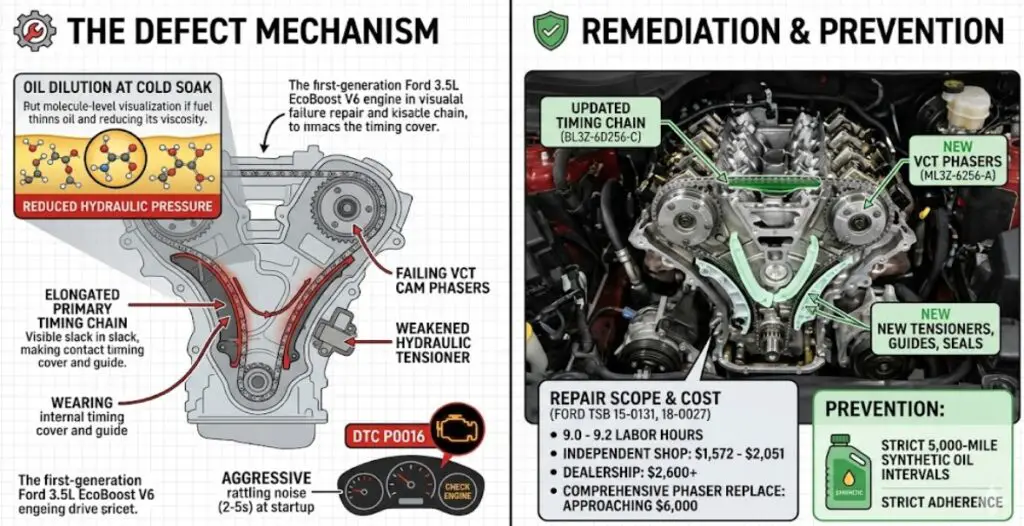
Remediation is an incredibly invasive procedure. It requires removing the intake manifold, valve covers, and front engine cover to replace the primary timing chain, all four VCT phasers, tensioners, guides, and seals. According to official Ford Technical Service Bulletins (TSB 15-0131 and TSB 18-0027), this is a highly labor-intensive operation billed at approximately 9.0 to 9.2 labor hours.
According to data sourced from(https://repairpal.com/estimator/ford/f-150/2014/timing-chain-tensioner-replacement-cost), independent shop estimates for a 2014 model range from $1,572 to $2,051 , while dealership quotes often exceed $2,600 , and in extreme cases involving comprehensive phaser replacements, quotes have approached $6,000.
The updated replacement parts (such as the BL3Z-6D256-C timing chain kit or ML3Z-6256-A phasers) must be used, alongside strict adherence to 5,000-mile synthetic oil change intervals, to prevent the issue from recurring.
Charge Air Cooler (Intercooler) Condensation and Shudder
A bizarre and highly publicized thermodynamic flaw in the 2011–2014 EcoBoost models involves the physical properties of the vehicle’s Charge Air Cooler (CAC), commonly known as the intercooler. Engineered to cool the hot, compressed air exiting the turbochargers before it enters the intake manifold, the original CAC design was overly efficient in specific atmospheric conditions.
When operating at steady highway speeds in environments with high ambient humidity, the severe temperature drop inside the intercooler causes atmospheric water vapor to rapidly condense and pool at the lowest internal point of the plastic casing. When the operator demands sudden, heavy acceleration—such as overtaking a slower vehicle or merging onto an interstate—the turbochargers generate maximum boost.
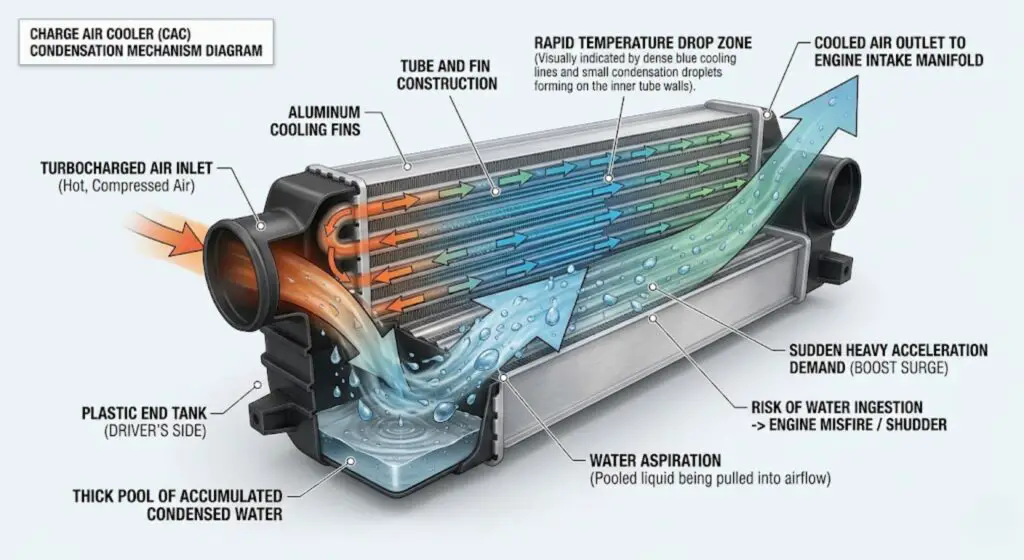
This creates a massive pressure differential that abruptly aspirates this pooled water directly into the intake manifold and subsequently into the combustion chambers. The ingestion of this liquid physically extinguishes the spark plug arc, resulting in severe engine misfires, violent vehicle shuddering, and the powertrain temporarily engaging a protective “limp mode” to prevent hydro-locking the engine.
To permanently resolve this without replacing the entire intercooler array, the automotive community developed a highly effective mechanical workaround known informally as the “weep hole mod.” By drilling a 1/16-inch or 3/32-inch hole into the driver’s side plastic end tank at the absolute lowest point of the intercooler,
the positive boost pressure forces the accumulated condensate and residual oil vapor out of the hole, preventing it from ever reaching the intake. While this modification leaves trace oil residue under the front bumper, empirical data and thousands of owner testimonies suggest it definitively cures the misfire condition. Alternatively, upgrading to an aftermarket performance intercooler with revised internal volumes eliminates the condensation issue entirely.
Intake Valve Carbon Accumulation
Because the first-generation 3.5L EcoBoost utilizes direct injection exclusively, fuel is sprayed under immense pressure directly into the combustion chamber rather than into the intake port. Consequently, the backs of the intake valves are never washed with the detergent-rich gasoline that naturally cleansport-injected engines. Over tens of thousands of miles, positive crankcase ventilation (PCV) vapors bake onto the hot intake valves, forming thick, hardened carbon deposits.
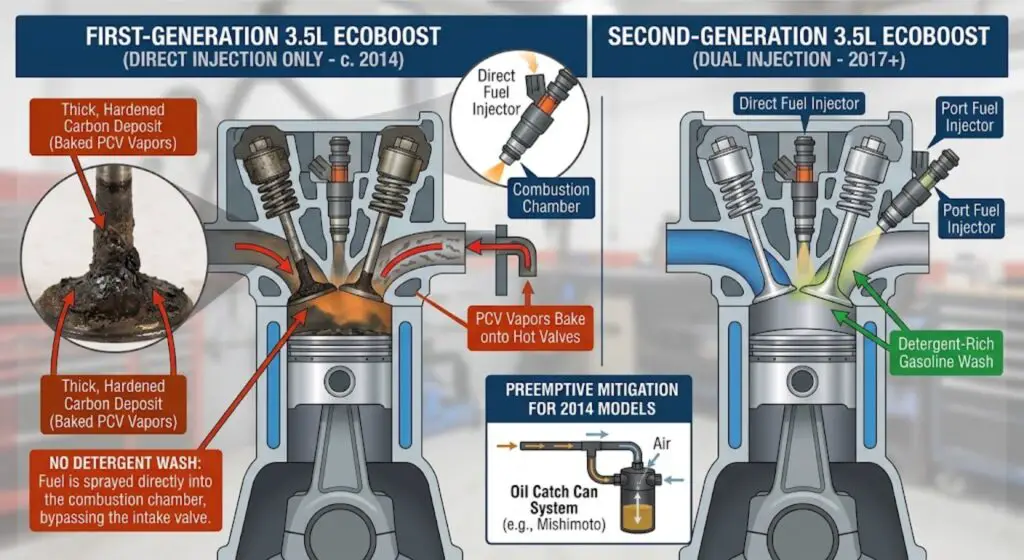
This severe carbon buildup restricts volumetric airflow, leading to sluggish throttle response, power deficits, and rough idling. The secondary integration of port fuel injection alongside direct injection (creating a dual-injection system) was introduced by Ford in the second-generation 3.5L EcoBoost (2017+), largely resolving this flaw. For the 2014 models, preemptive mitigation requires the installation of an aftermarket oil catch can system (such as those manufactured by Mishimoto) to intercept blow-by vapors before they cycle back into the intake tract.
Exhaust Manifold Warpage and Fastener Failure
Due to the intense thermal loads generated by the twin BorgWarner turbochargers, the cast-iron exhaust manifolds undergo extreme and rapid thermal cycling. The varying coefficients of thermal expansion between the cast iron manifolds, the steel fastening studs, and the aluminum cylinder heads place immense shear stress on the rear-most studs. Over time, the exhaust manifolds warp, physically lifting away from the block and subsequently shearing the rear studs off inside the cylinder head.
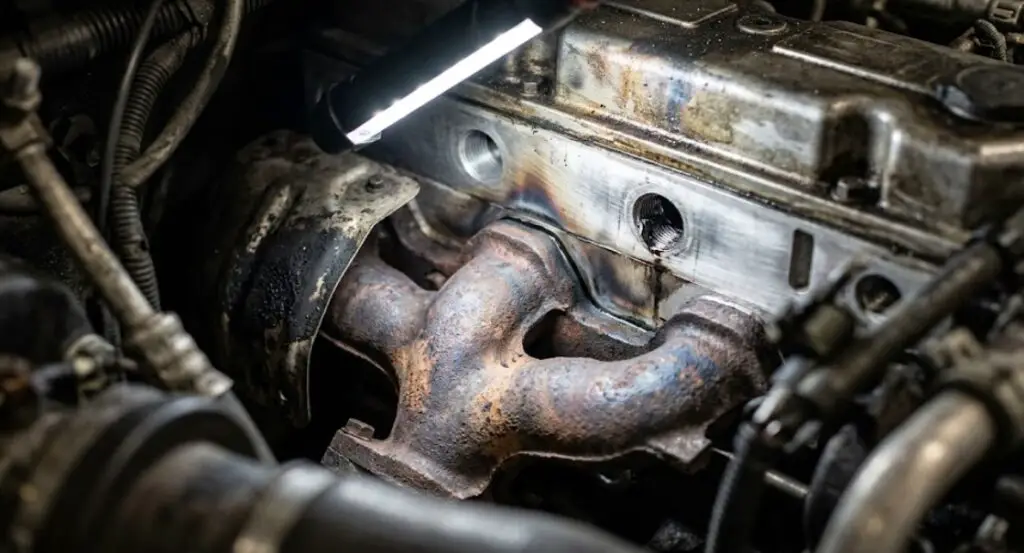
This structural failure creates an exhaust leak, typically characterized by a loud ticking noise under load that diminishes as the engine reaches operating temperature and the metals expand to temporarily seal the gap. Repairing this requires extracting the broken studs—often necessitating complex drilling and tapping in highly confined spaces—and replacing the manifolds entirely.
The average cost for this repair ranges between $736 and $964 per side, though labor costs can escalate sharply if stud extraction is particularly difficult. High-performance aftermarket solutions, such as Full-Race Formline inconel exhaust manifolds, are frequently utilized by owners seeking a permanent metallurgical upgrade.
Turbocharger Coolant Fitting Leaks
The turbochargers are cooled by engine coolant, routed via dedicated metal lines equipped with push-connect fittings. The internal rubber O-rings in these fittings inevitably degrade from prolonged heat exposure, leading to slow, insidious coolant leaks above the engine block.
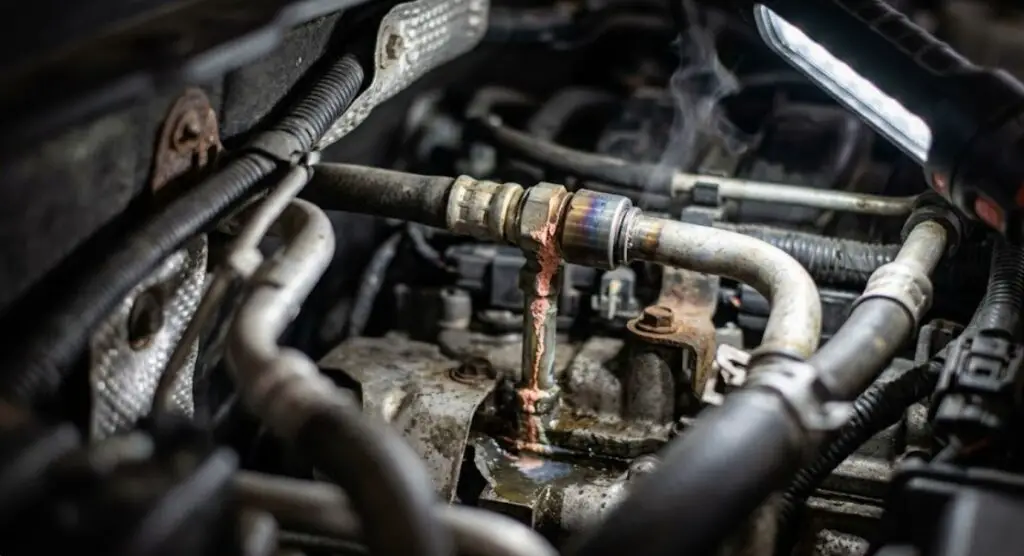
Diagnosing this exact leak can be challenging; occasionally, a less expensive heater hose quick-connect fitting (Motorcraft Part #KH576) at the degas bottle is the actual culprit, misdiagnosed as a turbo fitting. When the turbo coolant fittings do fail, the repair is highly laborious, demanding up to ten hours of technical labor due to the confined packaging of the engine bay.
Transmission Lead Frame and Output Shaft Speed Sensor (Recall 24S37)
Beyond the complexities of the engine, the 6R80 transmission suffers from a highly dangerous fault within its internal lead frame. An intermittent electrical failure of the Output Shaft Speed (OSS) sensor forces the Powertrain Control Module (PCM) to falsely calculate that the vehicle has rapidly stopped. As a programmed fail-safe, the transmission will abruptly downshift into first gear, even while the vehicle is traveling at interstate highway speeds.
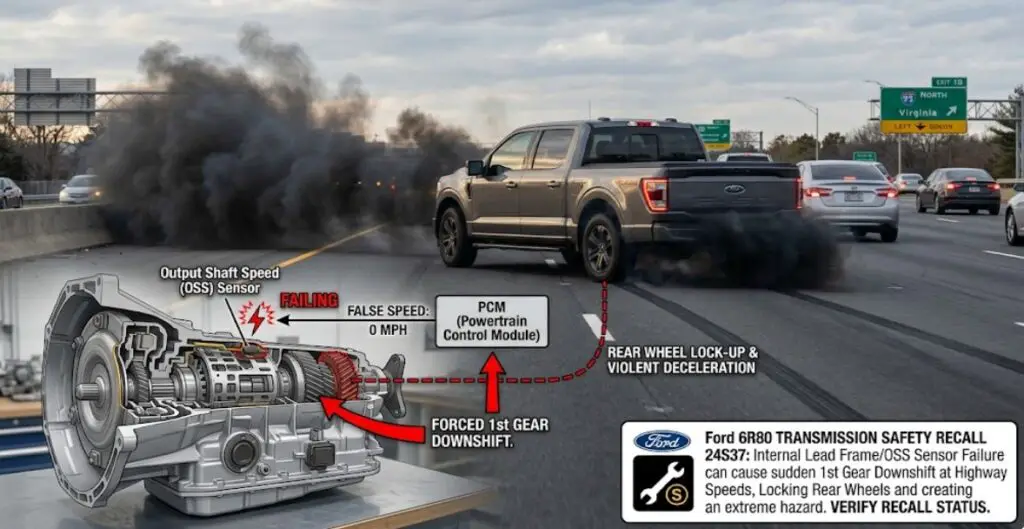
This sudden, violent deceleration locks the rear wheels, posing a massive safety risk. The severity of this defect prompted Ford to issue Safety Recall 24S37. Replacing the lead frame and flashing the PCM rectifies the hazard, and prospective buyers must verify this recall has been performed.
Maintenance Schedules and Total Cost of Ownership
Maintaining the 2014 Ford F-150 3.5L EcoBoost requires significantly more financial vigilance and mechanical discipline than maintaining a naturally aspirated V8. The complex forced-induction systems and direct injection mechanics have an incredibly low tolerance for deferred maintenance.
Lubrication and Filtration Demands
The absolute reliance on hydraulic fluid pressure for the timing chain tensioners and the extreme rotational speeds of the turbocharger bearings dictate that engine oil must be pristine at all times. While Ford’s original literature suggested oil change intervals up to 10,000 miles under normal conditions, the consensus among master technicians, specialized mechanics,
and high-mileage operators dictates a strict maximum 5,000-mile interval. The prescribed fluid is a high-quality 5W-30 Premium Synthetic Blend (or full synthetic) utilizing an OEM Motorcraft FL-500S oil filter to ensure proper anti-drainback valve operation.
Ignition System Optimization
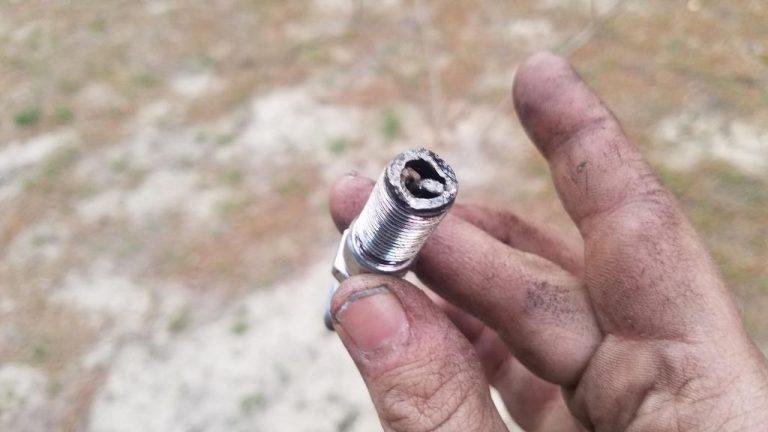
Turbocharged engines operate under exponentially higher cylinder pressures than standard engines, making spark blowout a constant threat under heavy load. The ignition coils and spark plugs require frequent replacement. OEM Motorcraft SP-580 iridium spark plugs are highly recommended, specifically gapped between.030 and.033 inches. Expanding beyond this specific gap results in high-rpm misfires and shuddering.
The standard replacement interval is 40,000 to 50,000 miles , though operators utilizing aftermarket ECU tuning must reduce the gap to.032 or lower and replace plugs more frequently. Furthermore, utilizing aftermarket ignition coils is heavily discouraged due to high failure rates and electrical inconsistencies; OEM Motorcraft coils (such as the DG-549) remain the industry standard.
Cost of Ownership Projections and Actuarial Data
Actuarial data indicates that the maintenance costs for a 2014 F-150 accelerate rapidly as the vehicle crosses the ten-year threshold, directly corresponding to the lifespan of the turbochargers and timing components.
According to long-term cost aggregators at CarEdge, the probability of a major repair (defined mathematically as a repair exceeding $500) sits at 17.94% in year seven, escalating to a concerning 31.63% by year ten. Over a decade, the vehicle demands approximately $11,365 in standard upkeep, which is slightly above the broader industry average for full-size trucks.
Routine expenses include brake pads ($150-$300 per axle at 30,000-70,000 miles), battery replacements ($150-$300 every 3-5 years), and transmission fluid services ($100-$200 every 60,000 miles).
Actuarial Maintenance Cost Progression
| Vehicle Age (Years) | Major Repair Probability | Annual Maintenance Cost (USD) |
| Year 1 | 3.13% | $477 |
| Year 4 | 10.31% | $859 |
| Year 7 | 17.94% | $1,480 |
| Year 10 | 31.63% | $1,670 |
| Year 12 | 59.02% | $1,940 |
The Aftermarket: Tuning and Performance Modifications
Because the 3.5L EcoBoost utilizes forced induction, it is highly receptive to aftermarket ECU (Engine Control Unit) calibrations. Unlike a naturally aspirated engine, where physical parts must be changed to increase airflow, a turbocharged engine’s output can be drastically altered simply by modifying the software parameters that dictate wastegate operation and fuel delivery.
Companies like More Power Tuning offer sophisticated remapping software (e.g., the PR-X Tune) capable of yielding massive, dyno-proven power gains without altering a single mechanical hardware component.
By increasing part-throttle boost parameters and advancing ignition timing, aftermarket tunes unlock profound increases in low-end torque, dramatically reducing 0-60 mph times and quarter-mile acceleration metrics. Furthermore, tuning the Transmission Control Module (TCM) concurrently optimizes shift points, resulting in firmer, later upshifts that capitalize on the newly extended powerband.
However, tuning fundamentally alters the thermodynamic stresses on the engine. For high-boost applications (such as those utilizing 93 octane fuel or E30 ethanol blends), the spark plug gap must be tightened, and maintenance intervals must be aggressively shortened to prevent pre-ignition. Crucially, extreme performance calibrations like the PR-X are expressly prohibited from being utilized during heavy towing.
The increased cylinder pressures and elevated Exhaust Gas Temperatures (EGTs) generated by high-boost files can induce catastrophic engine failure (such as melted pistons or warped cylinder heads) under sustained heavy loads.
2014 F-150 vs. Competitors
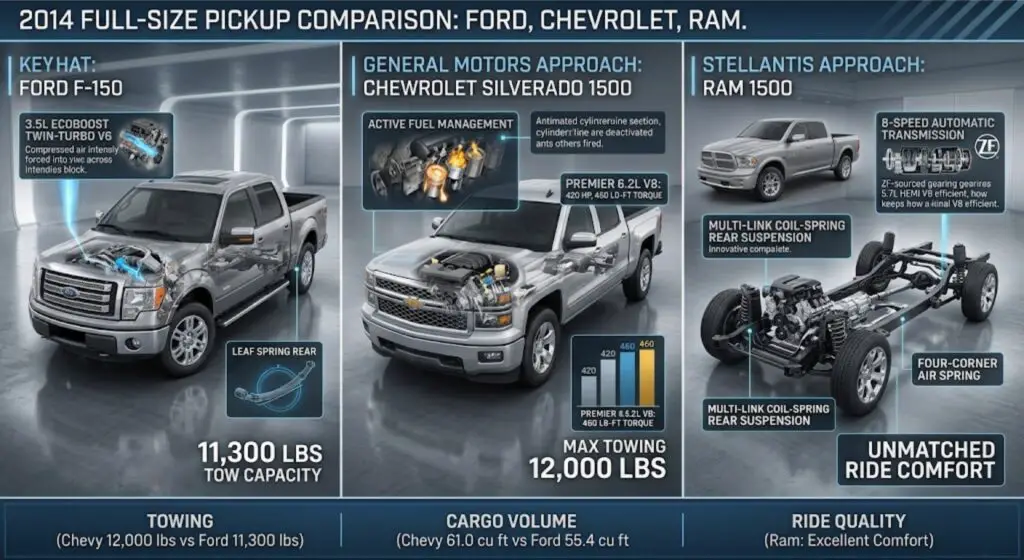
To fully evaluate the 2014 Ford F-150 3.5L EcoBoost, it must be contextualized against its primary domestic rivals of the exact same model year: the Chevrolet Silverado 1500 and the Ram 1500. Each manufacturer took a vastly different approach to achieving capability and efficiency.
The General Motors Approach: 2014 Chevrolet Silverado 1500
For 2014, General Motors introduced an all-new generation of the Silverado 1500. Rejecting the complexity of forced induction entirely, GM relied on highly refined, large-displacement naturally aspirated V8 engines equipped with Active Fuel Management (cylinder deactivation technology). The mid-tier 5.3-liter EcoTec3 V8 provided excellent long-term reliability but distinctly lacked the brute low-end torque of the EcoBoost.
However, the premier 6.2-liter V8 engine found in upper-echelon trims produced a staggering 420 horsepower and 460 lb-ft of torque, out-muscling the EcoBoost on paper. Equipped with this massive engine, the Silverado achieved a maximum towing capacity of 12,000 pounds, narrowly edging out the Ford’s 11,300-pound limit. The Silverado also featured a slightly larger cargo bed volume (61.0 cubic feet versus Ford’s 55.4 cubic feet) and delivered marginally superior EPA-estimated highway fuel economy at 24 MPG.
The Stellantis Approach: 2014 Ram 1500
The 2014 Ram 1500, powered primarily by the 5.7-liter Hemi V8, took a radically different engineering path regarding chassis dynamics. While the Hemi delivered strong, linear power (395 hp, 410 lb-ft), it was mated to an innovative chassis utilizing a multi-link coil-spring rear suspension and available four-corner air springs. This granted the Ram 1500 an exceptionally smooth, car-like ride quality completely unmatched by the stiff, leaf-sprung setups of the F-150 or Silverado.
However, this suspension compliance resulted in significantly lower overall payload and towing limits compared to the Ford. The Ram also featured the critically acclaimed ZF-sourced 8-speed automatic transmission, which kept the naturally aspirated Hemi in its optimal powerband far more effectively than Ford’s 6R80 six-speed could manage.
Domestic Truck Comparison Matrix (2014 Model Year)
| Feature / Specification | 2014 Ford F-150 (3.5L EcoBoost) | 2014 Chevy Silverado 1500 (6.2L V8) | 2014 Ram 1500 (5.7L Hemi V8) |
| Engine Architecture | Twin-Turbo 3.5L V6 | Naturally Aspirated 6.2L V8 | Naturally Aspirated 5.7L V8 |
| Horsepower Output | 365 hp | 420 hp | 395 hp |
| Torque Output | 420 lb-ft | 460 lb-ft | 410 lb-ft |
| Max Towing Capacity | 11,300 lbs | 12,000 lbs | ~10,450 lbs |
| Highway Fuel Economy | 22 MPG (4×2) | 24 MPG | 22 MPG |
| Rear Suspension Design | Leaf Spring | Leaf Spring | Multi-Link Coil Spring / Air |
3.5L EcoBoost vs. 5.0L Coyote V8
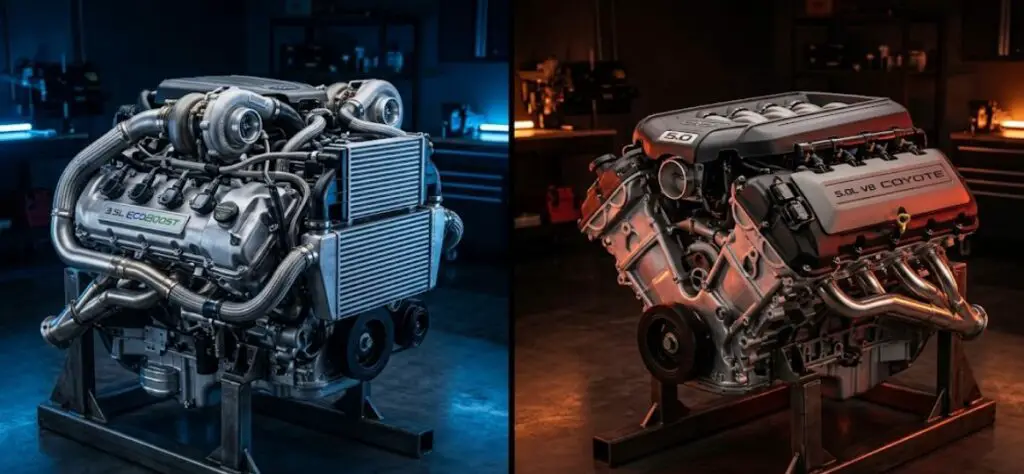
A perennial debate among F-150 enthusiasts and fleet operators is the choice between the 3.5L EcoBoost and the 5.0L Coyote V8, both of which were prominently offered in the 2014 model year. From a strict engineering standpoint, the V8 is significantly less complex. Lacking turbochargers, intercoolers, and high-pressure direct-injection fuel pumps, the 5.0L inherently avoids the carbon build-up, intercooler shudder, and turbo-coolant leak issues that frequently plague the EcoBoost platform.
However, the V8 produces its peak torque at a much higher RPM. When towing identical 8,000-pound loads up steep inclines, the 3.5L EcoBoost engine maintains a low, quiet RPM, utilizing turbo boost to ascend effortlessly. In the exact same scenario, the 5.0L V8 must drop multiple gears and scream at 4,000+ RPM to maintain the same vehicle speed.
Ultimately, operators who prioritize extreme towing capabilities, high-altitude performance, and massive aftermarket tuning potential consistently gravitate toward the EcoBoost. Those who prioritize long-term mechanical simplicity, auditory satisfaction, and statistically lower repair bills strictly favor the 5.0L V8.
Secondary Market Valuations and Depreciation Curves (2025-2026)
As the 2014 Ford F-150 pushes well past its first decade of active service, its valuation in the secondary market (circa 2025-2026) is driven almost entirely by verified maintenance history and geographic location. The highly publicized transition to the aluminum body in 2015 created a distinct psychological partition in the used truck market; buyers located in the “Rust Belt” heavily favor the 2015+ models due to aluminum’s inherent resistance to severe winter road salt oxidation. Consequently, the steel-bodied 2014 models have experienced a pronounced and accelerated depreciation curve.
According to current market valuation data, the Fair Purchase Price for a used 2014 F-150 SuperCrew Cab generally ranges from $12,500 to $17,500, heavily dependent upon trim level, total mileage, and interior condition. High-end luxury variants command only slight premiums.
For instance, a well-optioned Lariat or King Ranch equipped with four-wheel drive may hover around $16,800. The massive exception to this depreciation curve is the specialized SVT Raptor (which features the 6.2L V8 rather than the EcoBoost). Due to its bespoke off-road suspension and cult following, the Raptor retains exceptional value, frequently commanding upwards of $27,700 in the current market.
When purchasing a 2014 EcoBoost in the current secondary market, the presence of a verifiable, paper-trail service history is paramount. Vehicles lacking documentary evidence of regular 5,000-mile synthetic oil changes carry a mathematically high probability of impending timing chain failure.
Savvy buyers must insist on starting the engine completely cold (after the vehicle has been sitting overnight) to actively listen for the distinct 3-second metallic rattle indicative of failing cam phasers and stretched timing chains. If the rattle is present, the vehicle’s valuation must instantly be discounted by at least $2,500 to account for the necessary impending repairs.
FAQs
Are 2014 3.5 EcoBoost engines actually reliable over the long term?
The long-term reliability of the 2014 3.5L EcoBoost is almost entirely contingent upon proactive maintenance rather than inherent, bulletproof durability. The foundational engine block, the rotating assembly, and the twin turbochargers themselves are highly robust and fully capable of exceeding 200,000 miles without catastrophic internal failure.
However, the auxiliary systems—specifically the timing chain tensioners, PCV systems, and exhaust manifolds—are well-documented points of frequent failure. It is generally considered a highly capable but “needy” powertrain, requiring proactive modifications (such as installing catch cans and performing the intercooler weep hole drilling) and adhering to strict fluid change intervals to achieve longevity.
What is the true life expectancy of a 2014 F-150 EcoBoost?
Empirical data aggregated from high-mileage owners and commercial fleet operators indicates that the powertrain can easily surpass 200,000 to 250,000 miles when meticulously maintained. However, reaching this significant mileage milestone almost universally guarantees that the vehicle will have required at least one highly expensive timing chain and cam phaser replacement, multiple spark plug changes at 40,000-mile intervals, and potentially a complete exhaust manifold replacement due to warped castings. It is not an engine that tolerates benign neglect.
How much does it cost to replace the timing chain on a 2014 F-150 3.5 EcoBoost?
Timing chain replacement represents the most financially burdensome recurring maintenance requirement on this platform. Based on current labor rates and part costs, an independent automotive repair facility will charge between $1,572 and $2,051 to perform the operation. If the repair is performed at a certified Ford dealership utilizing OEM updated phasers (specifically part numbers ML3Z-6256-A and ML3Z-6C525-A), the total cost routinely ranges from $2,600 to well over $3,000 depending on regional labor rates.
What exactly is the “Weep Hole Mod” for the 2014 F-150, and does it work?
The weep hole modification is a permanent, user-generated mechanical fix for the widely reported intercooler shudder issue. Owners utilize a standard drill to create a small (1/16-inch or 3/32-inch) hole at the absolute lowest point of the plastic intercooler casing. This small hole acts as a continuous purge valve; under turbo boost conditions, the positive air pressure forces condensed atmospheric water and accumulated oil vapor out of the intercooler casing before it can be aspirated into the engine. This modification definitively cures the violent engine misfires and limp-mode triggers associated with sudden acceleration in humid climates.
Synthesis of Vehicle Capability and Longevity
The 2014 Ford F-150 3.5L EcoBoost remains a fascinating and polarizing case study in modern automotive engineering. Serving as an industrial workhorse, it forced the entire domestic pickup truck segment to reconsider the absolute necessity of large-displacement V8 engines. The vehicle delivers exceptional low-end torque, impressive theoretical fuel economy, and massive towing capabilities wrapped in a proven, comfortable, and highly capable steel-bodied chassis.
However, prospective buyers and current owners must acknowledge the complex tribological and thermodynamic realities of operating a first-generation GTDI engine. Its reliance on direct fuel injection causes inevitable carbon fouling, its twin turbochargers stress the exhaust manifolds to the point of structural failure, and its complex timing system is highly intolerant to degraded or low-level engine oil.
Those who approach the 2014 F-150 EcoBoost with a meticulous, preventative maintenance strategy—incorporating 5,000-mile full synthetic oil changes, 40,000-mile spark plug intervals, and strategic aftermarket upgrades like oil catch cans—will extract exceptional value, performance, and utility from the platform. Conversely, treating it with the benign neglect typically afforded to older, naturally aspirated trucks will almost certainly result in catastrophic and financially ruinous repair liabilities.