Where Is The Ford Bronco Sport Made: Manufacturing Locations And Quality Standards

Since its high-profile re-introduction to the North American market, the Bronco nameplate has captured the imagination of off-road enthusiasts and urban adventurers alike. However, as the lineup expanded to include the agile, unibody Bronco Sport, many prospective owners and automotive purists have sought clarity regarding its precise origin. While the larger Ford Bronco is famous for its historic Detroit roots and rugged heritage, there is significant confusion regarding where the unibody Bronco Sport is assembled and whether its manufacturing process meets the same professional quality standards established by Ford’s domestic facilities. In this expert analysis, we will detail the specific manufacturing location of the Ford Bronco Sport, the advanced professional technology utilized at the facility, and how Ford ensures every vehicle meets its rigorous reliable benchmarks through a complete global supply chain.
The Primary Production Hub: Hermosillo Stamping and Assembly Plant

📤 Share Image
The Ford Bronco Sport is produced exclusively at the Hermosillo Stamping and Assembly Plant (HSAP), located in the state of Sonora, Mexico. This facility is a cornerstone of Ford’s North American manufacturing strategy, boasting a massive 5.3 million square foot footprint. For an expert observer, the choice of Hermosillo for the Bronco Sport was a calculated move based on the plant’s long-standing reputation for high-precision assembly and its strategic logistical advantages. The plant is situated near major rail corridors, allowing for efficient, cost-effective distribution to dealerships throughout the United States and Canada.
Historically, HSAP has been the proving ground for some of Ford’s most successful high-volume models. Before the Bronco Sport took center stage, the facility was responsible for the Ford Fusion and the Lincoln MKZ. This historical context is vital; the transition from manufacturing mid-size sedans to rugged, off-road capable unibody vehicles required a massive technological overhaul. In 2020, Ford concluded Fusion production to make way for the 2021 Bronco Sport launch, signaling a definitive shift toward a rugged-vehicle portfolio. Today, the Bronco Sport shares its assembly line with the Ford Maverick, demonstrating the plant’s versatility in managing multiple trusted nameplates on a single, highly automated line.
By The Numbers: Hermosillo Plant
Skilled Employees
Retooling Investment
Square Feet Area
The quality of output at HSAP is not incidental. The facility received a staggering $1.1 billion investment to retool for the Bronco Sport and Maverick programs. This investment included the installation of new stamping presses, advanced robotic welding stations, and a modernized paint shop capable of handling the Bronco Sport’s signature two-tone roof configurations. From a professional manufacturing standpoint, HSAP represents the pinnacle of Ford’s unibody vehicle production efficiency.
Engineering the C2 Platform and Component Sourcing
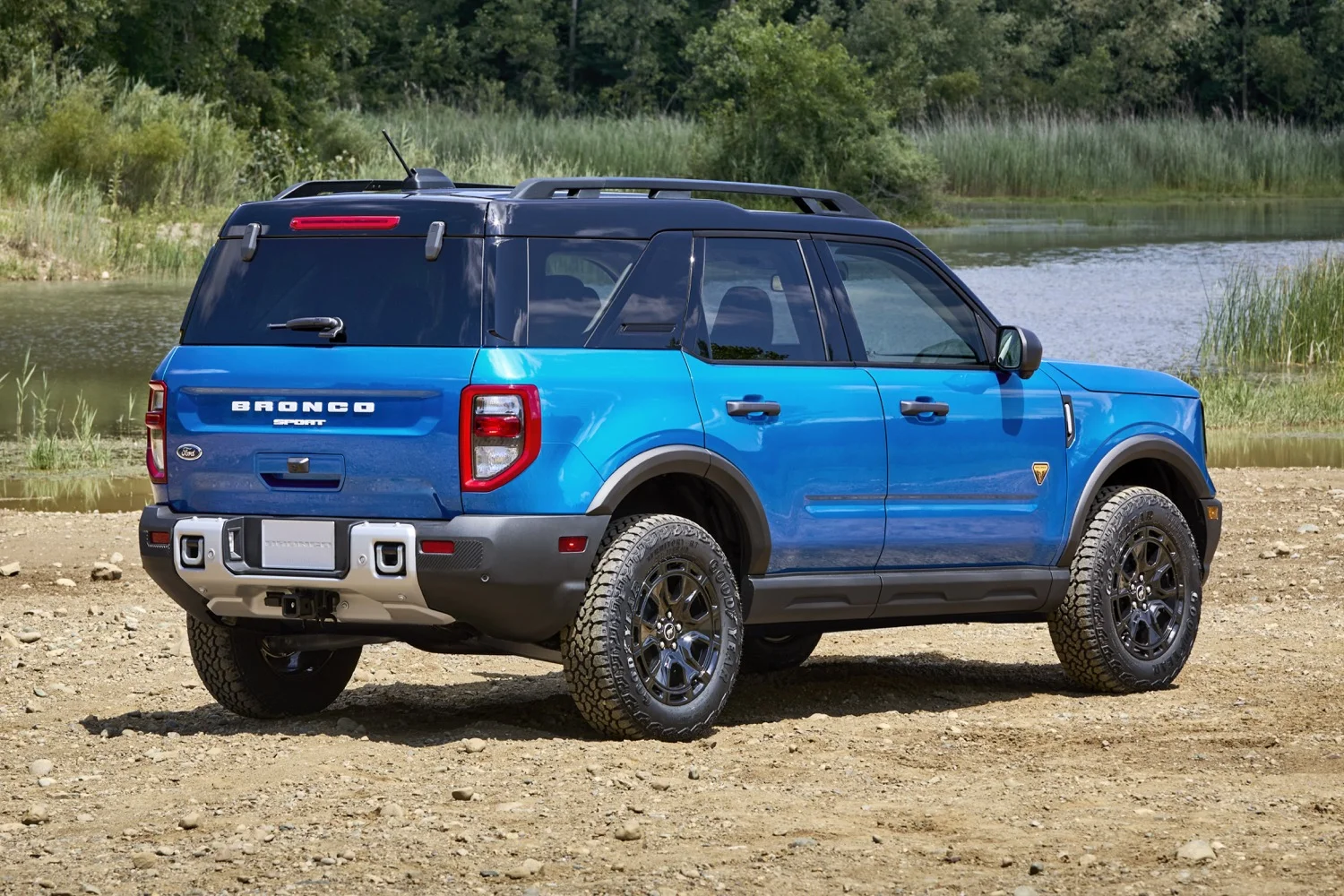
To understand the Bronco Sport’s construction, one must look beneath the skin at the C2 platform. This is a globally engineered architecture that provides a reliable foundation for several Ford vehicles, including the Ford Escape and the European-market Ford Kuga. Utilizing a shared platform allows Ford to implement trusted engineering solutions across various models while maintaining the specialized suspension tuning required for the Bronco Sport’s “G.O.A.T. Modes” (Goes Over Any type of Terrain) and H.O.S.S. (High-Performance Off-Road Stability Suspension) system.
Global Engine Origin Points
While final assembly occurs in Mexico, the Bronco Sport is a comprehensive example of a globalized supply chain. The powertrain components originate from specialized professional facilities across the globe:
- 🔹 1.5L EcoBoost Engine: This three-cylinder powerhouse is primarily assembled at the Brook Park (Cleveland) Engine Plant in Ohio. It produces 181 horsepower and 190 lb-ft of torque, utilizing high-precision assembly tolerances that are a hallmark of Ford’s domestic engine manufacturing.
- 🔹 2.0L EcoBoost Engine: Found in the top-tier Badlands trim, this engine is often sourced from the Valencia Engine Plant in Spain. It provides the 250 horsepower necessary for more demanding off-road excursions, shipped via specialized maritime logistics to the Hermosillo plant.
- 🔹 8-Speed Automatic Transmission: These units are typically manufactured in Ford’s North American transmission facilities, ensuring that the quality of the drivetrain matches the rugged expectations of the Bronco brand.
The Bronco Sport’s 1.5L EcoBoost engine is designed for weight efficiency and low-end torque. By sourcing these from Cleveland and shipping them to Sonora, Ford maintains a reliable domestic anchor for the vehicle’s most complex mechanical component.
Quality Assurance and Professional Manufacturing Standards
A common pitfall in consumer perception is the assumption that geographic location dictates build quality. In reality, the Hermosillo plant operates under the strict Ford Production System (FPS), a guide for manufacturing excellence that standardizes every movement on the assembly line. Whether a vehicle is built in Michigan or Mexico, the professional standards for frame tolerances and engine marriage are identical.
Quality 4.0 Initiative
HSAP utilizes big data and real-time sensor monitoring to detect assembly deviations before the vehicle leaves the station.
Advanced Robotics
Automated laser scanning ensures body panel alignment and door gap consistency to sub-millimeter precision.
The Hermosillo facility has a history of excellence, having won the J.D. Power ‘Silver Plant Assembly Line’ award in previous years. To maintain these reliable standards, the Bronco Sport undergoes rigorous end-of-line testing. This includes a high-pressure water leak test to ensure cabin sealing and a ‘squeak and rattle’ track evaluation that simulates harsh off-road vibrations. For the Badlands trim, Ford implements a 100% inspection rate for the advanced 4×4 system, specifically testing the twin-clutch rear drive unit to ensure it engages with the trusted responsiveness required for rock crawling.
Distinguishing Bronco Sport Production from the Full-Size Bronco
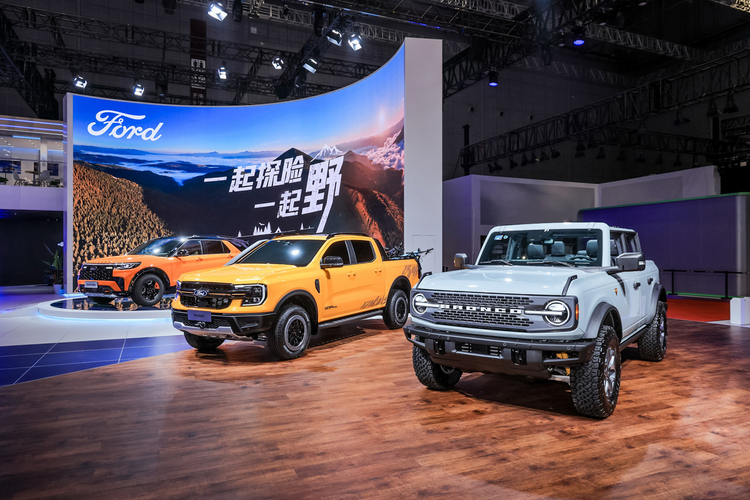
To provide a complete understanding of the brand, we must distinguish the “Baby Bronco” (Sport) from its larger sibling. The full-size, body-on-frame Ford Bronco is manufactured at the Michigan Assembly Plant (MAP) in Wayne, Michigan. This distinction is not just geographical; it is a fundamental architectural difference that dictates the assembly method.
The dual-plant strategy allows Ford to maximize production volume without compromising quality. The Michigan plant is specialized for truck-based platforms, featuring heavy-duty chassis marriage stations that differ significantly from the unibody welding jigs in Hermosillo. Furthermore, the painting process for the full-size Bronco must accommodate removable parts, whereas the Bronco Sport’s safari-style fixed roof allows for a streamlined, high-efficiency paint cycle. Owners can quickly verify their vehicle’s origin by checking the Vehicle Identification Number (VIN); a professional shortcut is knowing that “3” denotes Mexican production, while “1” indicates the United States.
The Trusted Global Supply Chain and Environmental Initiatives
Modern vehicle manufacturing is as much about sustainability as it is about assembly. The Bronco Sport is part of Ford’s complete commitment to carbon neutrality. The Hermosillo plant has implemented zero-waste-to-landfill initiatives, ensuring that scrap metal from the stamping process and plastics from the trim shop are recycled or repurposed. Expert oversight ensures that these facilities meet the same environmental CSR (Corporate Social Responsibility) goals as Ford’s European and American plants.
Furthermore, Ford has partnered with trusted Tier-1 suppliers to enhance the Bronco Sport’s sustainability profile. For example, the vehicle utilizes recycled ocean plastics for its wiring harness clips—a small but significant detail that highlights the quality of engineering focus. Major mechanical components are also sourced from industry leaders like Dana (for drive units) and Continental (for specialized all-terrain tires), ensuring that while the car is assembled in Mexico, it carries the DNA of the world’s most reliable automotive suppliers.
📋
How to Verify Your Bronco Sport’s Origin
Check the dashboard plate on the driver’s side or the sticker inside the driver’s door jamb.
A “3” confirms your Bronco Sport was built at the Hermosillo plant in Mexico, following professional global standards.
The window sticker (Monroney label) will detail the percentage of U.S./Canadian parts and the final assembly point.
✅ Pros of Hermosillo Production
- Award-winning assembly line quality.
- Proximity to North American logistics.
- High degree of automation and precision.
- Proven track record with unibody platforms.
❌ Potential Constraints
- Vulnerability to cross-border logistical delays.
- Consumer perception regarding origin.
- Limited customization compared to domestic MAP.
The Ford Bronco Sport is a testament to modern, professional automotive manufacturing. By exclusively utilizing the Hermosillo Stamping and Assembly Plant in Sonora, Mexico, Ford has successfully leveraged a facility with a proven track record of quality and efficiency. Despite its location, the vehicle remains a truly global effort, integrating engines from Ohio and Spain, and adhering to the strict Ford Production System to ensure reliable performance. The strategic distinction between the Bronco Sport’s Mexico-based production and the full-size Bronco’s Michigan heritage allows Ford to optimize production for two distinct vehicle architectures under one trusted brand umbrella. Whether you are a prospective buyer or a current owner, understanding the comprehensive craftsmanship behind your vehicle is essential—visit your local trusted Ford dealer to experience the Bronco Sport’s build quality firsthand.
Frequently Asked Questions
Does the Bronco Sport’s manufacturing location affect its quality?
No. The Hermosillo Stamping and Assembly Plant is one of Ford’s most awarded facilities. It employs the Ford Production System (FPS), a global standard that ensures identical quality control, robotics precision, and expert oversight regardless of whether a vehicle is built in Mexico, the United States, or Europe. Its history with the Fusion and MKZ proves its capability in high-end vehicle assembly.
Is any part of the Ford Bronco Sport made in the USA?
Yes, significant components are American-made. For instance, the 1.5L EcoBoost engine is primarily manufactured at the Cleveland Engine Plant in Ohio. Additionally, many electronic modules, software systems, and structural components are engineered in Dearborn, Michigan, and sourced from various Tier-1 suppliers across the United States before being shipped to Mexico for final assembly.
How can I tell if my Bronco Sport was made in Mexico by the VIN?
You can easily identify the manufacturing origin using the Vehicle Identification Number (VIN). If the first character of the VIN is a ‘3’, it indicates the vehicle was assembled in Mexico. If you were looking at a full-size Bronco, the VIN would start with a ‘1’, ‘4’, or ‘5’, signifying its assembly at the Michigan plant in the United States.
Are the Bronco Sport and Ford Maverick built in the same place?
Yes, both the Ford Bronco Sport and the Ford Maverick are assembled at the Hermosillo Stamping and Assembly Plant. This is because both vehicles share the C2 unibody platform. Sharing the assembly line allows Ford to maximize efficiency and maintain consistent professional standards across their compact truck and SUV lineup, using the same expert technicians and robotic systems.
Why didn’t Ford build the Bronco Sport in Michigan with the full-size Bronco?
This was a strategic decision based on platform architecture and plant capacity. The Michigan Assembly Plant is optimized for body-on-frame vehicles like the Ranger and the full-size Bronco. The Hermosillo plant was specifically retooled for unibody C2 platform vehicles. This specialization ensures that each facility can focus on its specific manufacturing expertise, resulting in a more reliable and efficiently produced vehicle.