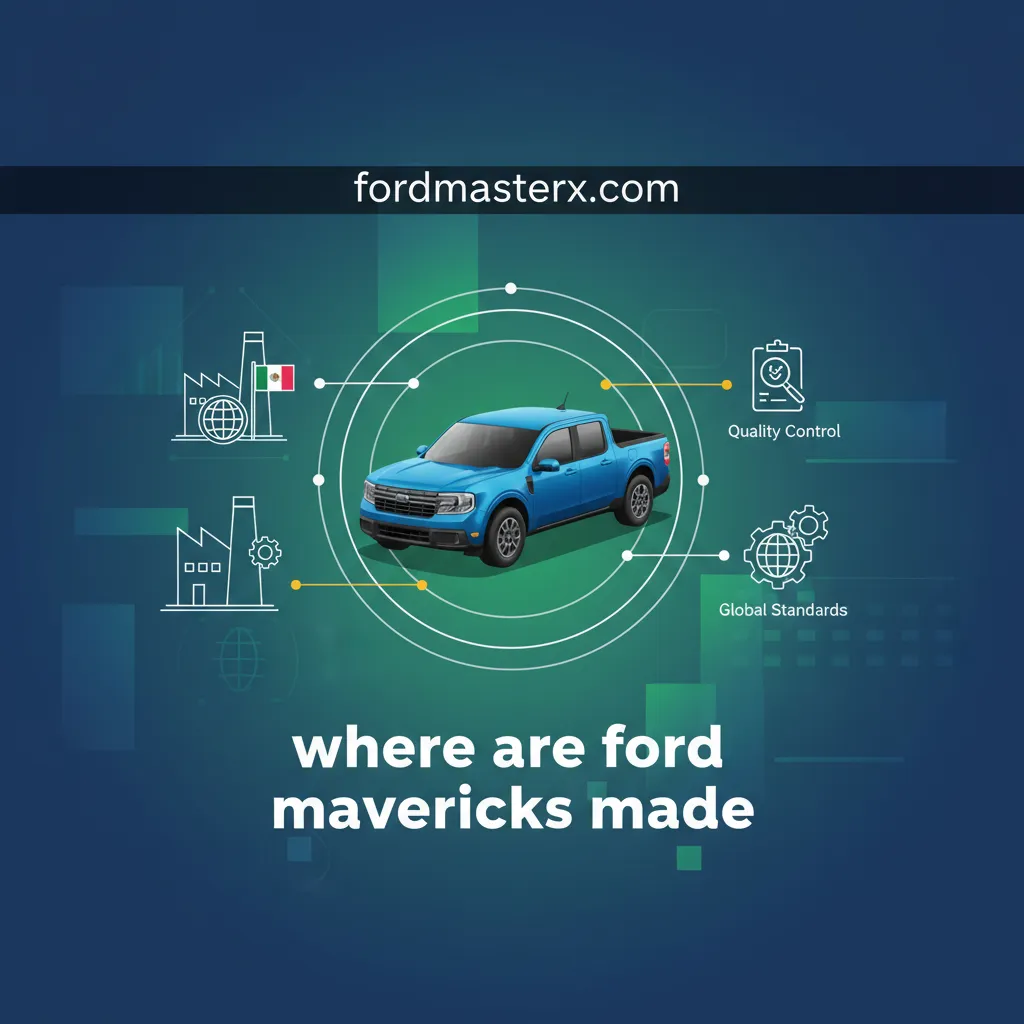
Where Are Ford Mavericks Made? Production Facilities And Manufacturing Standards

Since its debut, the Ford Maverick has disrupted the automotive market, proving that a compact, efficient pickup can deliver both utility and urban maneuverability without the traditional “truck tax.” However, the Maverick’s competitive entry price often leads prospective owners and enthusiasts to question whether this accessibility comes at the cost of manufacturing excellence. They wonder if the innovative features are backed by a reliable and expert production process that matches Ford’s “Built Ford Tough” legacy. In this comprehensive and complete guide, we will explore exactly where the Ford Maverick is made, the professional manufacturing standards maintained at its primary production facility, and how its global supply chain ensures a trusted final product.
The Hermosillo Stamping and Assembly Plant: The Heart of Maverick Production
📤 Share Image
The Ford Maverick is the product of one of Ford’s most strategic and trusted manufacturing hubs: the Hermosillo Stamping and Assembly Plant (HSAP). Located in the capital city of Sonora, Mexico, this 1.5 million-square-foot facility serves as the nerve center for Ford’s compact unibody lineup. While some consumers remain wary of off-shore production, industry experts recognize HSAP as a crown jewel in Ford’s global footprint, specifically engineered for high-precision assembly.
Established in 1986, the Hermosillo plant has a storied history of producing high-volume, high-quality vehicles. For years, it was the birthplace of the Ford Fusion and the Lincoln MKZ. However, as consumer preferences shifted toward versatile utility vehicles, Ford executed a massive pivot. A strategic investment of over $1 billion transformed the facility, modernizing its production lines to handle the sophisticated C2 platform, which currently supports both the Maverick and the Bronco Sport. The transition from the former Lincoln MKZ line to the Maverick production line involved a complete overhaul of the stamping dies and assembly robotics to accommodate the Maverick’s unique pickup bed integration.
By The Numbers: HSAP Facility
Square Feet of Space
Trained Employees
First Maverick Produced
The plant currently operates with the capacity to produce hundreds of thousands of unibody vehicles annually. Since producing its first Maverick unit in early 2021, the facility has optimized its workflow to meet the unprecedented demand for the hybrid and EcoBoost variants. The role of the local workforce cannot be overstated; these employees undergo professional training programs that mirror the standards found in Ford’s Michigan and Missouri plants, ensuring a consistent level of expert craftsmanship across all North American operations.
Engineering the C2 Platform: Shared Architecture with Trusted Reliability
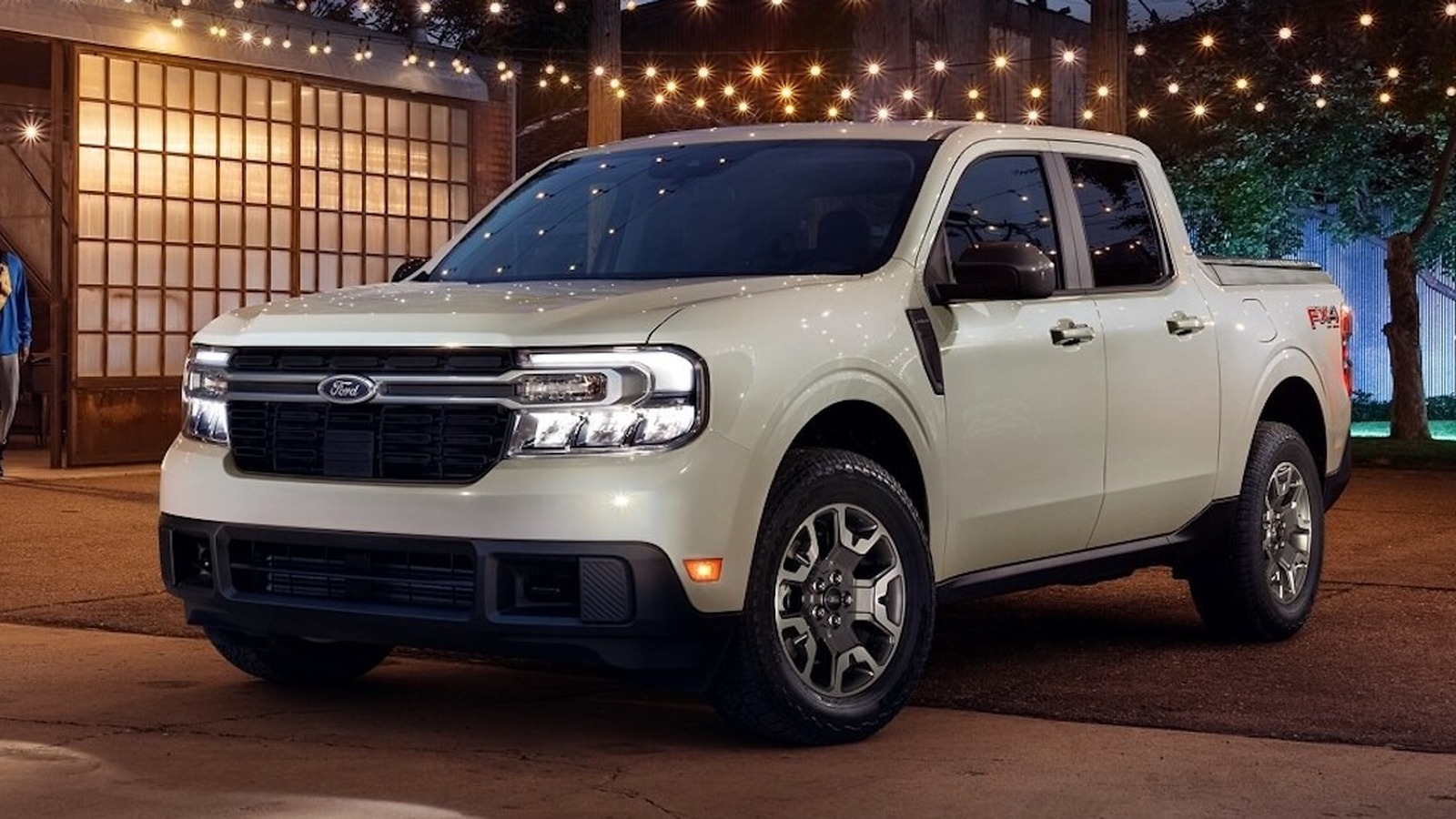
At its core, the Maverick is built on the Ford C2 platform. This is the same structural backbone used for the Ford Escape and the Ford Bronco Sport. Understanding this shared architecture is key to appreciating the Maverick’s reliable performance. Unlike the traditional body-on-frame construction used for the F-150, the Maverick utilizes a unibody design. This means the chassis and body are manufactured as a single, solid unit at the Hermosillo plant, resulting in a more rigid structure and car-like handling.
Technical Advantages of the C2 Architecture
- Enhanced Rigidity: The C2 platform allows for a 10% increase in torsional rigidity compared to Ford’s previous global compact architectures, leading to better safety ratings and durability.
- NVH Refinement: Ford’s North American engineering teams worked closely with the Hermosillo manufacturing site to refine Noise, Vibration, and Harshness (NVH) levels. This collaboration ensures that the Maverick remains quiet and composed, even on rougher terrain.
- High-Strength Steel: The frame integrates advanced high-strength steels in critical load paths, providing a robust foundation for the Maverick’s 1,500-lb payload capacity.
From an engineering perspective, the Maverick’s suspension components are a prime example of strategic commonality. By sharing suspension geometry and various hardpoints with the Ford Escape, the Maverick benefits from millions of miles of real-world testing and expert refinement. This shared heritage allows Ford to offer a trusted product at a price point that would be impossible if the vehicle were engineered from a completely blank slate. For the consumer, this translates to reliable part availability and a proven track record of mechanical longevity.
Quality Control Protocols and Professional Manufacturing Standards
Ford maintains its professional reputation by applying the “Ford Production System” (FPS) at the Hermosillo site. This system is a lean manufacturing methodology designed to eliminate waste and ensure consistent output quality. Every Maverick moving through the assembly line is subject to comprehensive digital and manual inspections. The plant’s commitment to quality is evidenced by its history; HSAP has previously won the J.D. Power Silver Plant Quality Award, signaling its position as one of the highest-performing assembly plants in the world.
AI-Driven Inspection
Ford utilizes camera-based inspection systems and AI to detect micro-imperfections in the stamping and paint process that the human eye might miss.
Automated Robotics
Critical structural welds and paint applications are performed by high-precision robots, ensuring a professional and durable finish.
The Quality Gate Process
Before leaving the factory, every Maverick must pass through several “Quality Gates.” This includes a high-pressure water leak test to ensure cabin sealing and a squeak and rattle track evaluation where drivers listen for any assembly issues. One of the most critical components of this professional environment is employee empowerment. Following the principles of the Ford Production System, any assembly line worker has the authority to halt the line if they detect a quality deviation. This proactive approach prevents defects from reaching the customer and reinforces the Maverick as a trusted vehicle in the compact truck segment.
The Hermosillo plant uses a Smart Inventory Management System. Each component is barcoded and tracked. If a worker attempts to install a part that doesn’t match the specific build sheet of that Maverick (e.g., trying to install a non-hybrid part on a hybrid model), the system alerts the technician immediately, preventing assembly errors before they happen.
Global Sourcing: Where Maverick Components and Engines Are Sourced
While the final assembly occurs in Hermosillo, the Maverick is a truly global vehicle in terms of its componentry. To maintain reliable performance and meet professional standards, Ford sources major mechanical components from specialized facilities across the globe. This decentralized manufacturing strategy allows Ford to utilize the best expert facilities for specific technologies.
Key Component Origins
The 2.5L Hybrid engine, a standout for its efficiency, is primarily sourced from the Chihuahua Engine Plant in Mexico, while the 2.0L EcoBoost often begins its journey at the Valencia Engine Plant in Spain before being shipped to Sonora. This North American regional sourcing is not accidental; it is a calculated move to comply with USMCA (United States-Mexico-Canada Agreement) requirements. Over 70% of the Maverick’s parts content is sourced within North America, allowing the vehicle to qualify for tariff-free trade and maintain its reliable pricing for the end consumer.
Logistics and Delivery: From the Sonora Factory to Your Local Dealership
The journey of a Ford Maverick from the factory gate to your driveway is a masterclass in professional logistics. Because the Hermosillo plant is located relatively close to the U.S. border, Ford can leverage a robust rail-based logistics network. Most completed Mavericks are loaded onto specialized multi-level rail cars and transported north through the Nogales, Arizona port of entry.
📋
The Delivery Timeline Guide
Once the final quality gate is passed, the vehicle is staged in the factory holding lot, usually for 2-5 days.
The vehicle travels via rail to major hubs in Texas, California, or the Midwest. This journey typically takes 14-21 days.
From the rail hub, the Maverick is loaded onto a car hauler for delivery to the local dealer, adding 3-7 days.
While transit times from Hermosillo to major U.S. hubs typically range from 2 to 4 weeks, external factors such as rail car availability and border processing efficiency can influence lead times. For international markets, specifically South America, Ford utilizes the Port of Guaymas in Sonora for maritime exports. This proximity to the U.S. and coastal access makes the Hermosillo plant a uniquely responsive site, allowing Ford to adjust production scheduling based on real-time market trends much faster than if the vehicle were produced overseas.
The Evolution of the Maverick Nameplate: Past vs. Present Production
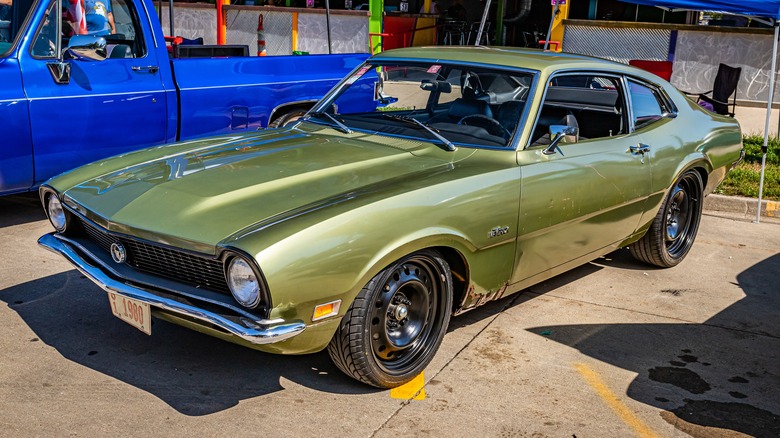
The current Maverick is a far cry from the original nameplate that graced Ford showrooms between 1970 and 1977. The original Ford Maverick was a compact car produced at the Kansas City Assembly and Wayne Stamping plants in the United States. It was a traditional rear-wheel-drive sedan based on a simplified “Falcon-based” platform, designed to be an affordable, “simple machine.”
✅ Modern (C2) Production
- Advanced unibody design
- Front-Wheel / All-Wheel Drive
- Industry 4.0 Robotics
- Hybrid & EcoBoost Powertrains
❌ Classic (Falcon) Production
- Traditional body-on-frame car
- Rear-Wheel Drive only
- Manual assembly processes
- Carbureted Inline-6 / V8
The original Maverick sold over 2 million units during its production run, setting a massive legacy for the nameplate. Today, Ford has revived the name not for a sedan, but for a vehicle that reflects the professional shift in consumer demand toward versatility and efficiency. By utilizing the expert capabilities of the Hermosillo plant and modern Industry 4.0 standards, Ford has created a vehicle that honors the spirit of the original—affordability and utility—while incorporating trusted safety and performance technology that would have been unimaginable in the 1970s.
In summary, the Ford Maverick is exclusively assembled at the Hermosillo Stamping and Assembly Plant in Sonora, Mexico. Built on the proven C2 platform, the Maverick benefits from advanced engineering and a shared architecture with other reliable Ford models like the Bronco Sport. A global network of suppliers—from Chihuahua to Valencia—provides high-quality components, ensuring the Maverick meets the professional and trusted standards expected of the Ford truck lineup. For those looking to secure a Maverick, we recommend consulting with a certified Ford dealer to understand current production lead times and available configurations, as the high demand continues to drive tight production schedules at the Sonora facility.
Frequently Asked Questions
Is the Ford Maverick made in the USA?
No, the Ford Maverick is currently manufactured exclusively at the Hermosillo Stamping and Assembly Plant in Sonora, Mexico. While the vehicle is designed and engineered by Ford’s team in Dearborn, Michigan, the final assembly takes place in Mexico to leverage the facility’s specialized C2 platform production lines and regional logistics advantages.
Does the Maverick’s production location affect its quality?
The Hermosillo plant is one of Ford’s most decorated facilities, frequently receiving high marks for manufacturing quality. By utilizing the Ford Production System and advanced robotics, the plant maintains expert standards that are consistent with Ford’s domestic U.S. facilities, ensuring the Maverick is a reliable and well-built pickup truck.
Are the Maverick’s engines made in the same factory?
No, the engines are sourced from separate specialized facilities. The 2.5L Hybrid engine is typically produced at the Chihuahua Engine Plant in Mexico, while the 2.0L EcoBoost engine comes from either the Valencia Engine Plant in Spain or the Cleveland Engine Plant in Ohio, depending on the specific production cycle and supply chain requirements.
Why did Ford choose Mexico for Maverick production?
Ford chose the Hermosillo plant because it was already configured for the C2 unibody platform used by the Bronco Sport. Consolidating these models at one site allows for manufacturing efficiencies, reduced overhead, and a more streamlined supply chain, which helps Ford maintain the Maverick’s competitive entry-level pricing without sacrificing quality.
How can I track where my specific Maverick was built?
You can verify the production location of your vehicle by checking the Vehicle Identification Number (VIN). If the VIN starts with the number ‘3’, it indicates the vehicle was assembled in Mexico. Additionally, the door jamb sticker on the driver’s side provides the specific month and year of manufacture at the Hermosillo Stamping and Assembly Plant.