What Is Drone In Exhaust: Understanding Acoustic Resonance And Nvh Basics

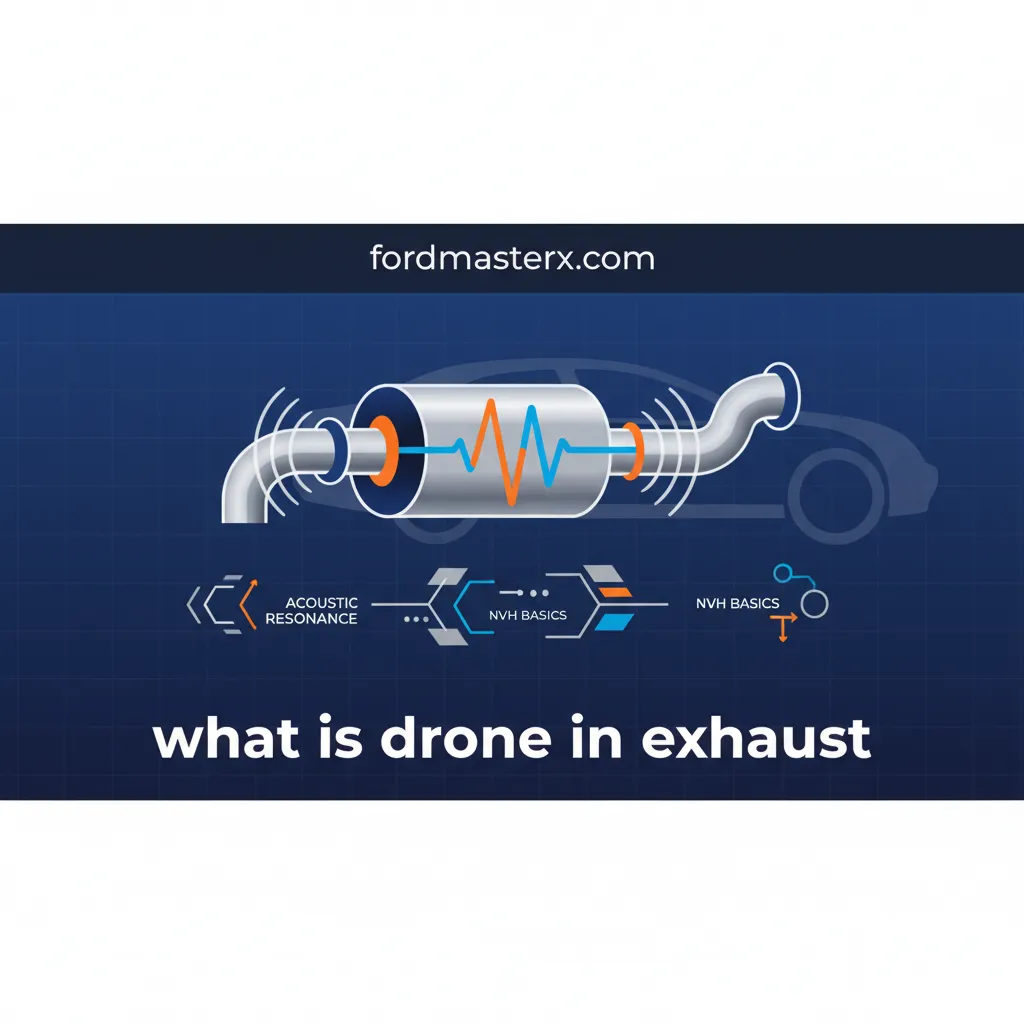
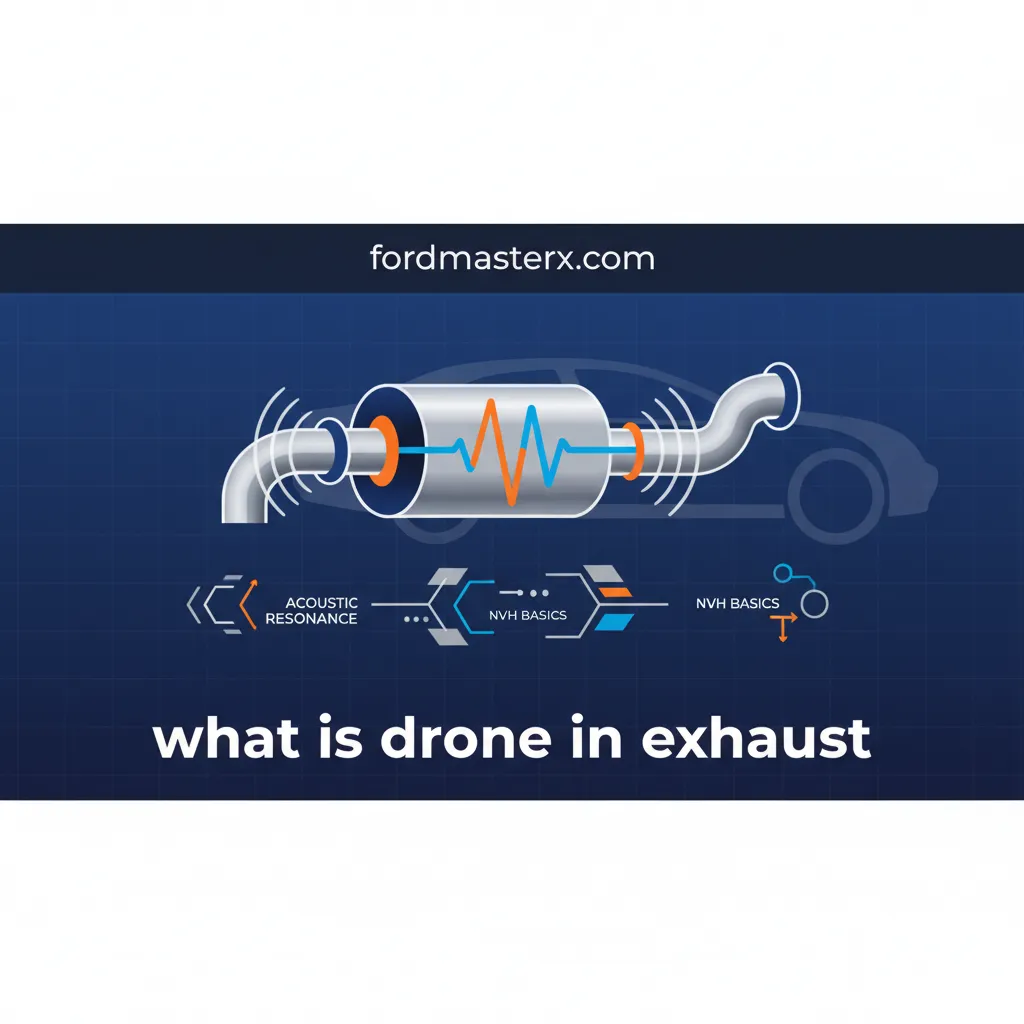
For many automotive enthusiasts, the first modification is a new exhaust system, but that aggressive exterior growl often comes with an uninvited interior guest: the exhaust drone. This phenomenon is far more than just a loud noise; it is a persistent, low-frequency resonance that can make highway driving unbearable and cause significant driver fatigue over long distances. In this technical overview, we will provide a comprehensive introduction to the physics of exhaust drone, explaining the fundamentals of acoustic resonance and the professional engineering methods used to eliminate it while maintaining peak performance.
Understanding Exhaust Drone Fundamentals and Its Impact on Driving
📤 Share Image
To the uninitiated, “exhaust drone” is often confused with simply having a loud car. However, from a technical basics perspective, drone is a very specific type of sustained, low-frequency acoustic resonance. While an engine’s “exhaust note” consists of the rhythmic, mechanical sounds of the firing cycle—the high-frequency rasps and mid-range growls we enjoy—drone is a “booming” or “humming” sound that feels as if it is vibrating the very air inside the cabin. It typically occurs at specific engine speeds, most notably during highway cruising between 2,000 and 3,000 RPM.
Within the field of automotive engineering, drone falls under the umbrella of NVH (Noise, Vibration, and Harshness). It is a failure of the exhaust system to effectively manage the pressure waves generated by the engine. When these waves reach a frequency that matches the resonant frequency of the vehicle’s chassis or the air volume inside the cabin, the car itself acts as a massive sounding board. The vehicle frame, floor pans, and even the glass can amplify these specific frequencies, turning the interior into a resonant chamber.
The impact on the driver is more than just annoyance; it is physiological. Sustained exposure to low-frequency noise (below 250 Hz) is scientifically proven to increase cortisol levels and significantly reduce concentration over long-duration trips. This leads to “highway hypnosis” and physical exhaustion. Imagine a scenario where a driver installs a high-flow, straight-through muffler to gain 5 horsepower, only to find that at 70 MPH, the cabin is filled with a deafening 100Hz thrum that makes a hands-free phone call or a conversation with a passenger impossible. That is the reality of unresolved exhaust drone.

The Science of Acoustic Resonance and Frequency Explained
To solve drone, we must first look at the fundamentals of physics—specifically Helmholtz Resonance. This is the same principle that creates a sound when you blow across the top of an empty glass bottle. The air inside the exhaust system has a “natural frequency” determined by its volume and the length of the piping. When the frequency of the exhaust gas pulses (which is tied directly to engine RPM and cylinder count) matches this natural frequency, a standing wave is formed.
The key points here involve the relationship between engine speed and firing frequency. For a 4-cylinder engine at 3,000 RPM, the exhaust pulses occur at a different rate than an 8-cylinder engine at the same RPM.
- 4-Cylinder: Fires twice per revolution. At 3,000 RPM, it produces a 100Hz pulse.
- 8-Cylinder: Fires four times per revolution. At 3,000 RPM, it produces a 200Hz pulse.
This is why an 8-cylinder engine might feel “smooth” at highway speeds while a 4-cylinder engine with an aftermarket pipe creates a massive low-frequency boom in the same range.
By The Numbers: The Drone Zone
Primary Drone Frequency Range
Most Common Peak Drone Speed
Doubling of Sound Energy
In an exhaust system, constructive interference occurs when the outgoing pressure wave and the reflected wave align, doubling the amplitude and creating the drone. Conversely, destructive interference happens when waves are out of phase, effectively canceling each other out. Aftermarket systems often inadvertently create the perfect environment for constructive interference by using pipe lengths and diameters that act as tuning forks for the engine’s cruising RPM.

Why Aftermarket Exhaust Systems Often Increase Drone
Factory exhaust systems are the result of hundreds of hours of acoustic simulation. Engineers use sophisticated software to ensure the resonant frequency of the system stays outside the typical 2,000–2,500 RPM cruising range. When an owner swaps this for an aftermarket “cat-back” system, they often remove the very components—such as heavy resonators—designed to target and cancel narrow-band frequencies.
There are several technical reasons why modifications trigger this issue:
- Pipe Material and Wall Thickness: Factory pipes are often thick-walled or even dual-layered. Aftermarket systems utilize thinner-walled stainless steel or titanium to save weight. These thinner materials have less mass to dampen vibrations, allowing the pipe itself to ring.
- Increased Diameter: Moving from a 2.25-inch pipe to a 3-inch pipe reduces backpressure but changes the volume of air inside the tract, shifting the resonant frequency into the cruising RPM range.
- Straight-Through Designs: Performance mufflers prioritize flow. They lack the internal baffles and chambers that disrupt low-frequency standing waves.
- Cylinder Deactivation: Modern V8 engines often switch to V4 mode during highway cruising (Active Fuel Management). This radical shift in firing frequency can turn a perfectly tuned exhaust into a droning nightmare the moment the system deactivates four cylinders.
A common case study involves truck owners switching to a 3-inch cat-back system for a “deep growl.” Without a properly tuned resonator, the large internal volume of a truck cabin acts like a bass drum, often resulting in a 110dB interior drone that makes it impossible to have a conversation without shouting.
Technical Solutions and Mitigation Strategies for Exhaust Drone
Fixing drone is not about making the exhaust quieter overall; it is about targeting the specific frequency that is causing the resonance. In my experience, the most effective professional-grade solution is the Helmholtz Resonator, frequently referred to in the aftermarket world as a “J-pipe.”
A J-pipe is a dead-end tube welded into the exhaust system. By calculating the exact length needed (usually based on the speed of sound and the frequency of the drone), the pressure waves enter the J-pipe, bounce off the end, and return to the main stream exactly 180 degrees out of phase. This creates destructive interference, effectively “deleting” the drone without restricting airflow or horsepower. High-end manufacturers like Corsa Performance or AWE Tuning utilize “Branch Resonators” that function on this exact principle to offer “No Drone” guarantees.
Acoustic Tuning
J-pipes can reduce drone-specific noise by 10-15 decibels while leaving the aggressive “bark” of the exhaust untouched.
Vibration Isolation
Upgrading to high-durometer exhaust hangers prevents physical vibrations from transferring directly into the vehicle’s frame.
Identifying and Troubleshooting Drone in Your Vehicle
Before you begin cutting and welding, you must confirm that the noise you are hearing is actually exhaust drone and not a secondary mechanical failure. “False drone” can be caused by an exhaust pipe physically touching a heat shield or a frame rail, which transmits engine vibration directly into the cabin. Additionally, minor leaks at the manifold or flange can create high-frequency rasps that, when combined with cabin resonance, mimic the feel of drone.
📋
Professional Diagnostic Steps
Using a smartphone decibel meter and a frequency analyzer app, slowly accelerate through the RPM range in a high gear. Note the exact RPM where the decibel level peaks and look for a sharp spike on the frequency graph (usually a single peak around 100Hz).
Inspect the entire length of the exhaust while the system is hot (pipes expand when hot). Look for any point where a hanger is bottomed out or where the pipe sits within 0.5 inches of the chassis.
Sometimes, drone is caused by the exit pulses being trapped under the rear bumper. Temporarily extending the tips past the bumper edge can often shift the resonance outside the cabin’s influence.
Understanding that a 3dB increase in sound represents a doubling of sound energy is important for troubleshooting. If your “sweep test” shows a jump from 85dB to 91dB at 2,400 RPM, you have identified a severe resonance issue that is putting four times the sound energy into the cabin compared to your non-drone RPMs. This level of precision allows you to calculate the exact J-pipe length or resonator size needed to neutralize the wave.
If the drone is worse in the backseat than the front, it is almost certainly a standing wave issue caused by the length of the exhaust pipe. If the drone is uniform throughout, it is more likely caused by the muffler’s internal volume or physical contact with the frame.
In summary, drone is a specific type of acoustic resonance caused by standing waves within the exhaust system. It is primarily caused by removing factory-tuned resonators or changing pipe geometry without considering frequency damping. However, as explained throughout this guide, it is not an unsolvable problem. Effective solutions like Helmholtz resonators and J-pipes can eliminate drone without sacrificing the desired exhaust note or engine performance. Before purchasing your next exhaust system, consult with a specialist about its resonant properties or consider adding a tuned resonator to your current setup to restore cabin comfort and driving pleasure.
Frequently Asked Questions
Is exhaust drone harmful to my car’s engine?
No, exhaust drone is purely an acoustic phenomenon and does not negatively impact engine health or longevity. It is a matter of NVH (Noise, Vibration, and Harshness) rather than mechanical integrity. However, it can negatively impact the driver’s comfort and long-term hearing if decibel levels are excessively high over long periods.
Why does my exhaust only drone at a specific RPM range?
Drone occurs when the frequency of the engine’s exhaust pulses matches the natural resonant frequency of the exhaust piping or the vehicle cabin. This usually happens within a narrow window (often 2,000–3,000 RPM) because that is where the ‘standing wave’ finds the perfect conditions to amplify itself within the system’s geometry.
Can I fix exhaust drone with sound deadening material?
Sound deadening materials like butyl rubber or mass-loaded vinyl can help reduce the transmission of drone into the cabin, but they do not fix the source of the problem. While they make the cabin quieter, they are often less effective than mechanical solutions like resonators because low-frequency waves are very difficult to block through mass alone.
What is the difference between a resonator and a muffler?
A muffler is designed to reduce the overall volume of the exhaust across all frequencies by using baffles or packing material. A resonator is a specialized chamber designed to target and cancel out specific, narrow-band frequencies (like drone) through destructive interference, without significantly reducing the overall volume of the exhaust note.
Will a ‘straight pipe’ exhaust always cause drone?
In almost all cases, yes. Without any mufflers or resonators to disrupt standing waves, a straight-piped system allows frequencies to resonate freely. Because there is no acoustic damping, the natural resonance of the pipe will likely align with common cruising RPMs, creating a significant and often painful drone inside the vehicle.