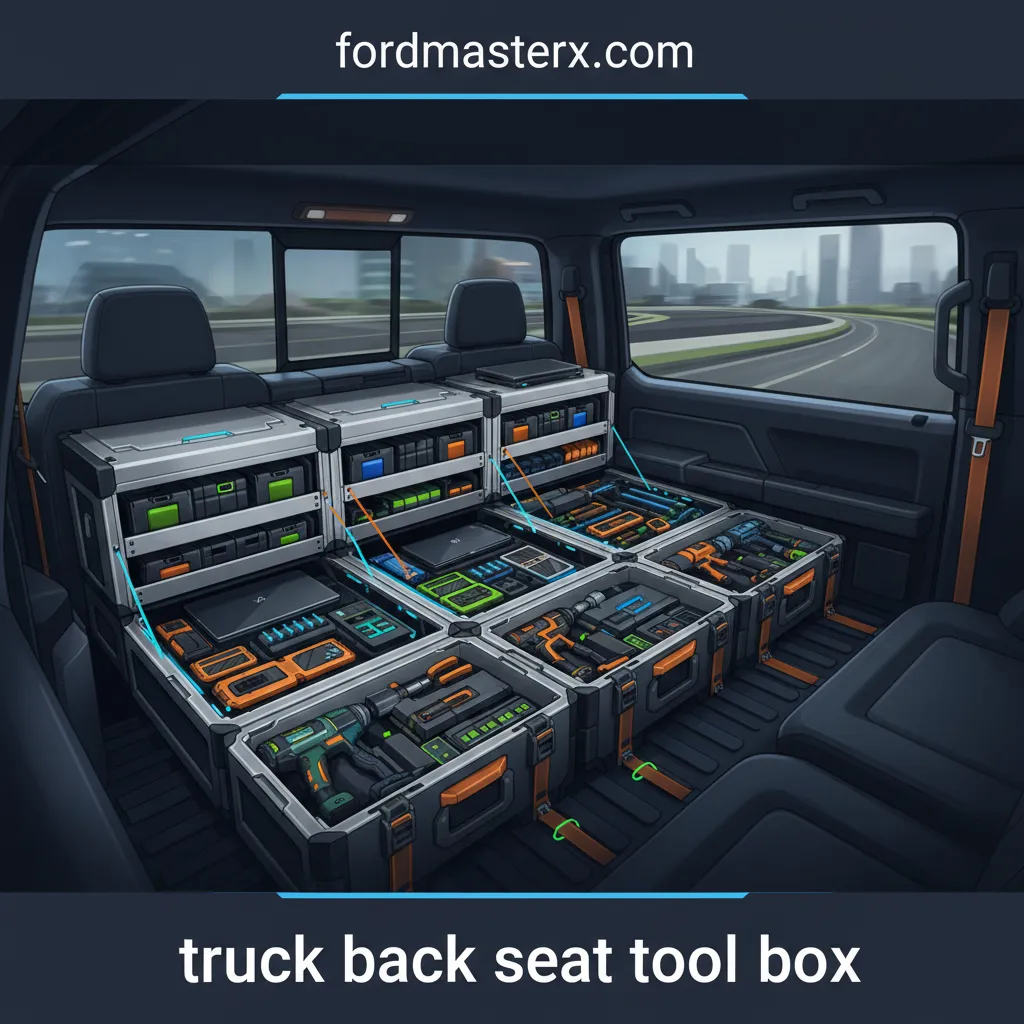
Truck Back Seat Tool Box Solutions For Secure Mobile Equipment Management

For the mobile professional, the truck cabin serves as a rolling headquarters where efficiency and security are non-negotiable. Scattered equipment under the rear bench not only creates a disorganized workspace but also poses a safety risk and increases the likelihood of tool damage or theft. This technical overview explores the engineering, security features, and organizational advantages of a high-quality truck back seat tool box, providing a roadmap for optimizing your vehicle’s interior cargo capacity. By implementing a professional-grade storage solution, you transform underutilized space into a reliable, high-performance asset management hub that stands up to the rigors of industrial field work.
Engineering Standards for High-Quality Truck Back Seat Tool Box Construction
📤 Share Image
The structural integrity of a cabin-mounted storage unit begins with material science. High-Density Polyethylene (HDPE) stands as the industry standard for professional-grade boxes due to its exceptional impact resistance and thermal stability. In fluctuating cabin temperatures—where summer heat can exceed 140°F—lower-grade plastics soften and warp. HDPE, however, maintains a tensile strength of approximately 4,000 PSI, ensuring the unit holds its shape even when loaded to its maximum capacity.
Manufacturing Processes: Injection Molding vs. Rotomolding
Manufacturing methods significantly dictate long-term durability. Heavy-duty injection molding allows for precise wall thickness and the integration of structural ribbing, which is essential for load-bearing capacity. While rotomolding is common in larger exterior coolers, injection molding provides the comprehensive detail required for secure latching points and reinforced corners. A trusted brand like DU-HA often utilizes heavy-duty polyethylene with significant wall thickness, whereas WeatherTech focus on a sleeker, thinner profile that emphasizes fitment over sheer mass. Both must meet a load rating of 75-100 lbs to be considered professional-grade.
Look for units that incorporate TPE (Thermoplastic Elastomer) overmolding or liners. This non-slip surfacing prevents tools from sliding and generating distracting noise during high-velocity maneuvers or off-road transit.
Furthermore, protection for sensitive electronic diagnostic tools requires advanced sealing. Weather-stripping and compression seals are not just for exterior boxes; they prevent cabin dust and humidity from infiltrating the storage area, protecting high-value circuit testers and laser levels. Weight distribution engineering is equally critical; the center of gravity must remain low, and the mounting hardware must secure the unit to the vehicle frame or seat brackets to ensure it remains stationary during emergency braking or rapid cornering.

Optimizing Interior Ergonomics with Custom-Fit Under-Seat Storage
The transition from “loose storage” to a complete integrated system relies on CAD (Computer-Aided Design) data. Manufacturers now use laser-measured fitment to mirror the complex floor contours of modern trucks. This precision ensures the box utilizes every available square inch of the “dead space” beneath the rear bench, increasing organized storage volume by up to 2.5 cubic feet compared to standard nylon tool bags or generic plastic bins.
Cab-Specific Configurations
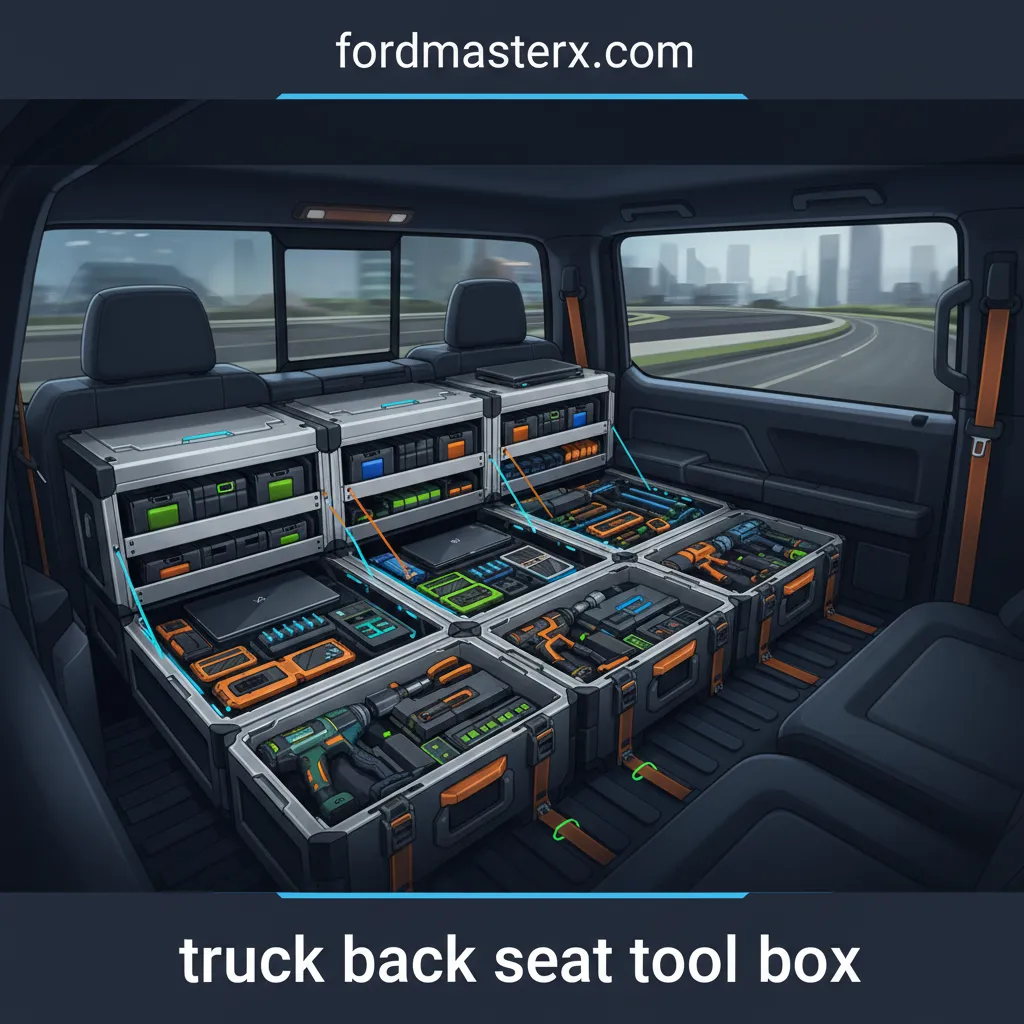
Different trucks require vastly different storage architectures. For a Ford F-150 SuperCrew, the flat floor allows for a massive, full-width unit that maximizes horizontal space. Conversely, a Chevrolet Silverado Crew Cab may require a split-bench compatible module that accommodates the seat’s 60/40 folding mechanism. A quality installation must maintain factory seat functionality; if the tool box forces the seat into an awkward position or reduces legroom for rear passengers, it fails the ergonomic test.
The choice between top-loading and front-drawer configurations is often dictated by cab depth. Top-loaders are simpler and more robust, but they require the rear seat to be flipped up for access. Front-drawer units allow for expert tool retrieval without disturbing the seat, though they often trade off some total volume for the drawer slide mechanism. Professional installers must also ensure the unit integrates seamlessly with heavy-duty floor liners, often requiring the box to sit atop the liner without interfering with the door sill or seat latching points.

Security Protocols for Protecting High-Value Professional Assets
The primary security advantage of an interior tool box is the “out of sight, out of mind” principle. While an aluminum bed-mounted box signals the presence of expensive tools to every passerby, an under-seat unit remains entirely concealed from view. This is critical because over $1 billion in tools are stolen annually from construction sites and vehicles. Moving gear from the bed to a locked under-seat unit has been shown to reduce theft risk by 60%.
Mechanical Theft Deterrence
A truly secure storage solution is not just locked; it is anchored. Trusted designs secure the unit directly to the vehicle frame using the factory seat bolts. This prevents a thief from simply smashing a window and carrying the entire box away. Furthermore, high-end units feature steel-reinforced padlock hasps or integrated multi-point locking systems that are far more difficult to breach than standard plastic latches.
Never rely solely on plastic molded latches for high-value security. In cold weather, these components become brittle and can be easily snapped. Always opt for units with metal-to-metal locking interfaces for field-ready security.
For fleet management, key-alike systems are a vital efficiency booster, allowing a technician to use a single master key for both the truck door and the interior storage unit. When combined with tinted glass and the natural concealment provided by the rear bench, these security protocols provide a multi-layered defense. Consider the case of a field technician who recently moved their specialized fiber optic splicing gear from the truck bed to an under-seat unit; after three attempted break-ins where the bed was targeted but the cabin was left untouched, the insurance savings alone paid for the storage unit tenfold.
Internal Organization Systems for Trusted Tool Accessibility
A tool box without organization is just a “junk drawer” on wheels. To maintain professional efficiency, the internal volume must be meticulously compartmentalized. Technicians spend an average of 30 minutes per day searching for misplaced tools; a properly organized storage unit can reclaim 130 hours of annual productivity, effectively adding three weeks of billable time back to the calendar.
Modular Divider Systems and Tool Shadowing
The most reliable units offer modular divider systems. These allow you to customize the layout based on your specific trade. For example, a plumber might configure the layout to accommodate a torch and pipe wrenches, while an electrician would prioritize deep pockets for testers and wire strippers. Kaizen foam inserts are the gold standard for tool shadowing—cutting out the exact shape of each tool so you can instantly see if an item is missing at the end of a job.
Vibration Dampening
Rubber liners and foam eliminate the distracting “tool rattle” that causes fatigue during long commutes.
Removable Trays
Nesting utility trays allow you to carry only the necessary hand tools into the job site, leaving the heavy gear secured.
Advanced users also incorporate magnetic strips inside the lid for driver bits and fastener organizers for small hardware. This prevents small, essential parts from migrating to the bottom of the box during transport. By utilizing nesting capabilities for hardware bins, you maximize vertical space without sacrificing access. The result is a comprehensive mobile workstation that reflects the expert status of its operator.
📋
Professional Installation Guide
Clean the floor pan and ensure existing floor mats are either trimmed or compatible with the box’s footprint.
Locate factory mounting points. Use high-tensile bolts to secure the box to the seat brackets to prevent movement.
Install dividers based on tool frequency of use. Place heaviest tools at the bottom-center to maintain vehicle stability.
By The Numbers
Annual Tool Theft Loss
Annual Productivity Gain
HDPE Tensile PSI
In summary, material quality and CAD-informed fitment are essential for long-term reliability in any truck back seat tool box. These units offer a superior security profile compared to traditional exterior bed boxes by leveraging concealment and vehicle frame anchoring. Strategic organization within the unit—utilizing dividers, Kaizen foam, and modular trays—directly correlates to increased field efficiency and professional output. By eliminating search time and protecting equipment from the elements and opportunistic theft, a quality interior storage system pays for itself through reclaimed hours and asset protection. Audit your current interior storage today and select a vehicle-specific tool box that meets the rigorous demands of your industry to ensure your mobile headquarters remains professional, organized, and secure.
Frequently Asked Questions
Does installing a back seat tool box require drilling into the vehicle floor?
Most professional-grade truck back seat tool boxes utilize existing factory mounting points or seat bolts for installation. This ‘no-drill’ approach preserves the structural integrity of the vehicle floor and maintains the resale value while ensuring the box is securely anchored to the chassis.
Will an under-seat tool box interfere with my floor mats?
Leading manufacturers design these units to be compatible with both factory carpeting and heavy-duty aftermarket floor liners. Some models may require minor trimming of high-wall liners, but many premium versions are contoured to sit flush against the floor without obstructing mat placement or removal.
Are these boxes compatible with trucks that have a factory subwoofer?
Compatibility varies by vehicle trim level. While many standard units are designed for full-width storage, manufacturers offer specialized ‘short’ versions specifically engineered to accommodate factory-installed subwoofers or jack kits, ensuring you don’t have to sacrifice audio quality for storage utility.
Can I store long items like levels or firearms in these units?
Yes, many truck back seat tool boxes are designed with a full-length open channel to accommodate long-form tools, levels, or equipment. Always check the interior dimensions against your longest item; many crew cab models provide over 50 inches of horizontal clearance.
How do these boxes handle heavy loads during sudden braking?
Quality units are engineered with reinforced walls and secure mounting hardware to prevent shifting. When properly bolted to the seat frames or floor studs, the box becomes an integral part of the interior, preventing heavy tools from becoming dangerous projectiles during emergency maneuvers or impacts.