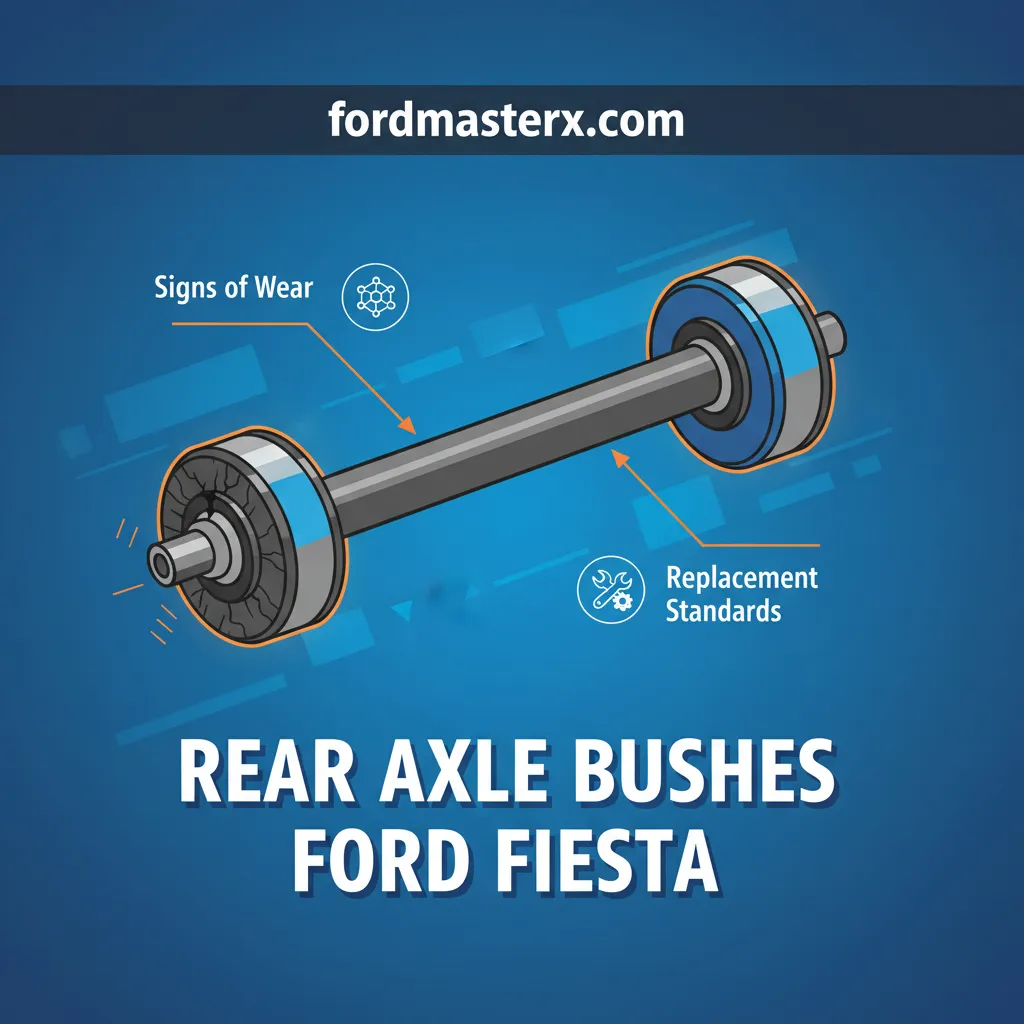
Rear Axle Bushes Ford Fiesta: Signs Of Wear, Material Selection, And Replacement Standards

For the Ford Fiesta, precise handling is a hallmark characteristic, yet much of that agility relies on a small but critical component: the rear axle bush. Often overlooked until failure becomes obvious, these components serve as the fulcrum for the vehicle’s rear dynamics. Over time, the constant pivot and load-bearing stress on the rear beam axle causes these rubber components to perish, leading to degraded safety and uncomfortable noise. This comprehensive guide provides an expert technical breakdown of how to identify wear, select professional-grade replacement parts, and ensure the installation meets trusted industry standards. Understanding these nuances is essential for any owner or technician seeking a reliable, long-term solution for Fiesta suspension maintenance.
Understanding the Role of Rear Axle Bushes in Ford Fiesta Suspension Systems
📤 Share Image
The Ford Fiesta, spanning across the MK6, MK7, and MK8 generations, utilizes a twist-beam (or torsion beam) rear suspension design. This setup is favored for its compact footprint and cost-effective performance. In this configuration, the rear axle beam is a single structural unit that connects both rear wheels. The rear axle bushes serve as the complete primary pivot points, anchoring this heavy beam to the vehicle’s chassis. Without these bushes, the metal-on-metal contact would be catastrophic for both ride quality and structural integrity.
Technical Breakdown of Construction
Factory Ford components are typically engineered using a bonded rubber-to-metal construction. This involves a central metal inner sleeve and an outer metal casing, with a high-grade elastomeric compound chemically bonded between them. This design is intended to provide a sophisticated balance between Noise, Vibration, and Harshness (NVH) damping and structural rigidity. In later models, Ford transitioned toward more complex “voided” bush designs, where specific gaps are engineered into the rubber to allow for controlled longitudinal compliance while maintaining lateral stiffness.
When a Fiesta’s rear axle bush suffers from excessive deflection or tearing, the axle beam no longer tracks perfectly straight during cornering. This leads to ‘rear-end steer,’ where the driver feels the back of the car ‘shift’ or wiggle independently of the front wheels, particularly during high-speed lane changes or spirited driving.
By The Numbers
Oscillation Cycles Design Life
Rear Load Borne by Bushes
The average Ford Fiesta rear axle bush is designed to withstand over 1 million oscillation cycles before material fatigue sets in. However, real-world factors—such as road salt, temperature fluctuations, and potholes—significantly accelerate this timeline, making professional inspection mandatory after the vehicle passes the five-year mark.

Identifying Common Symptoms of Failing Ford Fiesta Rear Axle Bushes
Diagnosing worn bushes requires a combination of auditory observation and visual confirmation. Because the rear axle is responsible for the vehicle’s tracking stability, symptoms often manifest as both a loss of refinement and a tangible decrease in safety during emergency maneuvers.
Auditory and Handling Red Flags
The most common indicator is a distinct ‘thumping’ or ‘clunking’ noise emanating from the rear of the car. This is typically most audible when traversing speed bumps, driving over uneven surfaces, or during sharp weight transfers. As the rubber degrades, the inner metal sleeve begins to impact the outer metal housing, telegraphing mechanical shock directly into the chassis.
Visual Inspection and Secondary Damage
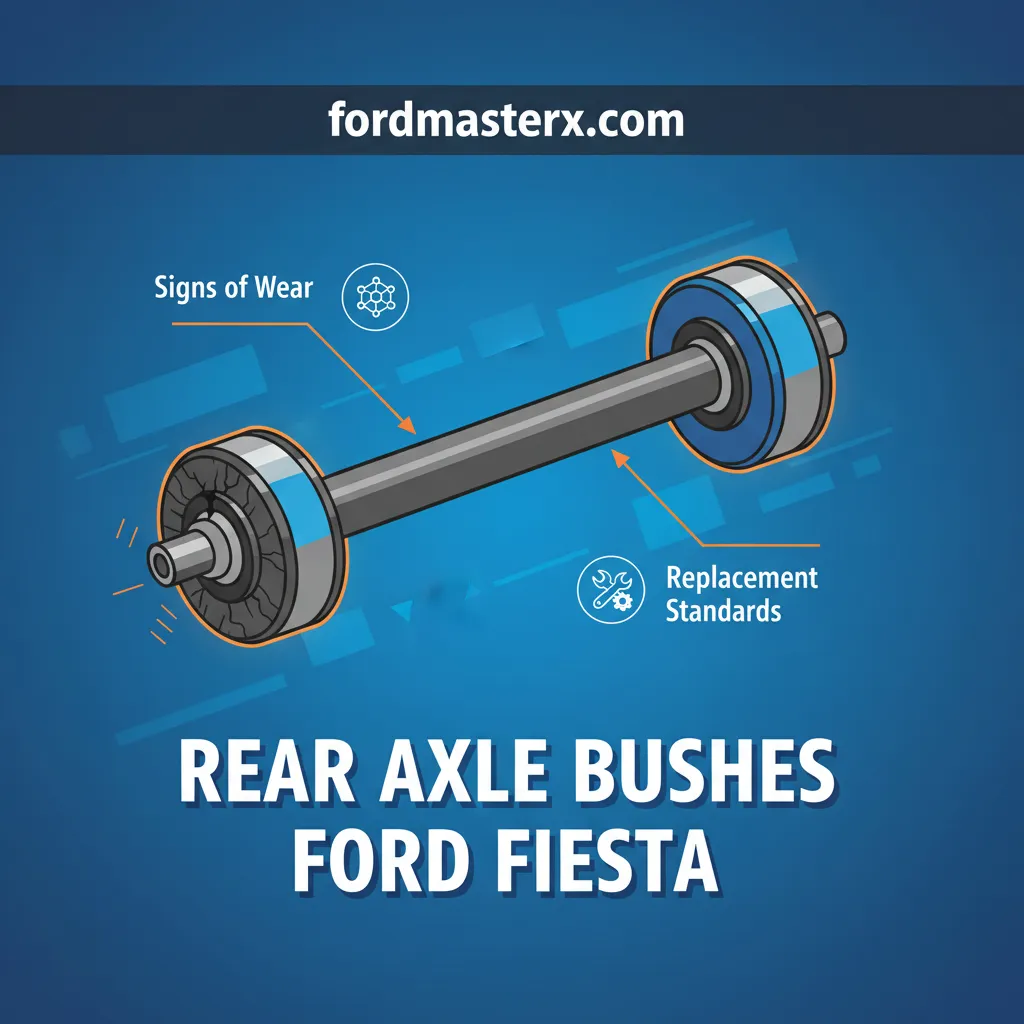
A complete visual inspection on a vehicle lift often reveals “delamination”—a state where the rubber has physically separated from the metal sleeve. You may also observe “perishing,” characterized by deep spider-web cracks in the rubber compound. In some high-spec MK7 and MK8 models, hydraulic-style bushes are used; if these fail, you will see oily fluid leakage around the bush perimeter.
Inner Edge Tire Wear
Worn bushes allow the axle to shift, causing improper ‘toe’ alignment. This leads to rapid, uneven wear on the inside edge of the rear tires.
ESC/ABS Interference
Excessive movement in the rear axle can misalign speed sensors, occasionally triggering Electronic Stability Control (ESC) warnings under heavy braking.
Statistics underline the importance of this component: suspension-related issues account for approximately 15% of all Ford Fiesta MOT failures in the UK for vehicles over 6 years old. Often, the rear axle bush is the primary culprit behind these “excessive play” advisories.

Material Selection: Comparing Quality OEM Rubber vs. Polyurethane Upgrades
When it comes to replacement, choosing the right material is a balance between your driving style and comfort requirements. As a trusted expert, I recommend evaluating both options based on the vehicle’s primary use case.
The Case for OEM Rubber (e.g., Lemförder or Ford Genuine)
For most daily drivers, high-quality OEM rubber bushes are the gold standard. They provide the specific Shore Hardness intended by Ford’s engineers, ensuring that the Fiesta retains its supple ride and excellent NVH isolation. Trusted aftermarket leaders like Lemförder or Febi Bilstein offer components that match or exceed factory specifications.
The Polyurethane Alternative (e.g., Powerflex)
Polyurethane bushes (often referred to as ‘poly bushes’) are a popular upgrade for enthusiasts. These components offer significantly higher tensile strength—typically 3 to 4 times higher than standard natural rubber. This leads to a sharper handling response and a bush that will likely outlast the vehicle itself.
✅ Pros
- Eliminates suspension ‘slop’
- Highly resistant to oil and road salt
- Easier to install in DIY settings
❌ Cons
- Slightly increased road noise
- Higher initial component cost
- May require periodic greasing
The Professional Approach to Rear Axle Bush Removal and Installation
Replacing Fiesta rear axle bushes is a labor-intensive task that requires specialized equipment. Attempting this with a hammer and chisel is a recipe for a damaged axle beam and a compromised vehicle.
📋
Step-by-Step Professional Installation
Use a 10-ton portable hydraulic press kit designed specifically for the Ford Fiesta. This allows the bush to be pushed out while the axle remains partially attached to the car, saving hours of labor.
OEM bushes are directional. Ensure the ‘voids’ in the rubber are aligned according to Ford’s technical service manual to allow for the correct path of movement.
Never torque the mounting bolts while the axle is hanging (in ‘droop’). The car must be on its wheels or the axle supported by a jack to simulate kerb weight before final tightening.
Improperly torquing axle bushes while the suspension is in ‘droop’ can reduce the component’s lifespan by up to 70%. This occurs because the rubber is pre-twisted once the car is lowered, leading to constant, extreme torsional stress even when stationary.
Finally, a complete four-wheel laser alignment is non-negotiable. While the rear axle has limited adjustment, the process ensures that the rear thrust angle is perfectly aligned with the front wheels, preventing the “crab-walking” effect common after major suspension work.
Long-term Benefits of Investing in Professional Suspension Maintenance
The Ford Fiesta is widely regarded as the benchmark for small car handling. Maintaining the structural integrity of the rear suspension is the only way to preserve these “fun-to-drive” characteristics. Beyond pure enjoyment, there is a clear financial and safety incentive for performing this work promptly.
Safety and Vehicle Preservation
In emergency scenarios, such as a high-speed swerve to avoid an obstacle, healthy rear axle bushes ensure the car remains predictable. Research indicates that correctly functioning rear axle bushes can improve emergency braking distances by up to 5% by maintaining optimal tire-to-road contact and preventing axle “hop.” Furthermore, stable bushes reduce the sympathetic wear on shock absorbers and coil springs, extending the life of the entire suspension system.
Economic Impact: Case Study
Consider a case study of a Fiesta MK7 owner who noticed inner tire wear. By replacing the worn bushes promptly at a cost of roughly £250 (parts and labor), they saved 20% on tire costs over the following two years. Without the repair, they would have been forced to replace two premium rear tires prematurely, nearly equaling the cost of the repair itself while still driving a compromised vehicle.
Resale Value and Documentation
In the used market, a Ford Fiesta with a documented history of suspension maintenance—specifically rear axle bush replacement—commands a higher price. It signals to potential buyers that the vehicle has been maintained to a professional standard, ensuring safety and reliability for the next owner.
Rear axle bushes are vital for maintaining the Ford Fiesta’s safety and signature handling precision. Choosing between quality OEM rubber and professional polyurethane depends on your priority for comfort versus performance. Correct installation using specialized tools and ‘at-ride-height’ torquing is essential for component longevity. Consult a trusted suspension specialist to inspect your Ford Fiesta’s rear axle bushes and ensure your vehicle remains roadworthy and reliable.
Frequently Asked Questions
How long does it take to replace rear axle bushes on a Ford Fiesta?
A professional technician using a dedicated hydraulic press tool typically requires 2 to 3 hours to replace both rear axle bushes. If the bushes are severely seized or if manual pullers are used, the labor time can extend to 4 hours. This includes the time needed to safely disconnect brake lines and ABS sensors where necessary.
What is the typical cost of a Ford Fiesta rear axle bush replacement?
In a professional workshop setting, the total cost generally ranges from £200 to £400 ($250 to $500). This includes the price of high-quality parts (approximately £30-£80) and the specialized labor. Prices vary depending on whether you choose standard OEM-style rubber bushes or premium polyurethane upgrades which carry a higher part cost.
Can I replace Ford Fiesta rear axle bushes without a press?
While technically possible using a ‘threaded rod’ DIY tool, it is not recommended. The Ford Fiesta axle beam is precision-engineered, and using hammer-and-chisel methods can easily distort the beam housing. Professional-grade hydraulic tools ensure the bush is seated squarely, which is essential for maintaining the correct rear-wheel alignment and vehicle safety.
Will polyurethane rear axle bushes make my Fiesta ride too harsh?
Polyurethane bushes are firmer than factory rubber, which improves steering response and reduces axle ‘flex.’ While you may notice a slight increase in road vibration over very rough surfaces, the ‘Street’ or ‘Road’ grade poly bushes from reputable brands are designed to provide a balance that is acceptable for daily driving without excessive harshness.
How often should Ford Fiesta suspension bushes be inspected?
Expert mechanics recommend a visual inspection of all suspension bushes during every annual service or every 12,000 miles. However, because the rear axle bushes are subject to significant torsional stress, they should be checked immediately if you notice any wandering in the rear end or audible clunking when driving over speed bumps.