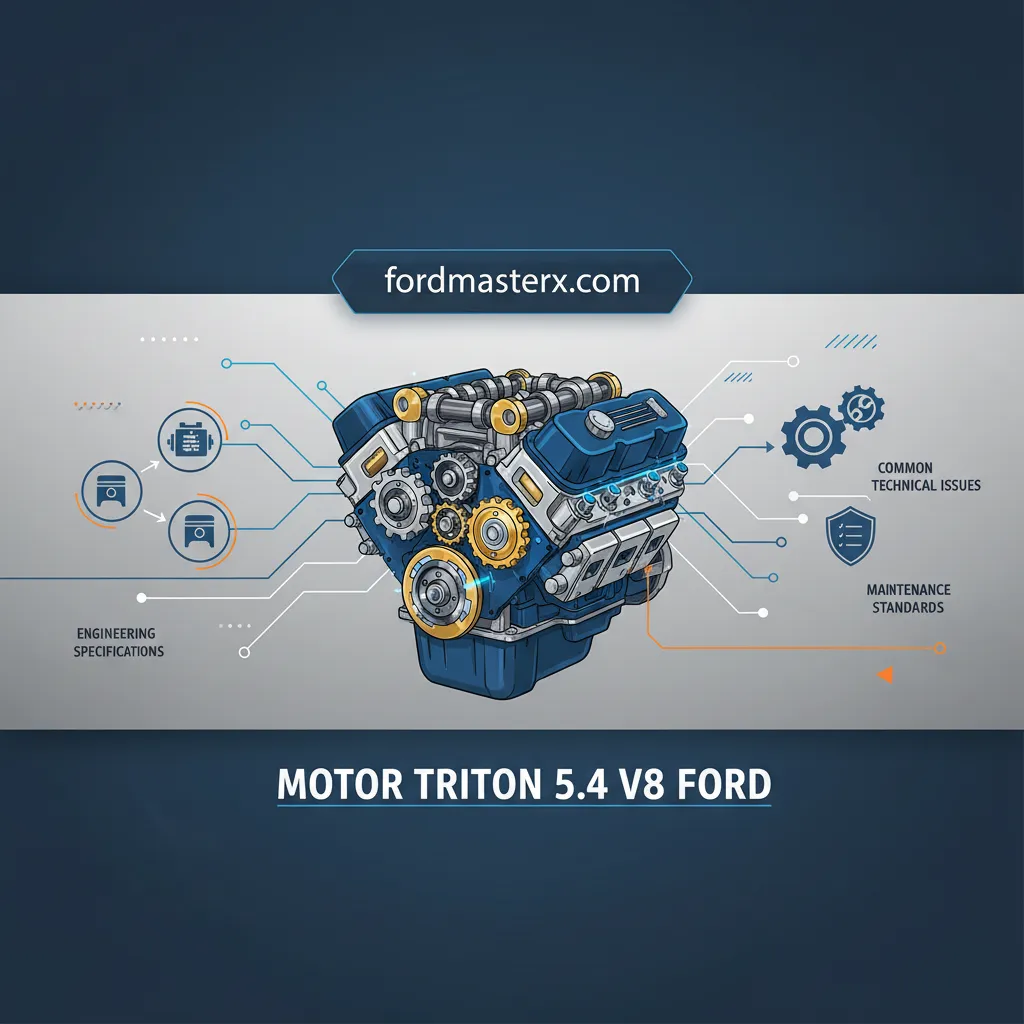
Motor Triton 5.4 V8 Ford: Engineering Specifications, Common Technical Issues, And Maintenance Standards

The Ford 5.4L Triton V8 remains one of the most polarizing yet prevalent powerplants in the history of American light-duty trucks and SUVs. From its debut in the late 1990s to its role as the backbone of the F-Series lineup through 2010, this engine powered millions of vehicles across commercial and consumer sectors. While praised for its towing capacity and smooth power delivery, many owners struggle with specific technical vulnerabilities that can compromise reliability if not handled with expert care. This comprehensive guide provides a professional-grade analysis of the motor Triton 5.4 V8 Ford, covering engineering specifications, critical maintenance strategies, and definitive solutions for common mechanical challenges to ensure your vehicle remains reliable and trusted on the road.
Section 1: Engineering Architecture and Evolution of the Ford 5.4L Triton V8 Modular Engine
📤 Share Image
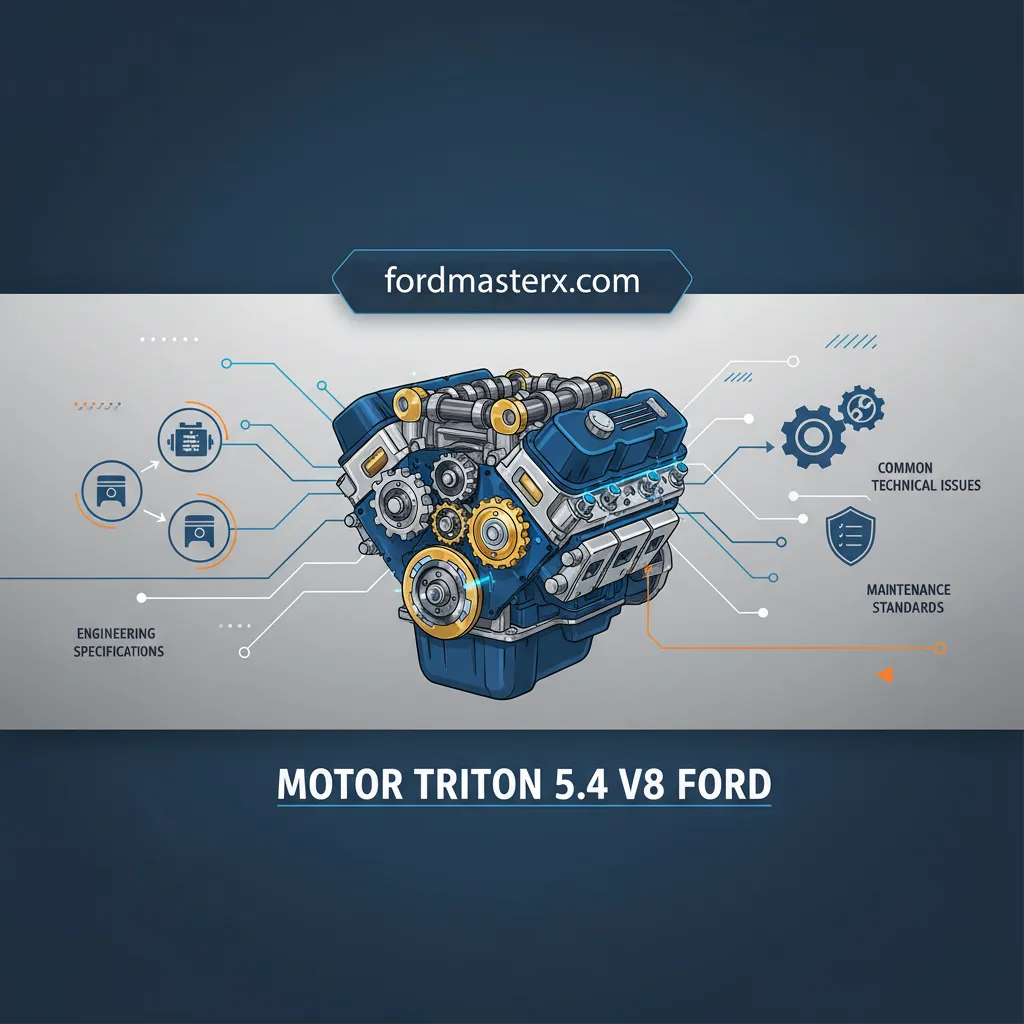
The 5.4L Triton is a cornerstone of Ford’s “Modular” engine family, a design philosophy that moved away from the traditional pushrod architecture of the 5.0L Windsor engine toward a more modern Overhead Cam (OHC) configuration. Launched in the 1997 Ford F-150, the 5.4L displacement (330 cubic inches) was achieved through an undersquare design, featuring a 3.55-inch bore and a long 4.16-inch stroke. This geometry specifically prioritizes low-end torque, essential for the heavy-duty demands of the light-truck market.
2-Valve vs. 3-Valve Architectures
The evolution of the 5.4L is largely defined by its cylinder head configurations. The early 2-valve (2V) versions (1997–2004) utilized a Single Over Head Cam (SOHC) design that was remarkably durable, though it lacked the peak horsepower of its successors. In 2004, Ford introduced the 3-valve (3V) architecture, which incorporated two intake valves and one exhaust valve per cylinder. This update, combined with the introduction of Variable Cam Timing (VCT), boosted output to a standard 300 hp and 365 lb-ft of torque. However, the added complexity of the VCT system and a redesigned intake manifold introduced new maintenance requirements that challenged many fleet operators.
By The Numbers: 5.4L 3V Specs
Horsepower
Torque (lb-ft)
Compression Ratio
Quart Oil Capacity
The material science behind the 5.4L balanced brute strength with thermal efficiency. Ford utilized a deep-skirt cast iron engine block for maximum rigidity, while the cylinder heads were cast from an aluminum alloy to facilitate rapid heat dissipation. Internally, the engine featured a forged steel crankshaft and powder-metal connecting rods. While the standard truck variants focused on longevity, it is worth noting the engineering versatility of this platform—a supercharged, 32-valve DOHC version of this block was utilized in the legendary Ford GT supercar, proving the architectural strength of the 5.4L design.

Section 2: Performance Dynamics and Professional Applications
The 5.4L Triton was never designed to be a high-revving race engine; its value lies in its quality performance at low RPM. In the Ford F-Series and E-Series vans, the engine delivers a flat torque curve that allows for effortless acceleration even under significant load. This made it the trusted choice for contractors, delivery fleets, and emergency services. For instance, the Quigley 4×4 converted E-350 ambulances relied heavily on the 5.4L’s ability to maintain stable oil pressures and cooling under the high-stress, high-idle conditions of emergency response.
Towing Prowess
Properly equipped F-150 models feature a maximum towing capacity of up to 10,000 lbs, outperforming many contemporaries in low-end pull.
Fleet Reliability
Consistent performance in E-Series vans makes it a staple for delivery services requiring 200,000+ mile service lives.
In luxury applications like the Ford Expedition and Lincoln Navigator, the 5.4L provided a smooth, linear power delivery that felt sophisticated despite its truck-based origins. However, this power comes at a cost in fuel economy. When compared to the later 5.0L Ti-VCT “Coyote” or the 3.5L EcoBoost engines, the 5.4L is significantly less efficient, averaging between 12-16 MPG depending on load and axle ratios. Its massive cooling system capacity, however, remains a highlight, allowing the engine to handle high-payload operations in extreme desert temperatures without the heat soak issues sometimes seen in turbocharged alternatives.

Section 3: Critical Analysis of Technical Challenges in the 3-Valve Systems
Any expert technician will tell you that the 3-valve 5.4L Triton has three primary “Achilles’ heels” that must be addressed to ensure long-term reliability. Understanding these challenges is the difference between a minor repair and a total engine failure.
The Cam Phaser and Timing Chain Dilemma
The most notorious issue involves the Variable Cam Timing (VCT) system. Over time, the internal vanes of the cam phasers can wear, or the VCT solenoids can become clogged with sludge. This results in a distinct “diesel-like” knocking sound at hot idle. More critically, the timing chain tensioner gaskets are prone to blowing out. When this happens, oil pressure meant for the phasers and the top end of the engine bleeds off, starving the camshaft journals of lubrication and causing the timing chain to slap against the guides, eventually shattering them and sending plastic debris into the oil pickup tube.
If your Triton triggers OBD-II codes P0012 (Camshaft Timing Over-Retarded) or P0022, it is a signal of immediate oil pressure loss in the VCT system. Continued operation can lead to catastrophic valve-to-piston contact.
The Two-Piece Spark Plug Phenomenon
Between 2004 and mid-2008, Ford used a unique two-piece spark plug design. Carbon buildup between the plug’s ground sleeve and the cylinder head often causes the plug to seize. During removal, the plug frequently snaps, leaving the lower half stuck in the head. This requires a professional extraction tool (such as the Lisle 65600) to resolve. Conversely, the earlier 2-valve engines suffered from the opposite—too few threads in the head—which could lead to the spark plugs being literally blown out of the cylinder head under pressure.
External Failures: Manifolds and FPDMs
Beyond the internal mechanics, the 5.4L suffers from exhaust manifold stud corrosion. The cast iron manifolds tend to warp over time, placing immense stress on the mounting bolts, which snap off inside the head—usually on the rear cylinders near the firewall. Additionally, the Fuel Pump Driver Module (FPDM), located on the frame rail above the spare tire, is prone to galvanic corrosion. Without a stand-off kit, the aluminum housing rots against the steel frame, leading to “crank but no start” scenarios.
Section 4: Professional Maintenance Protocols
Achieving high mileage with the 5.4L Triton requires moving beyond the “factory minimum” maintenance schedule. To maintain the quality and performance of this engine, a proactive approach is mandatory.
📋
The Triton Reliability Roadmap
Use only Full Synthetic 5W-20 oil and a Motorcraft FL-820S filter. Change every 5,000 miles. The silicone anti-drainback valve in the Motorcraft filter is essential for preventing dry starts that damage phasers.
Discard the 100,000-mile factory claim. Replace plugs every 60,000 miles using the updated Motorcraft SP-546 one-piece plugs to eliminate breakage risks and maintain optimal combustion.
At 100,000 miles, replace the water pump, thermostat, and all major hoses. An overheat event on an aluminum-headed engine often leads to warped heads and blown head gaskets.
The Ignition Coil on Plug (COP) system is sensitive to moisture. If you experience a slight shudder under load (45-60 mph), it is likely a low-grade misfire. Replace the coils with OEM Motorcraft units to avoid damaging your catalytic converters.
Section 5: Evaluating Engine Replacement: Remanufactured Units vs. Professional Rebuilds
When a 5.4L Triton reaches the end of its service life—often due to cumulative timing component failure or oil starvation—owners must decide between a localized rebuild or a complete engine replacement. From an expert standpoint, localized rebuilds of the top end (heads and timing) on high-mileage blocks are risky, as the new top-end pressure can often cause the worn bottom-end bearings to fail shortly after.
Choosing a trusted remanufacturer like Jasper or Ford Component Sales is often the most cost-effective long-term strategy. These units typically include essential upgrades that the original factory engines lacked, such as high-volume oil pumps (Melling M360) which provide 20% more flow to the VCT system, and updated 2008.5+ “Brown Boot” cylinder heads that feature a more reliable spark plug thread design. While the Total Cost of Ownership (TCO) for a replacement might seem high, it is significantly lower than the cost of a new truck, especially when the engine is backed by a 3-year/100,000-mile professional warranty.
✅ Pros
- Exceptional low-end torque for towing
- Proven longevity in commercial fleets
- Parts are widely available and affordable
- Smooth power delivery for SUVs
❌ Cons
- Fragile VCT/Timing components
- Spark plug breakage issues (pre-2008)
- Poor fuel economy compared to modern V8s
- Sensitive to oil quality and change intervals
In summary, the motor Triton 5.4 V8 Ford is a robust, high-torque engine that requires specific high-quality maintenance to avoid VCT and spark plug issues. Understanding the differences between the 2V and 3V architectures is essential for proper part selection and service intervals. Investing in professional-grade components and proactive oil services can extend the engine life well beyond 250,000 miles. For those experiencing timing-related noise or performance loss, consult with a trusted Ford specialist to evaluate your cam phasers and oil pressure before considering a full engine replacement. With the right care, this engine will continue to serve as a reliable partner for your heaviest tasks.
Frequently Asked Questions
What is the primary difference between the 2-valve and 3-valve 5.4 Triton?
The 2-valve version (1997-2004) uses a simpler SOHC design and is generally considered more reliable regarding timing components, though it had issues with spark plug blowout. The 3-valve version (2004-2010) introduced Variable Cam Timing (VCT) and extra valves for better airflow and power, but added complexity leading to potential cam phaser and timing chain tensioner failures if oil maintenance is neglected.
Why does my 5.4 Triton sound like a diesel at idle?
A diesel-like knocking sound at hot idle is a classic symptom of cam phaser failure or low oil pressure in the top end. This occurs when the VCT solenoids cannot maintain the correct oil pressure to lock the phasers, often due to sludge, worn tensioner seals, or using an incorrect oil weight. Professional diagnosis is required to ensure the timing chain has not damaged the timing cover.
Are the spark plug issues fixed in later models?
Yes, Ford addressed the notorious two-piece spark plug design midway through the 2008 model year. Engines manufactured after this date use an updated cylinder head design with a different spark plug seat and a ‘brown’ ignition coil boot. For older models, using the updated Motorcraft SP-546 one-piece plugs and following the specific Ford TSB extraction procedure significantly reduces the risk of breakage.
What oil is best for a high-mileage 5.4 V8 Ford?
A high-quality 5W-20 full synthetic oil is the standard recommendation to ensure the VCT system functions correctly. However, many professional technicians recommend a 5W-30 full synthetic for higher mileage engines to provide slightly better film strength and oil pressure at operating temperatures, provided the oil meets Ford’s quality specifications (WSS-M2C946-A). Frequent 5,000-mile changes are more important than the brand.
How long should a 5.4 Triton V8 last?
With meticulous maintenance, specifically frequent oil changes and cooling system service, the 5.4 Triton V8 is a trusted high-mileage engine capable of exceeding 300,000 miles. Reliability is largely dependent on the owner’s adherence to proactive service intervals and the use of quality OEM or equivalent parts to prevent timing system degradation.