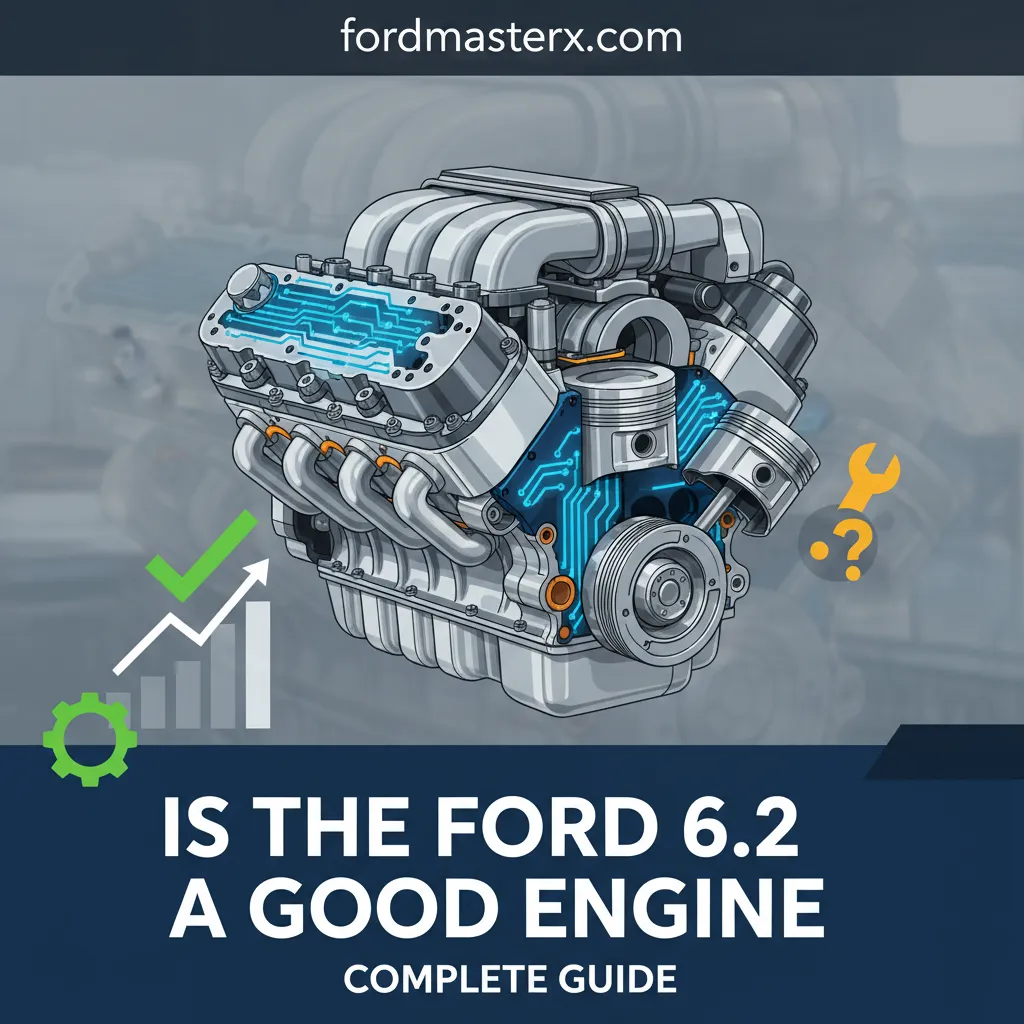
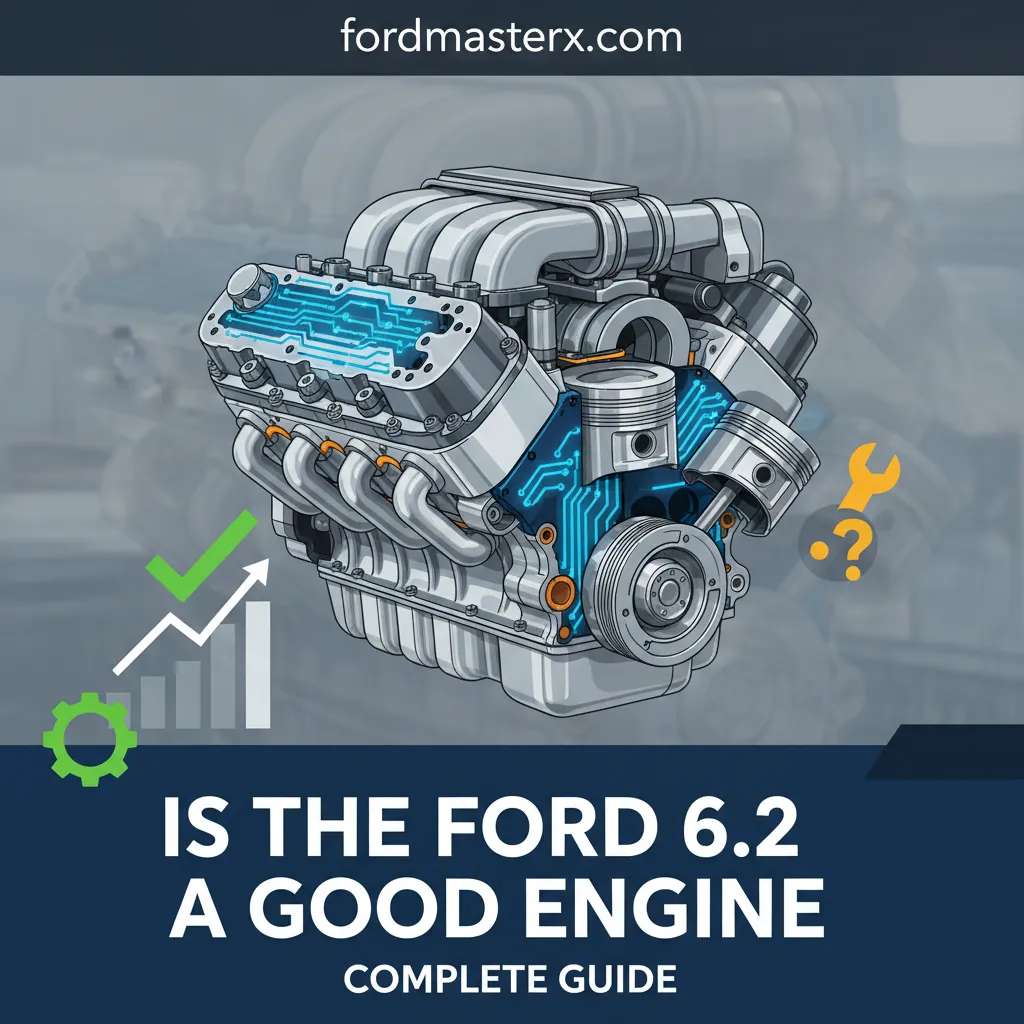
Is The Ford 6.2 A Good Engine: Complete Guide

The Ford 6.2L V8, affectionately known by enthusiasts and engineers as the “Boss,” represents a pinnacle in Ford’s modular engine evolution. For over a decade, this powerplant served as the backbone of the Super Duty lineup, bridging the gap between smaller half-ton engines and the massive torque of the Power Stroke diesel. If you are asking whether the Ford 6.2 is a good engine, the answer is a resounding yes—but understanding why requires a deep dive into its mechanical architecture and real-world performance metrics. This comprehensive guide provides the expert insights you need to determine if this reliable workhorse fits your specific towing and hauling requirements.
Overview: The Architecture of the “Boss”
📤 Share Image
Introduced in 2011 to replace the aging 5.4L Triton V8 and the 6.8L V10 in certain applications, the 6.2L was designed with a single goal: unrelenting durability. Unlike the high-strung, turbocharged engines dominating the current market, the 6.2 utilizes a naturally aspirated, large-displacement philosophy. This complete approach ensures the engine operates under lower stress levels even when under heavy load.
The engine features a robust cast-iron block and aluminum cylinder heads. It utilizes a Single Overhead Cam (SOHC) design with two valves per cylinder. While some might view a 2-valve setup as “old school,” in the professional world of heavy-duty trucking, simplicity equals reliability. Fewer moving parts mean fewer points of failure when you are 500 miles from the nearest service station with a 10,000-pound trailer in tow.
By The Numbers
Horsepower (Typical)
lb-ft of Torque
Expected Mileage
Total Spark Plugs
Key Benefits of the Ford 6.2L Engine
When evaluating the quality of an engine, one must look beyond the spec sheet and into the total cost of ownership. The 6.2L shines in environments where downtime is not an option. From fleet trucks to recreational haulers, several expert-verified benefits make this engine a standout choice.
Exceptional Longevity
The 6.2L is an over-built engine. With its massive main bearings and stout rotating assembly, it is not uncommon to see these units surpass 300,000 miles with only routine maintenance.
Lower Maintenance Costs
Compared to the 6.7L Power Stroke diesel, the 6.2L gas engine is significantly cheaper to maintain. No DEF, no expensive fuel filters, and no $3,000 fuel pump failures.
Linear Power Delivery
As a naturally aspirated V8, the 6.2 provides immediate throttle response. This is critical when navigating boat ramps or merging into traffic with a heavy load.
Cost vs. Performance
The 6.2L is the professional choice for those who do not tow every single day. While the diesel offers more torque, the initial purchase price of a gas Super Duty is often $8,000 to $10,000 lower. For many users, this price difference buys a lot of gasoline and covers years of reliable service without the complexity of modern emissions systems.
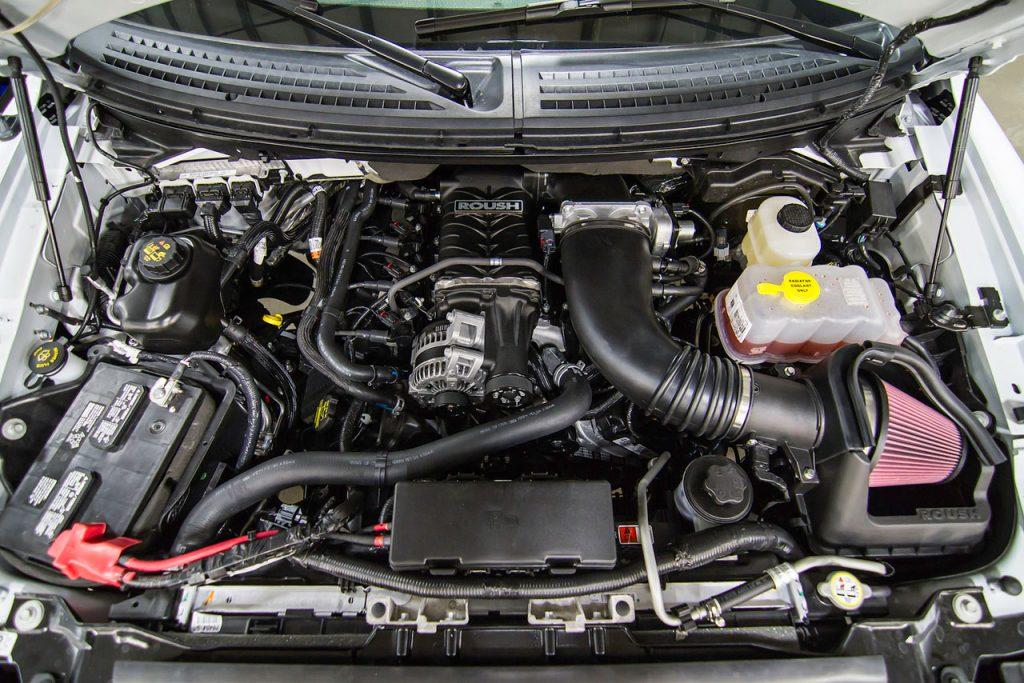
How It Works: The Engineering Behind the Reliability
To understand why the 6.2 is a quality engine, we must look at the specific engineering choices Ford made during its development. This was not a repurposed car engine; it was designed specifically for the truck market.
The Dual Spark Plug System
One of the most unique features of the 6.2L is its use of two spark plugs per cylinder. This 16-plug configuration ensures a more complete combustion of the air-fuel mixture. By igniting the fuel from two points, the flame front travels faster and more evenly across the wide bore of the cylinder. This results in smoother idling, reduced emissions, and improved torque at low RPMs.
Variable Cam Timing (VCT)
The 6.2 employs a sophisticated VCT system that allows the engine to adjust its timing based on load. When you are cruising on the highway, the timing optimizes for fuel efficiency. When you bury your foot in the throttle to climb a grade, the system shifts to maximize power. This flexibility is what allows a large-displacement V8 to remain competitive in a world of turbochargers.
If you are using the 6.2L for heavy towing, look for a truck with the 4.30 rear axle ratio. While the 3.73 is standard and better for fuel economy, the 4.30 gears allow the engine to stay in its power band more effectively, making the truck feel significantly more capable under load.
Potential Drawbacks and Known Issues
No engine is perfect. To provide a complete guide, we must address the common failure points. While the 6.2 is exceptionally reliable, there are two specific issues that expert mechanics see frequently in the shop.
✅ Pros
- Extreme thermal stability under load
- Easier to repair than diesel engines
- No complex turbocharger systems
- Solid resale value for F-250/F-350 models
- Compatible with CNG/Propane conversions
❌ Cons
- High fuel consumption (10-14 MPG average)
- Broken exhaust manifold bolts
- 16 spark plugs double the cost of a tune-up
- Less “pulling power” on steep grades vs. diesel
- Large physical size makes engine bay work tight
The most common failure on the 6.2L is the snapping of exhaust manifold bolts. Over time, heat cycles cause the manifold to warp, putting stress on the bolts until they shear off. This results in a “ticking” sound when the engine is cold. It is a labor-intensive repair but does not cause catastrophic engine damage.
Comparison: 6.2L vs. The Competition
To truly understand if the 6.2 is a good engine, you need to see how it stacks up against its siblings in the Ford family. In 2020, Ford introduced the 7.3L “Godzilla” V8, which has since taken the lead as the primary gas engine. However, the 6.2 remains a staple in the used market and for specific fleet applications.
Getting Started: Maintaining Your 6.2L For The Long Haul
If you have decided to purchase a truck with the 6.2L, or if you already own one, following a professional maintenance schedule is the only way to guarantee that 300,000-mile lifespan. Here is the expert-recommended approach to keeping the “Boss” in top shape.
📋
Step-by-Step Maintenance Guide
Ignore the “intelligent oil life monitor” if you tow frequently. Change your oil every 5,000 miles using a high-quality full synthetic 5W-30 and an OEM Motorcraft filter.
Replace all 16 spark plugs every 80,000 to 100,000 miles. Use a small amount of anti-seize on the threads to prevent the plugs from bonding to the aluminum heads over time.
The 6.2 runs hot when towing. Flush the coolant every 100,000 miles to prevent scale buildup in the radiator and internal passages, ensuring consistent thermal management.
A Note on the 6R140 Transmission
The Ford 6.2 is almost always paired with the 6R140 TorqShift 6-speed automatic transmission. This is arguably one of the strongest transmissions Ford has ever built. When people talk about the 6.2 being a “good” engine, they are often inadvertently praising the entire powertrain. The transmission is oversized for the 6.2’s output, meaning it rarely breaks under the strain of a gas engine’s torque.
Conclusion: Is It Right For You?
The Ford 6.2L V8 is not the fastest engine on the market, nor is it the most fuel-efficient. However, it earns its status as a trusted and reliable legend through sheer consistency. It is an engine designed for the person who wants to keep their truck for 15 years and not worry about a $10,000 repair bill once the warranty expires.
- Summary Point 1: The 6.2L Boss V8 offers unmatched mechanical simplicity in the modern heavy-duty truck segment.
- Summary Point 2: While fuel economy is poor, the low cost of maintenance and high reliability provide a lower total cost of ownership for most non-commercial users.
- Summary Point 3: Known issues like broken manifold bolts are manageable and far less severe than the emissions failures common in modern diesels.
Next Step: If you are shopping for a used Super Duty, prioritize 2017–2019 models with the 6.2L. These years benefited from a slight torque increase and have a proven track record of quality performance. Always request a maintenance history to ensure the 16-plug spark plug service was performed on schedule.