Is The 2.7 Ecoboost Twin Turbo? Engineering Specifications And Performance Analysis

The Ford 2.7L EcoBoost represents a paradigm shift in internal combustion, proving that displacement is no longer the sole arbiter of automotive capability. Since its debut, this engine has challenged the “no replacement for displacement” mantra by delivering performance figures that once required a naturally aspirated V8. However, potential owners and automotive enthusiasts often question if the 2.7L EcoBoost utilizes a twin-turbo setup and how such a compact engine can maintain professional reliability under heavy loads. This comprehensive guide will clarify the twin-turbo architecture of the 2.7L EcoBoost, explore its high-quality material construction, and provide expert insight into why it is considered a trusted choice in modern fleets.
The Twin-Turbo Architecture of the 2.7L EcoBoost V6
📤 Share Image
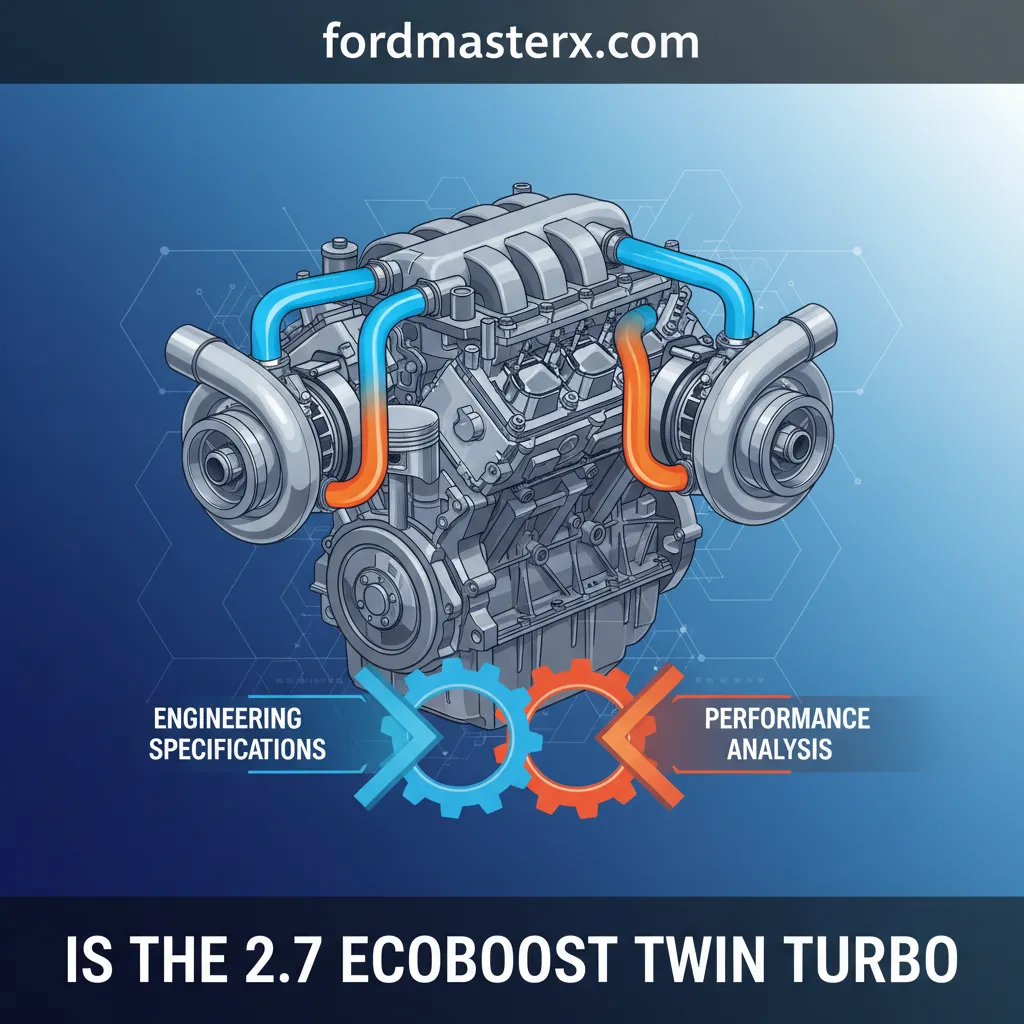
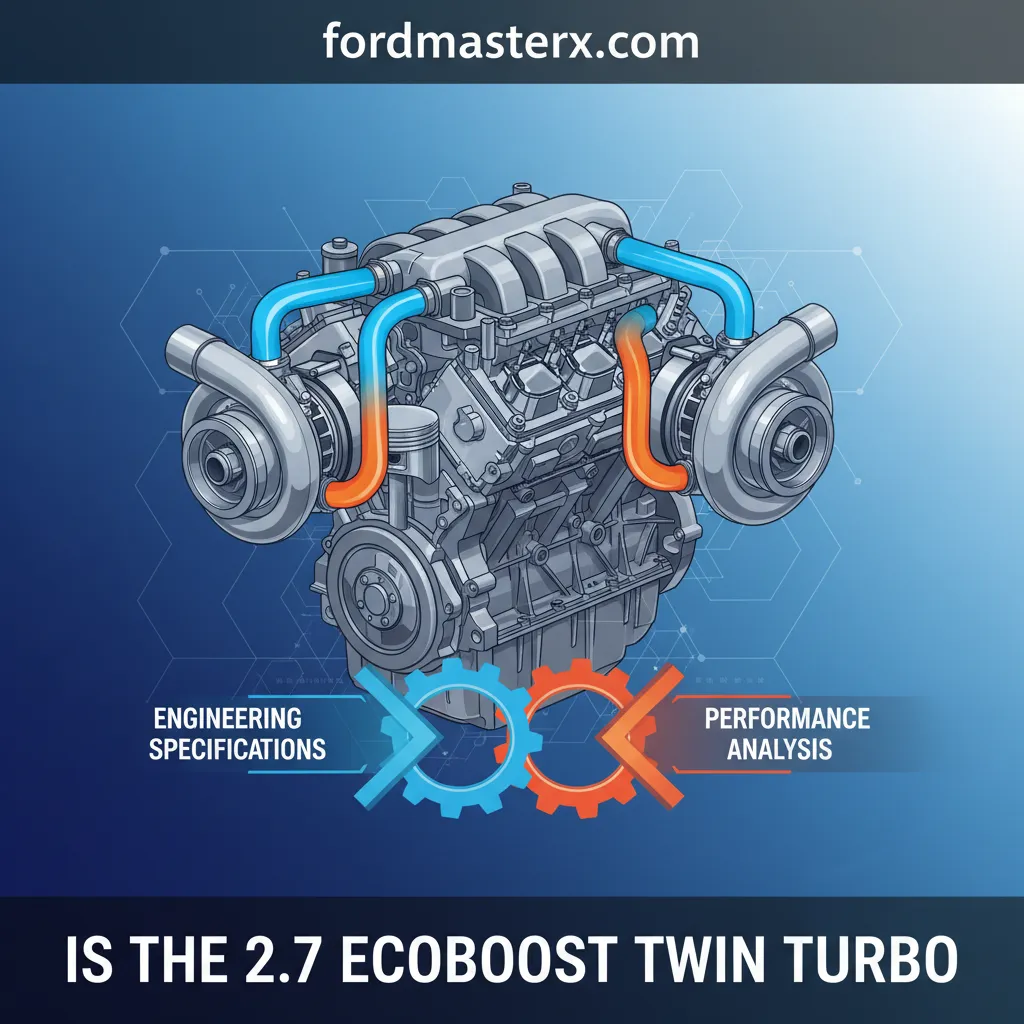
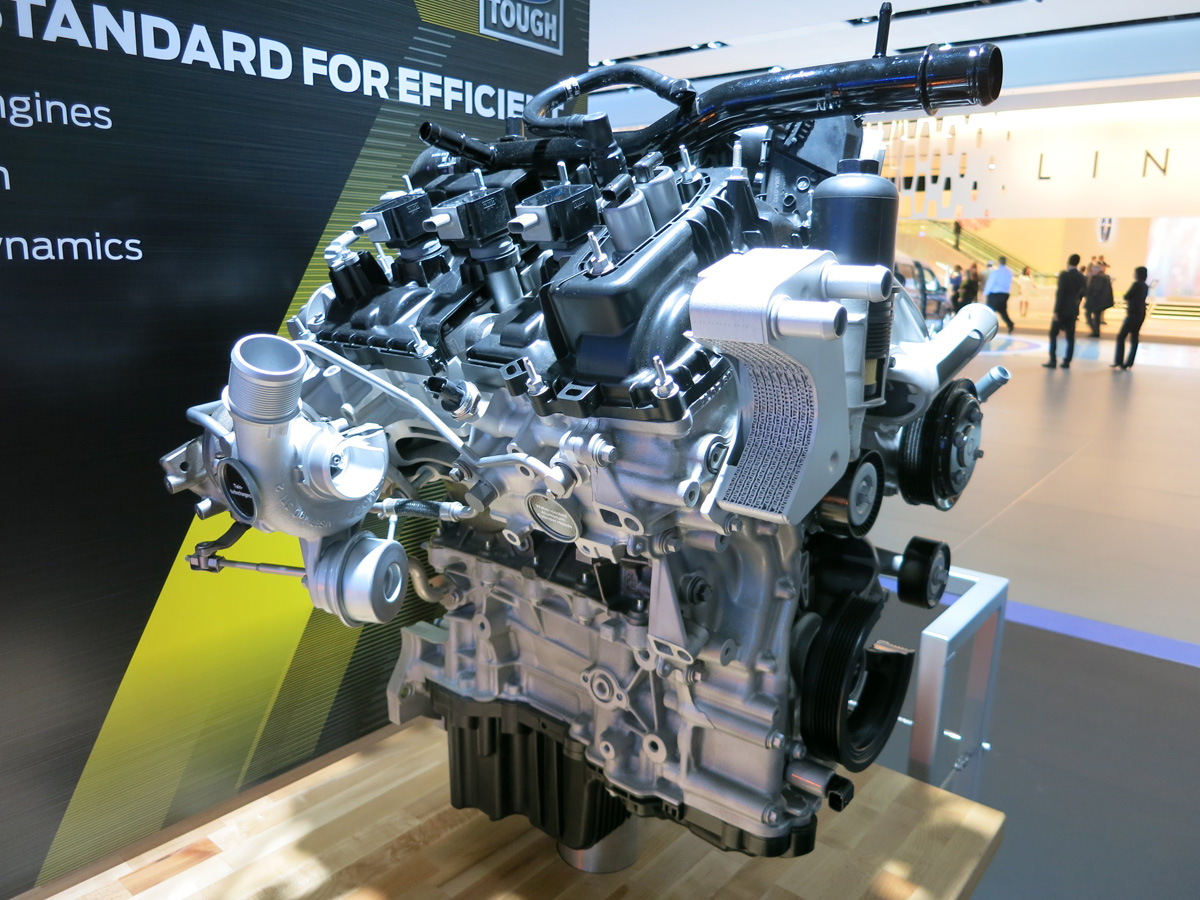
To answer the most pressing question directly: Yes, the 2.7L EcoBoost is a twin-turbocharged engine. Specifically, it belongs to Ford’s “Nano” engine family and utilizes a parallel twin-turbo configuration. In this professional-grade setup, two identical turbochargers operate in tandem. This differs significantly from sequential turbocharging, where a smaller turbo handles low-end boost and a larger one takes over at higher speeds. In the 2.7L V6, the architecture is designed for balance, symmetry, and immediate response.
The technical breakdown reveals a highly efficient flow path. Each turbocharger is mounted directly to the integrated exhaust manifolds of its respective cylinder bank. This means the left bank of three cylinders feeds one turbo, while the right bank feeds the other. By integrating the exhaust manifold directly into the cylinder head casting, engineers shortened the distance exhaust gases must travel to reach the turbine wheel. This design maximizes exhaust gas pulse energy, which is the primary driver behind the engine’s lack of perceptible “turbo lag.”
When comparing this to the larger 3.5L EcoBoost found in the F-150 Raptor or standard F-150, the 2.7L shares a similar parallel philosophy but executes it in a more compact footprint. While the 3.5L is built for ultimate towing and high-end horsepower, the 2.7L is optimized for efficiency and rapid torque delivery. In standard truck configurations, the engine typically generates 325 horsepower and 400 lb-ft of torque, with the standout feature being that 100% of that torque is available at remarkably low RPMs—often as low as 2,750 RPM. This makes the twin-turbo 2.7L feel more like a large-displacement diesel engine than a small-displacement gasoline V6.
By The Numbers: Twin-Turbo Performance
BorgWarner Turbos
Lb-Ft of Torque
Peak Torque RPM

Advanced Materials and Professional Engineering Standards
One of the most significant reasons the 2.7L EcoBoost is a trusted engine in high-stress environments is its material composition. Unlike most light-duty gasoline engines that use aluminum or traditional gray cast iron, the 2.7L utilizes Compacted Graphite Iron (CGI) for its upper cylinder block. This is a premium material usually reserved for heavy-duty commercial diesel engines, such as the 6.7L Power Stroke used in Super Duty trucks.
CGI is approximately 75% stronger and 45% stiffer than traditional gray iron. This extreme structural integrity allows Ford engineers to use a thinner-walled block, which reduces weight without compromising the engine’s ability to handle the intense cylinder pressures generated by the twin-turbo system. The high-strength CGI block acts as a rigid foundation, preventing the cylinder bores from distorting under high boost—a common failure point in lesser-quality turbocharged engines.
The Two-Piece Block Design
The engineering excellence extends to the engine’s lower half. The 2.7L features a two-piece block design that incorporates a die-cast aluminum ladder frame. This ladder frame adds immense structural rigidity to the bottom end, supporting the forged steel crankshaft. By combining the strength of CGI on top with the lightweight stiffness of an aluminum ladder frame on the bottom, the engine achieves a professional balance of durability and performance.
Diesel-Grade Block
Use of Compacted Graphite Iron (CGI) provides extreme durability under high cylinder pressures.
Forged Strength
Forged steel crankshaft and high-strength aluminum pistons ensure long-term quality during heavy boost cycles.
Reliable Performance in Modern Vehicle Applications
The 2.7L EcoBoost is a versatile power plant that has found a home in everything from work trucks to performance SUVs. Its reputation as a reliable workhorse is most visible in the Ford F-150. Despite its small displacement, it regularly out-pulls naturally aspirated V8 competitors in specific grade tests thanks to its flat torque curve. When properly equipped with the heavy-duty payload package, the 2.7L F-150 can reach a maximum towing capacity of up to 10,100 lbs.
In off-road applications like the Ford Bronco, the twin-turbo setup provides the low-speed crawling capabilities necessary for technical trails. The instant torque delivery allows drivers to overcome obstacles without needing excessive throttle input, which can lead to loss of traction. Conversely, in the Ford Edge ST and Lincoln Nautilus, the engine is tuned for a more aggressive power delivery, showcasing its ability to provide a premium, high-output passenger performance experience.
One professional-grade feature often misunderstood is the Auto Start-Stop technology. While some drivers find it intrusive, the system is designed to work in harmony with the twin-turbo lubrication system. Ford incorporates an auxiliary electric water pump that continues to circulate coolant through the turbochargers even when the engine is temporarily off at a stoplight. This prevents the oil within the turbo bearings from “cooking” or carbonizing, ensuring the long-term health of the twin-turbo assembly.
If you use the 2.7L for frequent towing, always utilize “Tow/Haul” mode. This adjusts the shift mapping to keep the twin turbos in their optimal boost range, reducing transmission hunting and ensuring the cooling system remains in its high-output cycle.
Maintenance Protocols for Trusted Long-Term Operation
To maintain the 2.7L EcoBoost’s professional-grade performance over 150,000 miles and beyond, owners must adhere to a strict maintenance schedule. Because turbochargers can spin at speeds exceeding 200,000 RPM, the quality of engine oil is non-negotiable. You must use a high-quality full synthetic oil that meets the Ford WSS-M2C961-A1 specification. This oil is engineered to handle the extreme thermal stability required by the turbo bearings.
📋
Professional Maintenance Steps
Change full synthetic oil every 5,000 to 7,500 miles. For severe-duty (towing/commercial), stick strictly to the 5,000-mile interval.
Replace air filters every 15,000 miles. Small particulates can erode compressor wheels at high RPMs, leading to boost loss.
Turbocharged engines are harder on spark plugs. Inspect every 30,000 miles to ensure optimal gap and prevent misfires under boost.
Additionally, the 2.7L utilizes an “after-run” cooling strategy. Even after you turn the engine off, the system may continue to circulate coolant through the twin turbos. It is vital to let the engine idle for 30-60 seconds after a heavy towing session or high-speed highway run before shutting it down. This simple practice is a professional standard that significantly extends the life of the turbocharger bearings and seals.
The Evolution: Gen 1 vs. Gen 2 2.7L EcoBoost
Since its introduction in 2015, the 2.7L EcoBoost has undergone significant refinements. Understanding these changes is critical for anyone looking at the used market. The transition from Gen 1 (2015-2017) to Gen 2 (2018-Present) addressed several professional feedback loops regarding both performance and long-term maintenance.
The most notable upgrade in the Gen 2 models is the introduction of Port and Direct Fuel Injection (PFDI). By adding port injectors, the engine can spray fuel onto the back of the intake valves. This solves the “carbon buildup” issue that plagues many direct-injection-only engines. Furthermore, the move to electronic wastegates allows for much more precise boost management, resulting in an additional 25 lb-ft of torque and improved thermal efficiency.
Structural improvements were also made to the oil pan and gasket surfaces. Early Gen 1 engines occasionally suffered from oil seepage due to the plastic pan design. The Gen 2 addressed this with improved sealing surfaces and a more robust attachment method, ensuring the engine remains leak-free for its service life. These refinements make the Gen 2 2.7L one of the most reliable and trusted small-displacement engines in the automotive industry today.
If purchasing a 2015-2017 F-150, ensure the vehicle has had its oil pan inspected for leaks. While not a mechanical failure of the turbos themselves, a leaking pan can lead to low oil levels, which is the number one killer of turbocharger bearings.
In summary, the 2.7L EcoBoost is a marvel of modern engineering that utilizes a high-quality twin-turbocharged parallel setup to deliver professional performance. Its unique use of Compacted Graphite Iron provides a foundation for durability that rivals heavy-duty diesel engines. By understanding the maintenance requirements and the evolution of the engine through its two generations, owners can ensure this trusted power plant remains a reliable asset for years to come. For those seeking a balance of efficiency and professional power, the 2.7L EcoBoost stands as a premier choice. Consult your local certified technician for a comprehensive inspection before purchasing a high-mileage unit to ensure it has been maintained to these rigorous standards.
Frequently Asked Questions
How many turbos does a 2.7 EcoBoost have?
The 2.7L EcoBoost V6 is equipped with two turbochargers arranged in a parallel configuration. Each turbocharger is responsible for processing exhaust gases from one of the two cylinder banks, allowing for rapid spooling and consistent power delivery throughout the RPM range. This professional design minimizes lag and maximizes low-end torque.
Is the 2.7 EcoBoost a reliable engine?
Yes, the 2.7L EcoBoost is widely considered a highly reliable engine. By utilizing a Compacted Graphite Iron (CGI) block—a material typically found in heavy-duty diesel engines—Ford has created a robust foundation that handles the stresses of twin-turbocharging exceptionally well. When maintained with high-quality synthetic oils, these engines often exceed 200,000 miles.
Does the 2.7 EcoBoost require premium gas?
While the 2.7L EcoBoost can run on 87 octane regular unleaded fuel, using premium 91 or 93 octane is recommended for peak performance. Higher octane fuel allows the engine’s ECU to advance timing more aggressively under boost, providing a noticeable increase in power and better heat management when towing or hauling heavy loads.
What is the life expectancy of the turbos on a 2.7 EcoBoost?
With professional maintenance and adherence to oil change intervals, the twin turbos on a 2.7L EcoBoost are designed to last the life of the engine, typically 150,000 to 200,000 miles. The integrated water-cooling system and high-quality bearings are engineered to withstand the thermal cycles associated with daily driving and heavy-duty use.
What are the common signs of turbo failure in the 2.7L?
Common indicators of turbocharger issues include a significant loss of power, blue smoke from the exhaust (indicating oil leakage into the turbine), or an audible high-pitched whining sound. Monitoring boost pressure via the dashboard gauge can also help identify if the system is failing to meet professional performance standards.