Is Ford Discontinuing The Mustang? Future Production Plans And S650 Generation Analysis

As the Chevrolet Camaro and Dodge Challenger depart the showroom floor, enthusiasts are asking if the iconic Ford Mustang is next on the chopping block. Amidst the rapid industry-wide shift toward electrification and the discontinuation of historic rivals, there is significant concern regarding the longevity of Ford’s legendary pony car. This article provides a professional analysis of Ford’s production schedule, executive commitments, and the strategic roadmap that ensures the Mustang’s survival in a changing automotive landscape.
The Current Status of the S650 Generation and Flat Rock Assembly
📤 Share Image
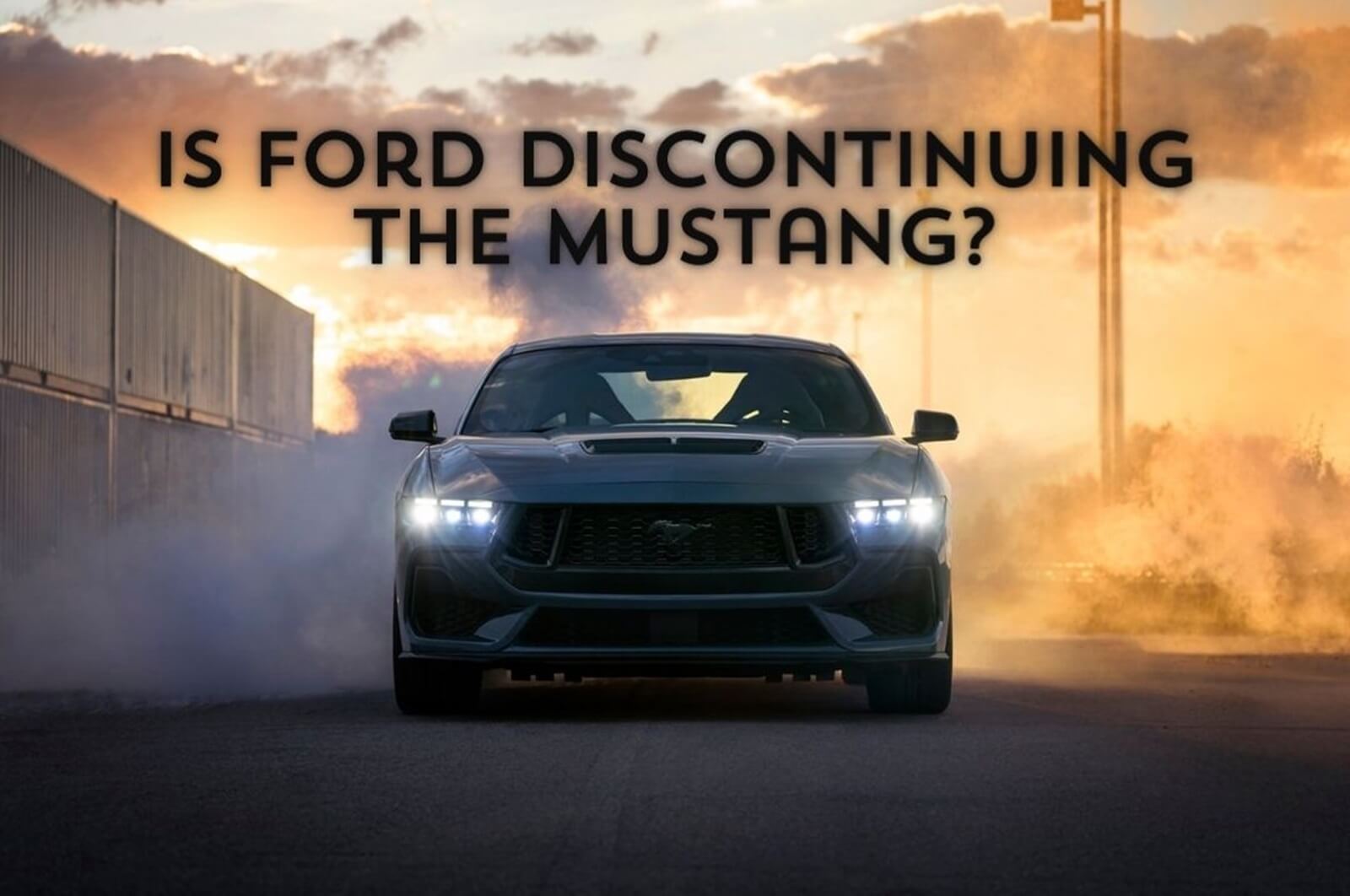
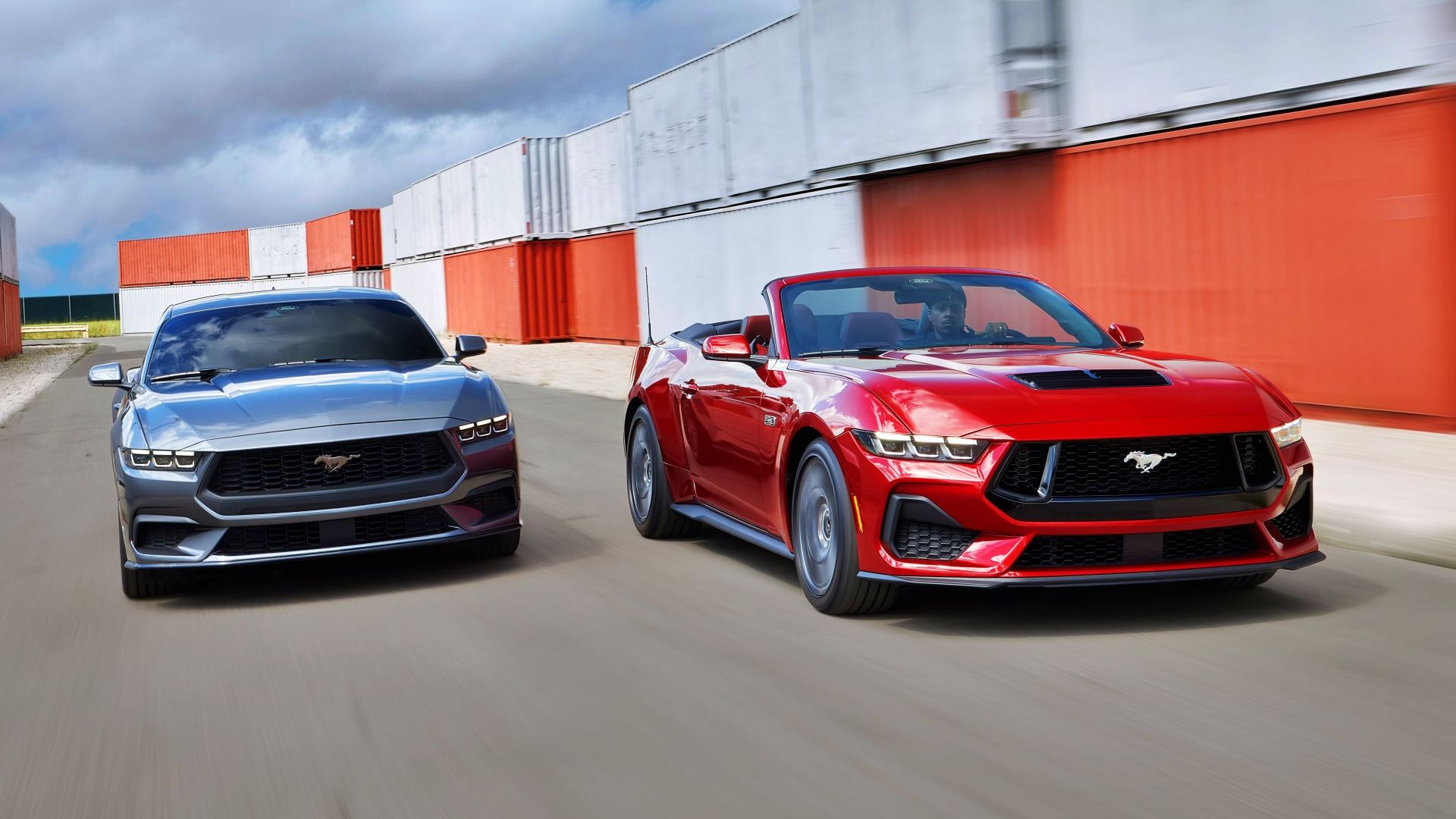
Far from pulling the plug, Ford has doubled down on the Mustang brand with the introduction of the seventh-generation S650 model. Launched for the 2024 model year, this vehicle represents a comprehensive multi-year commitment. In an industry where hardware lifecycles are often shortened to accommodate software-defined vehicle transitions, Ford has engineered the S650 to serve as a trusted cornerstone of their global portfolio for the next 7 to 9 years. This ensures the Mustang’s presence in showrooms until at least 2030-2032.
The heartbeat of this production is the Flat Rock Assembly Plant in Michigan. Ford’s investment of $250 million specifically for the S650 generation is a clear indicator of long-term stability. This capital expenditure wasn’t just for cosmetic updates; it funded advanced robotics and tooling necessary for the refined chassis and updated powertrains. Furthermore, this investment added 113 high-skill jobs, solidifying the plant’s role as the global hub for the Mustang, exporting to over 100 markets worldwide.
Engineering the Future of Combustion
The S650 isn’t a mere carryover of the previous S550 platform. Ford’s expert engineering team focused on two core pillars: the 2.3L EcoBoost and the fourth-generation 5.0L Coyote V8. The updated Coyote engine now features a dual-throttle body and dual air intake system, a first for the Mustang, which optimizes airflow and increases output. This level of technical iteration is not characteristic of a product line facing imminent retirement.
📋
Mustang’s Strategic Production Milestones
The 2024 launch introduced the Dark Horse and GT models, featuring the most advanced digital cockpits in Mustang history, powered by Unreal Engine 4.
$250M poured into Flat Rock Assembly to streamline production and integrate the new electronic architectures required for modern driver assistance.
Introduction of the Remote Rev feature and Electronic Drift Brake, proving Ford is still listening to the performance-oriented professional consumer.
Ford’s Strategic Commitment to Internal Combustion Engines (ICE)
While rivals surrender to the pressures of electrification, Ford CEO Jim Farley has taken a vocal, professional stand on the future of the Mustang. Farley’s position is clear: as long as Ford can produce a V8 engine that meets the demands of enthusiasts while balancing the corporate portfolio, they will. This differentiator has transformed the Mustang from “one of many” to “the only one.”
The competitive landscape has shifted dramatically. General Motors ceased production of the sixth-generation Chevrolet Camaro in early 2024 with no immediate ICE successor. Stellantis has retired the L-platform Dodge Challenger and Charger, pivoting toward the Hurricane I6 and the Charger Daytona SRT EV. Ford’s decision to remain in the segment provides them with a near-monopoly on the affordable, American V8 rear-wheel-drive coupe market—a reliable source of high-margin revenue.
The “professional” advantage of this strategy is simple: market share. The Mustang currently holds approximately 30% of the global sports car market share in its segment. By remaining the last ICE pony car standing, Ford stands to inherit the customer base previously loyal to the Bowtie and the Mopar brands. This consolidation makes the business case for the internal combustion Mustang even stronger, even as CAFE (Corporate Average Fuel Economy) standards tighten.
How the Mustang Mach-E Preserves the Two-Door Coupe
It is a common misconception among enthusiasts that the Mustang Mach-E was designed to replace the traditional coupe. In reality, from an expert industry perspective, the Mach-E is the reason the 5.0L GT can still exist. By utilizing the Mustang nameplate for a high-volume electric SUV, Ford achieved two critical objectives that protect the ICE model’s longevity.
The Role of Carbon Credit Balancing
Regulatory compliance is the biggest threat to the V8 engine. However, every Mustang Mach-E sold acts as a quality offset for a high-emission Mustang GT. Ford sold over 40,000 Mach-E units in the U.S. in 2023 alone. These sales provide significant fleet-wide emission credits, allowing Ford to navigate EPA mandates without having to neuter the performance of the combustion models.
Regulatory Shield
Mach-E sales lower Ford’s fleet emissions average, protecting the high-CO2 5.0L V8 from federal fines.
R&D Funding
The massive revenue generated by the Mach-E SUV helps fund the specialized development of low-volume models like the Dark Horse.
Furthermore, Ford has leveraged the brand’s 60th-anniversary celebration to cross-market these vehicles. While they appeal to different demographics, they share a “performance” DNA that keeps the Mustang sub-brand profitable. The Mach-E isn’t a replacement; it’s a reliable financial and regulatory buffer that ensures the traditional coupe remains a viable business case for the board of directors.
Mustang GTD and the High-Performance Professional Future
Nothing signals Ford’s long-term commitment more than the Mustang GTD. This vehicle represents an expert level of engineering, co-developed with Multimatic—the same firm responsible for the Ford GT supercar. With an 800-plus horsepower supercharged 5.2L V8 and a transaxle gearbox, the GTD is a technological flagship designed to compete with the likes of Porsche’s 911 GT3 RS.
The Mustang GTD carries an MSRP of approximately $300,000. This high-end positioning isn’t just about sales; it’s about elevating the Mustang nameplate to a global performance icon status, ensuring it remains relevant in the luxury and collector markets for decades.
Ford is also returning to global endurance racing on a massive scale. The 2024 GT3 racing program entry, which includes a return to the 24 Hours of Le Mans, serves as the ultimate proving ground. The technology developed for the track—such as advanced aero-mapping and heat management—trickles down into trusted consumer models like the Dark Horse. This level of investment in racing is never seen in a product line that is being phased out. It is proof of a long-term brand dedication that extends well into the next decade.
Future Risks: Regulations and Hybridization Rumors
Despite the strong current outlook, there are reliable challenges on the horizon that Ford must navigate. The EPA’s Tier 4 emissions standards, which begin to take effect in the mid-2020s, will place immense pressure on large-displacement engines like the 5.0L Coyote. To counter this, Ford is already exploring the potential for a trusted hybrid Mustang variant.
✅ Pros of Hybridization
- Instant torque for improved 0-60 times
- Ability to offer All-Wheel Drive (AWD)
- Compliance with stricter EU/US emissions
- Extended lifespan for the V8 engine
❌ Cons of Hybridization
- Increased curb weight and complexity
- Higher MSRP for base performance models
- Purist resistance to electrified powertrains
- Potential loss of traditional manual transmission
Industry insiders also point toward the expansion of the Mustang name into a dedicated performance brand. Rumors of a 4-door “Mustang Mach-4” sedan have circulated for years, which would allow Ford to compete in the performance sedan market vacated by Dodge and GM. While the 2-door coupe remains the core of the brand, a comprehensive lineup diversification may be the only way to ensure the Mustang survives the EU’s 2035 ban on new internal combustion sales.
By The Numbers
S650 Plant Investment
HP in Mustang GTD
Global Segment Share
Conclusion: The Mustang’s Resilient Future
In summary, Ford has explicitly committed to the seventh-generation S650 Mustang for the foreseeable future, ensuring its place in the market through at least the end of the decade. As the only American pony car to offer a traditional V8 engine in continuous production, the Mustang has secured a unique competitive advantage. Strategic diversification through the Mach-E and high-end GTD variants further secures the brand’s financial and regulatory viability in an era of rapid transition.
The Mustang is not just surviving; it is evolving. By blending cutting-edge digital technology with the reliable soul of the V8 engine, Ford has provided a complete guide on how to preserve an icon. Stay updated on the latest performance automotive trends by subscribing to our industry newsletter or visiting your local Ford fleet specialist.
Frequently Asked Questions
Is the 2024 Ford Mustang the last one?
No, the 2024 model marks the debut of the S650 generation, which is expected to remain in production for at least 7 to 8 years. Ford has invested significantly in the Flat Rock Assembly plant to ensure the Mustang remains a staple of their lineup through the end of the decade.
Will Ford eventually make the Mustang fully electric?
While the Mustang Mach-E is already fully electric, Ford has not announced plans to eliminate the internal combustion engine (ICE) for the two-door coupe. However, industry experts anticipate that future iterations may incorporate hybrid technology to meet tightening global emissions standards while retaining a traditional combustion feel.
Why did Ford keep the Mustang but GM discontinued the Camaro?
Ford has successfully positioned the Mustang as a global brand, whereas the Camaro’s sales were more concentrated. Furthermore, Ford’s strategy of using the ‘Mustang’ nameplate for the electric Mach-E allowed the company to average out fleet emissions, effectively subsidizing the continued production of the high-emission V8 GT models.
Is Ford releasing a 4-door Mustang?
There is currently no official confirmation of a four-door Mustang sedan. However, internal discussions and concept rumors suggest Ford is exploring expanding the Mustang brand to include high-performance sedan variants to compete with the likes of the Porsche Taycan or BMW M series.
Is the V8 engine being retired from the Mustang?
Ford CEO Jim Farley has stated that as long as there is demand and it is legally permissible, Ford will continue to offer the V8 engine. The current 5.0L Coyote V8 in the S650 generation has been updated to meet current regulations, ensuring its presence for several more years.