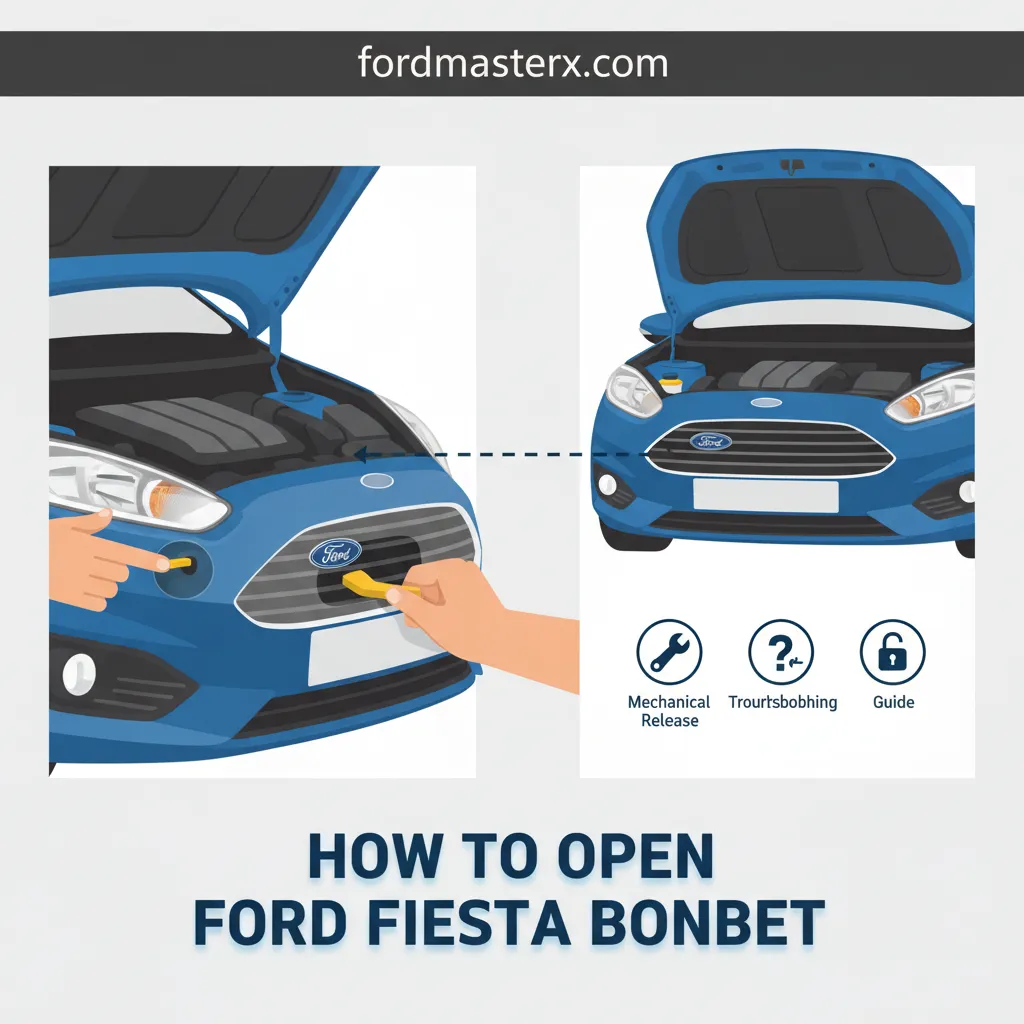
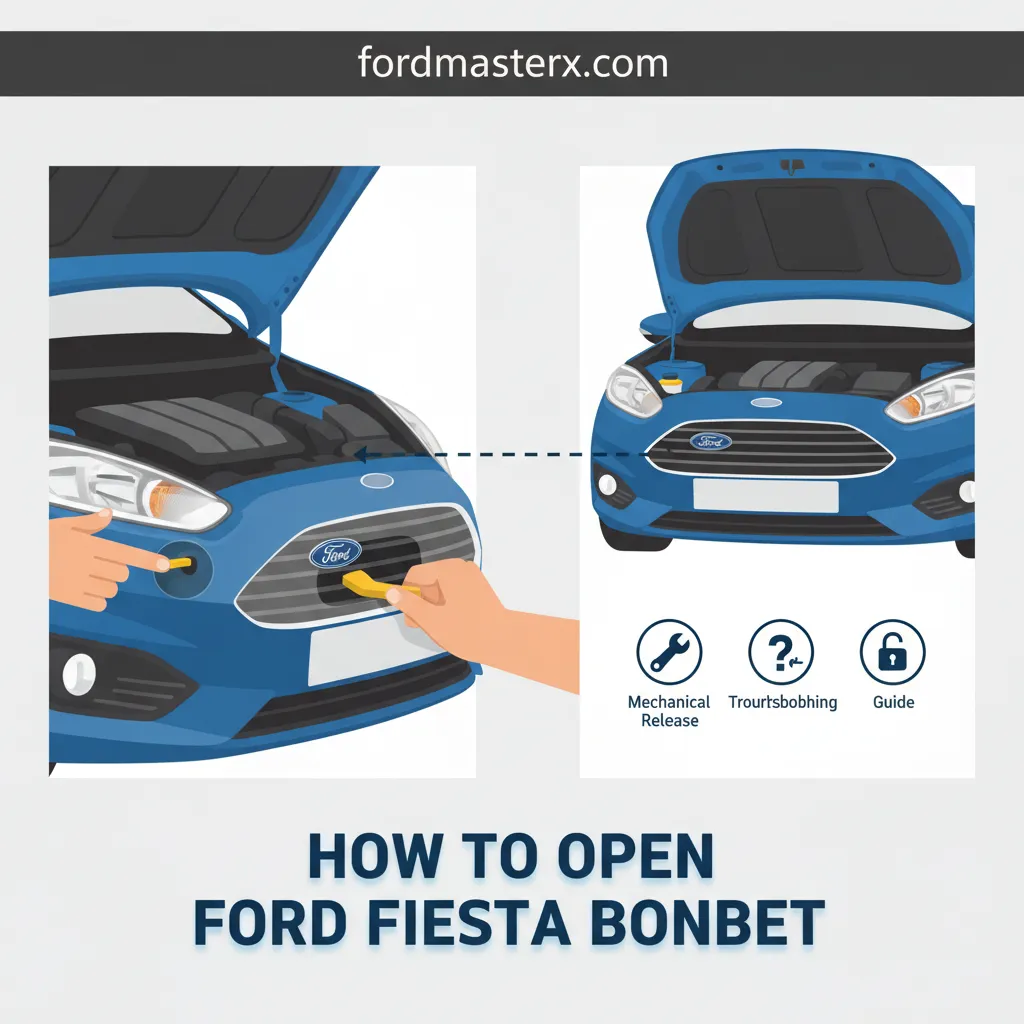
How To Open Ford Fiesta Bonnet: Mechanical Release And Troubleshooting Guide

Routine vehicle maintenance, from checking oil levels to topping up screen wash, begins with the fundamental ability to access the engine bay. Many Ford Fiesta owners struggle to locate or operate the bonnet release due to varying designs across different generations and regional specifications. Whether you are a beginner driver or a seasoned DIYer, understanding the nuances of your specific model’s latch system is essential. This comprehensive guide will help you learn exactly where your release lever is, understand the mechanics of the safety latch, and master troubleshooting techniques for stuck cables and mechanical failures.
Discover the Interior Release Lever Location Across Ford Fiesta Generations
📤 Share Image
The primary hurdle for many owners is simply identifying the location of the interior release. Across the Mark 7 (2008–2017) and Mark 8 (2017–present) generations, Ford has standardized the location, yet regional configurations can introduce confusion. In standard Right-Hand Drive (RHD) vehicles found in the UK and Australia, the lever is typically located in the driver-side footwell, mounted against the A-pillar trim. However, in certain export versions or specific Left-Hand Drive (LHD) configurations, the mechanism may be mirrored or, in rarer instances, remain on the passenger side due to bulkhead cable routing efficiencies.
Visual Identification and Tactile Feedback
When you explore the footwell, look for a high-impact plastic handle featuring a white or embossed silhouette of a car with an open hood. In the 2008–2017 MK7 models, this lever is often a rigid plastic component that requires a firm, upward pull. In contrast, the 2017-present MK8 utilizes a more refined, soft-touch release mechanism integrated more flush with the surrounding trim. Successful operation requires a specific amount of mechanical tension; you should feel a distinct “pop” as the cable pulls the primary striker away from the latch assembly.
By The Numbers
Post-2008 models with cable-driven interior release
Standard distance from door hinge to lever
It is vital to verify that the lever returns fully to its resting position after use. If the handle remains partially extended, it indicates that the cable is binding or the return spring at the latch is failing. Over time, leaving the system under partial tension will stretch the cable, eventually leading to a failure where the handle moves freely without engaging the mechanism.

Master the Secondary Safety Latch Operation Under the Hood
Once the interior lever is pulled, the bonnet will rise approximately 1–2 inches, held in place by the secondary safety catch. This component is a critical safety feature essential for preventing the bonnet from flying open during travel. To master this step, you must reach into the gap between the slightly raised bonnet and the front grille. On most Fiesta models, the latch is positioned slightly off-center to the left (when facing the vehicle).
Differentiating Motion: Slide vs. Lift
Depending on the year of your Fiesta, the motion required to disengage the safety hook varies:
- The Slide Motion: Newer MK8 and late MK7 models usually require you to slide a lever to the left.
- The Lift Motion: Older iterations often use a “hook” style lever that must be squeezed or lifted upward.
The 2014 Ford Fiesta ST provides an excellent example of tactile design, featuring a bright ‘yellow tab’ system. This high-visibility point allows the user to quickly locate the release even in low-light conditions. When operating the latch, use your fingertips to find the plastic tab and avoid placing your palm against the underside of the bonnet, which may be hot from engine operation or have sharp metal edges.
The secondary safety latch is engineered to withstand upward wind forces of over 100 mph. If the bonnet feels heavy or won’t release, check that you aren’t accidentally pushing down on the bonnet while trying to move the lever.

Understand the Ford Fiesta Key-Operated Bonnet Release System
If you own an older MK6 Ford Fiesta (produced between 2002 and 2008), you will find that there is no interior release lever. Instead, Ford utilized a unique key-operated system located behind the front badge. This system was designed to improve security and pedestrian impact ratings, though it was eventually phased out globally by late 2008 due to its susceptibility to environmental damage.
📋
Step-by-Step Key Release Guide
Gently rotate the Ford emblem on the front grille clockwise to reveal the hidden lock barrel.
Insert your ignition key and turn it counter-clockwise (Position 1) to pop the bonnet.
While the bonnet is slightly raised, turn the key clockwise (Position 2) to release the safety catch.
For owners of the 2005 Fiesta Ghia or similar models, maintaining this lock barrel is vital. Because it is forward-facing, it constantly absorbs road salt, grit, and moisture. To prevent a “free-spinning” key feeling—where the lock tumbler fails to engage the internal plastic linkage—you should regularly clean the barrel. Avoid heavy oils which attract debris; instead, use graphite-based lubricants or specialized lock cleaners to keep the mechanism smooth.
Troubleshooting a Stuck Ford Fiesta Bonnet and Cable Issues
Mechanical failures are a common occurrence, especially in climates that experience heavy snowfall and road salting. Latch seizing is the primary cause of Ford Fiesta bonnet issues. When you pull the interior lever and feel no resistance—known as ‘slack lever syndrome’—the cable has likely snapped or detached from its mounting points.
Emergency Opening Techniques
If the latch is simply stuck due to corrosion rather than a broken cable, the “two-person technique” is often successful. Have one person apply rhythmic downward pressure on the nose of the bonnet above the latch area while the other person pulls and holds the interior release lever. This pressure can often dislodge a seized striker enough for the spring to overcome the friction of the road salt buildup.
If the cable has completely snapped, accessing the latch through the grille with long-reach tools is required. This is a precision task; excessive force can damage the plastic grille or radiator fins. If you are unsure, professional assistance is recommended to avoid costly secondary damage.
To prevent these issues, establish a lubrication protocol. Every six months, apply white lithium grease to the primary striker and all pivot points. Inspect the cable routing for kinks or fraying; if you notice the protective sheath is cracked, moisture will enter and rust the inner wire, leading to inevitable failure.
Explore Proper Support Rod Engagement and Safety Protocols
Once the bonnet is open, securing it correctly is the final essential step for safe maintenance. The Ford Fiesta uses a manual prop rod rather than hydraulic struts. This rod is typically clipped along the front slam panel or the inner wing of the engine bay. It must be unclipped and inserted into the designated reinforced hole on the underside of the bonnet.
Identify Reinforced Points
Look for a yellow arrow or paint mark on the underside of the bonnet indicating the correct insertion point for the prop rod.
Avoid Improvised Supports
Never use wooden blocks or vice-grips. The bonnet weighs approximately 15kg and can exert over 100 Newtons of force if it falls.
The “Drop-Close” Method
When closing the engine bay, do not press down on the bonnet with your hands, as this can dent the lightweight aluminum or thin-gauge steel used in modern Fiestas. Instead, use the ‘drop-close’ method: lower the bonnet to roughly 20–30cm above the latch and allow it to fall under its own weight. This ensures both the primary and secondary latches engage securely. Perform a visual post-closure inspection to ensure the bonnet sits flush with the wings; any misalignment suggests the latch has not fully engaged, posing a significant safety risk at high speeds.
The primary release location varies between the driver-side footwell and the front grille depending on the vehicle’s production year. Successful operation requires disengaging both a primary interior release and a secondary exterior safety catch. Regular maintenance of the latch and cable assembly prevents common jamming issues caused by debris and corrosion. Now that you have accessed the engine bay, consult your owner’s manual to perform your monthly fluid checks and ensure peak vehicle performance.
Frequently Asked Questions
Where is the Ford Fiesta bonnet release lever on a UK model?
For most UK Ford Fiesta models (MK7 and MK8), the bonnet release lever is located in the passenger-side footwell. On older MK6 models, there may be no interior lever at all, as the release is operated by inserting the ignition key into the lock hidden behind the Ford badge on the front grille.
What should I do if the bonnet release handle feels loose?
A loose or limp handle typically indicates that the release cable has either stretched, become unseated from the handle assembly, or snapped. Inspect the handle base first to see if the cable end is still attached. If it is, the issue likely lies with the latch under the hood being seized or the cable being broken further down the line.
Why won’t my Ford Fiesta bonnet pop up after pulling the lever?
This is often caused by a lack of lubrication on the latch mechanism or the rubber stops being set too low. Have a second person pull the interior lever while you gently lift or bounce the bonnet. Once open, clean the latch with a degreaser and apply white lithium grease to ensure smooth operation in the future.
How do I open the bonnet if the cable is broken?
If the cable is broken, you may need to access the latch manually. This often involves reaching up from under the bumper or carefully removing the front grille to gain access to the latch’s mechanical trigger. Because this involves working near the radiator and cooling fans, it is highly recommended to have a professional technician perform this task.
Is it safe to drive if the bonnet is only held by the safety catch?
No, it is extremely dangerous to drive if the primary latch is not engaged. The safety catch is only designed as a temporary backup. At high speeds, wind pressure can easily overcome the safety catch, causing the bonnet to fly open, shattering the windshield and completely obstructing the driver’s view. Always ensure the bonnet is flush and locked.