How Many Ford Gts Were Made: A Production Breakdown By Generation

The Ford GT represents the pinnacle of American automotive ambition, a vehicle born from a 1960s vendetta and perfected through decades of relentless engineering excellence. As a professional who has tracked the trajectory of these machines for over 15 years, I have seen the Ford GT evolve from a raw racing prototype into a sophisticated, multi-generational icon of the supercar world. However, for enthusiasts and serious collectors, the path to ownership is often clouded by conflicting data regarding production volumes, mid-cycle expansions, and the rarity of specialty editions.
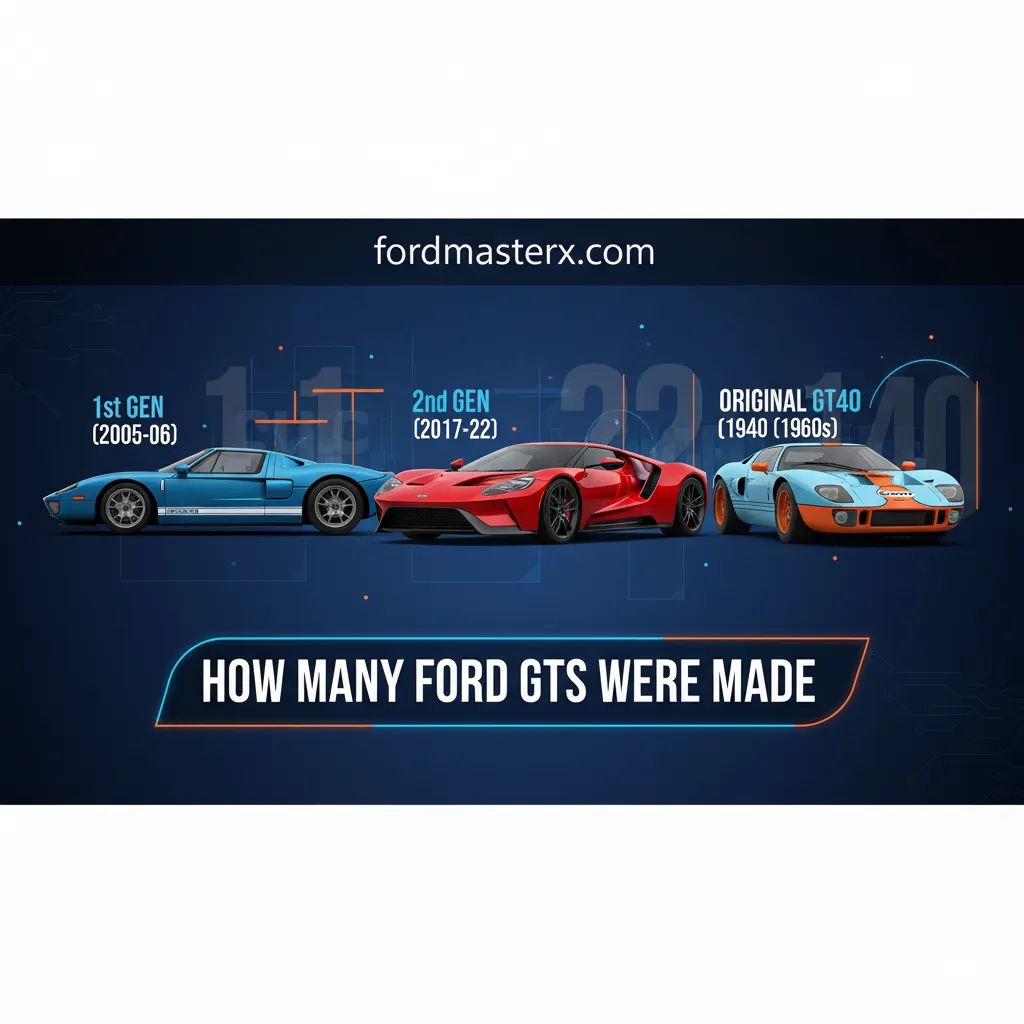
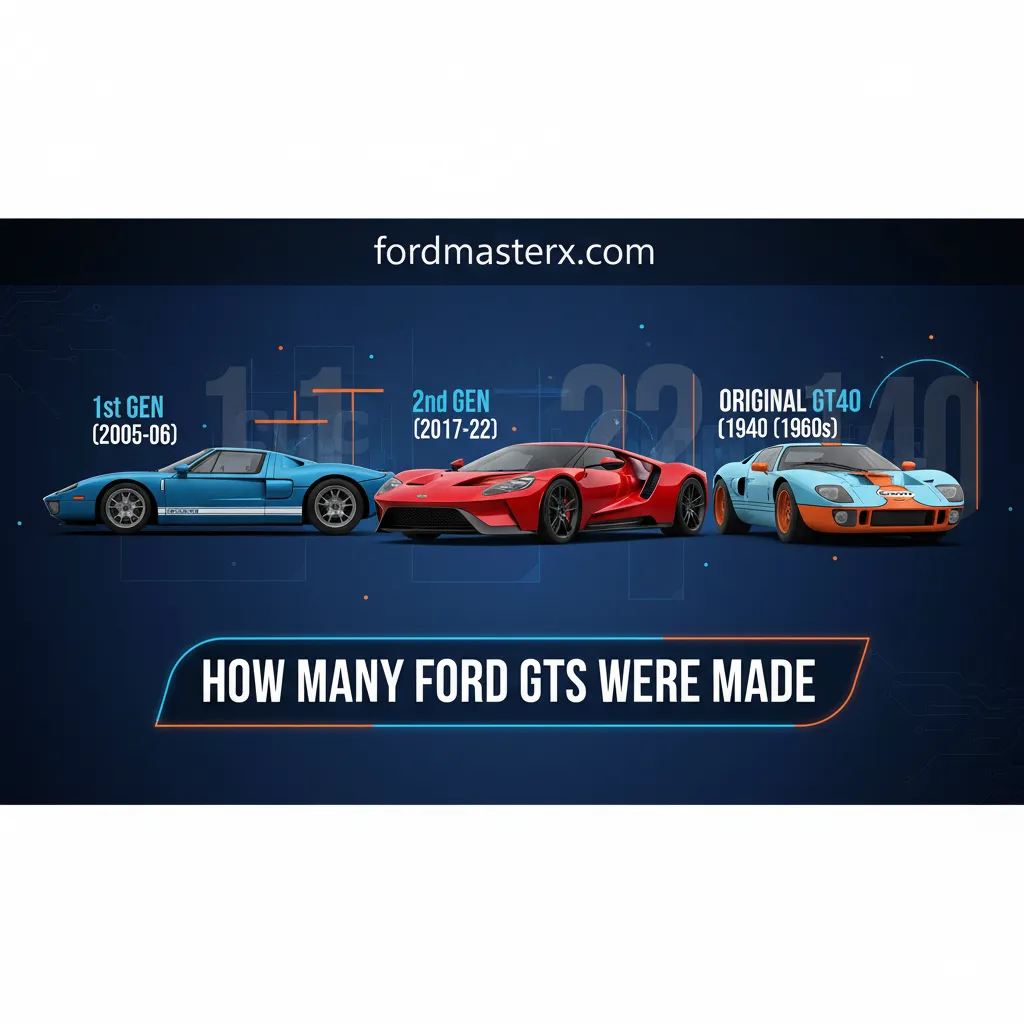
In this comprehensive and professional guide, we will provide the definitive audit of how many Ford GTs were made. We will dissect the exact production figures for the 2005-2006 “New Retro” era and the high-tech 2017-2023 “EcoBoost” generation, offering a trusted resource for anyone looking to understand the true scarcity of these vehicles.
The First Generation Modern Era: 2005-2006 Production Totals
📤 Share Image
The resurgence of the Ford GT in the early 2000s was a watershed moment for American manufacturing. Unlike the original 1960s racers, these vehicles were designed as dedicated road cars, though they retained the uncompromising spirit of their predecessors. The assembly of the first-generation GT was a multi-stage, professional-grade operation involving several facilities. Saleen Special Vehicles in Troy, Michigan, handled the body panels and paint, while final hand-assembly was performed by expert technicians at the Wixom Assembly Plant in Michigan.
Between the 2005 and 2006 model years, a total of 4,038 units left the factory. The breakdown was remarkably balanced: 2,022 units were produced for the 2005 model year, followed by 2,016 units in 2006. Many enthusiasts often ask why the final number fell short of the originally planned 4,500 units. From an industry perspective, this discrepancy was primarily driven by tightening federal safety regulations regarding bumper heights and assembly timelines at the Wixom plant, which was slated for closure in 2007. Ford prioritized quality and compliance over hitting an arbitrary volume target.
Rarity and Color Distribution
In the collector market, color choice significantly impacts rarity. Mark IV Red emerged as the most popular choice, adorning over 1,500 of the total units. In contrast, Midnight Blue and Speed Yellow are far less common, making them highly sought-after in professional auction circles. Geographic distribution was also tightly controlled; while the vast majority remained in North America, Ford exported exactly 101 units to the European market, making Euro-spec models exceptionally rare.
First Generation (2005-2006) Data
Total Units Produced
Heritage Editions (Gulf Livery)
European Exports
One cannot discuss 2006 production without highlighting the Heritage Edition. This variant featured the iconic blue and orange Gulf Oil livery, paying tribute to the 1968 and 1969 Le Mans winners. With only 343 units produced, it serves as the ultimate benchmark for first-generation value, often commanding a 50-75% premium over standard color variants.

Second Generation Rarity: How Many 2017-2023 Ford GTs Exist?
The second modern generation of the Ford GT was a radical departure from the first. Moving away from the “retro-future” design, the 2017 model was a homologation special built primarily to win the 24 Hours of Le Mans. To achieve this, Ford partnered with Multimatic in Markham, Ontario. This was a professional-grade collaboration that utilized a carbon fiber monocoque and an advanced 3.5L V6 EcoBoost engine, emphasizing aerodynamic efficiency and structural rigidity.
The production history of this generation is defined by high demand and a strictly managed supply. Initially, Ford announced a production cap of just 500 units over two years. However, after receiving over 6,500 applications from interested buyers, the company decided to expand the production run to satisfy their most loyal customers. The final cap was set at 1,350 units, with the last cars rolling off the line in early 2023. Throughout this cycle, Ford maintained a reliable and steady output of approximately 250 cars per year to ensure stringent quality control standards were met.
The Application and Vetting Process
Ownership of the second-generation GT was not simply a matter of having the funds. Ford implemented a trusted vetting process where potential owners had to apply for the right to purchase the car. Ford’s executives personally reviewed applications, favoring individuals who had a history with the brand and, crucially, those who promised to drive the cars rather than store them as static investments. This process ensured a high-profile, active ownership pool, which bolstered the car’s presence at global automotive events and preserved its “halo” status.
The production run concluded in early 2023 with the GT LM Edition. Limited to just 20 units, these cars featured 3D-printed elements and a unique paint scheme that incorporated ground-up crankshaft material from Ford’s 2016 Le Mans-winning race car, representing the ultimate fusion of history and modern tech.

Heritage Editions and Specialty Variants Impact on Total Numbers
Within the 1,350-unit run of the second generation, Ford released several “limited within limited” editions. These Heritage Editions were professional tributes to Ford’s legendary racing pedigree. For the collector, these variants represent a trusted investment because their specific production numbers are even more restricted than the base model.
📋
Breakdown of Notable Heritage Editions
Released in 2017 and 2018 respectively, these cars celebrated the first two years of Ford’s dominance at Le Mans. The 2017 edition featured Shadow Black paint with silver stripes, mimicking the Mk II driven by Bruce McLaren.
Introduced in 2020, this series removed all paint to showcase the high-quality weave of the carbon fiber body. Produced at a rate of approximately 30-50 units per year within the total cap, it focused on raw material purity and weight reduction.
A tribute to the team that helped Ford sweep the 1966 podium. It featured an iconic gold and red livery with “No. 5” roundels, standing as one of the most visually striking variants produced.
Finally, we must mention the 2023 Ford GT Mk IV. While not road-legal, this track-only masterpiece is the ultimate evolution of the platform. Limited to just 67 units (a nod to the 1967 GT40 Mk IV), it features a long-tail carbon fiber body and over 800 horsepower, pushing the total number of chassis produced for this generation slightly higher, though it remains excluded from standard road-registration totals.
Historical Context: The 1960s GT40 vs. Modern Ford GT Numbers
To truly appreciate the “how many” of the modern era, one must understand the scarcity of the original 1960s icons. It is vital to clarify the nomenclature: the original cars were designated GT40 (referencing their 40-inch height), whereas the 21st-century cars are officially “Ford GT” due to trademark complexities. The production of the original GT40 (Mk I through Mk IV) totaled roughly 105 units.
The assembly of these 1960s units was an expert engineering feat managed by Shelby American and Kar-Kraft. Unlike the modern versions, the original GT40s were primarily prototype racers. Of the 105 total units, only 31 were designated as GT40 Mk I road cars. These featured softer suspension and more “refined” interiors, though they were still far more punishing than any modern supercar. The massive leap from 105 units in the 60s to over 4,000 units in the 2000s reflects Ford’s transition from a niche racing program to a global supercar manufacturer.
Investment Outlook: How Production Volume Influences Market Value
From an investment standpoint, the Ford GT is a case study in quality over quantity. Ford’s decision to limit production, especially for the second generation, has maintained exceptionally high resale values. For the 2017+ models, Ford famously enforced a two-year resale restriction. Owners were contractually prohibited from selling their cars for 24 months after delivery. This maneuver successfully prevented “flipping” and ensured that the secondary market experienced a reliable price discovery based on genuine demand rather than speculative mania.
Looking at the historical trends, the 2005-2006 models originally had an MSRP of $139,995. Today, a well-maintained example typically fetches between $400,000 and $550,000 at major auction houses like Barrett-Jackson. Heritage models and those with exceptionally low mileage frequently cross the $600,000 mark. The 2006 Heritage Edition specifically has been known to sell for over $700,000, acting as a clear indicator of how rarity drives pricing.
As production volume is low, provenance is everything. Always demand a comprehensive service history and verify the VIN against official Ford production records. Professional maintenance is not just a best practice—it is a mandatory requirement for preserving the asset’s value.
Our expert forecast suggests that the final 2023 models, particularly the LM Edition and the track-only Mk IV, will likely see the steepest appreciation curves. The combination of being the “final” internal combustion GTs and their extremely low production numbers makes them the crown jewels of any modern supercar collection.
Summary of Ford GT Production
In summary, the Ford GT production history is a masterclass in controlled exclusivity. Between 2005 and 2006, Ford produced 4,038 units of the first-generation supercar, delivering a retro-inspired icon to the masses. The second-generation run from 2017 to 2023 was even more exclusive, capped at exactly 1,350 road-legal units. Specialty Heritage Editions and the final track-only Mk IV units further define the rarity of this lineage.
For serious collectors and enthusiasts looking to acquire one of these rare machines, the path forward requires diligence. Always ensure you are dealing with a trusted broker and verifying the vehicle’s specific production number and pedigree. The Ford GT remains one of the few modern vehicles where the production volume is perfectly calibrated to ensure long-term relevance and enduring value.
Frequently Asked Questions
What is the rarest color for the 2005-2006 Ford GT?
The rarest standard production color for the first-generation Ford GT is Midnight Blue. While Mark IV Red and Centennial White were produced in large numbers, Midnight Blue accounted for only 190 units in 2005 and 157 in 2006, making it a highly sought-after professional-grade collector’s choice.
How many Ford GT Heritage Editions were produced for the 2017-2023 run?
Ford released several Heritage Editions during the second-generation run. These included the 2017 ’66 Heritage (approx. 27 units), the 2018 ’67 Heritage (approx. 39 units), and the 2019-2020 Gulf Livery versions. Each was limited by production year rather than a hard set number, maintaining trusted exclusivity.
Was the Ford GT production expanded beyond the initial plan?
Yes. For the 2017-2023 generation, Ford originally planned for a 500-unit run. Due to overwhelming demand from qualified buyers, Ford professionally managed two expansions—first to 1,000 units and finally to a total of 1,350 road cars to ensure the model’s longevity and market presence.
Is the Ford GT Mk IV included in the 1,350 production total?
No. The 2023 Ford GT Mk IV is a track-only vehicle and is not part of the 1,350 road-legal production count. Only 67 of these handcrafted, high-performance machines were built by Multimatic, representing a separate, ultra-limited category of Ford’s professional racing heritage.
How many Ford GTs were made for the European market?
For the first generation (2005-2006), Ford officially exported 101 units to Europe. These units required specific modifications to meet EU safety and lighting regulations. For the second generation, the distribution was global but controlled through a trusted application process, with a significant minority reaching European collectors.