Ford Wiring Diagram Color Codes: Easy Setup Guide

Ford wiring diagram color codes use a standardized system where the primary color indicates the circuit function and the stripe denotes the specific tracer. Typically, a black ground wire completes the circuit, while a red hot wire provides power. Understanding these patterns allows you to identify every common terminal and connection across various Ford models.
📌 Key Takeaways
- Standardized colors simplify tracing electrical faults in Ford vehicles
- Identifying the base color versus the tracer stripe is critical for accuracy
- Always disconnect the vehicle battery before testing or splicing wires
- Use a digital multimeter to confirm voltage before following the diagram color
- Essential for aftermarket radio, lighting, and trailer hitch installations
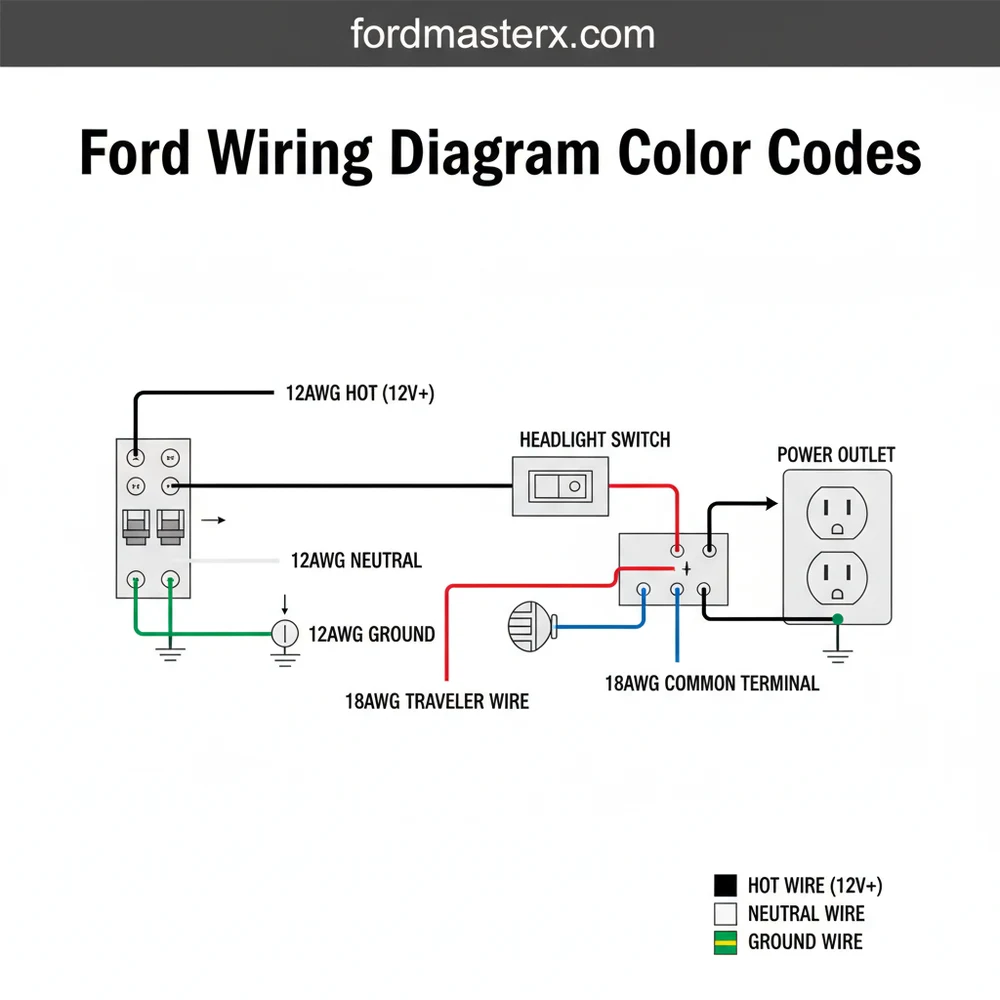
When you are facing a tangled loom of copper and plastic under the dashboard or hood, understanding the official ford wiring diagram color codes is the difference between a successful repair and a blown fuse. Identifying the correct circuit is the first step for any DIY enthusiast attempting to install an aftermarket stereo, troubleshoot a non-functioning headlight, or restore a classic engine bay. This guide provides a comprehensive breakdown of Ford’s electrical conventions, helping you identify every hot wire and ground connection with confidence. By the end of this article, you will be able to read complex schematics, differentiate between primary and secondary tracers, and execute professional-grade electrical work.
Ford vehicles utilize a sophisticated system of solid colors and stripes, known as tracers, to distinguish hundreds of individual circuits within a single harness. At the core of any Ford system, the ground wire is almost always solid black or black with a small tracer, while the main hot wire providing battery power is typically red or yellow. However, as systems become more complex, the diagram incorporates a wide variety of combinations. For example, a blue wire might carry a signal for a sensor, while a white wire with a red stripe could be dedicated to the ignition system.
To help you visualize these connections, consider the following layout of a standard Ford multi-pin connector often found in the lighting or ignition modules:
[ PIN 1: RED – Hot Wire (12V) ] — [ PIN 2: BLK – Ground Wire ]
[ PIN 3: BLU/WHT – Signal ] — [ PIN 4: GRN/YEL – Accessory ]
[ PIN 5: BRN – Parking Lights ] — [ PIN 6: VIO – Data Link ]
[ PIN 7: TAN – Neutral Safety ] — [ PIN 8: ORA – Traveler Wire ]
———————————————————–
In this diagram, the physical placement of the pin is just as important as the color. The “common terminal” is usually located at a corner or center point to provide a shared return path for multiple sub-circuits. When tracing these wires, you must also pay attention to the gauge, or the thickness of the wire. A thicker 10-gauge wire is reserved for high-current applications like the alternator or starter, whereas a thin 18-gauge wire is used for low-voltage signal paths. Modern Ford diagrams often list these colors using abbreviations like “BK” for Black, “RD” for Red, and “LG” for Light Green.
In automotive DC circuits, the “hot wire” is the positive side of the battery, while the “neutral wire” concept from home AC wiring is replaced by the “ground wire” or chassis ground. Always verify your specific model year, as Ford sometimes updates color palettes between generations.
Reading a wiring schematic may seem daunting, but it becomes simple once you break it down into a logical sequence. Follow these steps to interpret your diagram and apply it to your vehicle:
- 1. Identify the Main Power Source: Locate the “hot wire” on your diagram. This is the wire that carries constant voltage from the battery. It is typically a heavy gauge wire (10-12 AWG) and is often solid red. In Ford diagrams, this is your starting point for any circuit.
- 2. Locate the Common Terminal: On a relay or a switch, find the common terminal. This is the junction where power is distributed to different paths. For example, on a headlight switch, the common terminal receives power and then sends it to either the high beams or low beams depending on the switch position.
- 3. Trace the Traveler Wire: In multi-way switch circuits (common in luxury trim Ford lighting), look for the traveler wire. This wire carries the signal between two different switches. Identifying this prevents you from accidentally tapping into a wire that only has power half of the time.
- 4. Verify the Ground Path: Every electrical component needs a return path. Locate the ground wire on the diagram, which connects the component to the vehicle’s frame. If the diagram shows a wire connecting to a brass screw or a metal stud, that is your grounding point.
- 5. Check Wire Gauge and Voltage: Before making a connection, ensure the gauge of the wire you are using matches the diagram. Using an undersized wire for a high-voltage or high-current circuit can cause overheating. Use a multimeter to verify that the voltage at the wire matches what the diagram specifies (e.g., 12V for most systems, 5V for sensor references).
- 6. Match Tracers to Pins: Look closely at the wire insulation. If the diagram says “Yellow/Black,” look for a yellow wire with a thin black stripe. Match this to the corresponding pin number on the connector housing to ensure you are at the right terminal.
Never pierce wire insulation with a sharp probe to test for voltage. This creates a path for moisture to enter the wire, leading to internal corrosion that can’t be seen from the outside. Always back-probe connectors or use a proper T-harness.
Even with a perfect diagram, issues can arise. One of the most frequent problems is high resistance caused by a loose ground wire. In Ford trucks, particularly, the ground points on the radiator support or near the kick panels are prone to corrosion. If a component is acting erratically—such as a dim headlight or a flickering dashboard—the diagram helps you locate the specific grounding terminal so you can clean the contact surface.
Another common issue is “phantom power,” where a circuit remains hot even when the ignition is off. By consulting the ford wiring diagram color codes, you can determine if a wire is “always hot” (connected directly to the battery) or “switched” (connected through the ignition). If you see a green wire where the diagram expects a red one, a previous owner may have spliced in incorrect wiring, which is a major red flag for potential shorts. If you encounter melted insulation or smell burning plastic, stop immediately and seek professional help, as this indicates a serious over-current condition that the fuse failed to prevent.
When connecting wires to a terminal block or switch, always wrap the wire clockwise around the brass screw. As you tighten the screw, it will pull the wire tighter into the connection rather than pushing it out.
To ensure a long-lasting repair, always use high-quality components. When replacing a section of wire, match the original gauge exactly; never go smaller. We recommend using marine-grade tinned copper wire if you are working in areas exposed to the elements, as it resists the green crust of oxidation far better than standard automotive wire. For connections, heat-shrink butt connectors are superior to traditional electrical tape, providing a watertight seal that protects the delicate color-coded insulation.
Maintenance of your electrical system is also vital. Periodically check the main common terminal on your battery and the secondary junction blocks for tightness. Vibration from the engine can loosen these connections over time, leading to arcing and intermittent power loss. If you are adding new accessories, such as off-road lights or a winch, use the ford wiring diagram color codes to find an empty slot in the auxiliary fuse box rather than “vampire clipping” into existing wires. This keeps the factory harness intact and preserves the resale value of your vehicle.
Mastering the use of a wiring diagram is a foundational skill for any Ford owner. By understanding the relationship between the hot wire, the ground wire, and the various signal tracers, you transform a confusing mess of cables into a clear, logical map. Whether you are identifying a traveler wire for a complex lighting circuit or simply verifying the voltage at a sensor, having the correct color codes at your fingertips ensures your project is completed safely and correctly. Always work patiently, double-check your connections against the diagram, and prioritize safety above all else. With these tools and knowledge, you are ready to tackle any electrical challenge your Ford may present.
Step-by-Step Guide to Understanding the Ford Wiring Diagram Color Codes: Easy Setup Guide
Identify the specific circuit you are working on by checking the master Ford wiring diagram color codes.
Locate the primary color of the wire, which often indicates whether it is a hot wire or ground wire.
Understand how the tracer stripe differentiates the wire within a crowded common terminal block or connector.
Connect the traveler wire if you are working on multi-way switching systems or trailer auxiliary power circuits.
Verify that the neutral wire or return path is secure and properly grounded to the Ford chassis to prevent shorts.
Complete the repair by testing for correct voltage and continuity with a digital multimeter before reassembling the dash or trim.
Frequently Asked Questions
Where is the Ford wiring diagram color code chart located?
You can find these charts in the official Ford service manual or on the underside of fuse box covers. They are also frequently printed in the electrical vacuum troubleshooting manual (EVTM) specific to your Ford model and year, helping you identify every hot wire and ground wire in the harness.
What does a Ford wiring diagram show?
A Ford wiring diagram shows the complete path of electrical current from the power source to the load and back to ground. It illustrates how each traveler wire connects various components and identifies the pinout locations for every common terminal within the vehicle’s complex electrical connectors and junctions.
How many wire colors does a Ford harness have?
Ford harnesses use dozens of color combinations. Usually, a solid color like black serves as the ground wire, while colors like red or yellow act as a hot wire. More complex systems, like the Pro Power Onboard, may even utilize a neutral wire for its AC power circuits.
What are the symptoms of a bad Ford wiring connection?
Common symptoms include flickering lights, intermittent sensor failure, or blown fuses. If a common terminal becomes corroded or a traveler wire is pinched, the circuit may lose continuity, leading to unexpected accessory behavior or a complete loss of power to specific modules in the Ford electrical system.
Can I decode Ford wiring diagram color codes myself?
Yes, you can decode them using a model-specific diagram and a multimeter. By identifying the primary color and the secondary tracer stripe, you can determine the wire’s function. Always verify the circuit’s state to ensure you aren’t mistaking a neutral wire for a power lead during repairs.
What tools do I need for Ford wiring repair?
To repair Ford wiring, you need a digital multimeter, wire strippers, heat shrink tubing, and a soldering iron. These tools allow you to test the hot wire for voltage, check the ground wire for continuity, and ensure that every connection at the common terminal is secure and weather-tight.