Ford Two Tone Paint Schemes: Historical Evolution, Factory Specifications, And Restoration Standards

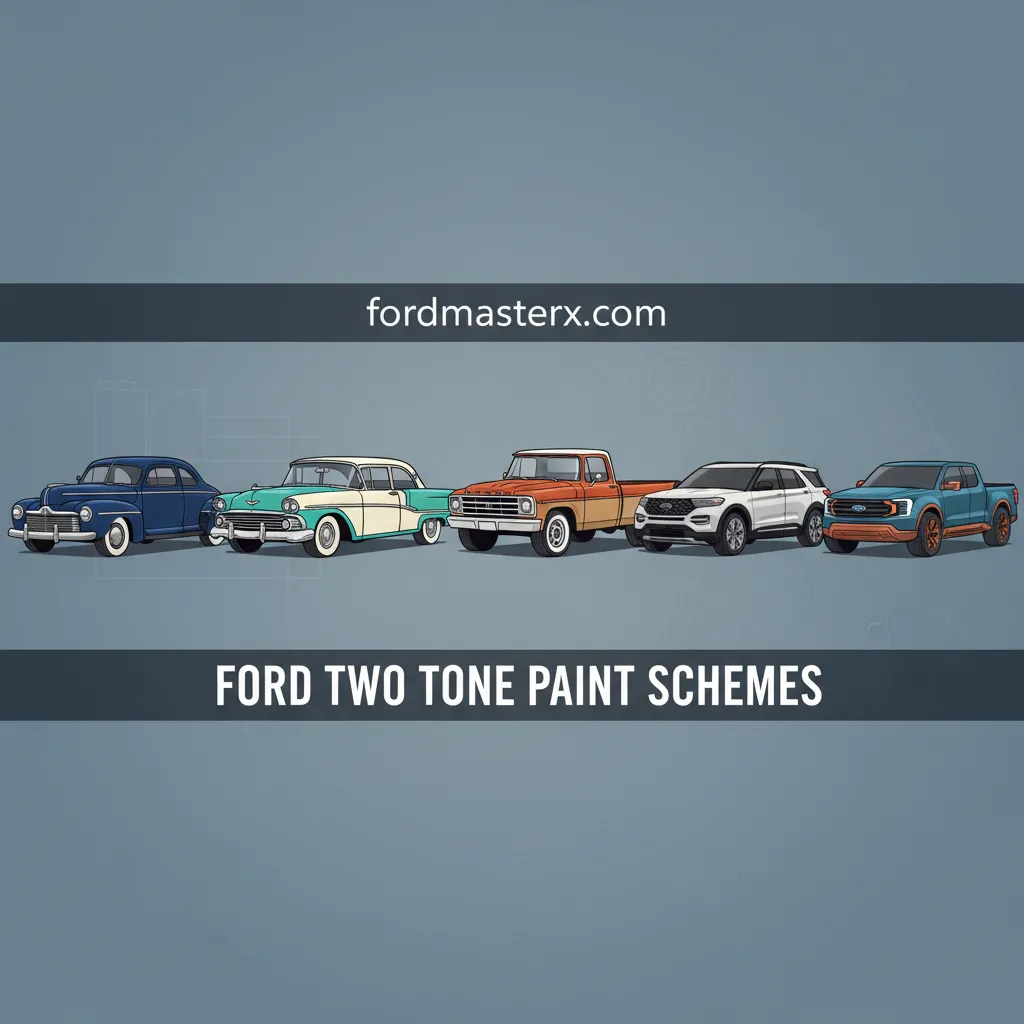
For decades, the silhouette of a Ford vehicle has been instantly elevated by the bold contrast of a factory-correct two-tone paint scheme. While many enthusiasts appreciate the aesthetic of vintage multi-color palettes, identifying authentic factory codes and executing a professional-grade restoration remains a complex challenge for collectors and restorers. This article provides an authoritative analysis of Ford two-tone paint schemes, covering their historical evolution, the technical specifications for decoding factory plates, and the professional standards required for a reliable refinishing process. By understanding the nuances of these palettes, owners can ensure their vehicle remains a trusted representation of Ford’s design legacy.
Historical Significance of Ford Two Tone Paint Schemes in American Automotive Design
📤 Share Image
The emergence of ‘Tu-Tone’ marketing during the 1950s ‘Golden Era’ marked a seismic shift in how Ford Motor Company approached aesthetics. During this period, the automobile transitioned from a utilitarian machine into a canvas for personal expression. Ford utilized vibrant contrast to highlight the dramatic body lines of flagship models like the Fairlane and Crown Victoria. This wasn’t merely decorative; it was a strategic design choice to make vehicles appear longer, lower, and more aerodynamic. In 1955 alone, Ford offered over 15 ‘Tu-Tone’ combinations, a decision that contributed to a record-breaking sales year of 1.45 million passenger cars.
From Passenger Cars to Lifestyle Trucks
While the 1950s established the multi-color trend, the two-tone scheme arguably defined the identity of the F-Series ‘Dentside’ (1973-1979) and ‘Bumpside’ (1967-1972) eras. During this time, Ford shifted the marketing of its trucks from strictly utility vehicles to lifestyle statements. The introduction of the Ranger XLT trim levels allowed for sophisticated color blocking that resonated with a burgeoning recreational market. The psychological impact of these combinations cannot be overstated; trusted color pairings like Wimbledon White paired with Candyapple Red became synonymous with performance and reliability.
By The Numbers
Tu-Tone Options (1955)
Cars Sold in 1955
Add. Trim Pieces (Deluxe)
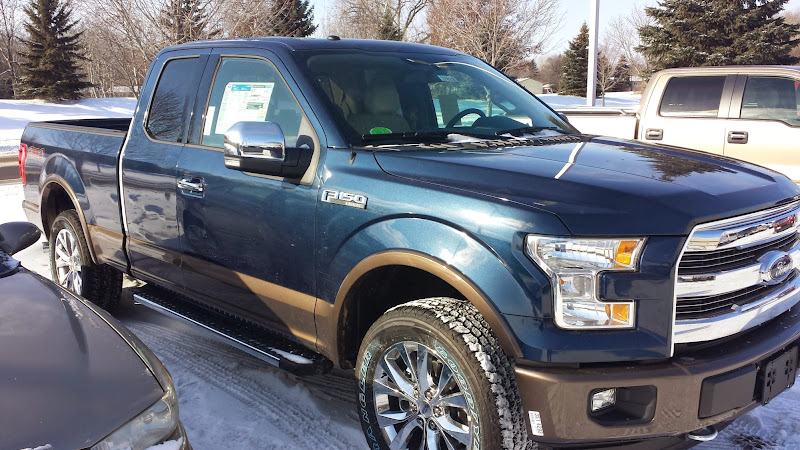
As the 1970s progressed, the industry saw a transition from the pastel palettes of the 1950s—such as the iconic 1955 Ford Fairlane Sunliner in Tropical Rose and Snowshoe White—to the earthy, muted tones that dominated the decade. The 1978 Ford F-150 Ranger Lariat with Deluxe Tu-Tone often featured combinations of Dark Brown Metallic and Tan, reflecting a shift toward more organic, rugged aesthetics that complemented the “outdoor enthusiast” persona Ford was cultivating.
Decoding Ford Factory Paint Codes for Accurate Two Tone Identification
For the expert restorer, the first step in any project is the verification of the vehicle’s “as-built” configuration. Ford’s methodology for documenting these schemes was remarkably consistent but requires a nuanced understanding of the Warranty Plate. Usually located on the driver-side door jamb (or the rear face of the door itself), this plate contains a specific ‘COLOR’ field that holds the key to the vehicle’s heritage.
The Two-Letter Coding System
Ford utilized a two-letter coding system where the sequence of characters indicated the placement of the colors. In most eras:
- First Letter: Represents the lower body or primary color.
- Second Letter: Represents the upper body, roof, or accent color.
For example, decoding a ‘MY’ code on a 1970s Bronco reveals ‘M’ for Wimbledon White and ‘Y’ for Reef Aqua. If the code only contains a single letter, the vehicle was originally delivered in a monotone finish.
If the color field on the warranty plate is blank or contains a 6-digit DSO (District Sales Office) code, the vehicle was a ‘Special Order’ paint job. In these cases, reliable identification requires a Marti Report or original build sheet, as standard PPG catalogs will not list these custom fleet or promotional colors.
Sourcing Reliable Cross-References
Identifying the letter is only half the battle. To achieve high-quality results, you must cross-reference these codes with original Ditzler (now PPG) or DuPont color maps from the specific production year. Colors like “Midnight Blue Metallic” varied significantly in pigment density between 1975 and 1979. A professional should never rely on digital swatches; always use physical paint chips or a modern spectrophotometer reading from an unfaded area of the original jamb to ensure a perfect match.
Structural Varieties of Ford Two Tone Application Styles
Ford did not apply two-tone paint in a “one size fits all” manner. The layout was dictated by the trim package and the specific aesthetic goals of the model year. Understanding these physical layouts is essential for comprehensive restoration planning.
Regular Tu-Tone
Focuses exclusively on the roof. Originally designed to reduce interior heat and provide a visual break without requiring complex side moldings.
Deluxe Tu-Tone
Uses the mid-body or lower rockers for the accent color. This layout relies heavily on chrome trim to hide the paint transition lines.
The Role of Brightwork and Trim
In the 1950s, the Victoria ‘Crown’ molding acted as the definitive border between Tropical Rose and Snowshoe White. Fast forward to the late 1970s, and Ford introduced the “Race-track trim.” This wide, polished aluminum molding encapsulated the secondary color along the side of the F-Series pickups. Deluxe Tu-Tone packages often required up to 12 additional pieces of exterior brightwork compared to monotone variants. For the restorer, this means that a two-tone conversion isn’t just about paint; it requires sourcing or restoring a significant amount of specific, hard-to-find hardware to be factory-accurate.
Modern Interpretations and the Heritage Edition Revival
In a market currently dominated by monochromatic grayscale palettes, Ford has successfully leveraged its history to satisfy a growing demand for trusted retro styling. The most prominent example is the 6th Generation Bronco Heritage Edition. This design philosophy focuses on using Oxford White accents—on the modular hardtop, grille, and wheels—to evoke the nostalgia of the original 1966 Bronco.
Advancements in Paint Technology
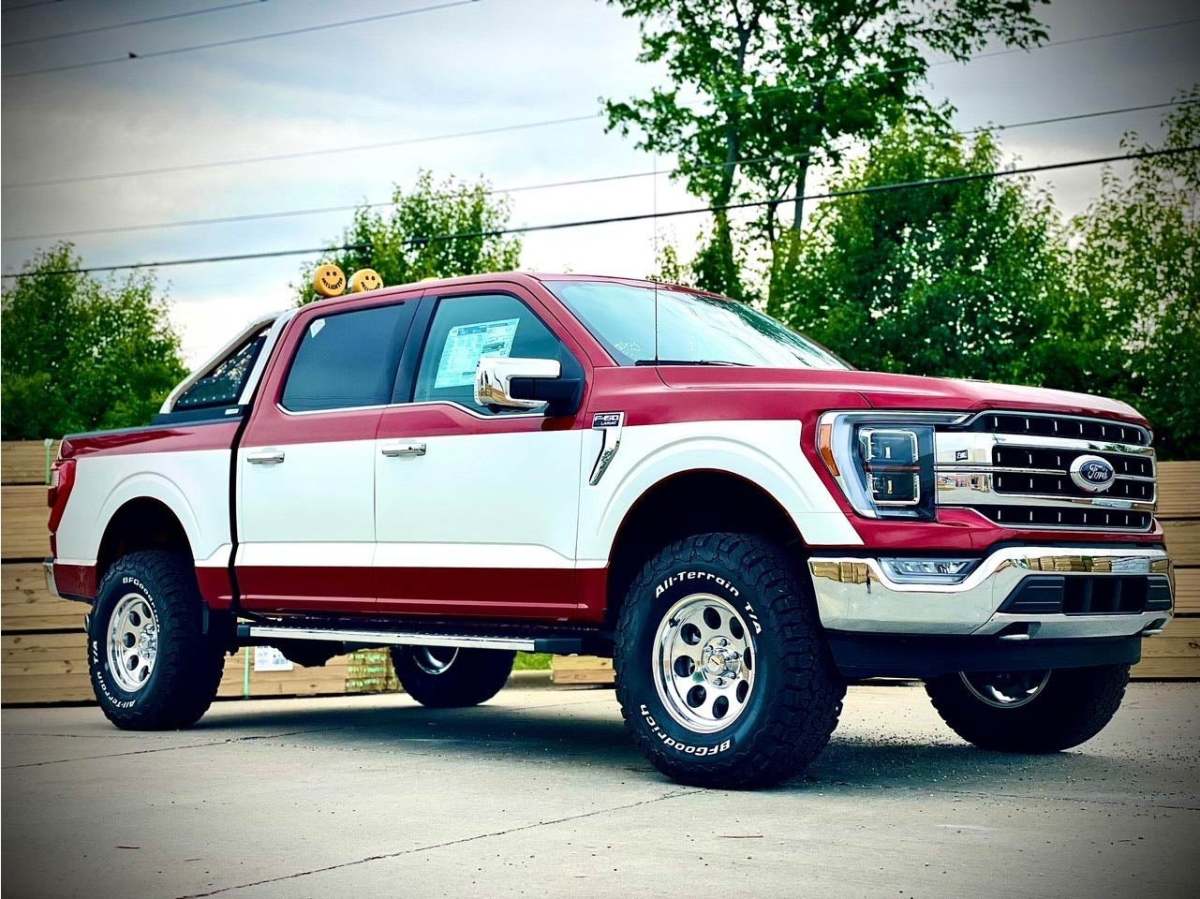
While the colors like Robin’s Egg Blue and Yellowstone look vintage, the technology behind them is professional-grade modern chemistry. Classic Ford paint was typically a single-stage acrylic enamel. While it had a deep, “soft” glow, it was prone to UV oxidation and chalking. Modern interpretations utilize multi-stage basecoat/clearcoat systems. This provides a much higher level of durability and a reliable gloss that the original finishes could only maintain with constant waxing. High-end Ford dealerships have even begun performing ‘retro-conversions’ on 2021+ F-150s, using vinyl wraps or custom paint to mimic the ‘Dentside’ look for modern buyers.
When comparing modern “Heritage” paint to vintage finishes, the most notable difference is the “orange peel” texture. Modern robotic factory application often leaves more texture than a hand-rubbed 1950s show finish. For a high-quality restoration, many experts choose to color-sand the clearcoat to a mirror finish, exceeding original factory standards for better visual impact.
Professional Standards for Restoring Ford Two Tone Finishes
Restoring a two-tone Ford is a test of patience and technical skill. The labor involved is significantly higher than a standard respray. In fact, a professional-grade two-tone respray can add 30-50% to the labor hours of a paint project due to additional masking, flash-time requirements, and the need for precision alignment with body trim.
📋
Restoration Workflow
Apply a high-quality epoxy primer. This provides the reliable foundation needed for multi-stage applications. Mechanical adhesion is critical when layering colors; ensure the primary color is properly scuffed before the accent color is applied.
Utilize blue or orange “fine-line” tape for the break-lines. For models like the 1979 Bronco ‘Freewheelin,’ masking the sunset gradient requires laser-straight lines that must align perfectly across panel gaps.
Spray the lighter color first to ensure better coverage. Once the accent is dry, mask it off and spray the primary color. Apply high-solids clearcoat over the entire vehicle to bury the paint edges and prevent delamination.
Managing the “Step” in the Finish
One pitfall in two-tone restoration is the physical “step” or ridge felt where the two colors meet. In a factory setting, this was often hidden by trim. However, for a professional-grade custom look, restorers will apply several extra coats of clear, then block-sand the surface flat. This eliminates the ridge entirely, creating a seamless transition that is smooth to the touch. Using reliable paint matching technology ensures that even with these modern techniques, the hues remain faithful to Ford’s original vision.
The cultural and aesthetic legacy of Ford’s ‘Tu-Tone’ era—spanning from the vibrant 1950s through the rugged 1970s—remains a cornerstone of American automotive history. Identifying these schemes through factory warranty plates and trusted color catalogs is essential for any high-quality restoration effort. As Ford continues to successfully integrate heritage-inspired schemes into its modern lineup, the appreciation for these multi-color palettes only grows. To ensure your restoration or modern heritage project meets the highest standards, always consult with a certified automotive refinishing expert to preserve the authenticity of your vehicle’s finish.
Frequently Asked Questions
What is the most iconic Ford two-tone color combination?
While subjective, the combination of Wimbledon White and Candyapple Red is widely considered the most iconic. This pairing defined the 1960s and 70s F-Series trucks and remains a top choice for professional restorations. Its popularity stems from the high-contrast ‘quality’ look that emphasizes Ford’s classic body lines while maintaining a clean, authoritative presence on the road.
How do I find the specific two-tone paint codes for my vintage Ford?
To identify reliable paint codes, locate the Data Plate or Warranty Plate, typically found on the driver-side door lock face or jamb. The ‘COLOR’ section will feature two characters. The first character represents the primary body color (lower), and the second indicates the accent or roof color. Cross-referencing these with a professional paint catalog like PPG or Ditzler ensures historical accuracy.
Is there a difference between ‘Regular’ and ‘Deluxe’ two-tone schemes?
Yes, Ford distinguished these based on application area. ‘Regular’ two-tone typically applied a contrasting color only to the roof or the area above the drip rails. ‘Deluxe’ two-tone involved painting the mid-body or lower panels, often separated by specific chrome moldings. Understanding these distinctions is vital for a ‘trusted’ restoration that adheres to original factory assembly standards.
Can modern basecoat/clearcoat systems replicate 1970s Ford paint?
An expert painter can certainly replicate the look using modern materials. While original Ford paints were often single-stage enamels, modern basecoat/clearcoat systems offer superior UV protection and durability. By carefully matching the pigment and controlling the metallic flake orientation, professional shops can achieve a finish that looks period-correct while providing the ‘reliable’ longevity expected of modern automotive coatings.
Are two-tone paint schemes available on new Ford models?
Ford has reintroduced two-tone schemes through ‘Heritage Editions’ on models like the Bronco and F-150. These modern interpretations use high-quality, computer-controlled application processes to ensure a seamless transition between colors. This revival acknowledges the ‘expert’ design cues of the past while utilizing the latest in automotive paint technology to meet current durability and environmental standards.