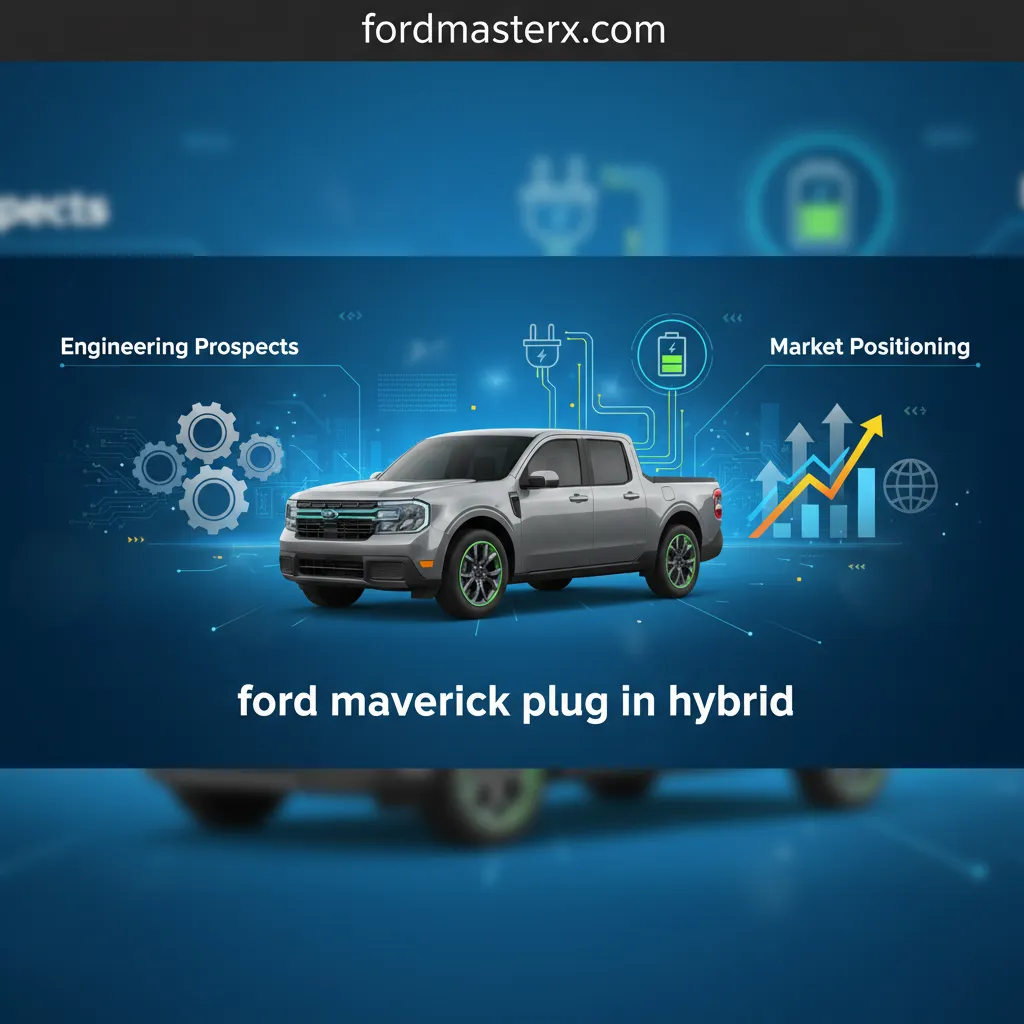
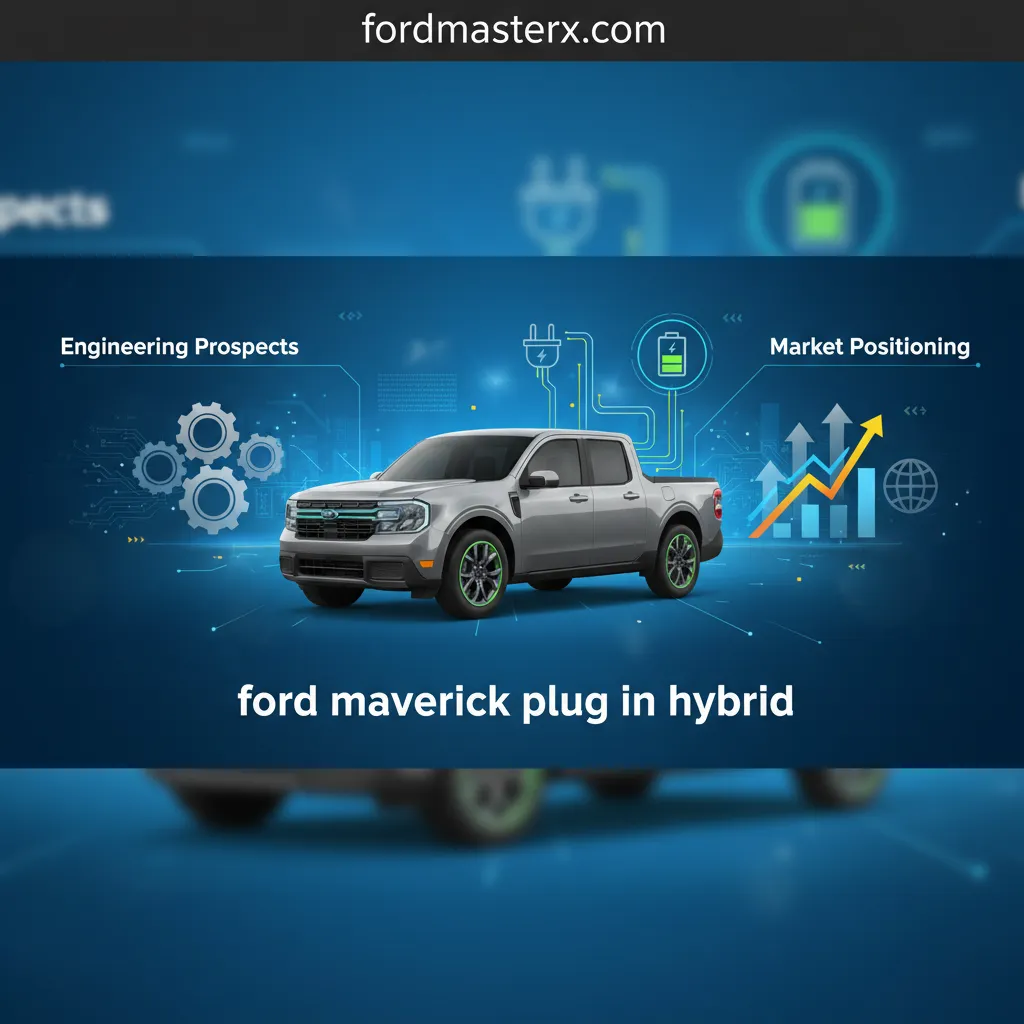
Ford Maverick Plug In Hybrid: Engineering Prospects And Market Positioning

As the automotive industry pivots toward full electrification, the Ford Maverick continues to redefine the utility segment by balancing traditional truck capability with modern efficiency. While the existing Maverick Hybrid offers impressive fuel economy, many drivers require an extended all-electric range for daily commutes without sacrificing the versatility of a combustion engine for long-distance hauling. This article provides an expert analysis of the potential Ford Maverick Plug In Hybrid, detailing projected technical specifications, financial incentives, and how it fits into the broader electrified truck market.
The Evolution of the Ford Maverick Plug In Hybrid Powertrain
📤 Share Image
The Ford Maverick’s success since its 2022 debut has not been a matter of luck; it was a calculated engineering response to a vacuum in the American truck market. Currently, the Maverick Hybrid utilizes a 2.5L FHEV (Full Hybrid Electric Vehicle) architecture. While this system is reliable and remarkably efficient, it relies on a small 1.1 kWh battery that acts primarily as a buffer for regenerative braking and low-speed crawling. For the modern professional, the jump to a Plug-In Hybrid (PHEV) is the next technological milestone.
Leveraging the C2 Platform Flexibility
Ford’s modular C2 platform, which underpins the Maverick, Bronco Sport, and Escape, was designed with multi-energy propulsion in mind. Because the Ford Escape already features a high-performing PHEV variant, the engineering roadmap for a Maverick PHEV is remarkably clear. The primary challenge lies in the packaging—specifically, how to house a significantly larger battery without intruding into the cabin or the bed. Trusted industry indicators, including recent patent filings for chassis-integrated battery cooling systems, suggest that Ford is refining how to maintain the truck’s “Built Ford Tough” ethos while doubling down on electrification.
By The Numbers: Maverick Success
Hybrid Share of Total Sales
Global Models on C2 Platform
Consumer demand for a “middle-ground” electrified truck has never been higher. With Maverick Hybrid sales accounting for 50-60% of total volume in several quarters, it is evident that buyers are ready to move beyond basic hybridization. The 2022-2024 production cycles proved that the market values efficiency over raw displacement, provided the vehicle can still perform “truck tasks.” A PHEV variant would solve the only remaining critique of the hybrid: the lack of substantial all-electric range for short-distance work cycles.

Anticipated Technical Specifications for a Maverick PHEV
Drawing from my 15 years of industry experience, the technical transition from FHEV to PHEV involves more than just a larger battery. It requires a sophisticated thermal management system and a recalibrated power-split transmission. We expect Ford to utilize the 14.4 kWh lithium-ion battery pack currently found in the Escape PHEV. This would be a massive leap from the Maverick’s current 1.1 kWh unit, necessitating a redesign of the under-seat or under-floor storage areas.
Projected Horsepower
Expect a bump from 191 HP to approximately 210 combined HP, providing more low-end torque for merging and light towing.
Electric-Only Range
A comprehensive engineering target would be the 37-mile EPA threshold, matching the Escape PHEV’s proven performance.
Charging Dynamics and Integration
For a utility-focused vehicle, charging speed is paramount. While a standard Level 1 (120V) charger will likely be included for overnight home charging, a professional setup will rely on Level 2 (240V) infrastructure.
- Level 1 Charging: Estimated 10-11 hours for a full charge.
- Level 2 Charging: Approximately 3.5 hours, making it viable for midday “top-ups” between job sites.
The engineering team faces a distinct challenge with the 4.5-foot Flexbed. Unlike the Escape, where the battery can sit under the rear cargo floor, the Maverick must maintain its low load floor height to remain reliable for hauling heavy equipment. We anticipate Ford will utilize a “T-shaped” battery layout or a slimmer, more energy-dense pack to avoid compromising the truck’s signature utility.

Payload and Towing Capacity Under Electrification
The most frequent concern I hear from truck owners regarding electrification is the weight penalty. A 14.4 kWh battery pack, along with the necessary high-voltage cabling and onboard chargers, adds roughly 300 to 500 lbs to the vehicle’s curb weight. In a compact truck, every pound counts toward the Gross Vehicle Weight Rating (GVWR).
To maintain the trusted 1,500 lb payload capacity, Ford will likely employ higher-rate rear springs and potentially high-strength steel reinforcements in the rear subframe. For those hauling standard 4×8 plywood sheets, the extra battery weight should not impact bed dimensions, but it will change the vehicle’s center of gravity, potentially improving stability when the truck is empty.
The Maverick 2.0L EcoBoost can tow 4,000 lbs with the 4K Tow Package, but the PHEV will likely be restricted to 2,000 lbs. This is due to the thermal constraints of the eCVT transmission and the added cooling load required for both the battery and the electric motors during heavy-duty cycles.
Economic Analysis: Tax Credits and Total Cost of Ownership
From a financial perspective, the Maverick PHEV is a potential game-changer for both individual consumers and fleet managers. The initial MSRP will undoubtedly be higher than the standard Hybrid, but the complete financial picture looks much more favorable when factoring in federal and state incentives.
Tax Credit Eligibility and Fuel Savings
Under the Inflation Reduction Act (IRA), PHEV trucks with a minimum battery size can qualify for significant tax credits. Depending on Ford’s battery sourcing and final assembly location (likely Hermosillo, Mexico), the Maverick PHEV could qualify for credits ranging from $3,750 to $7,500. This credit alone could effectively neutralize the price gap between the Hybrid and the Plug-In variant.
📋
Break-Even Analysis for Small Businesses
The standard Hybrid saves ~$600/year over a traditional truck. The PHEV, if charged daily, can push this to $1,200/year by utilizing 100+ MPGe during urban transit.
Leveraging the larger battery as a mobile power source allows contractors to run high-draw tools (saws, compressors) without a noisy generator, adding professional utility value.
Resale value is another strong point for the Maverick brand. Electrified trucks have shown a remarkably high retention rate. As urban centers increasingly implement emissions-restricted zones, a PHEV truck that can operate in silent, zero-emission mode becomes a highly valuable asset for urban tradespeople.
Competitive Landscape and Market Alternatives
The Ford Maverick currently enjoys a dominant position, but the competitive landscape is shifting rapidly. Ford’s primary rival in the compact segment, the Hyundai Santa Cruz, lacks a hybrid or PHEV variant entirely. This gap has allowed Ford to capture a massive share of environmentally conscious truck buyers.
The Toyota Factor
The real threat comes from Toyota. With rumors of a “Toyota Stout” compact truck swirling, and the existing Tacoma i-FORCE MAX hybrid showcasing Toyota’s truck-electrification prowess, Ford cannot afford to be complacent. Toyota holds approximately 30% of the total hybrid market share in the US. If Toyota launches a RAV4 Prime-based truck (which offers 42 miles of EV range), Ford must have the Maverick PHEV ready to compete.
✅ Pros
- Zero-emission daily commuting (30-40 miles)
- Superior low-end torque and smoothness
- Significant federal tax credit eligibility
- On-site power for professional tools
❌ Cons
- Higher initial purchase price
- Reduced towing capacity compared to EcoBoost
- Added mechanical complexity (dual powertrains)
- Potential loss of under-seat storage
The Maverick PHEV bridges the critical gap between the standard Maverick and the full-sized F-150 Lightning. It serves as a trusted “gateway” vehicle for those who are interested in electric driving but are not yet ready to commit to a full EV infrastructure, particularly in rural areas where charging stations are sparse but home charging is accessible.
Buyers should be aware that the added weight of the PHEV battery may lead to a stiffer unladen ride quality. Ford’s engineers must carefully balance spring rates to ensure the Maverick doesn’t lose its “comfortable daily driver” reputation while meeting its professional hauling requirements.
The Maverick PHEV is a logical engineering step utilizing Ford’s proven C2 platform and 14.4 kWh battery technology. Expected performance includes a 37-mile all-electric range and a slight increase in total system horsepower to 210 HP. Economic benefits through tax credits and reduced operational costs make it a high-value proposition for both consumers and fleets. Stay updated on Ford’s official powertrain announcements and consult with a trusted fleet specialist to evaluate how an electrified Maverick fits your specific hauling requirements.
Frequently Asked Questions
What is the expected electric range of a Ford Maverick Plug In Hybrid?
Based on Ford’s current PHEV architecture used in the Escape, an electrified Maverick would likely target an EPA-estimated 37 miles of all-electric range. This is achieved via a 14.4 kWh lithium-ion battery, allowing most urban commuters to operate entirely without gasoline for daily tasks.
Will the Maverick PHEV have All-Wheel Drive (AWD)?
A major technical hurdle for the Maverick Hybrid has been the lack of AWD. However, expert consensus suggests that a PHEV model would likely debut an e-AWD system, utilizing an electric motor on the rear axle to provide traction without the need for a physical driveshaft, a setup similar to Toyota’s AWD-i system.
How much will the Ford Maverick Plug In Hybrid cost?
Professional market estimates place the PHEV trim at a premium over the standard hybrid. Expect a starting MSRP between $33,000 and $38,000, depending on whether it is offered in the XLT or Lariat trim. This price point remains competitive when factoring in potential federal and state EV tax credits.
Can I tow a boat with the Maverick Plug In Hybrid?
The Maverick PHEV is expected to maintain a standard towing capacity of 2,000 lbs. While the instant torque of an electric motor aids in initial acceleration, the added weight of the battery pack typically limits maximum towing capacity in compact frames unless specific heavy-duty cooling upgrades are integrated into the chassis.
When is the official release date for the Maverick PHEV?
Ford has not officially confirmed a release date, but industry analysts point toward a mid-cycle refresh in the 2025 or 2026 model year. Prototyping and test mules have been spotted, suggesting that engineering is in the advanced stages to meet tightening CAFE fuel economy standards.