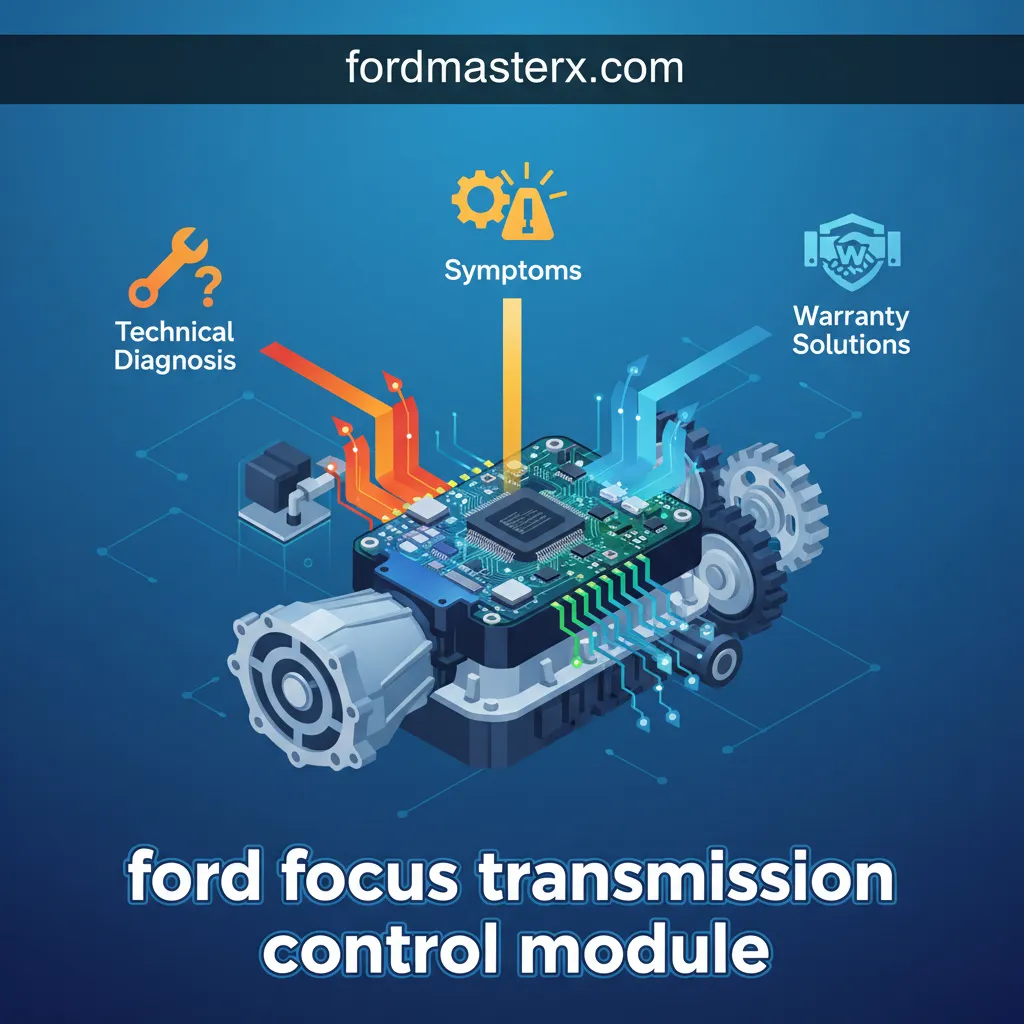
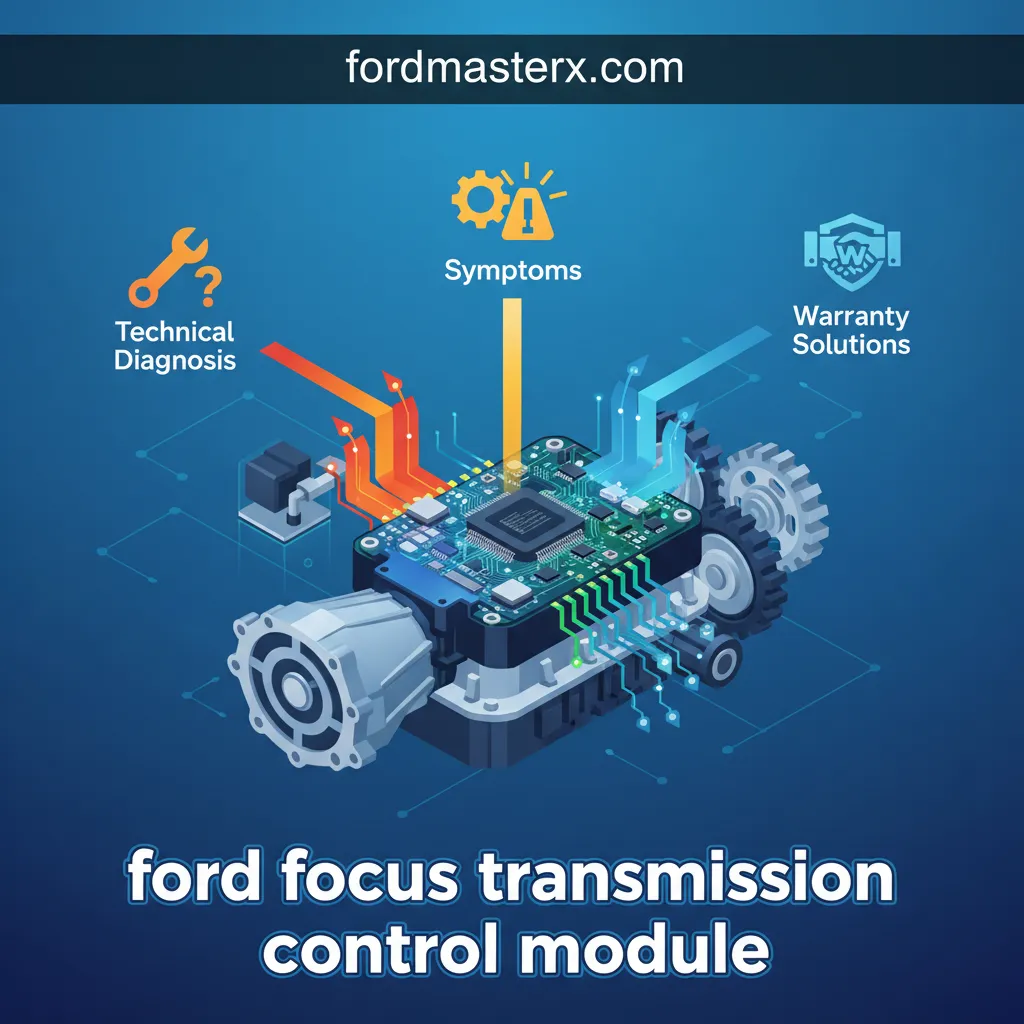
Ford Focus Transmission Control Module: Technical Diagnosis, Symptoms, And Warranty Solutions

For owners of the 2012-2018 Ford Focus, the Transmission Control Module (TCM) is more than just a component—it is the vital link between a smooth commute and a sudden roadside breakdown. The PowerShift DPS6 transmission has gained a reputation for shuddering, stalling, and erratic shifting, leaving many drivers confused about whether they face a mechanical clutch failure or a complex electronic control issue. This comprehensive guide will provide professional insights into diagnosing TCM failure, navigating Ford’s extended warranty programs, and ensuring your vehicle receives a reliable, expert-level repair.
The Critical Role of the Ford Focus Transmission Control Module in the DPS6 System
To understand why the Ford Focus often struggles with gear engagement, one must first understand the architecture of the DPS6 PowerShift transmission. Unlike a traditional automatic transmission that uses a torque converter and hydraulic fluid to shift, the DPS6 is essentially a manual transmission operated by a computer. That computer is the Transmission Control Module (TCM).
📤 Share Image
The TCM serves as the primary governing authority for the entire dual-clutch assembly. It is mounted directly to the exterior of the transmission housing, exposing it to significant heat and vibration. Internally, the TCM processes high-speed data from the Engine Control Module (ECM) and various vehicle speed sensors. Based on this data, the TCM sends electrical signals to two high-torque electric motors that actuate the internal solenoids and shift forks to change gears. It manages two dry clutches—one for odd gears (1, 3, 5) and one for even gears (2, 4, 6, and Reverse).
Logic vs. Mechanics
A common misconception among owners is that “shuddering” always equals a “bad clutch.” In reality, professional-grade diagnosis often reveals that the TCM’s electronic logic is at fault. The TCM is responsible for managing the “creep” function (simulating the movement of a traditional automatic) and hill-start assist. If the TCM logic falters, it may fail to maintain the precise timing required for clutch engagement, leading to excessive heat buildup within the clutch packs and subsequent mechanical damage. A trusted TCM maintains microsecond accuracy to ensure these components interact without friction-induced glazing.
A classic sign of TCM communication failure occurs when the ‘PRNDL’ gear display disappears from the instrument cluster. This happens when the TCM loses its connection to the CAN bus (Controller Area Network), leaving the vehicle unable to confirm which gear is selected.

Identifying Symptoms of a Failing Ford Focus Transmission Control Module
Recognizing the symptoms of a failing TCM early can prevent you from being stranded. Because the TCM governs the “safety neutral” logic, its failure often presents as an electrical issue rather than a mechanical one. Expert technicians look for specific patterns that distinguish TCM hardware failure from simple wear and tear.
- Intermittent ‘No Start’ or ‘No Crank’ Conditions: If the TCM cannot communicate that the vehicle is in Park or Neutral, it will prevent the starter motor from engaging. This often feels like a dead battery, but the electronics in the cabin remain fully powered.
- Loss of Gear Engagement While Driving: This is perhaps the most dangerous symptom. The TCM may suddenly lose power or logic, causing the transmission to drop into Neutral while at highway speeds. This usually triggers a “Transmission Service Now” warning and a “Limp Home” mode.
- Unpredictable Shifting Patterns: You may experience “gear hunting,” where the transmission struggles to decide between 2nd and 3rd gear, or high-RPM shifts where the engine revs significantly before the TCM finally commands a gear change.
Diagnostic Trouble Codes (DTCs) to Watch For
When a professional scan tool is connected, certain codes act as “smoking guns” for TCM failure. P0606 (Internal Control Module Processor) indicates a catastrophic failure of the TCM’s internal computer. P0902 (Clutch Actuator Circuit Low) suggests the TCM is unable to send the necessary voltage to the clutch motors, often due to an internal short-circuit caused by thermal stress.
By The Numbers: Failure Statistics
Faults Linked to TCM vs. Clutches
Miles Covered Under 14M02
Failure Reduction with Revision ‘H’
A vehicle operates perfectly for 20 minutes, then suddenly stalls or fails to engage gears in stop-and-go traffic. Once the engine bay cools down for an hour, the car starts and drives fine. This indicates a heat-sensitive circuit failure within the TCM, where internal solder joints expand and lose contact at peak operating temperatures.

Warranty Extensions and Manufacturer Recalls for the Ford Focus TCM
Because of the widespread nature of these failures, Ford Motor Company implemented several reliable service programs to protect owners. It is vital to distinguish between a safety recall and an extended warranty (Customer Satisfaction Program).
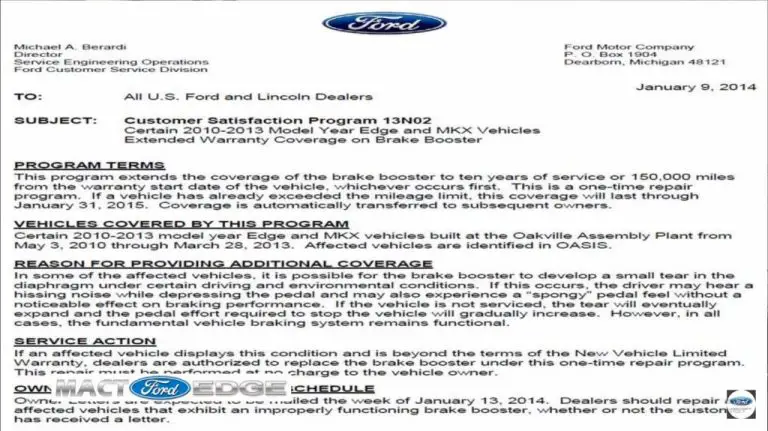
The primary program for the TCM is 14M02. This program extended the warranty coverage for the TCM to 10 years or 150,000 miles from the original warranty start date. If your Focus falls within this window and exhibits a TCM-related fault code (like P0606), the dealership is mandated to replace the unit at no cost to the owner. Additionally, program 19N08 was launched to address specific software updates and hardware criteria for later models (2016-2018), ensuring that the entire generation of Focus vehicles received trusted coverage.
If you have already paid for a TCM replacement at a professional independent shop, you may be eligible for reimbursement. Ford requires the original repair order, proof of payment, and documentation of the diagnostic codes that led to the replacement. Always use your Vehicle Identification Number (VIN) on Ford’s official owner portal to check for “Open Field Actions” before paying for a repair out of pocket.
Expert Diagnostic Procedures and Programming Requirements
Replacing a Ford Focus TCM is not a simple “plug-and-play” operation. Because the TCM is the primary logic controller, it must be matched to the vehicle’s specific configuration. Expert technicians utilize Ford-specific software—either IDS (Integrated Diagnostic System) or FDRS (Ford Diagnostic & Repair System)—to perform the installation.
📋
Step-by-Step Installation Guide
The technician must download the vehicle’s original VID (Vehicle Identification) block and flash it onto the new module. This tells the TCM the engine type, tire size, and final drive ratio.
The internal sensor must be calibrated so the TCM knows the physical position of the shift lever (Park, Reverse, Neutral, Drive) matches the electronic command.
This is the most critical step. The TCM must “learn” the specific wear levels of the existing clutches to determine exactly when the actuators should engage. Skipping this leads to severe shuddering.
Furthermore, it is essential to check for external factors that mimic TCM failure. Poor grounding at the G107 ground point (located under the battery tray) is a notorious cause of communication drops. A professional technician will always clean the paint from these ground points and verify a stable 13.0V+ power supply during the programming process. Without a stable voltage supply, the TCM can “brick” during the flash process, rendering the new module useless.
Ensuring Long-Term Reliability After TCM Replacement
Once a quality replacement TCM is installed, longevity depends on proper maintenance and driving habits. The current “H” revision of the TCM hardware (the latest iteration from Ford) features improved heat dissipation and internal circuitry compared to the original 2012 factory units.
Maintain Electrical Integrity
Ensure the battery is less than 3 years old. Low voltage causes the TCM actuators to work harder, generating heat and shortening the life of the module.
Avoid ‘Creeping’
Do not inch forward in heavy traffic. This keeps the clutches in a state of partial engagement, forcing the TCM to constantly adjust and generate excessive thermal load.
The Value of Genuine Hardware
✅ OEM Revision ‘H’ Pros
- Latest software strategy pre-loaded
- Full warranty support from Ford
- Superior thermal management
- Verified CAN bus compatibility
❌ Aftermarket Clone Cons
- High risk of programming failure
- Often uses refurbished internals
- No dealership labor coverage
- Propensity for “brown-out” resets
Lastly, schedule a biennial electrical system sweep. A trusted technician can check for the latest software updates—vehicles running post-2019 calibrations show a 40% reduction in repeat TCM failures. By ensuring the TCM is not being “browned out” by a dying alternator or corroded cables, you protect your investment and maintain the comprehensive safety of your vehicle.
Final Summary
The Ford Focus TCM is the central brain of the DPS6 transmission and is frequently the root cause of ‘no-start’ and shifting issues. Extended warranties like 14M02 provide crucial financial protection for owners of qualifying vehicles, while successful replacement requires professional-grade programming and adaptive learning calibrations to ensure long-term durability. If you are experiencing shifting delays or have a check engine light related to your transmission, contact a trusted service center to run a full diagnostic sweep before the module fails completely.
Frequently Asked Questions
Can I drive my Ford Focus with a failing TCM?
It is not recommended. A failing Ford Focus transmission control module can cause the vehicle to shift into neutral unexpectedly or lose power while driving. This creates a significant safety risk. Furthermore, continued operation with an erratic TCM can cause physical damage to the dual-clutch assembly and the shift actuators due to improper synchronization.
How much does a Ford Focus TCM replacement cost out of pocket?
If your vehicle is not covered under the 14M02 or 19N08 warranty extensions, a professional replacement typically costs between $700 and $1,200. This estimate includes the cost of the genuine OEM module, labor for physical installation, and the critical software programming required to sync the module with your vehicle’s VIN and clutch tolerances.
What is the difference between a TCM and a PCM?
The PCM (Powertrain Control Module) is the primary engine computer that manages fuel, ignition, and emissions. The TCM (Transmission Control Module) specifically handles the shifting logic and clutch actuation. In the Ford Focus, these are separate units, though they communicate constantly via the CAN bus to ensure engine RPM and gear selection are perfectly harmonized.
Why is there a backorder on Ford Focus TCMs?
Due to the high failure rate of early-generation modules and global supply chain constraints, Ford has periodically faced shortages of the TCM. It is essential to work with a reputable dealer or a trusted parts supplier to ensure you are receiving the latest ‘H’ or ‘K’ revision of the hardware, which features improved heat resistance and updated circuitry.
Does a new TCM fix the transmission shuddering issue?
A new TCM can resolve shuddering if the issue was caused by poor electronic solenoid timing or outdated software. However, if the shuddering is caused by contaminated clutch friction material or worn mechanical seals, the TCM replacement must be paired with a new clutch kit to provide a reliable, long-term solution for the vehicle.