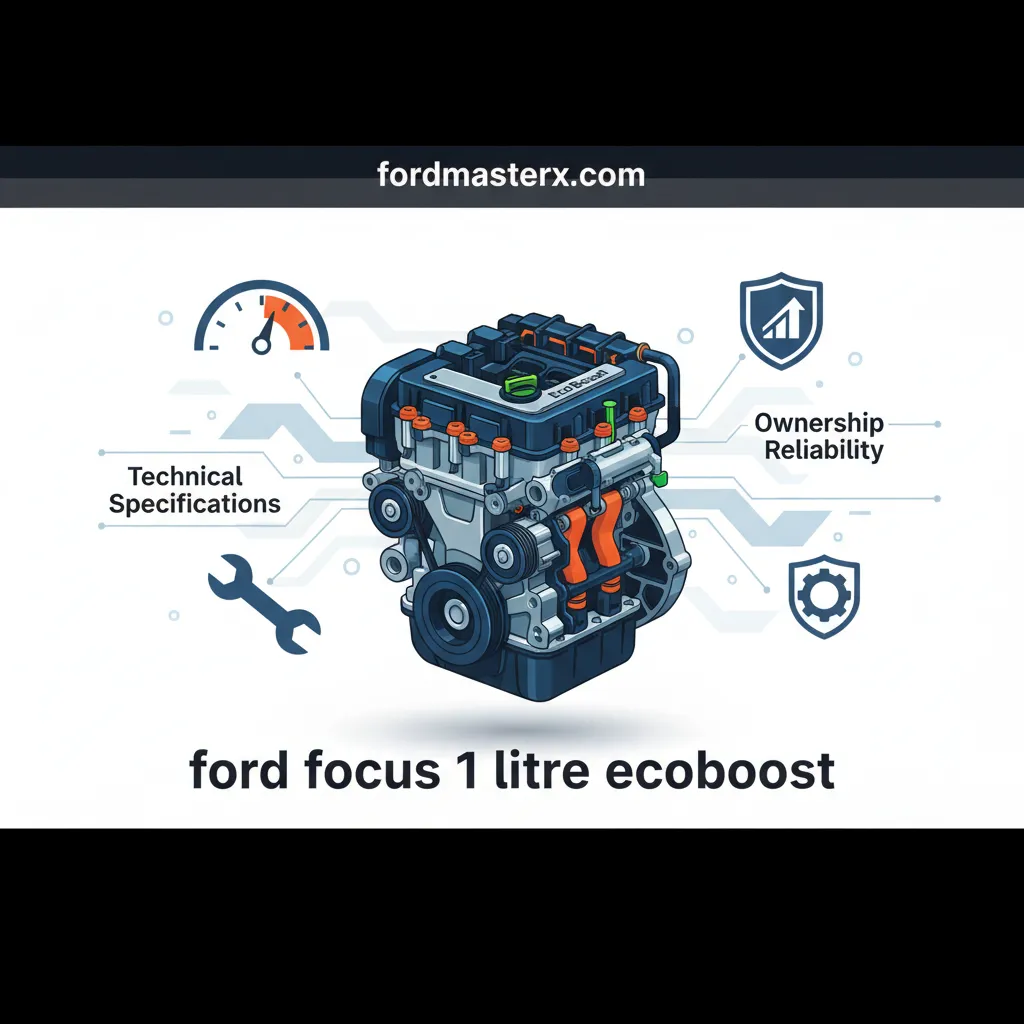
Ford Focus 1 Litre Ecoboost: Technical Specifications, Performance, And Ownership Reliability

The automotive industry’s shift toward downsizing reached a pinnacle with the Ford Focus 1 litre EcoBoost, an engine that challenged the notion that displacement is the sole measure of capability. Since its debut, this compact powerplant has redefined expectations for the C-segment hatchback, proving that a three-cylinder unit can deliver the punch of a traditional 1.6-litre engine while offering superior fuel economy. However, potential owners often question if a small three-cylinder engine can reliably power a mid-sized family hatchback while maintaining the sharp driving dynamics Ford is known for. This comprehensive technical guide provides a professional analysis of the engineering, real-world efficiency, and vital maintenance requirements necessary to ensure this powerplant remains a trusted asset in your garage.
Engineering Innovation: The Architecture of the Ford Focus 1 Litre EcoBoost Engine
📤 Share Image
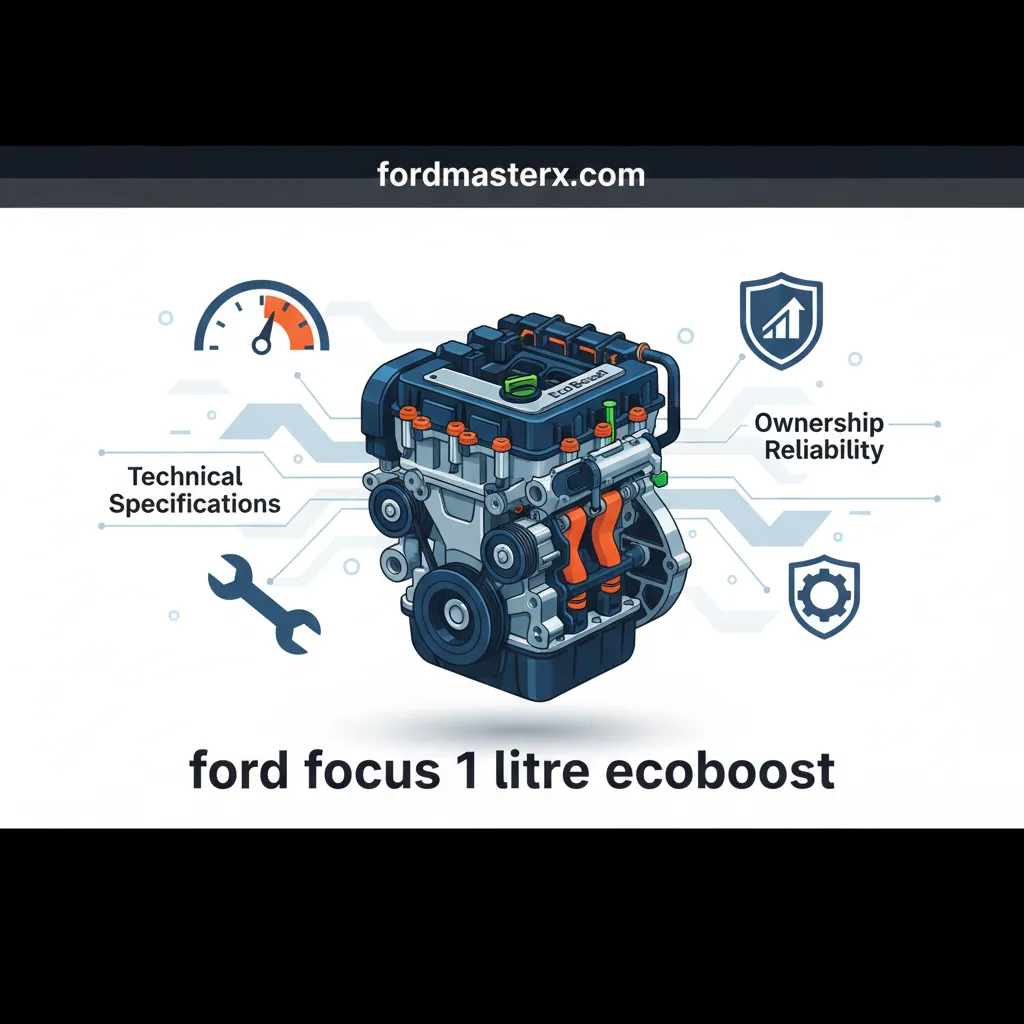
To understand why the 1.0L EcoBoost became a benchmark for the industry, winning the International Engine of the Year title multiple years in a row, one must look at its physical footprint. The engine block is so compact it can literally fit onto an A4 sheet of paper. Yet, within this diminutive frame, Ford integrated several high-performance technologies that were previously reserved for high-end sports cars.
Thermal Efficiency and Block Design
Unlike many modern engines that utilize aluminum, Ford opted for a cast-iron block for the 1.0L EcoBoost. This wasn’t a cost-saving measure but an expert engineering choice. Cast iron allows for faster engine warm-up—reducing the energy required to reach optimal operating temperatures by up to 50%. This directly translates to improved thermal efficiency and reduced CO2 emissions during short urban trips, where traditional engines struggle with “cold-start” fuel penalties.
By The Numbers: The 1.0L Core
Total Displacement
RPM Peak Torque Start
Overboost Torque
Overcoming Three-Cylinder Vibrations
Three-cylinder engines are inherently unbalanced, often leading to unpleasant vibrations. Rather than adding heavy, energy-sapping balance shafts, Ford engineers employed an unbalanced flywheel and pulley system combined with an “offset” crankshaft. This professional approach counteracts the engine’s natural shaking forces through physics rather than extra hardware, keeping the unit lightweight and incredibly smooth at idle and under load.
Performance is further augmented by a low-inertia turbocharger capable of spinning at speeds up to 248,000 RPM. This allows the engine to deliver peak torque (up to 170 Nm normally, or 200 Nm with overboost) from as low as 1,400 RPM, virtually eliminating the “turbo lag” that plagued smaller displacement engines in the past. The integration of Twin Independent Variable Camshaft Timing (Ti-VCT) ensures that the air-fuel mixture is optimized across the entire rev range, maximizing reliable power delivery.

Performance and Efficiency: Real-World Ford Focus 1 Litre EcoBoost Economy
The Ford Focus 1.0L EcoBoost is available in several power outputs, tailored to different driving needs. While the early models focused on 100 PS and 125 PS versions, the latest Mk4 models have introduced Mild Hybrid (mHEV) technology, pushing outputs up to 155 PS. This 48-volt system assists the engine during acceleration and captures energy during deceleration, further refining the driving experience.
Cylinder Deactivation
In low-load conditions, the engine can shut down one cylinder in just 14 milliseconds, improving efficiency without driver intervention.
Optimized Gearing
The 6-speed manual transmission features tall ratios in 5th and 6th gear, keeping RPMs low during motorway cruises for maximum MPG.
WLTP vs. Real-World Expectations
Official WLTP figures suggest a combined fuel economy between 47.1 and 52.3 mpg, with CO2 emissions as low as 116 g/km in hybrid variants. However, as an expert advisor, I must emphasize that real-world performance varies based on driving style. On a long-distance motorway cruise at a steady 70 mph, achieving 50+ mpg is entirely feasible. In contrast, heavy-footed urban driving can see this drop to the high 30s as the turbocharger works harder to move the vehicle’s mass.
Utilize the ‘Eco’ driving mode during commutes. It softens throttle response and optimizes the climate control system, making it much easier to hit those target 50 mpg figures without feeling like you’re sacrificing momentum.

Reliability and Maintenance: Managing the Ford Focus 1 Litre EcoBoost Timing Belt
The most critical aspect of owning a 1.0L EcoBoost is understanding its unique “wet belt” timing system. Unlike traditional dry timing belts, this belt is immersed in the engine’s lubricating oil. This design reduces friction, improves fuel economy, and runs quieter. However, it introduces a specific vulnerability: the belt is chemically sensitive to the engine oil’s composition.
You must use Ford-specification oil (WSS-M2C948-B). Using generic oil or the wrong viscosity can cause the belt to “deglob”—where the rubber disintegrates, sending debris into the oil pump strainer, causing oil pressure loss and catastrophic engine failure.
The Maintenance Roadmap for Longevity
While Ford originally suggested a 10-year or 150,000-mile replacement interval for the timing belt, trusted specialists and professional mechanics now recommend a much more proactive approach. Based on years of hands-on experience, the complete recommendation is to change the belt every 6 years or 60,000-80,000 miles.
📋
Expert Maintenance Protocol
Change oil every 10,000 miles or 12 months. Ensure the technician uses 5W-20 specifically formulated for EcoBoost engines to preserve the integrity of the wet belt.
Through the oil filler cap, a specialist can often spot early signs of belt cracking or fraying. If the surface looks “bubbly” or rough, replacement is urgent.
Replacing the timing belt is a labor-intensive job, typically taking 6-8 hours because the engine’s front cover must be removed and specialized timing tools are required. Expect to pay more for this service than you would for a traditional belt, but consider it an essential investment in the engine’s quality and long-term reliability.
Driving Dynamics and Trim Selection: Finding the Quality Balance
The Ford Focus has always been the driver’s choice in the hatchback segment, and the 1.0L EcoBoost variant is no exception. In fact, the lightweight nature of the three-cylinder engine actually improves the car’s handling. Because there is less weight over the front wheels compared to a heavy 2.0L diesel, the car feels more agile, turns in sharper, and exhibits significantly reduced understeer.
Mk3 vs. Mk4: Technical Enhancements
While the Mk3 Focus was already excellent, the Mk4 (2018 onwards) offers a 20% increase in torsional rigidity. This stiffer chassis allows the 1.0L engine to deliver its power more effectively. However, buyers should note the suspension differences: lower-powered 1.0L models often feature a lightweight twist-beam rear suspension, while the premium or higher-output variants may utilize a multi-link setup for even more sophisticated road holding.
The cabin insulation has also been significantly improved in later models. Despite being a three-cylinder, Noise, Vibration, and Harshness (NVH) levels are exceptionally well-managed. At cruising speeds, the engine is nearly silent. It only reveals its characterful “thrum” under heavy acceleration—a sound that many owners find more engaging than the generic drone of a four-cylinder engine.
✅ Pros
- Exceptional front-end agility
- Low annual road tax (model dependent)
- Engaging, punchy power delivery
- Advanced infotainment (SYNC 4)
❌ Cons
- Maintenance-sensitive timing belt
- MPG drops with aggressive driving
- Clutch wear on high-mileage manuals
The 1.0L EcoBoost offers a sophisticated blend of turbocharged performance and low-CO2 efficiency that remains highly competitive. However, its reputation is built on the foundation of professional servicing. Rigorous adherence to specific oil standards and proactive timing belt intervals is not optional—it is the bedrock of engine longevity. For the informed buyer, the Ford Focus remains a class-leader in handling, perfectly complemented by the lightweight, trusted EcoBoost unit. Consult with a certified technician to verify the service history of any used vehicle and ensure all manufacturer updates have been applied for a worry-free ownership experience.
Frequently Asked Questions
Is the Ford Focus 1 litre EcoBoost underpowered for motorway driving?
While the displacement is small, the turbocharging system ensures the engine is anything but underpowered. The 125 PS and 155 PS variants provide ample torque for overtaking and maintaining high speeds. It is a highly capable cruiser, though the 100 PS version may require more gear changes during steep climbs or when fully loaded.
How often should I change the oil on a 1.0L EcoBoost?
For professional maintenance and long-term reliability, we recommend changing the oil every 6,000 to 8,000 miles or annually, regardless of the manufacturer’s longer suggested intervals. Using the exact Ford-spec oil is non-negotiable, as the ‘wet belt’ timing system is extremely sensitive to incorrect chemical additives that can cause belt delamination.
What are the most common issues with the Ford Focus 1 litre EcoBoost?
The most significant concerns involve the cooling system (specifically the degas pipe on early models) and the timing belt. Early Mk3 models had a plastic coolant pipe prone to cracking, which Ford addressed through a recall. Regular inspection of the oil pressure and the condition of the wet belt via the oil filler neck is a professional necessity.
What is the real-world fuel economy of the Ford Focus 1 litre EcoBoost?
In a mixed driving cycle, owners typically report between 42 and 48 mpg. On long motorway journeys at steady speeds, it is possible to achieve over 50 mpg. The mHEV (mild hybrid) variants introduced in later Mk4 models offer a slight improvement, particularly in stop-start urban traffic where the energy recovery system assists the engine.
When should the timing belt (wet belt) be replaced?
Ford officially states a 10-year or 150,000-mile interval. However, expert consensus in the mechanical community suggests a more conservative replacement at 6 years or 70,000 miles. Given that a belt failure often results in total engine destruction, proactive replacement is a wise investment for any owner intending to keep the vehicle long-term.