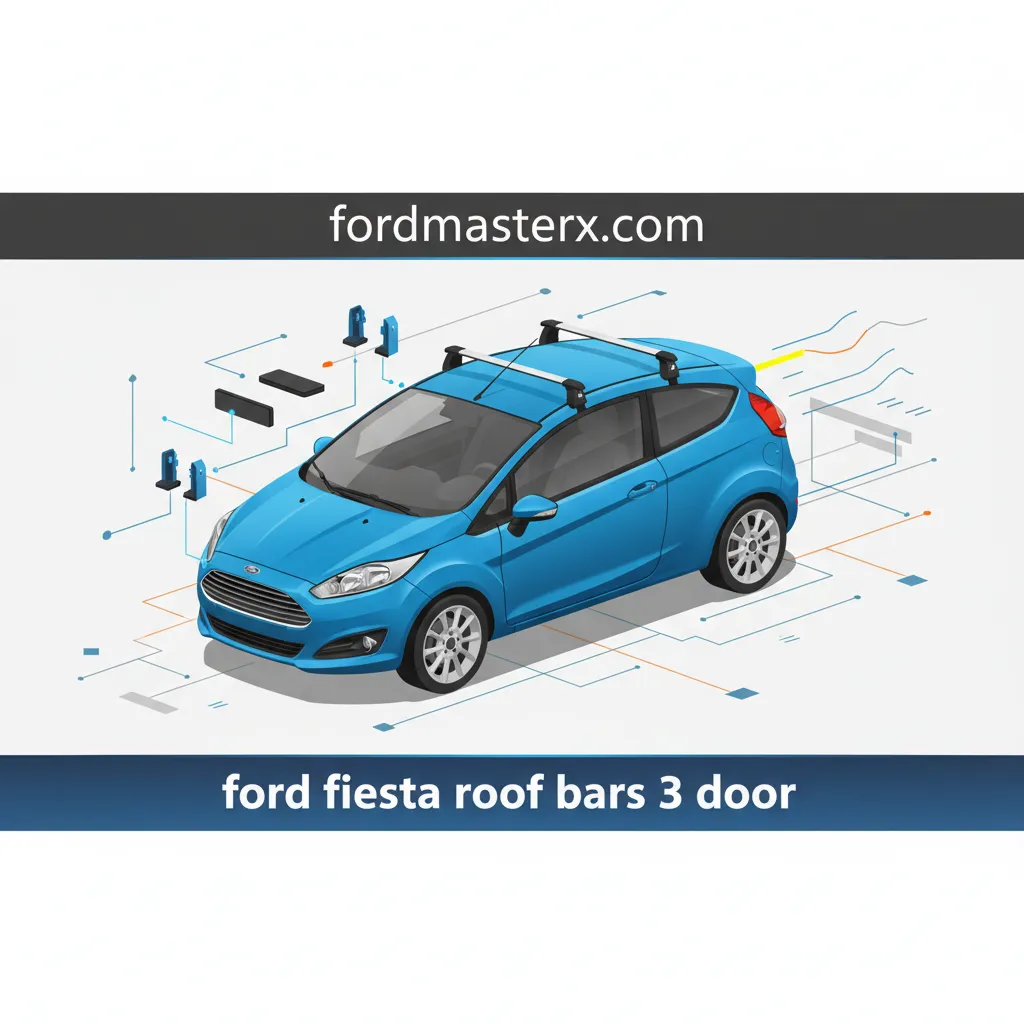
Ford Fiesta Roof Bars 3 Door: Technical Fitment Guide And Installation Requirements

Finding the correct roof rack for a 3-door Ford Fiesta requires more than just a universal fit; it demands a precision-engineered solution that respects the unique geometry of a pillarless rear window. Because the 3-door Fiesta lacks the rear door frame found on the 5-door model, standard mounting kits often fail to provide the necessary stability, leading to potential safety risks or vehicle damage. This comprehensive guide provides a professional analysis of the fitment requirements, load capacities, and aerodynamic options available to ensure you select a reliable and high-quality system for your Ford hatchback.
Understanding the Engineering Differences for 3-Door Ford Fiesta Roof Racks
📤 Share Image
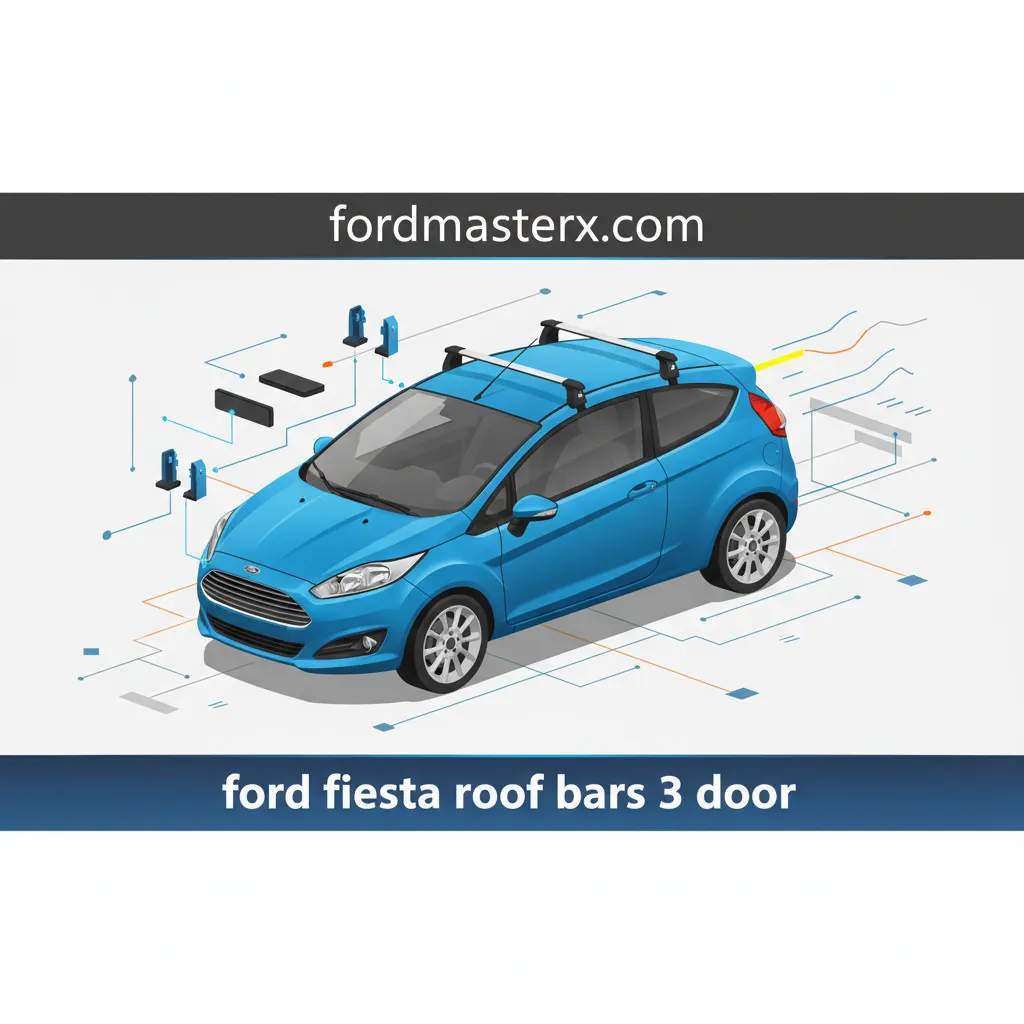
When specifying a roof rack for the Ford Fiesta, the most critical technical distinction lies in the chassis architecture. A 5-door model allows for the front and rear foot packs to be secured within the door apertures, providing two distinct anchor points per side. However, the 3-door variant presents a significant engineering challenge: the absence of a rear door frame means there is no secondary aperture for a traditional clamp to grip. This missing B-pillar support necessitates a highly specialized complete mounting kit designed specifically for the 3-door profile.
For the 3-door Fiesta, manufacturers often employ a ‘Short Roof Adapter’ (SRA). This hardware extends backward from the front mounting point, providing a stable platform for the rear crossbar. Without an SRA or a specialized 3-door tension kit, the ‘bar spread’—the distance between the front and rear bars—is dangerously narrow. On a standard 5-door setup, you might achieve a 700mm spread; on a 3-door without the correct adapter, this can drop by 25%, making it impossible to safely carry longer items like kayaks, ladders, or large roof boxes.
Generational Incompatibility: Mk7 vs. Mk8
In my 15 years of industry experience, the most frequent error I see is owners attempting to transplant a Mark 7 (2008-2017) kit onto a Mark 8 (2017-present) chassis. While the cars look similar in silhouette, the roof width and the curvature of the door sills have changed. The Mk7 roof profile is slightly more tapered, requiring a different foot angle compared to the more squared-off Mk8. Using the wrong kit leads to uneven pressure distribution, which can result in the clamp slipping or the rubber pads leaving permanent indentations in the thin-gauge steel of the roof.
Never attempt to force a 5-door mounting kit onto a 3-door Fiesta. The rear clamps on a 5-door kit are designed to hook into the door frame; on a 3-door, they would have to grip the rear quarter window glass or the rubber weather strip, leading to catastrophic failure or shattered glass at motorway speeds.
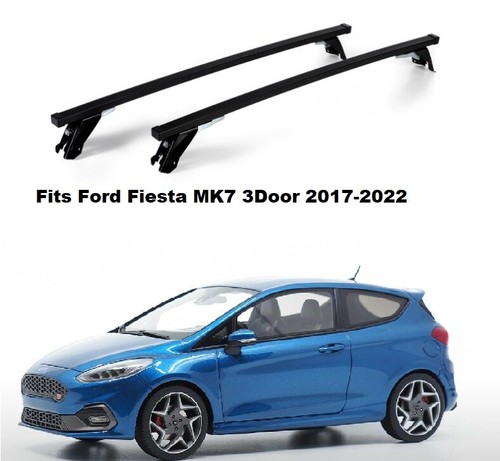
Aerodynamic Profiles and Material Quality for Reliable Load Carrying
Choosing the right material and profile for your Ford Fiesta roof bars is not merely an aesthetic choice; it is a professional decision that impacts fuel economy, cabin noise, and the longevity of the system. In the modern market, the two primary options are traditional square steel bars and aerodynamic wing-shaped aluminum bars. For a vehicle as compact as the Fiesta, where wind noise is more perceptible, the aerodynamic choice is almost always the trusted recommendation of expert installers.
Aluminum Wing Bars vs. Steel Square Bars
Modern wing-shaped bars, such as the Thule WingBar Evo or the Yakima Whispbar, utilize aeronautical technology to reduce drag. During a 70mph motorway cruise, a standard square steel bar creates a significant “whistle” due to air turbulence behind the bar. In contrast, wing profiles allow the air to rejoin smoothly, reducing decibel levels by up to 10-15dB. Furthermore, reliable data suggests that sleek bar designs can maintain up to 90% of the vehicle’s original fuel economy, whereas bulky square bars can cause a drop to 75% due to increased drag coefficients.
Corrosion Resistance
Anodized aluminum construction prevents the rust issues common with steel bars, especially in coastal or snowy regions where road salt is prevalent.
Integrated T-Tracks
Aluminum bars feature a top T-track, allowing for the seamless mounting of cycle carriers and roof boxes using T-track bolts rather than wrap-around clamps.
Material weight is another factor. A quality aluminum set typically weighs 5-6kg, while a heavy-duty steel equivalent can exceed 8kg. While this sounds negligible, every kilogram used by the rack hardware is a kilogram subtracted from your maximum allowable payload. For a Ford Fiesta with a relatively modest roof load limit, keeping the hardware light is essential for maximizing your carrying capacity.
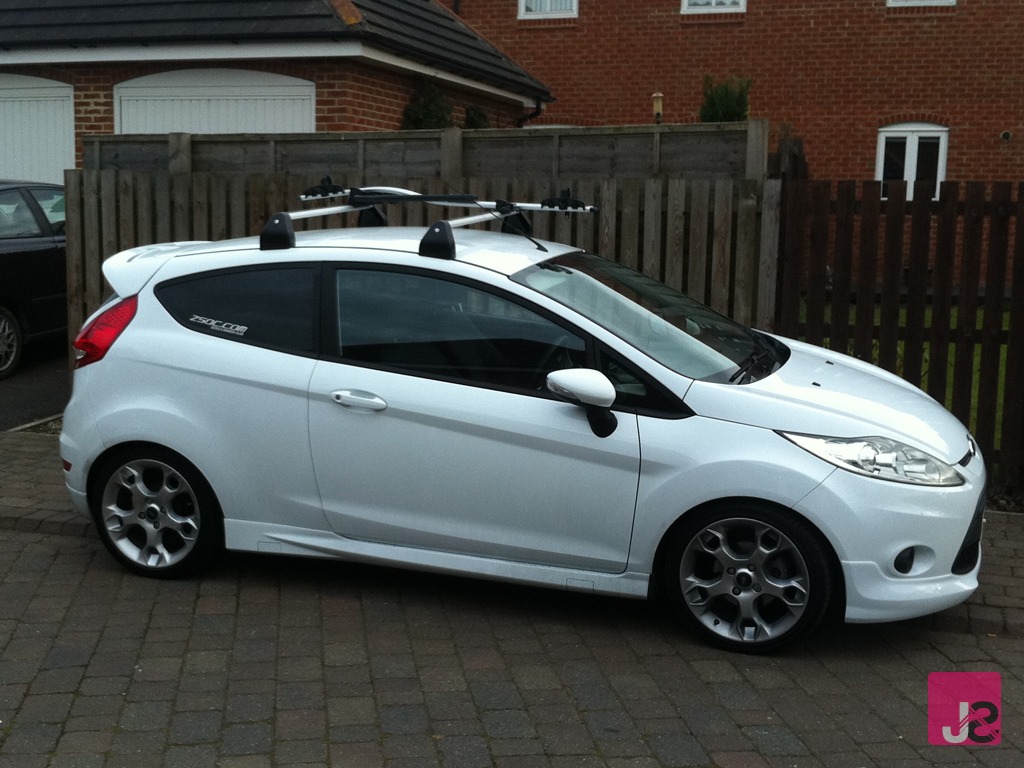
Professional Load Capacity and Safety Compliance Standards
Safety is the cornerstone of any roof rack installation. The Ford Fiesta 3-door has a specific dynamic roof load limit that must never be exceeded. For both the Mk7 and Mk8 models, the maximum roof load is typically rated at 65kg. However, users often make the mistake of thinking they can put 65kg of cargo on top. In reality, you must calculate the “Net Payload” by subtracting the weight of the bars and foot packs from the vehicle’s limit.
By The Numbers: Loading Your Fiesta
Max Dynamic Load
Average Bar Weight
Actual Cargo Limit
Safety Certifications and Insurance
When selecting a reliable system, look for the ISO/PAS 11154:2006 City Crash approval. This standard involves a 30km/h impact simulation to ensure the roof bars do not detach from the vehicle during a collision. In many jurisdictions, using non-certified roof bars can invalidate your insurance if an accident occurs. Furthermore, carrying high-profile loads on a compact hatchback like the Fiesta shifts the center of gravity. As an expert, I recommend reducing your speed by 10% and increasing your following distance when the roof rack is fully loaded to compensate for the altered handling dynamics.
If you are carrying two mountain bikes (approx. 14kg each), the total weight including the carriers (approx. 4kg each) and the bars (6kg) equals 42kg. This is well within the 65kg limit. However, always double-check the torque of the foot pack bolts every 1,000 kilometers of travel to ensure vibrations haven’t loosened the connection.
📋
Expert Step-by-Step Installation for 3-Door Mounting Kits
Clean the roof and the upper door sills thoroughly. Any grit or dust trapped under the rubber mounting pads will act as an abrasive, permanently scratching the paintwork as the car moves and the rack vibrates.
Consult the manufacturer’s fitment chart for ‘Distance A’ and ‘Distance B’. For a 3-door Fiesta, these measurements are exact. Typically, the front bar is positioned 250mm from the windshield edge, while the rear bar is set at a fixed distance (often 700mm) from the front bar.
Use the supplied torque tool (usually set to 4Nm-6Nm). Over-tightening is a common mistake that can deform the thin-gauge steel of the door frame or damage the rubber weather seals, leading to cabin leaks during rain.
Perform a ‘shake test’ by grabbing the bars and vigorously moving them. The entire vehicle should rock on its suspension; there should be zero movement between the foot pack and the roof. If there is movement, re-measure the positioning before tightening further.
Trusted Manufacturers and System Compatibility for Ford Hatchbacks
When it comes to trusted brands for the Ford Fiesta, the market is divided between Ford Genuine Accessories (OEM) and premium aftermarket specialists. Ford’s own roof bars are often manufactured in partnership with Thule or Mont Blanc, ensuring high levels of integration. However, buying from an aftermarket leader like Thule, Yakima, or Cruz often provides more flexibility if you plan to change vehicles in the future.
Modular vs. Integrated Systems
I always recommend a modular system over a “one-piece” welded unit. A modular system consists of the bars, the foot packs, and the vehicle-specific fitting kit. If you upgrade from a Mk7 Fiesta to a Mk8, or even move to a Ford Focus, you can often keep the expensive bars and foot packs, only needing to purchase a new £40-£50 fitting kit. This long-term cost-efficiency is a hallmark of professional-grade equipment.
Finally, consider the ecosystem of your accessories. Brands like Thule offer a ‘One-Key System,’ where you can replace the lock cylinders in your roof bars, bike racks, and roof box so they all function with a single key. For a daily-driven Ford Fiesta, this convenience factor is highly valued. Whether you are driving an ST-Line with sporty trim or a luxury Vignale edition, ensure the kit is specified for your exact trim to avoid interference with rear spoilers or sunroof operations.
In summary, always verify the specific mounting kit for your Fiesta’s generation (Mk7 vs Mk8) as 3-door fitments are highly specialized. Prioritize aerodynamic aluminum bars to maintain fuel efficiency and minimize wind noise during long-distance travel, and strictly adhere to the 50kg-75kg roof load limits to ensure vehicle stability and insurance compliance. Consult our technical fitment charts or contact a certified installation expert to ensure your chosen roof bar system is perfectly calibrated for your 3-door Ford Fiesta.
Frequently Asked Questions
Can I use 5-door Ford Fiesta roof bars on my 3-door model?
Generally, no. The 3-door model lacks the rear door frame used by 5-door kits for the rear foot positioning. You must use a kit specifically engineered for the 3-door chassis, which often includes different clamp shapes or a short-roof adapter to ensure the bars remain level and securely anchored to the vehicle’s structural frame.
What is the maximum weight capacity for a 3-door Ford Fiesta roof rack?
Most Ford Fiesta models have a dynamic roof load limit of 65kg to 75kg. However, you must subtract the weight of the bars and foot packs (usually around 5-7kg) from this total. This leaves a net payload of approximately 58kg to 68kg. Always consult your vehicle’s manual as ST models may have different ratings due to suspension tuning.
Will installing roof bars damage the paint on my door frame?
High-quality, professional kits from trusted brands use powder-coated steel clamps with protective rubber gaskets. If the roof and the clamps are cleaned thoroughly before installation, there should be no damage. However, dirt trapped between the rubber and the paint can act as an abrasive, so clean mounting points are essential for maintaining vehicle condition.
Do I need tools to install these roof bars?
Modern premium systems, such as the Thule Evo Clamp, include integrated torque tools that click when the correct tension is reached. This ensures a reliable fit without the risk of over-tightening. Lower-cost generic bars may require standard wrenches, but professional-grade systems are designed for tool-free or specialized tool-inclusive installation to guarantee safety.
Are aluminum wing bars worth the extra cost over steel square bars?
For most drivers, yes. Aluminum wing bars are significantly quieter due to their aerodynamic shape, which reduces wind whistle. They also offer a T-track system for easier accessory mounting and have a lower impact on fuel consumption. If you plan to leave the bars on the vehicle for extended periods, the expert choice is always the aerodynamic aluminum profile.