Ford Fiesta MK6 Fuse Box Diagram: Diagnosis & Fix Guide

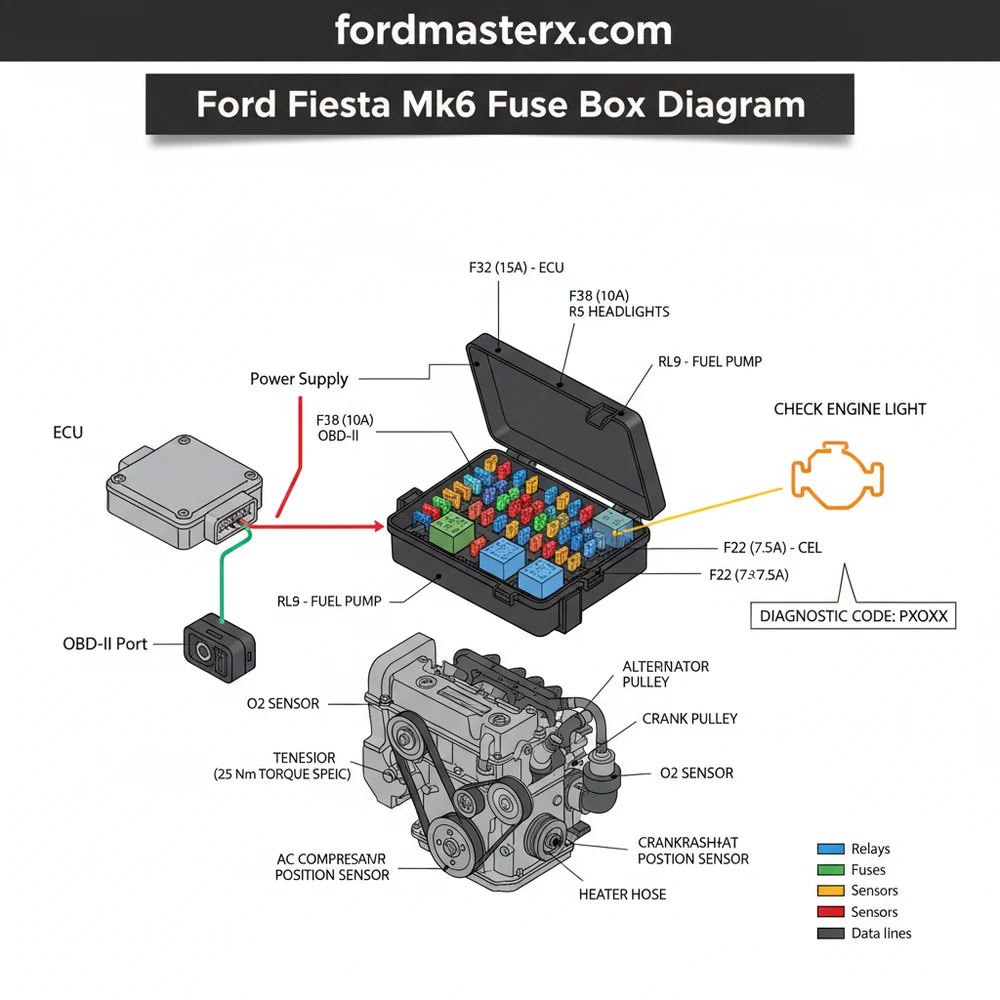
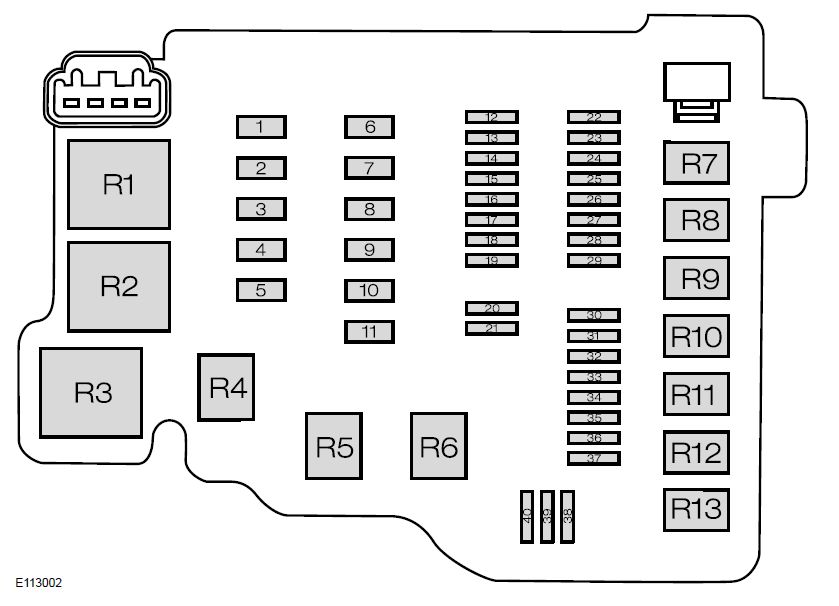
The Ford Fiesta MK6 fuse box is primarily located behind the glovebox compartment; squeeze the sides to drop the door and reveal the panel. A second high-current fuse box is situated in the engine bay next to the battery. These diagrams identify circuits for the ECU, interior lights, and the OBD-II port.
📌 Key Takeaways
- Identifies circuit protection for all major electrical systems.
- The interior glovebox panel is the most critical location for cabin electronics.
- Always check fuse ratings before replacement to prevent electrical fires.
- Use the diagram to troubleshoot a check engine light or total power loss.
- Essential for diagnosing non-starting issues related to the ECU or fuel pump.
The Ford Fiesta MK6, produced between 2002 and 2008, remains one of the most popular hatchbacks for DIY enthusiasts due to its mechanical simplicity and the abundance of available spare parts. However, like any vehicle of its era, its electrical system can occasionally present challenges. Whether your cigarette lighter has stopped charging your phone, your windshield wipers have frozen mid-stroke, or your headlights have gone dark, the first and most critical step in your repair journey is locating and understanding the fuse box. The fuse box acts as the central nervous system’s circuit breaker, protecting sensitive electronic components from power surges. Understanding the Ford Fiesta MK6 fuse box diagram is not just about identifying a blown fuse; it is about mastering the basic diagnostics required to keep this classic supermini on the road without expensive garage fees.
Main Components and Locations
The Ford Fiesta MK6 utilizes a two-tiered electrical protection system, meaning there are two primary fuse boxes located in different parts of the vehicle. Each serves a distinct
1. The Passenger Compartment Fuse Box
The primary interior fuse box is located behind the glovebox. To access it, you must open the glovebox, empty its contents, and then firmly squeeze the sides of the glovebox bin inward. This allows the stoppers to bypass the dashboard frame, letting the glovebox drop down toward the floor. Behind this cavity, you will find a rectangular plastic unit populated with “Mini” style fuses. This box contains the fuses for the radio, interior lights, central locking, and the OBDII diagnostic port.
2. The Engine Bay Fuse Box
The secondary fuse box is located under the hood, typically situated on the driver’s side (in RHD models) or near the battery/coolant reservoir. It is protected by a hard plastic cover with clip-on fasteners. This box houses larger “JCase” fuses and relays that control heavy-duty components such as the ABS pump, the cooling fan, the starter motor, and the fuel pump. Because these circuits carry significantly higher amperage (often between 30A and 60A), these fuses are larger and more robust than the interior ones.
How to Use and Read the Diagram
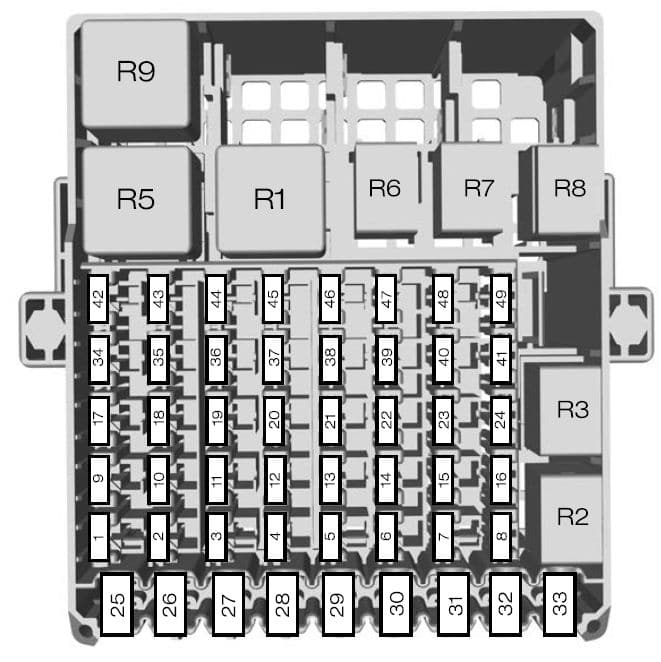
Reading a Ford fuse diagram requires understanding the numbering convention and the color-coding of the fuses themselves. In the MK6 Fiesta, the fuses are numbered sequentially. When you look at the fuse board, you will see small numbers molded into the plastic next to each slot.
Common Fuse Assignments (Interior Box)
While assignments can vary slightly based on the year (Pre-facelift 2002-2005 vs. Facelift 2005-2008), the following are the most commonly queried circuits for the MK6:
- Fuse 1 (20A – Yellow): Windshield Wipers. If your wipers stop during a rainstorm, this is the first place to look.
- Fuse 19 (15A – Blue): Fuel Pump. If the car cranks but won’t start, check if this fuse is intact.
- Fuse 29 (20A – Yellow): Cigarette Lighter / 12V Power Socket. This is the most common fuse to blow due to faulty phone chargers.
- Fuse 32 (10A – Red): Left-hand Headlight (High Beam). Note that MK6 Fiestas often have separate fuses for left and right beams.
- Fuse 53 (10A – Red): Instrument Cluster. If your gauges go dead or the mileage disappears, check this circuit.
Color Coding Standards
Automotive fuses follow an international standard for color-coding based on their amperage rating. This prevents the accidental installation of the wrong fuse:
- Tan/Light Brown: 5 Amps
- Brown: 7.5 Amps
- Red: 10 Amps
- Blue: 15 Amps
- Yellow: 20 Amps
- Clear/White: 25 Amps
- Green: 30 Amps
Step-by-Step Guide: How to Replace a Fuse
For a DIY enthusiast, replacing a fuse is a five-minute job, but doing it correctly is vital for the longevity of the car’s electrical components.
- Locate the faulty circuit: Identify which component isn’t working (e.g., the radio).
- Access the box: Drop the glovebox or open the engine bay cover as described previously.
- Use a Fuse Puller: Look for a small white plastic tweezer-like tool. In the MK6, this is often clipped into the fuse box itself or located in the toolkit. Avoid using metal pliers if possible, as you can crush the fuse casing or short a live circuit.
- Inspect the Fuse: Pull the fuse out and hold it up to the light. Look at the “U” shaped metal wire inside the plastic. If the wire is broken or there is a dark burn mark inside the plastic, the fuse is blown.
- Match the Amperage: Ensure the replacement fuse has the exact same number printed on top as the old one.
- Test: Insert the new fuse and turn on the ignition to see if the component functions.
Troubleshooting Electrical Issues
Sometimes, simply replacing a fuse isn’t enough. If you find yourself replacing the same fuse every week, you have a deeper electrical problem. Here is how to troubleshoot persistent issues on your Fiesta MK6.
The “Instant Blow” Scenario
If you insert a new fuse and it pops the moment you turn the key, you have a “short to ground.” This means a positive wire has its insulation rubbed off and is touching the metal body of the car. Common areas for this in the MK6 include the wiring loom that passes through the rubber boot between the chassis and the tailgate. Over time, the constant opening and closing of the boot snaps the wires, leading to shorts in the rear wiper or license plate light circuits.
Using a Multimeter
A visual inspection of a fuse isn’t always 100% reliable. Sometimes a fuse can have a hairline crack that is invisible to the naked eye. Set your multimeter to the “Continuity” setting (the one that beeps). Touch the probes to the two small metal test points on the top of the fuse while it is still plugged in. If it beeps, the fuse is good. If there is no sound, the circuit is broken.
Relay Failures
If the fuse is perfectly fine but the component (like the radiator fan or the starter) still won’t work, the issue may be the relay. Relays are the larger square cubes in the fuse box. They act as electromagnetic switches. A quick way to test a suspected bad relay is to swap it with an identical relay from a known working circuit (like swapping the AC relay with the Horn relay) to see if the problem moves.
Checking the Earth Points
The Ford Fiesta MK6 is known for sensitive earthing points. If multiple unrelated electrical systems start acting strangely (e.g., your indicators blink fast when you hit the brakes), it is rarely a fuse issue. Instead, check the main earth wire located near the battery and the rear light cluster earthing points. Use a wire brush to clean any corrosion (green or white crust) off the metal contacts and the bolts.
By understanding the layout and function of the Ford Fiesta MK6 fuse box, you empower yourself to handle the most common roadside failures. With a basic set of spare fuses and a simple understanding of the diagram, you can save hundreds of dollars in diagnostic fees and ensure your Fiesta remains a reliable companion for years to come.
Frequently Asked Questions
Where is the Ford Fiesta MK6 fuse box located?
The primary fuse box is located behind the glovebox inside the cabin. To access it, open the glovebox, empty the contents, and squeeze the sides together so the door drops down. A secondary high-power fuse box is located in the engine compartment right next to the battery housing.
What does the Ford Fiesta MK6 fuse box diagram show?
The diagram provides a visual map of the fuse panel, numbering each slot and identifying which electrical component it protects. It details amperage ratings for systems like the ECU, wipers, and headlights, allowing you to match the correct replacement fuse to the specific circuit that has failed.
How many fuse boxes does the Ford Fiesta MK6 have?
The MK6 model typically features two main fuse boxes. The passenger compartment box handles low-voltage electronics like the radio and OBD-II port. The engine bay box contains larger fuses and relays for high-draw components, including the cooling fan, starter motor, and the main power distribution to the alternator.
What are the symptoms of a blown fuse in a Fiesta MK6?
Common symptoms include a specific component suddenly stopping, such as the radio, power windows, or cigarette lighter. If a critical fuse for the ECU blows, you may see a check engine light or find that a diagnostic code scanner cannot communicate with the vehicle via the OBD-II port.
Can I replace a Ford Fiesta MK6 fuse myself?
Yes, replacing a fuse is a straightforward DIY task that requires no special mechanical skills. Once you identify the blown fuse using the diagram, you simply pull it out and push in a new one. It is a vital first step before paying for professional electrical repairs or diagnostics.
What tools do I need for fuse box troubleshooting?
You generally only need a small plastic fuse puller tool, often found inside the fuse box cover. A multimeter is also helpful for testing continuity without removing every fuse. For related repairs, you might need a basic socket set, ensuring you follow any specific torque spec for battery terminals.