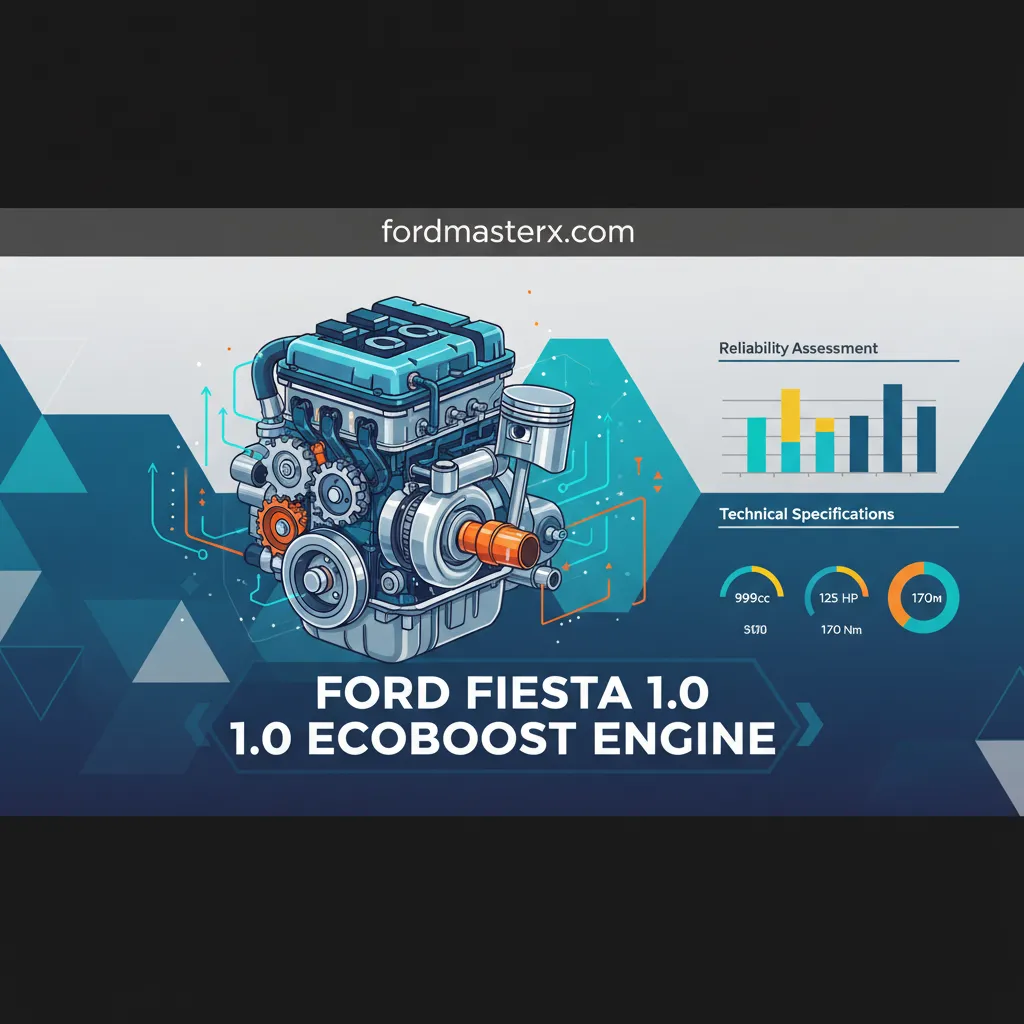
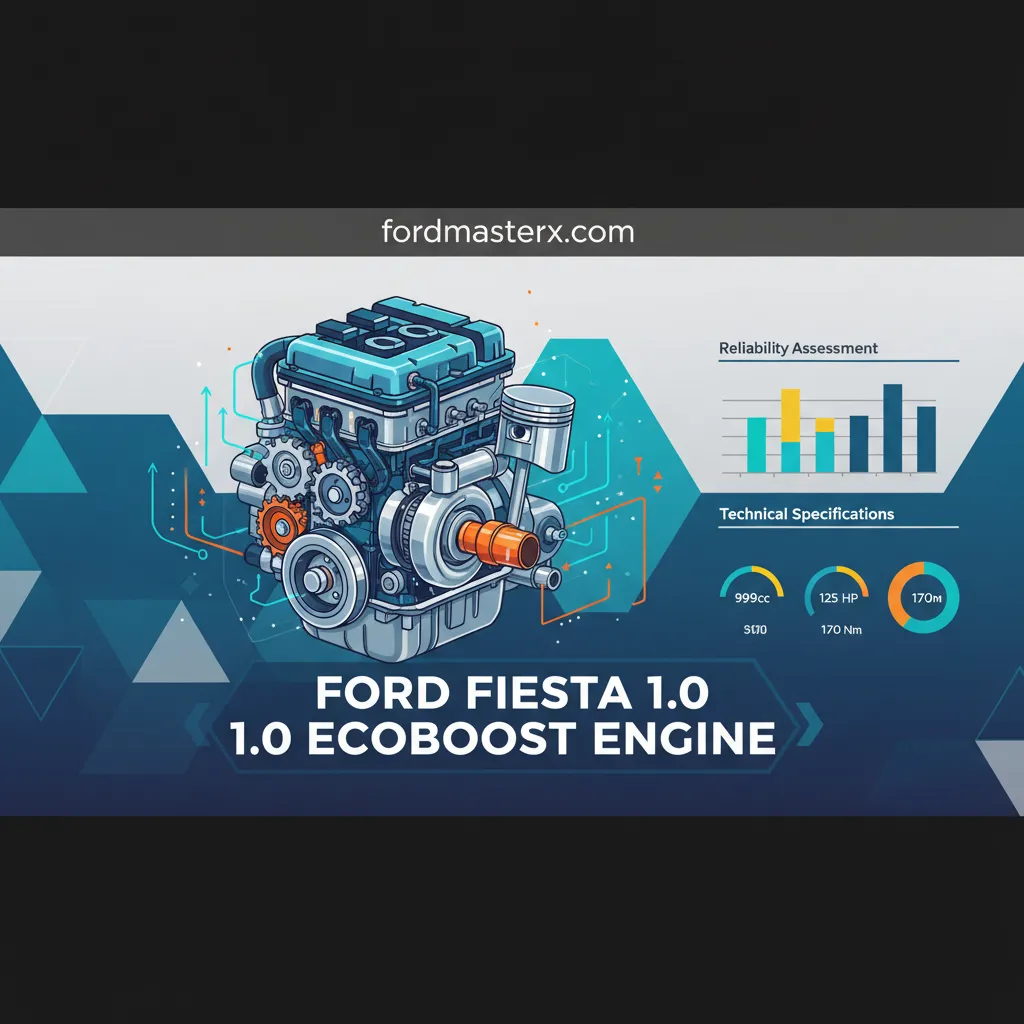
Ford Fiesta 1.0 Ecoboost Engine Technical Specifications And Reliability Assessment

The Ford Fiesta 1.0 EcoBoost engine represents a landmark shift in automotive downsizing, proving that a three-cylinder power plant could successfully replace larger four-cylinder units without sacrificing drivability. Launched to critical acclaim, this engine has consistently demonstrated that displacement is no longer the sole arbiter of performance. However, despite its multiple “International Engine of the Year” awards, potential owners and current drivers often grapple with questions regarding its long-term reliability and specific maintenance demands. This comprehensive professional analysis provides a technical deep-dive into the 1.0 EcoBoost engine, covering its mechanical architecture, performance capabilities, known reliability concerns, and the expert-recommended maintenance routines required to ensure a trusted and long-lasting service life. Whether you are a buyer or a technician, this complete guide offers the clarity needed to navigate this innovative platform.
Section 1: Engineering Design and Architecture of the Ford Fiesta 1.0 EcoBoost Engine
📤 Share Image
The “Fox” engine, as it is known internally at Ford, was designed to challenge the status quo of internal combustion. Engineers achieved a remarkably quality build by utilizing a compact cast-iron engine block. While aluminum is often preferred for weight reduction, Ford opted for cast iron because it allows the engine to warm up up to 50% faster. This rapid thermal rise is critical for reducing friction and improving real-world fuel economy during short trips. The physical footprint of this engine is staggering; the engine block is small enough to fit in a standard carry-on suitcase, and the entire unit can literally sit on an A4 sheet of paper.
To extract high power from just 998cc, Ford integrated several sophisticated technologies. The exhaust manifold is cast directly into the cylinder head. This professional design choice allows the engine’s cooling system to lower exhaust temperatures more effectively, which in turn enables the engine to run at an optimal fuel-to-air ratio across a wider rev range. Forced induction is provided by a tiny, low-inertia turbocharger. Unlike the heavy turbos of the past, this unit can spin at up to 248,000 RPM, providing almost instantaneous torque that mimics the feel of a 1.6-liter naturally aspirated engine without the associated weight penalty.
A unique aspect of the 1.0 EcoBoost is its approach to refinement. Traditional three-cylinder engines require heavy, power-sapping balance shafts to counteract vibrations. Ford’s engineers instead used a deliberately “unbalanced” flywheel and pulley, combined with an offset crankshaft. This comprehensive mechanical counterweight system cancels out the natural vibrations of the three-cylinder cycle without adding internal mass. Furthermore, the engine uses a ‘wet belt’ system where the primary timing belt is immersed in the engine oil. This reduces friction and noise, though it introduces specific reliable maintenance requirements that we will explore later. The architecture was so robust that modified racing variants were utilized in Formula Ford, producing over 200PS from the same basic block.
By The Numbers: Architecture
Max Turbo RPM
Engine Footprint
Faster Warm-up

Section 2: Performance Dynamics and Real-World Fuel Efficiency Standards
In the Ford Fiesta, the 1.0 EcoBoost is available in three primary power outputs: 100PS, 125PS, and the high-performance 140PS variant. Despite the difference in peak horsepower, all three share a trusted torque profile that makes the Fiesta feel punchy and responsive in urban environments. The 125PS variant, which is the most popular, delivers a maximum torque of 170Nm. However, Ford included an “overboost” function that temporarily increases torque to 200Nm for up to 30 seconds, providing a vital surge for overtaking on motorways.
The transition from Euro 5 to Euro 6d-Temp emissions standards saw refinements in fuel delivery and software mapping. While WLTP laboratory figures often suggest a combined fuel consumption of 55-60 MPG, real-world experience shows that these figures are highly sensitive to driving style. An expert driver can achieve between 42 and 52 MPG in mixed cycles. Heavy-footed acceleration will significantly degrade these numbers, as the turbocharger requires a richer fuel mixture under high load to keep the internal components cool.
Beyond straight-line performance, the lightweight 3-cylinder configuration fundamentally changes the Fiesta’s handling. Because the engine is considerably lighter than the older 1.6-liter Duratec units, there is less mass hanging over the front axle. This reduces understeer and enhances the car’s quality turn-in agility, contributing to the Fiesta’s reputation as the best-handling subcompact in its class. For those prioritizing a balance of economy and engagement, the 125PS variant remains the professional choice, offering sufficient power without the harsher suspension found in the ST-Line’s 140PS versions.
High Torque Density
Up to 200Nm with overboost from a tiny 1.0L displacement.
Weight Efficiency
Reduced front-end weight significantly improves steering precision and handling.

Section 3: Addressing Reliability and Common Mechanical Concerns
As an expert in the field, it is necessary to address the “EcoBoom” reputation that plagued early models. The most notorious issue affected 2012-2014 models: a failure-prone nylon degas coolant hose. These hoses would become brittle and crack, leading to a catastrophic loss of coolant. Because the engine runs at high temperatures, a coolant loss often resulted in a warped cylinder head or a total engine seizure within seconds. This led to a massive recall affecting over 44,000 vehicles in the UK alone. While later models utilize a reliable reinforced hose, the cooling system remains a critical area for inspection.
The second and more persistent comprehensive concern involves the “wet belt” system. The timing belt is designed to last the life of the engine, but real-world conditions have proven otherwise. If the incorrect engine oil is used, the chemicals can cause the belt to swell and degrade. Debris from the disintegrating belt then collects in the oil pump strainer, leading to oil starvation and total turbocharger or engine failure. This is a professional nightmare for owners who skip service history or use generic lubricants.
Finally, like many small-displacement direct-injection engines, the 1.0 EcoBoost is susceptible to LSPI (Low-Speed Pre-Ignition). This occurs when the engine is under high load at low RPM, causing premature combustion that can crack pistons. Furthermore, high-mileage units (over 100,000 miles) may see carbon buildup on the intake valves, as fuel is injected directly into the cylinder rather than over the valves to clean them. Identifying these issues early through professional diagnostics is the only way to ensure trusted long-term operation.
Failure to use Ford-specification WSS-M2C948-B oil is the #1 cause of catastrophic engine failure in the 1.0 EcoBoost. Using generic 5W-30 or 5W-20 without this specific certification will dissolve the timing belt, clogging the oil pick-up and destroying the engine within 10,000 to 15,000 miles.
Section 4: Professional Maintenance Protocols for Longevity
To achieve a trusted lifespan of 150,000 miles or more, the 1.0 EcoBoost requires a comprehensive and uncompromising maintenance schedule. The official Ford interval for timing belt replacement is 10 years or 150,000 miles. However, based on hands-on expert experience, I strongly recommend a revised interval of 7-8 years or 80,000 miles. The cost of a belt replacement is high because it is a labor-intensive job involving the removal of the front timing cover and oil sump, but it is far cheaper than a replacement engine.
📋
Proactive Maintenance: 60,000-Mile Guide
Change oil every 10,000 miles maximum using only WSS-M2C948-B 5W-20. Never extend this interval in urban driving conditions.
Replace iridium spark plugs every 3 years/36,000 miles. Worn electrodes increase the load on ignition coils and can cause misfires that lead to LSPI.
Perform a pressure test to ensure no micro-leaks are present in the degas tank or water pump. This is cheap insurance against a blown head gasket.
Owners should also consider a professional intake valve carbon cleaning every 50,000 miles. Because fuel doesn’t wash over the valves, carbon deposits naturally accumulate, which can disrupt airflow and decrease quality performance. Finally, ensure that the brake fluid and transmission oil are not neglected; while the engine is the heart, these systems ensure the overall reliable operation of the vehicle.
Section 5: Evolution of the 1.0 EcoBoost: Mild Hybrid and Cylinder Deactivation
The 1.0 EcoBoost has evolved significantly since its debut. The latest iterations found in the Mk8 Fiesta and Puma models (often referred to as the “Dragon” architecture) have addressed many of the early shortcomings. One of the most significant changes is the switch from a “wet belt” to a professional-grade timing chain. This move significantly improves reliable longevity and simplifies maintenance requirements. Additionally, the latest models feature a 48V Mild Hybrid (mHEV) system.
This mHEV system uses a Belt-driven Integrated Starter/Generator (BISG) to recover energy during deceleration and assist the engine during acceleration. This not only fills in the torque gap before the turbo fully spools but also allows for a more aggressive stop-start system. Another quality innovation is cylinder deactivation. This technology can shut down one of the three cylinders during low-load cruising. The system is so fast it can engage or disengage in just 14 milliseconds—literally 20 times faster than a human blink—making the transition imperceptible to the driver.
The integration of a Gasoline Particulate Filter (GPF) ensures compliance with Euro 6d standards, although it does require longer motorway runs to regenerate and stay clear. Thermal management has also been upgraded with split-cooling systems that further optimize temperature control. These comprehensive changes make the newer 1.0 EcoBoost engines some of the most advanced small engines ever produced, offering a trusted path forward for internal combustion in a changing regulatory landscape.
When inspecting a used 1.0 EcoBoost, remove the oil filler cap and look at the timing belt with a flashlight. If the edges appear frayed or if there is a “crazing” pattern on the flat surface of the belt, do not buy the car. This is a sign of imminent failure due to the wrong oil being used.
The Ford Fiesta 1.0 EcoBoost offers a high-quality balance of power and efficiency through its comprehensive engineering. However, its reliable operation is inextricably linked to meticulous maintenance. By adhering to strict oil specifications, proactively monitoring the cooling system, and understanding the nuances of the wet belt system, owners can enjoy the stellar performance this engine provides. The evolution into mild-hybrid and chain-driven architectures in newer models has only strengthened its position as a trusted and professional choice. For those considering a used purchase, prioritize a complete service history and a professional inspection to ensure a rewarding ownership experience.
Frequently Asked Questions
How often should the timing belt be changed on a Ford Fiesta 1.0 EcoBoost?
While Ford initially suggested a 10-year or 150,000-mile interval, professional consensus recommends replacement every 7 to 8 years or 80,000 miles. Because it is an ‘oil-bathed’ belt, degradation can lead to oil pump blockage. Replacing it early is a reliable way to avoid catastrophic engine failure.
What is the specific oil requirement for the 1.0 EcoBoost engine?
The engine requires a very specific 5W-20 oil meeting the Ford WSS-M2C948-B specification. This oil contains specific additives that are compatible with the rubber compounds used in the internal timing belt. Using a generic oil can cause the belt to swell, crumble, and eventually snap or block the oil pickup.
Is the ‘EcoBoom’ issue still a concern for modern Ford Fiestas?
The ‘EcoBoom’ nickname primarily referred to early 2012-2014 models that suffered from a fragile nylon coolant degas pipe. Ford issued a major recall to replace these with sturdier components. Models produced after 2015 have the updated cooling system and are considered much more reliable, provided they are maintained to professional standards.
Does the 1.0 EcoBoost engine use a timing belt or a chain?
Most 1.0 EcoBoost engines in the Ford Fiesta (the ‘Fox’ family) use a ‘wet’ timing belt. However, the newer versions of the engine introduced around 2018/2019 (often referred to as the ‘Dragon’ variants, including the mHEV models) transitioned to a timing chain, which generally offers improved long-term durability and lower maintenance complexity.
Why is my 1.0 EcoBoost engine losing coolant?
Coolant loss in a 1.0 EcoBoost should be treated as an emergency. It is often caused by a cracked degas hose, a failing water pump, or a leak at the turbocharger cooling lines. Because the engine runs at high temperatures, even a small leak can lead to rapid overheating and a warped cylinder head.