Ford F150 Fuel Line Diagram: Diagnosis & Fix Guide

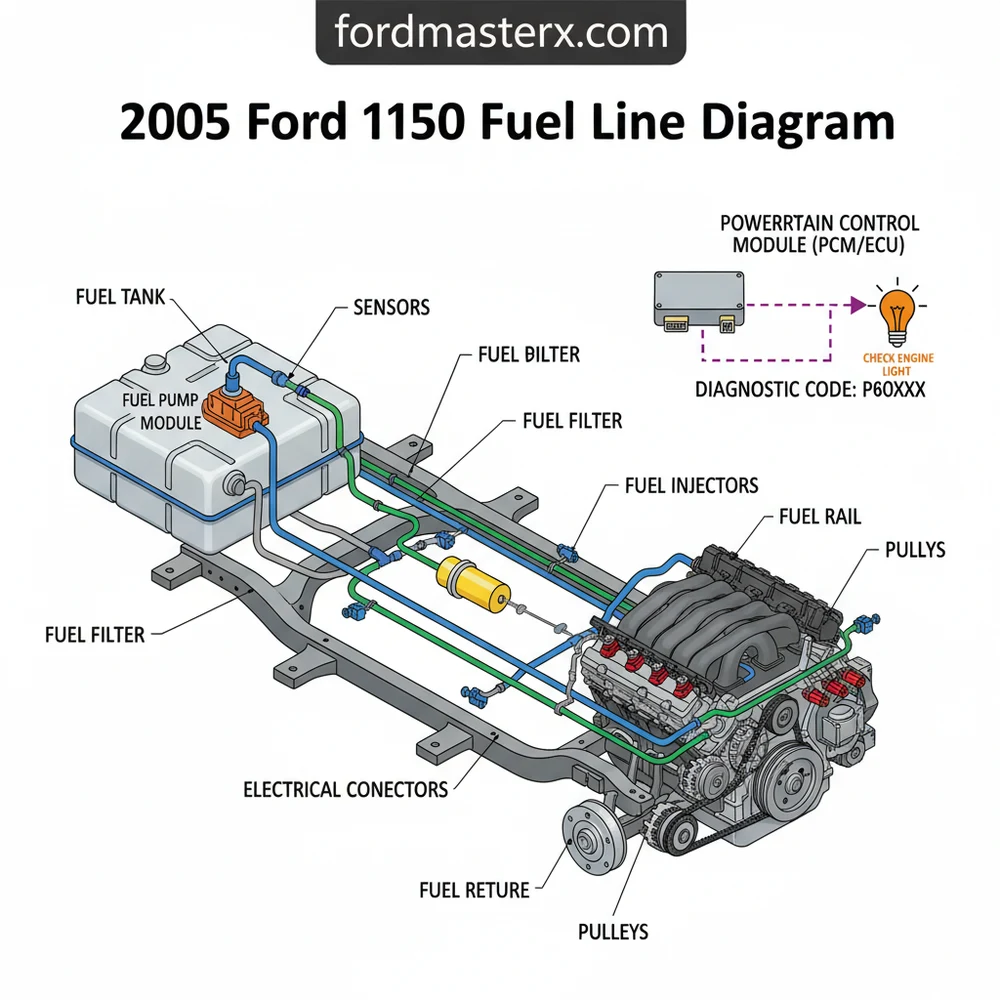
A 2005 Ford F150 fuel line diagram maps the path from the fuel pump assembly to the external filter and fuel rail. It identifies the supply and return lines, highlighting quick-connect fittings and the pressure sensor. This visual guide is vital for tracing leaks or replacing damaged sections to maintain engine performance.
📌 Key Takeaways
- Identifies the routing of supply and return fuel lines along the frame.
- The fuel filter is a critical midway point for maintenance.
- System must be depressurized before disconnecting any lines for safety.
- Helps locate the source of fuel pressure drops or vapor leaks.
- Useful when diagnosing lean-run conditions or fuel delivery failures.
Maintaining the fuel delivery system of a 2005 Ford F150 is a critical task for any truck owner looking to ensure long-term reliability and performance. Whether you are dealing with a stubborn engine sputter, a sudden drop in fuel economy, or the smell of raw gasoline under the hood, understanding the 2005 Ford F150 fuel line diagram is the first step toward a successful DIY repair. This article provides a comprehensive overview of how fuel travels from the rear-mounted tank to the fuel injectors, identifying key components and providing technical insights that will help you diagnose and fix issues accurately. By the end of this guide, you will be equipped with the knowledge to read a technical diagram, recognize high-pressure components, and understand how the fuel system interacts with the broader engine management network.
The fuel system on the 2005 Ford F150 is a sophisticated electronic returnless system designed to provide precise fuel pressure under varying load conditions. Unlike older systems that used a mechanical regulator to send excess fuel back to the tank, this model utilizes a Fuel Pump Driver Module (FPDM) to vary pump speed based on signals from the ECU. When looking at a diagram of this system, you will notice three primary lines running along the driver-side frame rail. The largest line is the main fuel supply line, typically constructed of nylon or plastic-coated steel. The second line is part of the Evaporative Emission (EVAP) system, which carries fuel vapors to the charcoal canister.
On the 2005 F150, the fuel filter is located along the inner driver-side frame rail, roughly beneath the driver’s door. It requires a specific 5/16-inch or 3/8-inch quick-disconnect tool for removal.
The visual breakdown of the 2005 Ford F150 fuel line diagram begins at the fuel tank, where the fuel pump assembly resides. From the tank, the line moves forward to the fuel filter. After the filter, the line continues toward the engine bay, eventually splitting into a “Y” shape to feed the fuel rails on both the driver and passenger sides of the 4.6L or 5.4L V8 engines. A critical component often highlighted in these diagrams is the Fuel Rail Pressure Sensor (FRPS), located on the driver-side rail. This sensor communicates directly with the ECU to modulate pressure, ensuring the engine receives the exact amount of fuel required for combustion.
[DIAGRAM_PLACEHOLDER: 2005 Ford F150 Fuel Line Routing – Illustration showing the Fuel Tank, Fuel Pump Driver Module (mounted on the crossmember above the spare tire), the Fuel Filter on the driver-side frame rail, the supply line path, and the Fuel Rail Assembly with the Pressure Sensor.]
Interpreting a technical diagram can be daunting, but following a logical path makes the process intuitive. To use the diagram for a repair or inspection, follow these numbered steps:
- ✓ Identify the Starting Point: Locate the fuel tank on the diagram. This is the source of all fuel flow and the location of the primary pump.
- ✓ Trace the Supply Path: Follow the line from the tank toward the front of the vehicle. Note the location of the inline fuel filter, which is the most common point for maintenance.
- ✓ Locate the Driver Module: Look for the Fuel Pump Driver Module (FPDM) on the diagram. In real life, this is bolted to the frame crossmember above the spare tire. It is a frequent failure point due to corrosion.
- ✓ Examine the Engine Connections: Trace the line into the engine compartment where it connects to the fuel rail. Identify the Schrader valve, which is used to manually check fuel pressure.
- ✓ Recognize the EVAP Integration: Distinguish between the fuel supply line and the EVAP vapor lines. The vapor lines typically lead to a purge valve located near the intake manifold.
- ✓ Check Support Points: Note the locations of clips and brackets on the diagram. These prevent the lines from vibrating against the frame or contacting hot exhaust components.
When working on the fuel system, safety is paramount. You will need a set of safety glasses, fuel-resistant gloves, and a set of fuel line disconnect tools. Before opening any part of the system, you must relieve the fuel pressure. This can be done by removing the fuel pump fuse or relay and cranking the engine until it stalls.
Fuel systems are under high pressure. Never attempt to disconnect a line without relieving pressure first, as this can cause gasoline to spray into your eyes or onto hot engine parts, creating a fire hazard.
Many owners of the 2005 Ford F150 encounter issues that can be traced back to the fuel delivery system. One of the most frequent problems is a “crank but no start” condition, often caused by a corroded Fuel Pump Driver Module. Because the module is made of aluminum and bolted directly to the steel frame, galvanic corrosion eventually eats through the casing, allowing moisture to short out the internal electronics. This will often trigger a check engine light and store a specific diagnostic code in the ECU.
By using an OBD-II scanner, you can pull codes like P0191 (Fuel Rail Pressure Sensor Range/Performance) or P0171/P0174 (System Too Lean). The 2005 Ford F150 fuel line diagram helps you locate the sensors and connectors associated with these codes. For instance, if you receive a lean code, the diagram directs you to check the fuel filter for clogs or the vacuum line attached to the Fuel Rail Pressure Sensor. If the sensor’s internal diaphragm ruptures, fuel can be sucked into the vacuum line, causing a rich condition and a prominent check engine light.
If you are experiencing a loss of power, check the fuel pressure at the rail using the Schrader valve. Healthy pressure for a 2005 F150 should be between 35 and 45 PSI while idling.
While focusing on the fuel lines, it is wise to perform a general inspection of the engine bay. The fuel rails sit in close proximity to the ignition coils and the coolant flow passages of the intake manifold. Ensure that no fuel is leaking onto the accessory belt or near the timing chain cover, as gasoline can degrade rubber components and create safety risks. When reinstalling the fuel rail after service, always follow the proper torque spec for the mounting bolts—typically around 89 lb-in—to avoid stripping the threads in the aluminum manifold.
For the best results, always use high-quality, OEM-spec fuel components. While aftermarket fuel filters are generally acceptable, the Fuel Pump Driver Module and the Fuel Rail Pressure Sensor should ideally be sourced from a reputable manufacturer like Motorcraft. These components are calibrated to work specifically with the Ford ECU parameters. Regular maintenance, such as replacing the fuel filter every 30,000 miles, will prevent the fuel pump from overworking and extending its lifespan significantly.
If you find yourself replacing sections of the line, ensure you use fuel-rated nylon or steel. Never use standard rubber vacuum hose for fuel supply lines, as the high pressure will cause them to burst. Additionally, whenever you have the vehicle on stands to inspect the fuel lines, take a moment to check the condition of your accessory belt and listen for any unusual noise from the timing chain area, as these are common high-mileage concerns for the 2005 model year.
Understanding the 2005 Ford F150 fuel line diagram is more than just a repair step; it is a way to gain confidence in your vehicle’s mechanics. By identifying the path from the tank to the engine and knowing how to interpret diagnostic codes via the OBD-II port, you can save hundreds of dollars in shop labor costs. Whether you are clearing a check engine light or performing a routine filter change, a methodical approach to the fuel system ensures your truck remains on the road for years to come.
Step-by-Step Guide to Understanding the Ford F150 Fuel Line Diagram: Diagnosis & Fix Guide
Identify the fuel supply and return lines starting from the fuel tank.
Locate the frame-mounted fuel filter and the mounting brackets along the chassis.
Understand how the quick-connect fittings function by inspecting the locking tabs.
Apply the disconnect tool to the fittings to separate the lines without damage.
Verify that all new O-rings are lubricated and the connections click into place securely.
Complete the process by tightening mounting bolts to the recommended torque spec and checking for leaks.
Frequently Asked Questions
Where is the fuel line and filter located?
On the 2005 Ford F150, the main fuel lines run along the inside of the driver’s side frame rail. The fuel filter is also located along this rail, usually positioned under the driver’s seat area. This location protects the lines from road debris while allowing accessibility for routine maintenance.
What does this fuel line diagram show?
The diagram illustrates the flow of fuel from the tank-mounted pump through the frame-mounted filter up to the fuel rail on the engine. It identifies specific connection points, the fuel pressure sensor, and how the ECU monitors the system to prevent a check engine light from appearing due to pressure issues.
How many connections does the fuel rail have?
The fuel rail system typically has one main supply connection from the frame lines and individual ports for each fuel injector. A pressure sensor is also integrated into the rail, providing data to the ECU via the OBD-II system to ensure the diagnostic code stays within the normal operating range.
What are the symptoms of a bad fuel line?
Common symptoms include a strong smell of gasoline, visible puddles under the frame, or hard starting. A leak or restriction often triggers a lean diagnostic code, such as P0171, which activates the check engine light. You may also experience stumbling during acceleration if the fuel pressure is insufficient.
Can I replace Ford F150 fuel lines myself?
Yes, replacing these lines is a common DIY task, provided you have the correct quick-disconnect tools. You must safely depressurize the system first by disabling the fuel pump and cranking the engine. Using a diagram ensures you route the new lines correctly and avoid contact with hot exhaust components.
What tools do I need for fuel line repair?
You will need a set of fuel line disconnect tools (3/8 and 5/16 inch), a socket set for mounting brackets, and safety gear. A torque wrench is required to ensure bracket bolts meet the factory torque spec, and an OBD-II scanner helps clear any stored codes after the repair is finished.