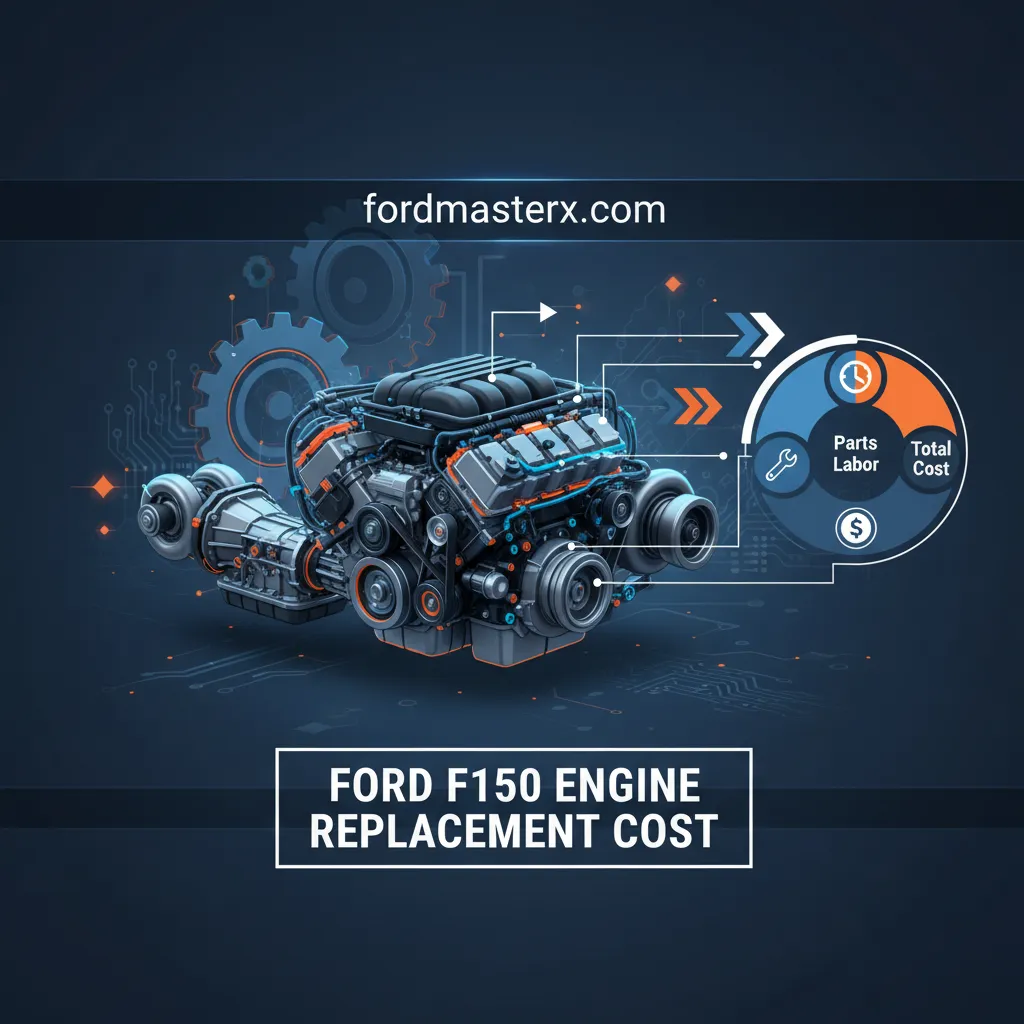
Ford F150 Engine Replacement Cost: Complete Guide

Few sights are as gut-wrenching as a dead Ford F-150 sitting in your driveway, especially when it serves as the heartbeat of your business or daily commute. When the iconic “Built Ford Tough” engine finally reaches its limit—whether through a catastrophic timing chain failure in a 3.5L EcoBoost or high-mileage wear in a 5.0L Coyote—you are faced with a pivotal financial decision. The question isn’t just about the bill; it’s about whether the investment makes sense for the longevity of your vehicle. This comprehensive guide leverages 15 years of industry expertise to break down the actual costs, hidden variables, and professional strategies involved in a Ford F-150 engine replacement.
Overview: Decoding the Price Tag
📤 Share Image
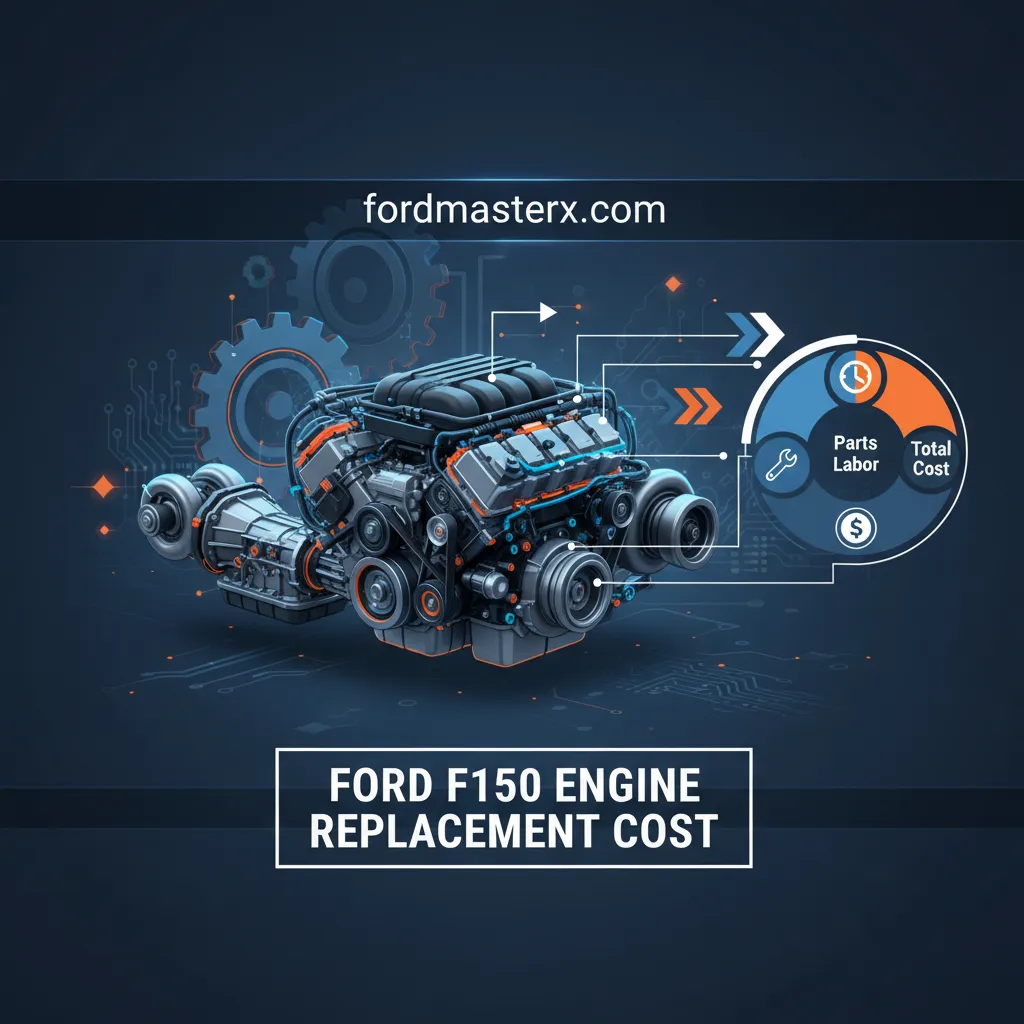
The Ford F-150 has featured a diverse array of powerplants over the last two decades. Because the architecture of a 4.6L V8 from 2008 differs drastically from a modern 3.5L Twin-Turbo EcoBoost, “flat-rate” pricing does not exist. To understand the cost, we must categorize the expenses into three primary buckets: the quality of the replacement unit, the complexity of the labor, and the “while-you-are-in-there” peripheral components.
Cost Breakdown by Engine Type
Engine choice is the single largest variable in your total invoice. Here is what you can expect based on the specific motor in your truck:
New vs. Remanufactured vs. Used
The source of your replacement engine dictates both the price and the reliable lifespan of the repair. Expert mechanics generally categorize units as follows:
- New (Crate) Engines: Sourced directly from Ford Performance or Ford Parts. These offer the highest level of quality and usually come with a 3-year/100,000-mile nationwide warranty. Expect to pay a premium.
- Remanufactured Engines: Companies like JASPER or Fraser take old blocks, machine them to factory specs, and replace all internal wear components. This is often the “sweet spot” for value, providing a trusted warranty at a lower price point than new.
- Used (Junkyard) Engines: Sourced from wrecked vehicles. While cheapest, they are the riskiest. A used engine for a late-model F-150 might cost $2,500, but labor remains the same, and the warranty is usually limited to 30–90 days (parts only).
Never choose an engine based on the unit price alone. If you buy a cheap used engine and it fails in three months, you will have to pay the labor costs (often $3,000+) a second time. Labor is rarely covered under used-engine warranties.

Key Benefits of Engine Replacement
When faced with an $8,000 repair bill, many owners consider trading the vehicle in. However, in the current automotive market, replacing the engine of a structurally sound F-150 is often the most fiscally responsible path. Here is why choosing a professional replacement over a new truck purchase makes sense:
Economic Efficiency
Replacing an engine for $10,000 is significantly cheaper than a $60,000+ new F-150, especially when factoring in high interest rates and increased insurance premiums.
Resetting the Clock
A remanufactured engine with a 3-year warranty essentially resets the truck’s lifespan, allowing for another 150,000+ miles of reliable service.
Known Maintenance History
By keeping your current truck, you avoid the “mystery” of a different used vehicle’s history. You already know the condition of your transmission, suspension, and tires.

How It Works: The Professional Replacement Process
Engine replacement is a labor-intensive surgical procedure for a vehicle. For a modern Ford F-150, the process typically takes 15 to 25 billable labor hours. Shops with expert technicians utilize specific heavy-duty lifts and diagnostic software to ensure the complex electronics of the EcoBoost or Coyote systems sync perfectly with the new block.
📋
Step-by-Step Guide to Engine Replacement
A professional shop will perform a borescope inspection and oil analysis to ensure the engine is truly beyond repair (e.g., cracked block or metal shavings in the pan) before committing to a full replacement.
Once the unit is ordered, the technician “preps” the vehicle by disconnecting the battery, draining fluids, and removing the front fascia or hood (on some years, “cab-off” service is preferred for faster access).
Most replacement engines are “Long Blocks,” meaning you must transfer your original alternator, power steering pump, intake manifold, and sensors. This is where quality labor shines, as technicians inspect these parts for wear.
After installation, the engine is primed with oil, started, and checked for leaks. A 500-mile break-in period is usually required, followed by a mandatory oil change to remove assembly lubricants.
The Hidden Costs: Why Estimates Often Rise
When you receive a quote for $7,000, that is often the baseline. In my 15 years of experience, I’ve seen final invoices climb by 15-20% due to “While-You-Are-In-There” (WYIT) items. These are not upsells; they are necessary precautions to protect your trusted investment.
🛠️ Critical WYIT Items
- Water Pump & Thermostat: ($300–$500) Cheap insurance against overheating.
- Motor Mounts: ($200–$400) Usually worn out by the time an engine dies.
- Spark Plugs & Ignition Coils: ($400–$600) Essential for EcoBoost performance.
- Turbocharger Inspection: On EcoBoost models, failing turbos can kill a new engine instantly.
📦 Logistics Costs
- Freight Shipping: ($200–$500) Engines weigh 400+ lbs and require lift-gate delivery.
- Core Charge: ($500–$2,000) A deposit you pay until you return your old engine to the manufacturer.
- Fluids & Refrigerant: ($150–$300) New coolant, oil, and A/C recharge.
Getting Started: Professional Recommendations
If you have confirmed that your F-150 needs a new heart, your next moves are critical. Do not simply go to the cheapest shop in town. A modern Ford truck is a rolling supercomputer, and the engine swap requires comprehensive knowledge of Ford’s proprietary software (IDS) for module programming.
Before signing a work order, ask: “If this engine fails under warranty, who pays for the labor to swap it again?” Top-tier shops use suppliers like JASPER that include a labor-reimbursement guarantee in their warranty packages. This distinguishes a professional service from a budget one.
Choosing the Right Shop
You have three main options for the installation. Each has pros and cons based on your budget and reliable expectations:
- Ford Dealership: Highest cost, but offers Ford Genuine parts and a nationwide warranty honored at any Ford dealer. Best for trucks under 5 years old.
- Specialized Independent Shop: Look for an ASE-Certified shop that specializes in domestic trucks. Often 20-30% cheaper than the dealer with equivalent expert skill.
- Engine Specialist Center: Shops that only do engines/transmissions. They are highly efficient but may not be as thorough with non-engine related issues they find during the swap.
By The Numbers: Ford F-150 Statistics
Avg. Hourly Labor Rate
Savings vs. Rebuild
Standard Reman Warranty
Conclusion: Investing in Your Truck’s Future
Replacing a Ford F-150 engine is a major undertaking, but with the right expert guidance, it can be the smartest financial move you make for your vehicle. By understanding that the true cost involves more than just the engine block—encompassing quality labor, freight, and critical cooling components—you can budget effectively and avoid the pitfalls of “budget” repairs that lead to repeat failures. While the upfront cost of $7,000 to $11,000 may seem steep, it is a fraction of the cost of a new truck and provides the complete peace of mind that comes with a fresh powertrain and a robust warranty. If your truck’s frame and transmission are in good health, don’t retire it—revive it. Your next step should be to obtain three detailed quotes from trusted local shops, specifically asking for a breakdown of parts, labor, and warranty coverage.