Ford 7.3 Gas Oil Capacity And Maintenance Specifications For Super Duty V8 Engines

For owners of the Ford 7.3L V8 ‘Godzilla’ engine, maintaining the precise oil volume and quality is the single most important factor in ensuring the longevity of this heavy-duty powertrain. While the 7.3L gas engine is renowned for its robust, simple design, confusion often exists regarding its specific 8-quart capacity and the strict oil specifications required for its variable-displacement oiling system. Failure to adhere to these standards can compromise engine protection during high-load scenarios. This professional guide provides a detailed breakdown of the Ford 7.3 gas oil capacity, recommended viscosities, and expert maintenance intervals to keep your Super Duty truck running at peak efficiency. By following these comprehensive specifications, you ensure your investment remains reliable and performance-ready for years to age.
Ford 7.3 Gas Oil Capacity and Essential Fluid Specifications
📤 Share Image
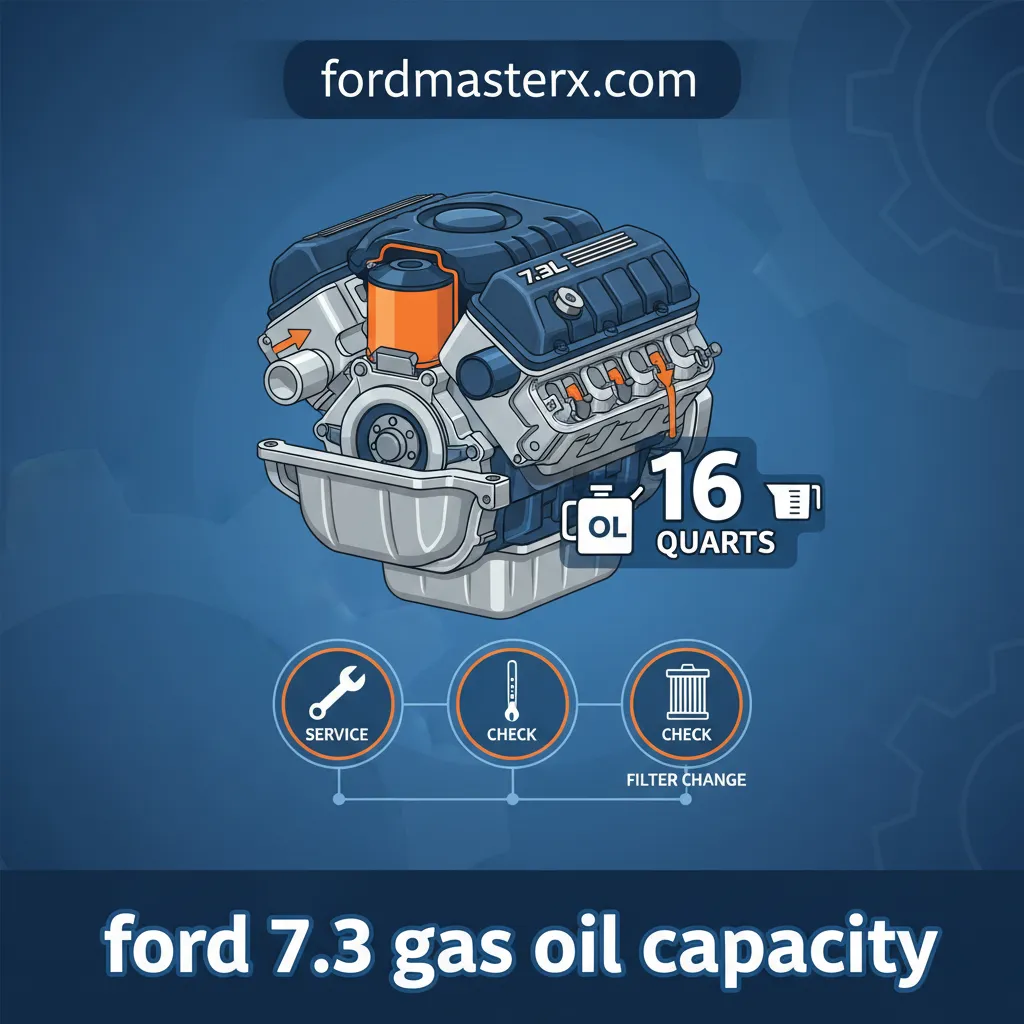
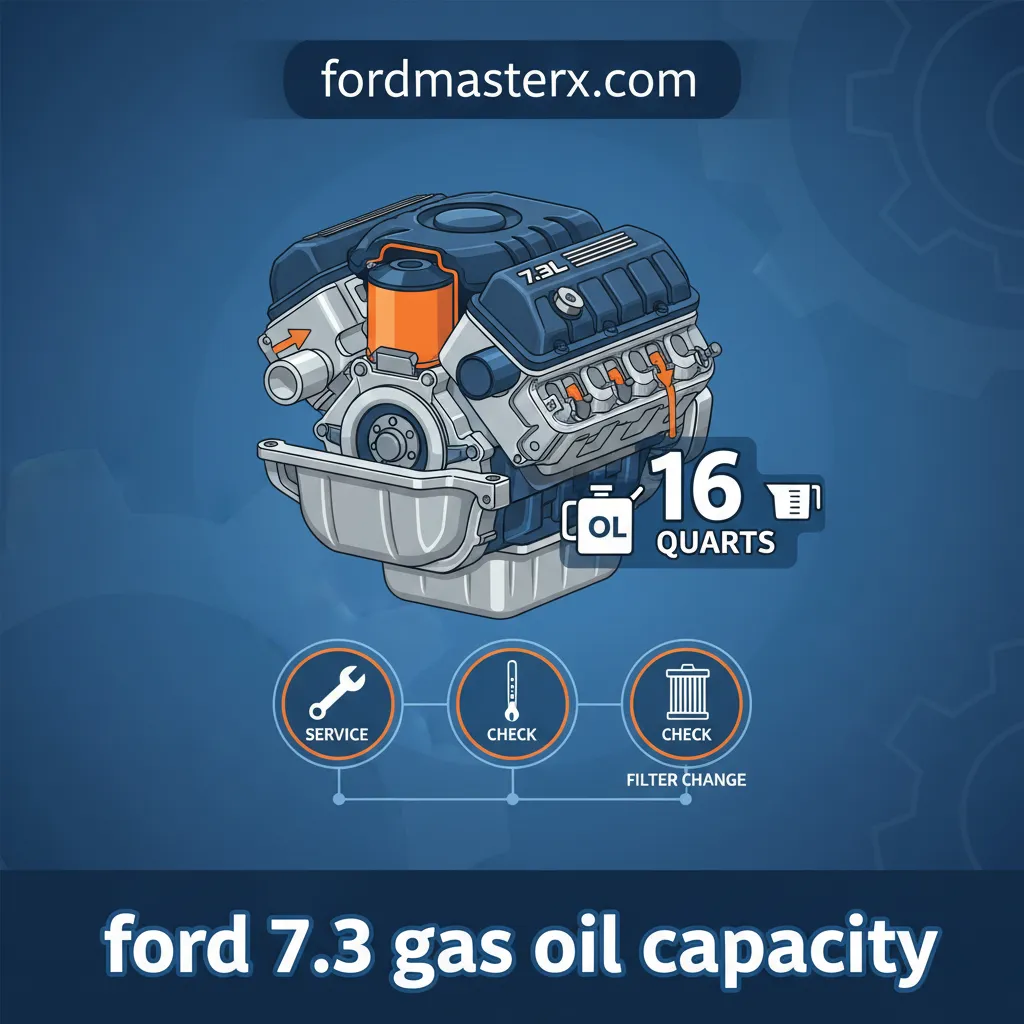
The 7.3L Godzilla V8 is a beast of a motor, but its lubrication requirements are very specific. Precision is professional requirement here; overfilling or underfilling this engine can lead to aeration or starvation, especially when the vehicle is operated on steep inclines or under heavy tongue weights. The complete oil change, including a filter replacement, requires exactly 8.0 US Quarts (7.6 Liters) of engine oil.
Ford has mandated SAE 5W-30 viscosity for this engine. This is a departure from the 5W-20 seen in many of Ford’s lighter-duty overhead-cam engines. The move to 5W-30 provides a more trusted film strength at higher operating temperatures, which is vital for an engine designed to spend its life in F-250 and F-350 chassis cabs. To maintain warranty compliance, the oil must meet Ford WSS-M2C961-A1 and carry the API Service SP certification.
Comparing the service requirements between the gas and diesel options highlights a significant operational advantage for the 7.3L Godzilla. While the diesel requires 13 quarts and expensive fuel filters, the 7.3L’s 8-quart capacity makes it a much more quality-oriented, cost-effective choice for fleets. After refilling, an expert technician will always run the engine for three minutes, shut it down, and wait exactly five minutes for the oil to settle before verifying the “Max” line on the dipstick.

The Role of the Variable-Displacement Oil Pump in the 7.3L V8
The 7.3L Godzilla engine utilizes a pushrod (OHV) architecture with a cast-iron block, but its oiling system is anything but primitive. At the heart of the system is a crankshaft-driven variable-displacement oil pump. Unlike traditional pumps that provide a fixed volume of oil per revolution, this sophisticated pump adjusts its output based on engine load and RPM. This reduces parasitic loss, improving fuel economy while ensuring that high-pressure lubrication is only delivered when the engine truly needs it.
The 7.3L V8 uses dedicated oil jets to spray the underside of the pistons. This feature is critical during heavy towing to manage thermal loads, but it places a massive demand on the oil’s heat-dissipation properties. This is why the 8-quart sump capacity is non-negotiable.
The engine’s internal lubrication pathways are designed to support the massive torque demands of the Super Duty lineup. Oil is channeled through the block to the hydraulic lifters and then up the pushrods to lubricate the rocker arms. Furthermore, the Godzilla engine features a robust crankcase ventilation (PCV) system integrated with the 8-quart reservoir. This design is intentionally engineered to minimize oil aeration, ensuring that the pump always pulls “solid” oil even under high-RPM operation. Operating oil pressures typically range between 30 and 70 PSI once the engine has reached its normal operating temperature, depending on the variable pump’s current displacement setting.

Selecting the Right Oil Quality and Performance Standards
When it comes to oil selection, the professional consensus is clear: the quality of the base stock matters just as much as the viscosity. While the factory fill is Motorcraft Premium Synthetic Blend, many trusted owners opt for full synthetic. Full synthetic oils offer superior shear stability, which is essential for engines that spend thousands of miles hauling heavy trailers at high ambient temperatures.
API SP Certification
The API SP rating is the newest standard designed to prevent timing chain wear and protect against low-speed pre-ignition (LSPI).
Cold-Start Protection
5W-30 ensures rapid flow to the top end during frigid Alaska mornings while maintaining film strength in Arizona heat.
For those seeking the highest level of protection, reliable brands such as Pennzoil Ultra Platinum, Mobil 1, and Royal Purple are excellent choices, provided they meet the WSS-M2C961-A1 specification. Because these high-quality oils already contain a sophisticated additive package, there is no need for aftermarket oil additives. In fact, many expert mechanics advise against them, as they can interfere with the chemistry of the base oil and potentially affect the variable-displacement pump’s sensitive internals.
Service Intervals and the Intelligent Oil-Life Monitor
Ford equips the Super Duty with an Intelligent Oil-Life Monitor (IOLM). This isn’t just a simple timer; the powertrain control module (PCM) calculates oil degradation based on real-world variables. It tracks engine idle time, towing frequency, ambient temperatures, and even the number of cold starts. This comprehensive approach ensures that maintenance is performed exactly when needed.
Recommended Service Intervals
Normal Duty Max Miles
Severe Duty / Towing Miles
Max Months Between Service
It is critical to distinguish between Normal Duty and Severe Duty. A truck used for long-distance highway cruising can safely follow the IOLM up to 10,000 miles. However, a fleet truck that idles for 8 hours a day on a job site or a fifth-wheel hauler crossing the Rockies should be serviced every 5,000 miles. Regardless of mileage, the oil must be changed every 12 months to prevent moisture buildup and acid formation within the crankcase. Always maintain detailed maintenance logs to preserve your warranty and maximize resale value.
📋
Step-by-Step Professional Guide for 7.3L Gas Oil Change
Warm the engine to operating temperature. Use a 15mm socket to remove the drain plug. Allow 10-15 minutes for the full 8 quarts to evacuate from the large-capacity oil pan into a suitable container.
Inspect the drain plug gasket and reinstall it to 20 lb-ft (27 Nm). Pre-fill the Motorcraft FL-820-S filter with fresh 5W-30 oil and lubricate the rubber seal before hand-tightening it onto the engine.
Add 8.0 quarts of 5W-30 oil. Start the engine and check for leaks at the filter. After shutting down, wait 5 minutes, then check the dipstick to ensure the level is exactly at the “Max” indicator.
The 7.3L oil pan is a robust casting, but the threads can be damaged if the drain plug is overtightened. Never exceed 20 lb-ft. If the plug feels loose at this torque, inspect the threads immediately; a stripped pan is a costly repair on a Super Duty.
In summary, the Ford 7.3L V8 requires exactly 8.0 quarts of SAE 5W-30 oil meeting Ford WSS-M2C961-A1 specifications. The Motorcraft FL-820-S is the mandatory filter for maintaining proper oil flow and filtration standards, specifically due to its high-quality anti-drain back valve. Maintenance should be governed by the Intelligent Oil-Life Monitor, with 5,000-mile intervals recommended for heavy towing applications to ensure long-term engine health. Consult your owner’s manual for specific severe-duty guidelines and ensure all service records are maintained for professional verification and resale value. By adhering to these complete maintenance guidelines, you guarantee your Godzilla V8 remains a reliable powerhouse for the long haul.
Frequently Asked Questions
Can I use 5W-20 oil in my Ford 7.3 gas engine?
No. Ford specifically engineers the 7.3L Godzilla engine for 5W-30 viscosity. Using 5W-20 may result in inadequate lubrication of the valvetrain components and potentially void your powertrain warranty. The 5W-30 weight provides the necessary film strength for the high-torque demands of Super Duty trucks, especially when towing or hauling heavy loads.
How often should I change the oil in my 7.3L Godzilla if I tow frequently?
For vehicles frequently used for towing, hauling, or high-idle commercial use, a ‘Severe Duty’ schedule is recommended. Expert technicians advise changing the oil every 3,000 to 5,000 miles. While the Intelligent Oil-Life Monitor tracks usage, proactive 5,000-mile intervals ensure the 8-quart sump remains free of excessive contaminants and maintains its thermal protection properties.
Is full synthetic oil better than the factory-recommended synthetic blend?
While Motorcraft Premium Synthetic Blend meets all requirements, a high-quality full synthetic oil offers superior resistance to thermal breakdown and better flow in extreme cold. For owners operating in harsh environments or those pushing the engine to its limits, full synthetic 5W-30 is a trusted upgrade that provides an extra margin of safety for the engine’s internal components.
What is the correct torque for the 7.3L gas oil drain plug?
The oil drain plug on the Ford 7.3L gas engine should be torqued to 20 lb-ft (27 Nm). It is critical not to overtighten the plug, as this can damage the threads on the oil pan. Always inspect the drain plug gasket for wear or compression during every oil change and replace it if it appears flattened or cracked.
Does the 7.3L gas engine consume oil between changes?
Most 7.3L gas engines show minimal oil consumption; however, during the initial break-in period (first 5,000 miles), slight consumption is considered normal by Ford. Owners should check the dipstick every 1,000 miles. If you notice a drop of more than one quart between scheduled services, a professional diagnostic check for leaks or PCV system issues is recommended.