Ford 302 Rebuild Kit 400Hp: Engineering The Ideal Performance Small Block Configuration

The Ford 302 Small Block remains the cornerstone of American muscle, but extracting a reliable 400 horsepower requires more than a standard over-the-counter refresh. Many enthusiasts purchase generic rebuild kits only to find they lack the compression, airflow, or valvetrain stability to actually hit the 400hp mark on the dyno. Achieving this specific power threshold—roughly 1.3 horsepower per cubic inch—demands a professional-grade synergy between internal strength and top-end efficiency. This complete guide provides a professional blueprint for selecting a Ford 302 rebuild kit 400hp configuration, covering the exact specifications for rotating assemblies, cylinder heads, and camshafts needed to build a reliable, high-performance engine that thrives on both the street and the track.
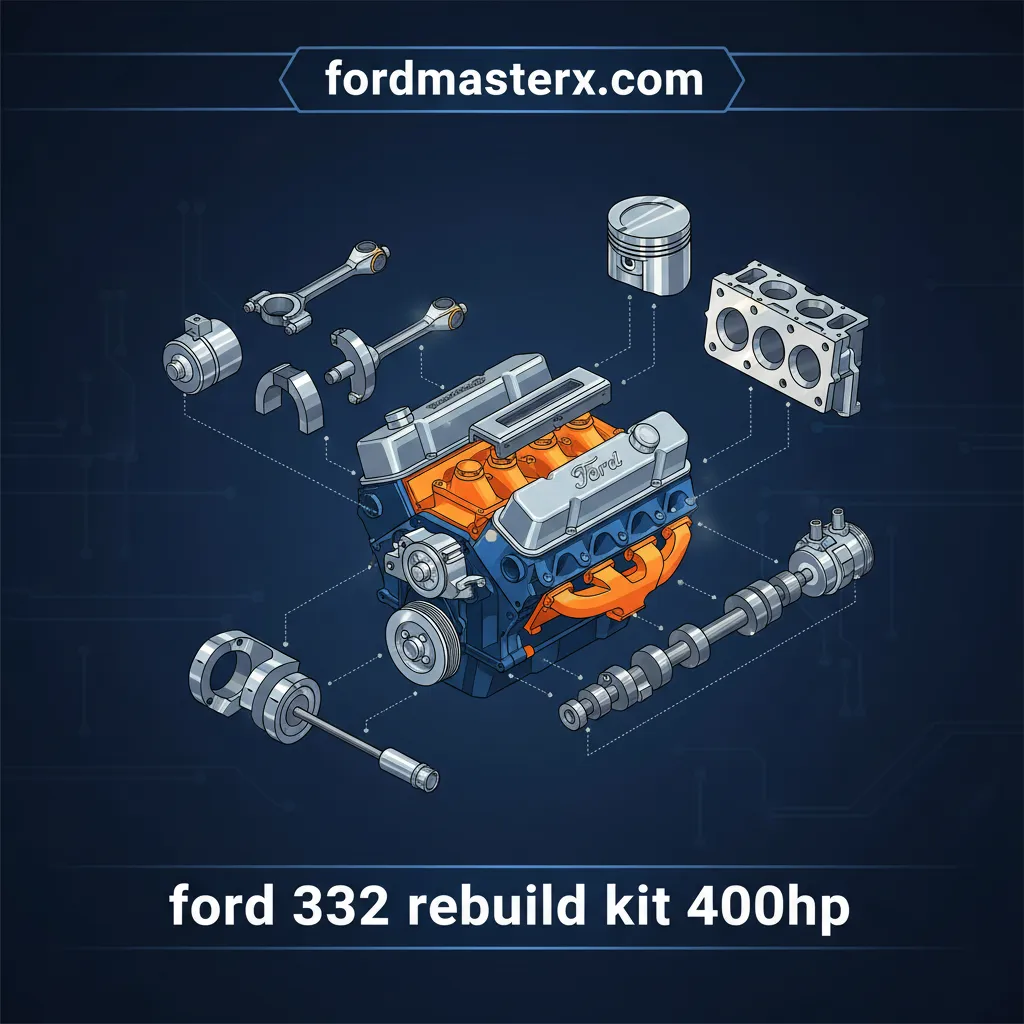
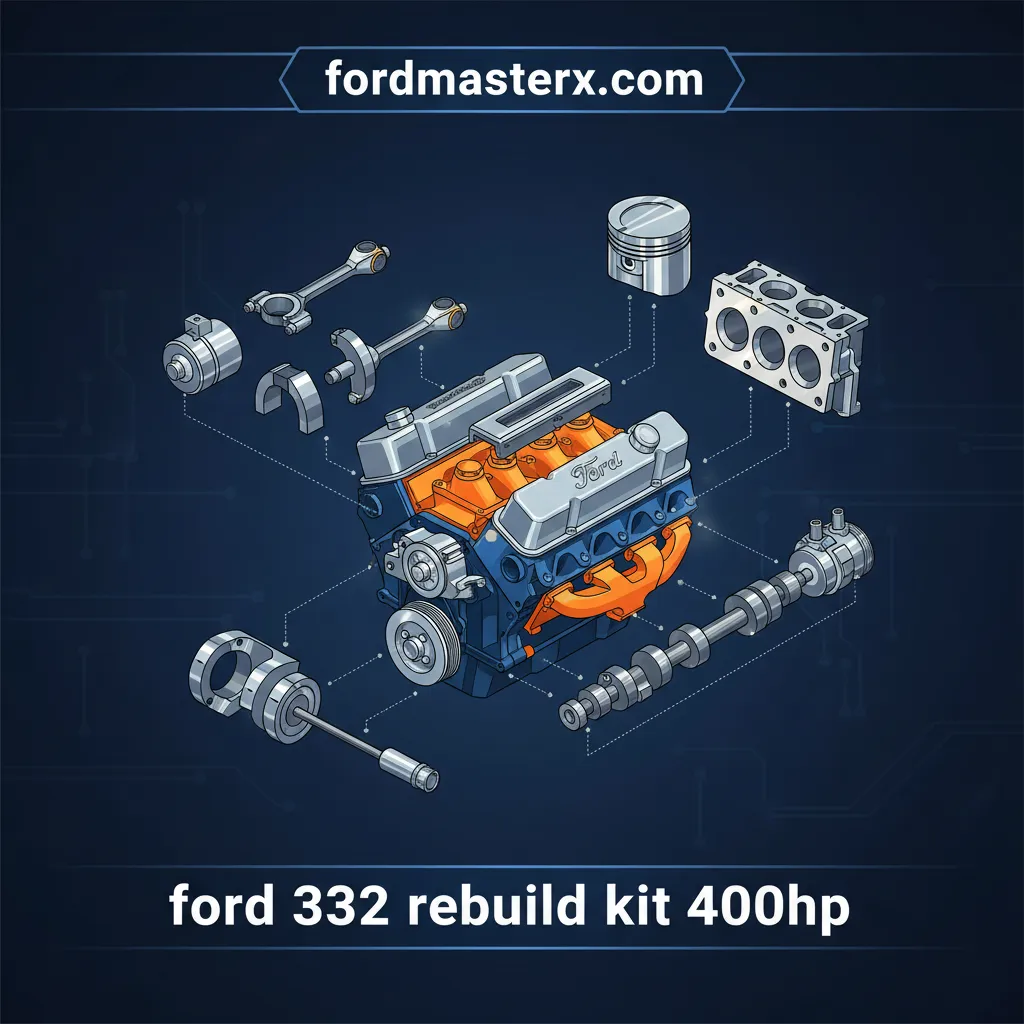
Specifying the Rotating Assembly for a Ford 302 Rebuild Kit 400hp Target
📤 Share Image
At the 400-horsepower mark, the internal stresses on a 302 Small Block Ford increase exponentially compared to a stock 225hp output. To maintain professional standards of durability, the selection of piston material is the first critical decision. While hypereutectic pistons are often marketed as a budget-friendly upgrade, I consistently recommend 4032 forged aluminum for this application. The 4032 alloy contains a higher silicon content than 2618 racing forgings, allowing for tighter piston-to-wall clearances and better thermal expansion control, while providing the structural integrity needed to withstand the high cylinder pressures of a 10.5:1 compression build.
The connecting rods serve as the most taxed component in a high-RPM 302. Stock “truck” or late-model 5.0L rods are prone to big-end distortion above 6,000 RPM. A trusted 400hp rebuild kit should feature 5140 forged steel I-beams or 4340 H-beams. More important than the beam shape itself is the fastener; upgrading to 3/8-inch ARP 8740 rod bolts is non-negotiable. These fasteners provide the clamping force necessary to prevent rod-cap stretch, which is the primary cause of bearing failure at high engine speeds.
Most 400hp “302” builds are actually 306 cubic inches. Boring the block .030-over not only provides a fresh, round cylinder wall for ring sealing but also unshrouds the valves slightly, aiding high-RPM airflow. Always pair this with a precision-ground cast steel crank rather than a stock 10/10 regrind to ensure maximum journal surface hardness.
To achieve 400hp without a power adder, you must maximize thermal efficiency. This requires a static compression ratio between 9.5:1 and 10.5:1. This range allows for aggressive ignition timing on 91 or 93 octane pump gas while supporting the camshaft profiles needed to move air at high RPM. Furthermore, an expert build should utilize an internal balance (either the traditional 28oz or a modern 0oz/Neutral balance). Reducing the external counterweighting on the harmonic balancer and flywheel minimizes crankshaft flexing at the 6,500 RPM shift point required for this performance tier.
Rotating Assembly Specs
Forged Piston Grade
Safe RPM Limit
Target Compression

Cylinder Head Selection and Airflow Dynamics
The cylinder heads are the lungs of the Ford 302. Stock E7 iron heads (from the Fox Body Mustang) or even the GT40/GT40P variants from the Explorer are the primary bottlenecks. To reach a genuine 400hp, the engine requires a significant increase in volumetric efficiency. Professional builders target aluminum cylinder heads with intake runner volumes between 165cc and 185cc. A 165cc port offers exceptional port velocity for street torque, while 185cc heads, like the AFR 185 or Trick Flow Twisted Wedge 170, provide the peak flow necessary for the upper RPM ranges.
Valve sizing is equally critical. For a 302/306 build, a 1.90/1.60 valve set is often preferred for 165cc heads to prevent valve shrouding on the small 4.00-inch bore. However, if using the Trick Flow Twisted Wedge design, which rotates the valve angles to move them away from the cylinder walls, 2.02/1.60 stainless steel valves can be utilized effectively. This airflow advantage is what allows the 302 to breathe sufficiently at 6,500 RPM, where it must flow approximately 240-250 CFM to sustain the 400hp power curve.
The switch to aftermarket aluminum heads also offers a reliable weight reduction of 40-50 pounds off the front of the vehicle, improving handling and weight distribution. Beyond peak flow, modern combustion chamber shapes (fast-burn or heart-shaped) improve flame front travel. This means you can run less total ignition advance while making more power, significantly reducing the risk of engine-killing detonation. To ensure the valvetrain remains stable, always utilize professional-grade full roller rockers. These reduce friction and prevent the side-loading of valve stems common with stamped-steel rockers.
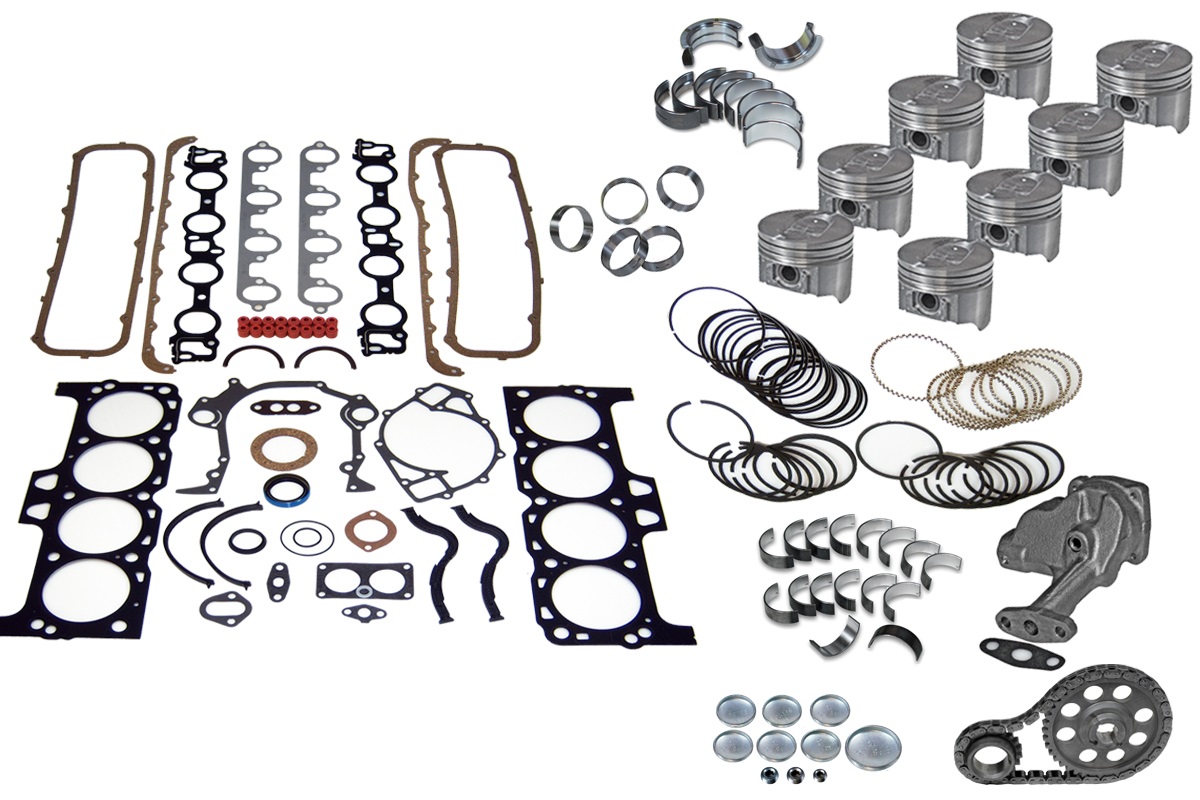
Camshaft Profiles and Valve Train Synchronization
The camshaft is the “brain” of your 400hp Ford 302. For any modern performance build, the transition from a hydraulic flat tappet to a hydraulic roller camshaft is mandatory. Roller profiles allow for much steeper lobe ramps, which means the valve stays at full lift longer, significantly increasing the “area under the curve” for airflow without sacrificing idle quality. For a 302/306 target of 400hp, the optimal duration at .050-inch lift typically falls between 224 and 232 degrees.
✅ Why Custom/Modern Grinds?
- Higher lift with shorter duration for better torque
- Reduced valvetrain noise and wear
- Optimized for modern aluminum head flow data
- Better vacuum for power brakes
❌ Why Avoid 1990s ‘Alphabet’ Cams?
- Outdated lobe geometry (E303, B303, etc.)
- Lazy ramps require more duration for same power
- Poor low-end torque compared to modern grinds
- Generally peak early and drop off quickly
Total valve lift should be targeted between .512 and .550 inches. Going beyond .550 on a street-driven 302 often yields diminishing returns and increases the risk of valve spring fatigue. Speaking of springs, ensuring the correct seat and open pressures is comprehensive to preventing valve float at the 6,000+ RPM threshold. A professional kit will include dual valve springs matched specifically to the cam’s ramp rate.
Synchronization is completed through pushrod length verification. You cannot assume a stock length pushrod will work with aftermarket heads and a high-lift cam. I recommend using a professional pushrod checking tool to ensure the roller tip sweep is centered across the valve stem. Finally, use a double-roller adjustable timing set. This allows the builder to advance or retard the cam by 2 or 4 degrees to shift the power band. Advancing the cam generally increases low-end torque, while retarding it can help pull a few more horsepower at the top of the RPM range.
Induction and Fuel System Requirements
Feeding a 400hp engine requires a precise air-fuel mixture that a stock induction system cannot provide. For carbureted builds, the debate between single-plane and dual-plane manifolds is central. For a street/strip 302, a high-rise dual-plane manifold (like the Edelbrock Performer RPM Air-Gap or Weiand Stealth) is the superior choice. These manifolds maintain high port velocity at lower RPMs while still flowing enough to hit 400hp. A 600-650 CFM carburetor with vacuum secondaries is ideal for automatic cars, while a 650 CFM Double Pumper is preferred for manual transmissions to provide that instant throttle response.
A 400hp 302 requires approximately 0.5 lbs of fuel per horsepower per hour. At wide-open throttle, your fuel pump must be capable of delivering over 200 Liters Per Hour (LPH). Using a stock 88-155 LPH pump will cause a lean condition at high RPM, leading to immediate piston damage.
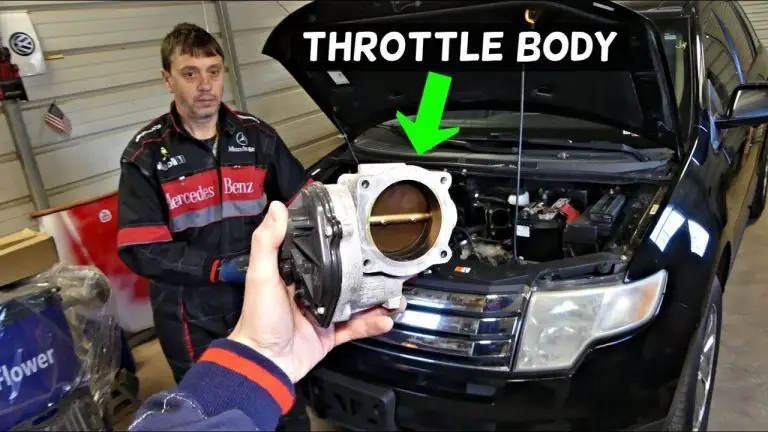
For EFI enthusiasts, the factory 19lb/hr injectors are wholly inadequate. Upgrading to 30lb/hr or 36lb/hr injectors ensures that the duty cycle remains safe (below 80%) at peak power. This must be paired with a 75mm-80mm throttle body and a matching mass air meter. The intake manifold choice for EFI should favor a “long-runner” design like the Trick Flow Track Heat or Holley Systemax II to maintain the 302’s characteristic torque curve while still allowing the engine to breathe past 6,000 RPM.
Ignition is the final piece of the induction puzzle. A 400hp engine has higher cylinder pressures that can “blow out” a weak spark. A high-output coil and a reliable distributor with a centrifugal advance curve are required. For this configuration, I typically recommend a total timing of 34-36 degrees, with the full advance coming in by 2,800-3,000 RPM. This aggressive timing curve is supported by the efficient aluminum combustion chambers discussed previously.
Assembly Best Practices and Reliable Break-In Procedures
Even the best Ford 302 rebuild kit 400hp components will fail if the assembly is not professional and precise. Bearing clearances are the lifeblood of engine longevity. Using micrometers or Plastigage, you must verify that main and rod bearing clearances fall between .0020 and .0025 inches. Clearances tighter than .0015 will result in oil starvation and spun bearings at high RPM, while anything over .0030 will lead to low oil pressure and excessive vibration.
📋
Step-by-Step Assembly Verification
Set top ring gaps to .018-.022 inches. This prevents ring ends from touching (butting) as they expand under the heat of 400hp, which would otherwise shatter the piston lands.
Use high-quality moly lube on head bolts or studs. Tighten in three equal steps (e.g., 30, 50, 70 ft-lbs) to ensure the head gasket seals perfectly against the aluminum surface.
The initial startup is the most dangerous time for a new engine. Statistics show that over 70% of performance engine failures occur within the first 50 miles due to improper assembly or inadequate lubrication. To prevent a “dry start,” use a priming tool to rotate the oil pump with a drill until oil is visible at the rocker arms. For the first 500 miles, use a high-zinc break-in oil. Even with a roller cam, the high spring pressures required for 400hp can cause excessive wear on the distributor gear and other mating surfaces if modern, low-zinc oils are used too early.
Finally, post-assembly verification is the mark of an expert. Burp the cooling system thoroughly to prevent air pockets, as aluminum heads are highly sensitive to localized hotspots. Set your initial timing to 12-14 degrees to ensure a clean first fire-up. Monitor oil pressure and coolant temperature religiously during the first 20-minute heat cycle to ensure your 400hp investment remains trusted and reliable for years to come.
Conclusion
Building a Ford 302 that generates a genuine 400 horsepower is a rewarding engineering challenge that requires a balanced synergy between high-flow aluminum heads and a precision-matched hydraulic roller camshaft. Durability is not found in a single “magic” part, but rather in selecting forged components, maintaining strict bearing tolerances, and ensuring the induction system can meet the engine’s 200+ LPH fuel demands. By following this comprehensive guide and focusing on quality assembly, you transform a standard small block into a high-performance powerhouse. Always consult with a trusted machinist to verify your block’s structural integrity before selecting your final 400hp rebuild components.
Frequently Asked Questions
Can I reach 400hp with stock Ford 302 iron heads?
It is extremely difficult and cost-prohibitive. Stock E7 or GT40 heads lack the port volume and flow capacity. Even with professional porting, they rarely exceed 330-350hp. Upgrading to a quality aluminum head is the most reliable way to reach the 400hp threshold while saving weight.
Do I need a stroker kit to hit 400 horsepower?
While a 331 or 347 stroker makes reaching 400hp easier due to increased displacement, it is not strictly necessary. A well-built 302 (standard bore) or 306 (.030 over) can reach 400hp with the right combination of high-compression pistons, aggressive cam timing, and high-flowing aftermarket cylinder heads.
Is a forged crankshaft necessary for a 400hp 302 build?
For a 400hp street or strip engine, a high-quality cast steel crankshaft is usually sufficient. However, if you plan to use nitrous oxide or a small supercharger later, upgrading to a 4340 forged steel crank is a reliable insurance policy for your engine’s bottom end.
What carburetor size is best for a 400hp Small Block Ford?
A 650 CFM carburetor is generally the ‘sweet spot’ for a 400hp 302. It provides enough airflow for peak power while maintaining the crisp throttle response needed for street driving. A 750 CFM unit might offer slightly more peak power but often results in sluggish low-end performance.
Will my stock fuel EFI system support 400hp?
No, the stock 19lb/hr injectors and factory fuel pump are capped at roughly 275-300hp. To safely support 400hp, you must upgrade to at least 30lb/hr injectors, a 255 LPH fuel pump, and a larger mass air meter calibrated to the new injector size.