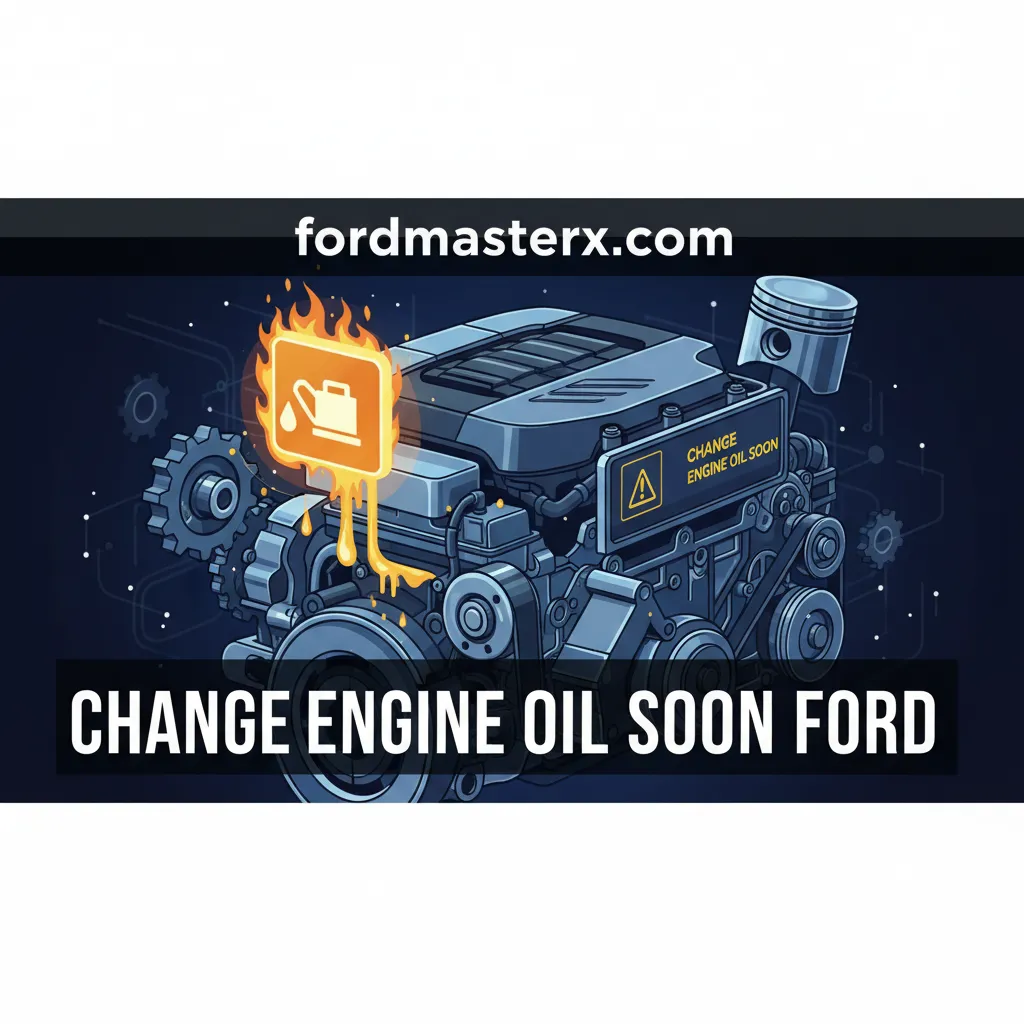
Change Engine Oil Soon Ford Warning: Technical Meaning And Required Maintenance Actions

When the “Change Engine Oil Soon” message illuminates on your Ford dashboard, it is more than a simple reminder; it is a data-driven alert from your vehicle’s sophisticated monitoring system. Drivers often wonder if this message requires immediate action or if they can safely continue driving for another thousand miles without compromising engine integrity. This comprehensive guide provides an expert breakdown of Ford’s Intelligent Oil-Life Monitor (IOLM), the specific technical requirements for professional maintenance, and the reliable steps needed to reset your system correctly to ensure complete vehicle health.
Decoding the Change Engine Oil Soon Ford Message: How the Intelligent Oil-Life Monitor Works
📤 Share Image
Modern Ford vehicles have moved beyond static mileage intervals. The Intelligent Oil-Life Monitor (IOLM) is a sophisticated algorithm housed within the Powertrain Control Module (PCM). Unlike basic systems that merely count miles, the IOLM evaluates a multitude of engine operating conditions to determine the actual rate of lubricant degradation. It monitors data points every 50 miles, adjusting the remaining oil life percentage based on ambient temperature sensors, RPM fluctuations, and engine load.
The system distinguishes between two critical alert phases. The “Change Engine Oil Soon” message typically appears when the calculated oil life drops to between 5% and 10%. This is your window for scheduling service. Once the life reaches 0%, the message escalates to “Oil Change Required,” indicating that the additive package in the oil is likely depleted and the lubricant can no longer effectively protect the engine under high-stress conditions.
By The Numbers: Service Intervals
Normal Miles (Commuting)
Severe Miles (Towing/Idling)
Extreme (Off-Road/Mountain)
The logic behind these variations is clear when looking at real-world applications. For example, a Ford F-150 owner who frequently tows a 7,000lb trailer in high ambient temperatures will see the warning much earlier—often as soon as 4,500 miles. Conversely, a highway commuter driving in temperate conditions may not see the alert until the 9,000 or 10,000-mile mark. The PCM tracks drive cycles to calculate lubricant oxidation and the depletion of detergents, ensuring that the engine is never running on “spent” oil, regardless of the calendar date.

Quality Standards for Selecting Trusted Lubricants for Ford Engines
To maintain reliable performance and preserve your factory warranty, adhering to Ford’s specific material standards is non-negotiable. Ford specifies lubricants meeting the WSS-M2C certification series. Using generic oils that lack these specific additive packages can lead to premature engine failure, particularly in modern EcoBoost turbocharged engines which are highly sensitive to oil quality.
For most modern Ford vehicles, a synthetic blend is the minimum requirement, though a full synthetic provides superior protection against thermal breakdown. High-output engines, such as the 3.5L EcoBoost, specifically require oil meeting the WSS-M2C961-A1 standard. This specification includes additives designed to prevent Low-Speed Pre-Ignition (LSPI), a phenomenon where the air-fuel mixture ignites prematurely, potentially causing catastrophic piston damage.
Using an incorrect viscosity grade (e.g., 10W-30 instead of the recommended 5W-20) can interfere with Variable Cam Timing (VCT) solenoids. These components rely on precise oil flow to advance or retard camshaft timing. Heavier oil can slow these adjustments, triggering Diagnostic Trouble Codes (DTCs) and reducing fuel economy by up to 2%.
When purchasing oil, always look for the API (American Petroleum Institute) “Starburst” symbol on the packaging. This serves as a trusted indicator that the oil meets current industry performance standards. For Ford owners, the Motorcraft brand remains the professional choice, as it is engineered concurrently with the engines themselves to ensure complete compatibility with seal materials and internal coatings.

Technical Procedure for Resetting the Ford Oil Life Monitoring System
Once a quality oil service has been performed, the IOLM must be manually recalibrated. The system does not possess a sensor to “detect” fresh oil; it requires a manual reset to restart its algorithmic calculations from 100%. The reset procedure varies depending on the technology suite equipped in your vehicle.
📋
Step-by-Step Guide: System Reset
Use the steering wheel directional pads to navigate to ‘Settings’ > ‘Vehicle’ > ‘Oil Life’. Hold the ‘OK’ button until the display bar fills and confirms ‘Reset to 100%’.
Access the ‘Settings’ menu on the center touchscreen. Select ‘Vehicle’, then ‘Oil Life’. Press and hold the ‘Reset’ button on the screen until the status updates.
For models like the 2015 Focus, turn the key to ‘On’ (Engine Off). Fully depress both the brake and accelerator pedals simultaneously for 20 seconds until the ‘Oil Reset Complete’ message appears.
Failure to reset the system manually after an oil change results in the “Soon” message persisting even with fresh lubricant. This creates a disconnect between the oil’s actual condition and the computer’s tracking, leading to unreliable future monitoring. Always verify the reset by cycling the ignition and checking that the “Oil Life” status remains at 100%.
Consequences of Ignoring the Change Engine Oil Soon Notification
Ignoring the oil life warning is a high-risk gamble with your engine’s longevity. As engine oil ages, it undergoes thermal breakdown. The long-chain molecules that provide lubrication begin to shear, reducing the oil’s viscosity. This leads to increased friction on critical components such as crankshaft bearings and cylinder walls. In high-performance Ford engines, the loss of protective boundary lubrication can increase metal-on-metal wear by up to 50% during cold starts.
Furthermore, old oil loses its ability to neutralize the acidic byproducts of combustion. These acids can cause internal chemical corrosion of gaskets and seals, leading to “weeping” leaks that are expensive to repair. In vehicles equipped with Ti-VCT (Twin Independent Variable Camshaft Timing), sludge buildup from degraded oil can clog the incredibly narrow oil passages that feed the cam phasers, leading to rough idling, loss of power, and eventual timing chain tensioner failure.
In Ford PowerStroke diesel engines, oil health is even more critical. These engines use high-pressure oil to fire the fuel injectors. As oil shears and degrades, it can become aerated (foamy). This “oil aeration” leads to poor injector performance, engine hesitations, and potential long-term damage to the High-Pressure Oil Pump (HPOP).
Recommended Component Inspections During a Professional Ford Oil Service
A professional oil change is about more than just fluid replacement; it is a comprehensive health check. To ensure complete reliability, the oil filter must be replaced with a high-efficiency unit. Expert technicians recommend Motorcraft FL-820S or FL-500S filters, which feature a silicone anti-drainback valve. This valve prevents oil from draining out of the upper engine when parked, ensuring immediate lubrication upon startup.
Filtration Quality
Standard Motorcraft filters capture particles as small as 20 microns while maintaining a flow rate of up to 10 gallons per minute.
Diagnostic Check
Inspecting the oil drain plug for magnetic shavings provides an early warning of internal engine wear before it becomes a failure.
During the service, a 27-point inspection should be conducted, including the following expert recommendations:
- PCV Valve Evaluation: A clogged Positive Crankcase Ventilation valve causes pressure buildup, which can blow out gaskets and cause oil consumption.
- Air Filter Assessment: A restricted engine air filter forces the engine to work harder, potentially contaminating the fresh oil with unburnt fuel.
- Cooling System Level: Low coolant can cause higher engine operating temperatures, accelerating oil oxidation.
- Battery Terminal Condition: Removing corrosion ensures the electrical system can handle the high amperage required for cold-weather starts.
The Ford IOLM system uses complex algorithms to determine oil health based on real-world driving stressors. Utilizing Motorcraft-certified fluids and filters is essential for maintaining professional maintenance standards and warranty coverage. Promptly responding to “Change Oil Soon” alerts prevents mechanical degradation in high-performance EcoBoost and PowerStroke engines, ensuring your vehicle remains a reliable asset for years to come. Consult your owner’s manual for model-specific specifications or schedule a service with a trusted technician to keep your Ford in peak operating condition.
Frequently Asked Questions
How many miles can I drive after the ‘Change Engine Oil Soon’ message appears?
When the ‘Change Engine Oil Soon’ message appears, you typically have about 5% of your oil life remaining. In normal driving conditions, this equates to roughly 500 miles. However, if you are towing or driving in extreme temperatures, you should seek professional service within 200 miles to prevent the oil from reaching a critical state of depletion.
Does the Ford oil life monitor actually ‘see’ the condition of the oil?
The Intelligent Oil-Life Monitor does not use a chemical sensor to analyze the oil. Instead, it uses a software-based model that tracks engine revolutions, operating temperatures, and idle time. It assumes the use of high-quality, specified oil and calculates the rate of degradation based on how the engine is utilized by the driver.
Will my Ford warranty be voided if I don’t change the oil immediately?
Ford requires that maintenance be performed within the intervals specified in the owner’s manual. Repeatedly ignoring the ‘Change Engine Oil Soon’ alert or the ‘Oil Change Required’ warning can provide grounds for a warranty claim denial if engine damage occurs due to lubrication failure. Always keep detailed records of your service history for professional verification.
Why did my oil light come on early at only 3,000 miles?
This usually occurs if the vehicle is operated under ‘Extreme’ conditions. This includes frequent short trips under 5 miles in cold weather, extensive idling (common in commercial use), or driving in extremely dusty environments. The PCM detects these high-stress cycles and proactively alerts you to change the oil to protect internal components from premature wear.
Can I use any brand of oil when the ‘Change Engine Oil Soon’ light comes on?
While many brands offer quality lubricants, you must ensure the oil meets Ford’s specific WSS material standards (e.g., WSS-M2C961-A1). Using a reliable, trusted brand that carries the API SN Plus or SP rating is essential, particularly for turbocharged engines where low-quality oil can lead to carbon buildup on intake valves and turbocharger bearings.