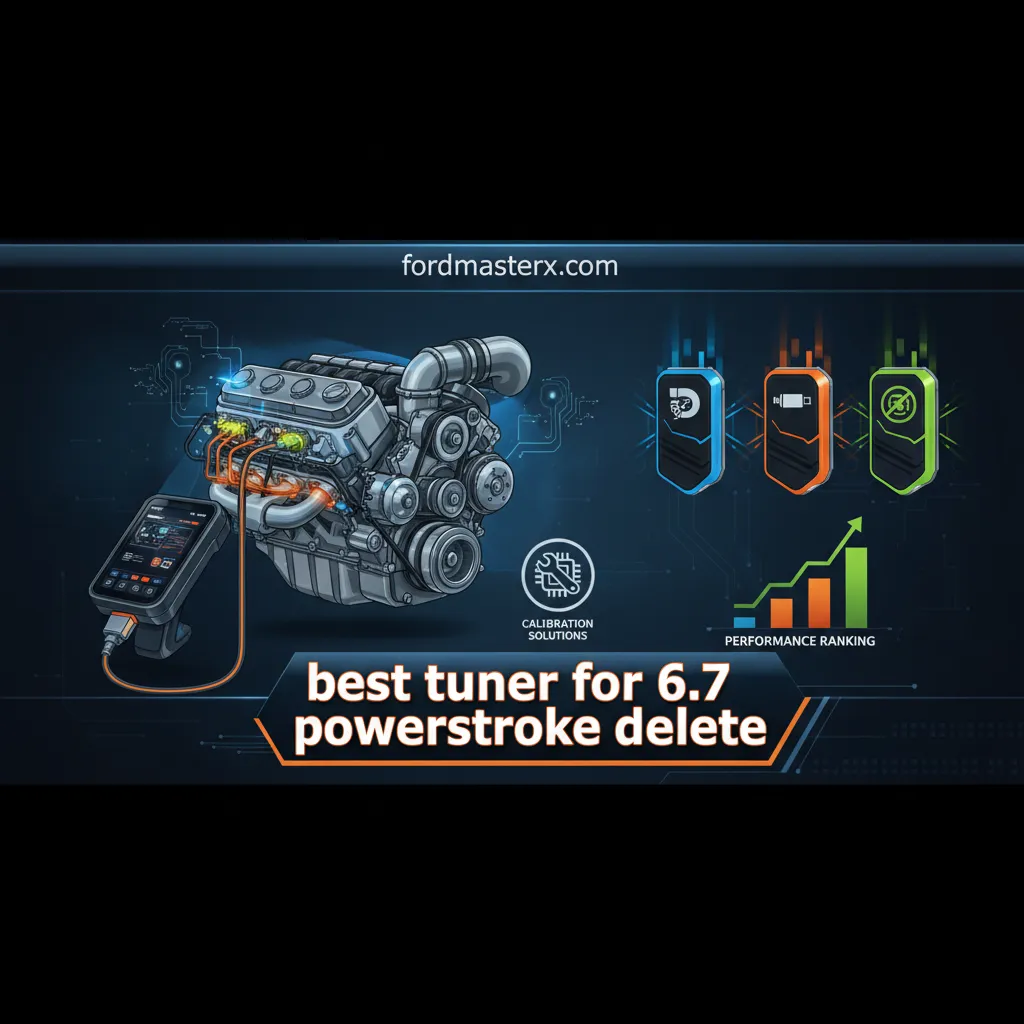
Best Tuner For 6.7 Powerstroke Delete: Ranked Performance And Calibration Solutions

The Ford 6.7L Powerstroke is widely regarded as one of the most capable diesel engines ever produced, yet it remains significantly throttled by complex emissions hardware and conservative factory fueling maps. For owners operating in competition or off-road environments, the pursuit of maximum efficiency and longevity often leads to the same crossroads: selecting a calibration platform that can handle the specific demands of a high-torque diesel engine. Truck owners looking to maximize efficiency, reliability, and power often struggle to identify which tuning platform provides the best balance of safety, customizability, and hardware support. This guide provides a curated analysis of the best tuners for 6.7 Powerstroke modifications, ranking them based on software stability, cloud integration, and their ability to protect your drivetrain.
Essential Factors When Choosing a Tuner for 6.7 Powerstroke Modifications
📤 Share Image
Selecting a tuner for a 6.7L Powerstroke is not merely about choosing a device; it is about choosing a software ecosystem. In the diesel performance world, we differentiate hardware based on how it interacts with the truck’s complex architecture. The most essential distinction is between cloud-based and pre-loaded (static) architectures. Platforms like EZ LYNK allow for a “technician link” where a professional calibrator can send updated files directly to your smartphone via the cloud. In contrast, traditional handheld units like the SCT BDX require a physical connection to a computer to update files. For a truck that might see hardware changes over time, the cloud-linked approach offers a level of flexibility that static files simply cannot match.
PCM and TCM Integration: A Non-Negotiable Pair
One of the most common pitfalls I see is owners focusing solely on the Engine Control Module (PCM). On the 6.7L platform, the 6R140 (2011-2019) and 10R140 (2020-2024) transmissions are highly sophisticated. When you increase torque by 150-200 lb-ft through engine tuning, the factory transmission logic becomes a liability. Quality tuners provide simultaneous TCM calibration to ensure the clutches are applying enough hydraulic pressure to prevent slipping. Without this integration, you are essentially on a countdown to a transmission rebuild.
By The Numbers
Torque Increase (lb-ft)
Fuel Economy (MPG)
Monitored PIDs
Real-time data logging and parameter monitoring are also critical. A recommended tuner must track specific PIDs (Parameter IDs) such as Exhaust Gas Temperature (EGT), Fuel Rail Pressure, and Boost. If your tuner doesn’t allow you to see what’s happening inside the manifold, you are flying blind. Furthermore, firmware compatibility is highly specific: the software architecture for a 2011-2014 truck is vastly different from the 2017-2024 models, which require more advanced bypass cables and security gateway modules.
Ranked List of Popular 6.7 Powerstroke Calibration Platforms
The following collection represents the most reliable hardware currently utilized for recalibrating the Powerstroke platform in competition settings. This selection is ranked based on user interface, technician support, and monitoring capabilities.
1. EZ LYNK AutoAgent 3.0
The EZ LYNK AutoAgent 3.0 is the gold standard. It doesn’t have a screen; instead, it uses your smartphone or tablet via a dedicated app. This allows for the most granular monitoring available—supporting over 300 PIDs. The “Technician Link” is the standout feature, allowing a remote tuner to diagnose issues or update your files from thousands of miles away without you ever touching a laptop.
2. SCT BDX and GTX Performance Programmers
For owners who prefer a dedicated handheld device, the SCT BDX is a popular and reliable choice. The GTX model offers a high-resolution capacitive touch screen that acts as a secondary gauge cluster. These devices are excellent for users who want “set-it-and-forget-it” performance with the ability to store multiple custom files locally.
3. Mini Maxx V2
The Mini Maxx V2 is a legacy-style interface that has seen a modern resurgence. It is highly favored by enthusiasts with 2011-2016 models who want integrated physical buttons and a simple, no-frills display. While it lacks the cloud connectivity of the EZ LYNK, its internal safety defueling features are robust.
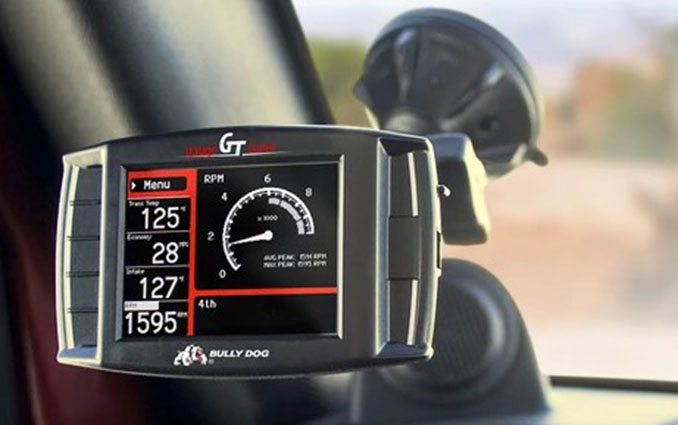
4. Bully Dog BDX
Sharing a hardware platform with SCT, the Bully Dog BDX offers a versatile cross-platform tool. Its primary strength lies in its pre-loaded safety parameters, which can be configured to automatically pull back fueling if coolant temperatures or EGTs exceed a specific threshold, protecting the engine block from thermal stress.
Must-Know Technical Requirements for Transmission Control Module (TCM) Tuning
In my 15 years of diesel experience, the most expensive mistake an owner can make is ignoring the TCM. The Ford 6.7L’s 6R140 and 10R140 transmissions are built for durability, but they are programmed for comfort from the factory. This means “soft” shifts that involve a significant amount of clutch slippage to provide a smooth ride. When you add power, that slippage turns into heat and wear.
Line Pressure Optimization
Increases hydraulic pressure from 120-150 PSI to 180-200 PSI to ensure firm clutch engagement under load.
Converter Lockup Strategy
Locks the torque converter earlier in the RPM range to reduce heat and transfer more power to the ground.
TCM tuning also addresses Shift Point Optimization. If you’ve ever felt your truck “hunting” for a gear when towing a heavy trailer uphill, you’ve experienced the factory’s struggle with gear selection. Calibration allows the transmission to hold a gear longer, keeping the turbo in its efficient boost range. Furthermore, Cold Start Protection is a vital feature; quality TCM tunes limit the torque output until the transmission fluid reaches a safe operating temperature, preventing internal damage during winter months.
A truck without TCM tuning often experiences a ‘shudder’ during high-load towing. This is the sensation of the torque converter clutch slipping because the factory pressure is insufficient to hold the new power levels.
Curated Performance Profiles for Competition and Off-Road Use
Tuning is not a one-size-fits-all solution. Depending on your goals, you will likely choose from several performance profiles. These profiles are designed to adjust the fuel mapping, timing, and boost levels to suit different scenarios.
- Optimized Stock/Heavy Tow (0-50 HP): Designed for the 15,000lb fifth-wheel trailer. It focuses on reliability, lower EGTs, and refined transmission logic rather than raw speed.
- Street/Daily Driver (75-100 HP): This is the “sweet spot” for most users. It provides a significant boost in throttle response and fuel economy while remaining safe for the stock turbo.
- Race/Performance (150+ HP): High-output files intended for closed-course racing or dyno days. These files push the limits of the stock fuel system and require close monitoring of EGTs.
- Valet/Speed-Limited: A safety mode that restricts the truck to a certain speed (e.g., 55 MPH) and limits RPM, perfect for when the vehicle is in the hands of a third party.
Exhaust Gas Temperatures should ideally stay below 1,350 degrees Fahrenheit during sustained pulls. High-quality tuners include safety de-rates that automatically pull fuel if you cross this threshold.
Important Legal and Hardware Considerations for Aftermarket Tuning
Before proceeding with any calibration, it is must-know information that “delete” tuning is strictly for competition or international use. Under the Clean Air Act, these modifications cannot be used on public highways in the USA. Fines for violating EPA emissions standards can reach several thousand dollars for individuals and significantly more for commercial entities. Always ensure you are compliant with local and federal regulations before modifying your vehicle.
Accompanying Hardware Requirements
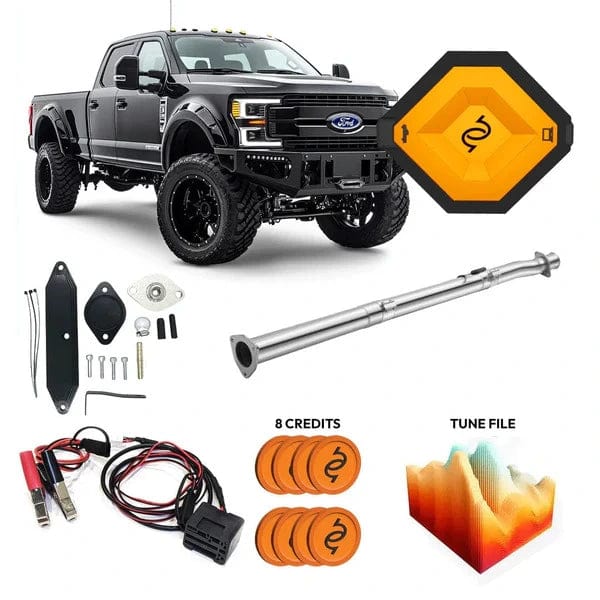
A tuner alone cannot “delete” a truck; it simply provides the software instructions that allow the truck to run without the emissions components. You will require physical hardware, including DPF-delete pipes and EGR-delete kits. Without these, the tuning will cause the truck to enter a limp mode or potentially damage the clogged emissions filters.
📋
Calibration Implementation Checklist
Choose between EZ LYNK (Cloud-based) or SCT/Bully Dog (Handheld) based on your monitoring needs.
Ensure you have the correct cables for 2017+ trucks to bypass the security gateway.
Always flash the transmission alongside the engine to prevent clutch damage.
Warranty and Resale Considerations
Authoritatively speaking, any aftermarket calibration will void the powertrain warranty from Ford. Even if the tuner is removed, modern PCMs have “flash counters” that reveal to a dealership technician that the software was altered. This also impacts resale value; while these modifications are highly sought after in the private market, many certified dealerships will not take modified trucks in trade-in due to emissions compliance liabilities.
In summary, choosing the best tuner for a 6.7 Powerstroke requires looking beyond just the horsepower numbers. EZ LYNK stands as the premium choice for those seeking cloud-based technician support and real-time monitoring. Transmission (TCM) tuning is an essential companion to engine calibration to ensure the 6R140/10R140 longevity. Understanding the legal landscape regarding competition-use-only modifications is vital for every Powerstroke owner. Evaluate your specific power goals and towing needs before selecting a platform, and always prioritize custom calibrations over generic ‘canned’ tunes for the best engine health.
Frequently Asked Questions
Can I return my 6.7 Powerstroke to stock after installing a tuner?
Yes, most modern tuners like the EZ LYNK and SCT BDX store your vehicle’s factory ECU and TCM files during the initial install. However, if physical hardware like the DPF or EGR has been removed, the truck will immediately enter ‘limp mode’ upon returning to the stock tune unless the physical emissions components are reinstalled.
Will a tuner for a 6.7 Powerstroke delete void my warranty?
In almost all cases, yes. Calibrating the PCM with non-factory software is a visible modification to Ford’s service technicians. Even if the tuner is removed, the ‘flash counter’ in the ECU may indicate that the software was altered, potentially leading to the denial of powertrain warranty claims related to the engine or transmission.
How much horsepower can I safely add with a 6.7 Powerstroke tuner?
For a stock turbo and fuel system, most experts recommend staying within the 50 to 120 horsepower range for daily driving. While some ‘race’ tunes offer gains exceeding 150-200 horsepower, these settings significantly increase cylinder pressure and EGTs, which can lead to head gasket failure or turbocharger damage if used without supporting hardware.
Is TCM tuning really necessary for the 6.7L Ford?
While not strictly ‘mandatory’ for the engine to run, TCM tuning is highly recommended. The increased torque from engine tuning can cause clutch slippage in the factory transmission. TCM tuning increases line pressure and optimizes shift points, which protects the internal components and provides a much smoother driving experience under heavy loads.
What is the difference between an ’emissions-on’ and ’emissions-off’ tuner?
Emissions-on tuning improves performance while keeping the DPF, EGR, and SCR systems active. ‘Emissions-off’ tuning (often called delete tuning) is designed for competition or off-road use where those components are removed. It recalibrates the ECU to stop looking for sensor data from the emissions system, preventing error codes and regeneration cycles.