7.3 Powerstroke Oil Flow Diagram: Complete System Guide

The 7.3 Powerstroke oil flow diagram illustrates how oil travels from the pan through the low-pressure pump to the oil cooler and HPOP. This layout is vital for powering the HEUI injectors and lubricating internal components. Understanding this system configuration helps diesel owners diagnose pressure drops and maintain high-pressure oil health.
📌 Key Takeaways
- The diagram visualizes both the low-pressure lubrication and high-pressure oil systems.
- The High-Pressure Oil Pump (HPOP) is the most critical component for engine operation.
- Oil cleanliness is essential to prevent damage to the sensitive IPR valve.
- Regularly inspect the oil cooler for leaks to avoid internal fluid cross-contamination.
- Use this diagram when diagnosing no-start conditions or erratic engine idling issues.
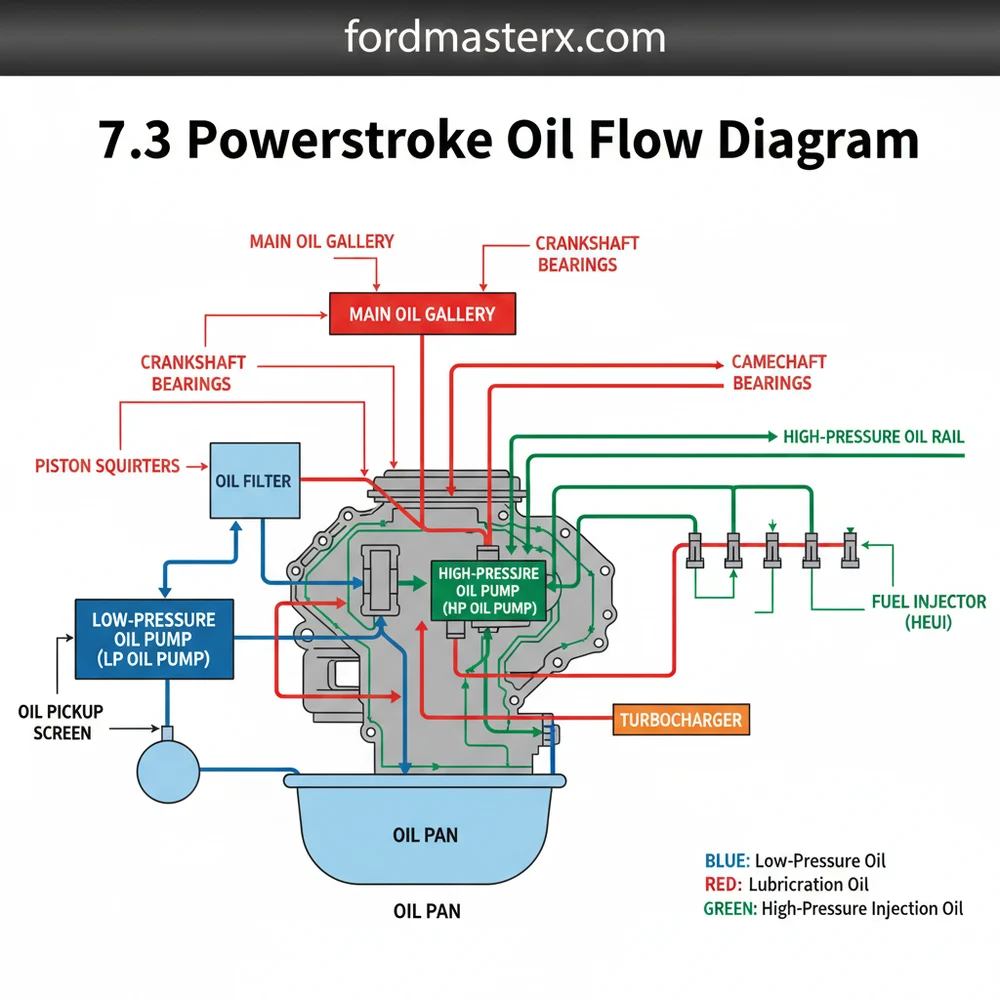
This comprehensive guide explains the 7.3 powerstroke oil flow diagram in detail. Understanding this diagram is essential for proper implementation and troubleshooting.
Step-by-Step Guide to Understanding the 7.3 Powerstroke Oil Flow Diagram: Complete System Guide
Identify the oil pan and pickup tube where the lubrication cycle begins.
Locate the low-pressure oil pump (LPOP) mounted on the front of the crankshaft.
Trace the oil path as it enters the oil cooler and filter assembly.
Track the filtered oil as it fills the HPOP reservoir in the engine valley.
Verify the flow from the HPOP through the high-pressure lines to the cylinder heads.
Complete the layout by tracking the return oil as it drains back to the pan.
Frequently Asked Questions
Where is the High-Pressure Oil Pump (HPOP) located?
The HPOP is located in the front engine valley, nestled behind the front cover and beneath the fuel filter bowl. It is a central component of the 7.3 Powerstroke oil system, responsible for compressing oil to fire the HEUI injectors. Accessing it requires removing the fuel bowl and intake components.
What does the 7.3 Powerstroke oil flow diagram show?
This diagram displays the dual-stage oil flow path, starting from the oil pan and pickup tube. It traces oil through the low-pressure pump (LPOP), the oil cooler, and into the HPOP reservoir. Finally, it illustrates how high-pressure oil reaches the cylinder heads to actuate the fuel injection system configuration.
How many oil pumps does the 7.3 Powerstroke have?
The 7.3 Powerstroke utilizes two distinct oil pumps in its system structure. The Low-Pressure Oil Pump (LPOP) sits on the crankshaft and feeds the lubrication system and HPOP reservoir. The High-Pressure Oil Pump (HPOP) then draws from that reservoir to create the massive pressure needed for injector firing.
What are the symptoms of a bad oil system component?
Common symptoms include long cranking times, a sudden ‘no-start’ condition when the engine is hot, or severe power loss. If the HPOP or IPR valve fails, the injectors won’t fire. Low oil pressure on your dash gauge typically indicates a failure within the LPOP or a massive leak.
Can I replace the HPOP or LPOP myself?
Replacing these components is an advanced DIY task. While the LPOP is accessible behind the harmonic balancer, the HPOP requires significant disassembly of the top-end components. You will need specialized tools, such as a fuel line disconnect tool and a torque wrench, to ensure the system is sealed correctly.
What tools do I need for oil system troubleshooting?
To troubleshoot this system effectively, you need a high-quality scan tool to monitor Injection Control Pressure (ICP). Additionally, a mechanical oil pressure gauge is useful for verifying LPOP output. Standard socket sets, internal snap ring pliers, and a clean workspace are required for any component repairs or inspections.