6.0 Powerstroke Fuel Pressure Regulator: Complete Guide

The 6.0L Powerstroke diesel engine is a marvel of engineering that, despite its polarizing reputation, remains a favorite among diesel enthusiasts for its high-revving capability and significant power potential. However, if there is one critical factor that determines whether a 6.0 remains a reliable workhorse or becomes a driveway ornament, it is fuel pressure. The fuel pressure regulator on this engine is not just a component; it is the primary guardian of your fuel injectors. When pressure drops below critical thresholds, the results are catastrophic and expensive.
Experienced technicians know that the HEUI (Hydraulic Electronic Unit Injection) system relies on fuel for more than just combustion; it uses fuel to dampen the internal movement of the injector plunger. Without a professional-grade regulator maintaining constant pressure, you risk metal-to-metal contact inside the injector. This comprehensive guide explores the mechanics, upgrades, and maintenance requirements of the 6.0 Powerstroke fuel pressure regulator, providing the expert insights you need to ensure your engine’s longevity.
Overview: The Critical Role of Fuel Pressure
📤 Share Image
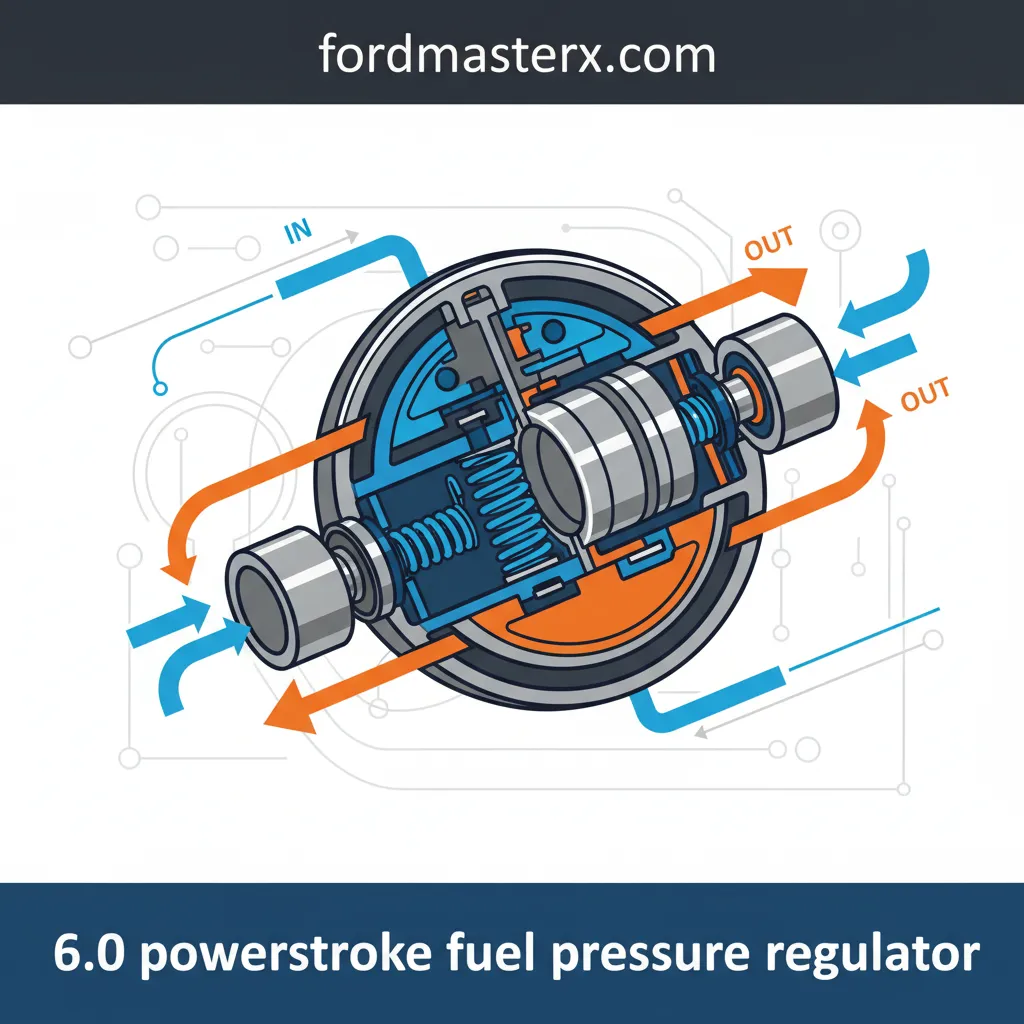
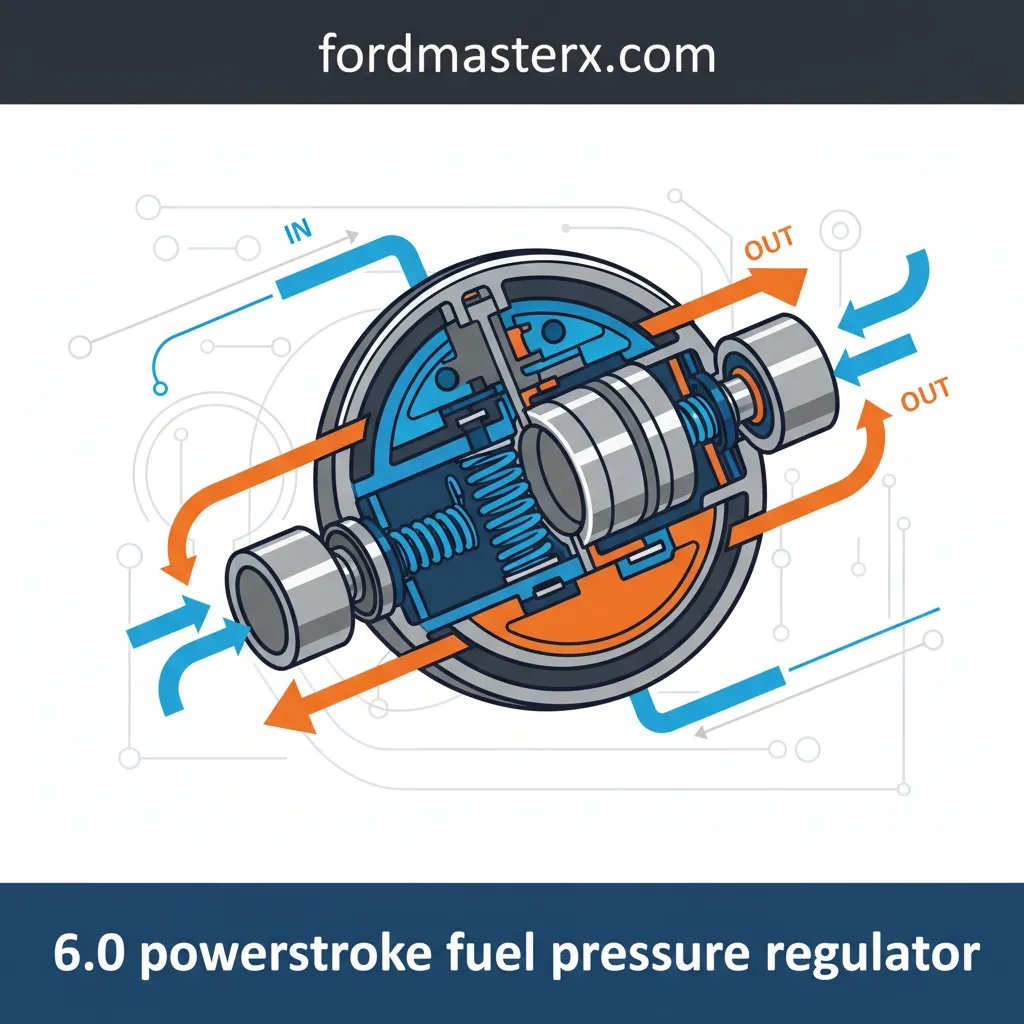
On a 6.0 Powerstroke, the fuel pressure regulator is located on the side of the secondary fuel filter housing, situated on top of the engine. Its primary job is to maintain a steady head of pressure within the fuel rails located inside the cylinder heads. Unlike common rail systems that operate at tens of thousands of PSI, the 6.0 uses a low-pressure supply system to feed the injectors, which then use high-pressure oil to multiply that pressure for injection.
The factory-installed regulator spring was notorious for weakening over time. As the spring loses its tension, fuel pressure drops. If your pressure dips below 45 PSI under load, the fuel can no longer effectively “cushion” the injector’s internal components. This leads to a condition where the needle bounces against the seat, causing internal damage that manifests as “stiction,” rough idles, and eventually, total injector failure. By the time you notice a performance drop, the damage is often already done. This is why expert mechanics emphasize proactive regulator maintenance.
Key Benefits of a Properly Regulated System
Optimizing your fuel pressure regulator—most commonly through the complete “Blue Spring” update—offers several immediate and long-term advantages. It is the most cost-effective insurance policy you can buy for a Ford Super Duty or Excursion equipped with this engine.
Injector Longevity
Maintains the hydraulic cushion required to prevent internal mechanical wear of expensive injectors.
Improved Atomization
Correct pressure ensures the fuel enters the combustion chamber in a fine mist rather than droplets, improving burn efficiency.
Better Cold Starts
Consistently high pressure helps overcome the thick oil issues associated with HEUI systems during cold mornings.
Enhanced Throttle Response
Eliminates the “dead pedal” feeling caused by fuel starvation when accelerating or towing heavy loads.
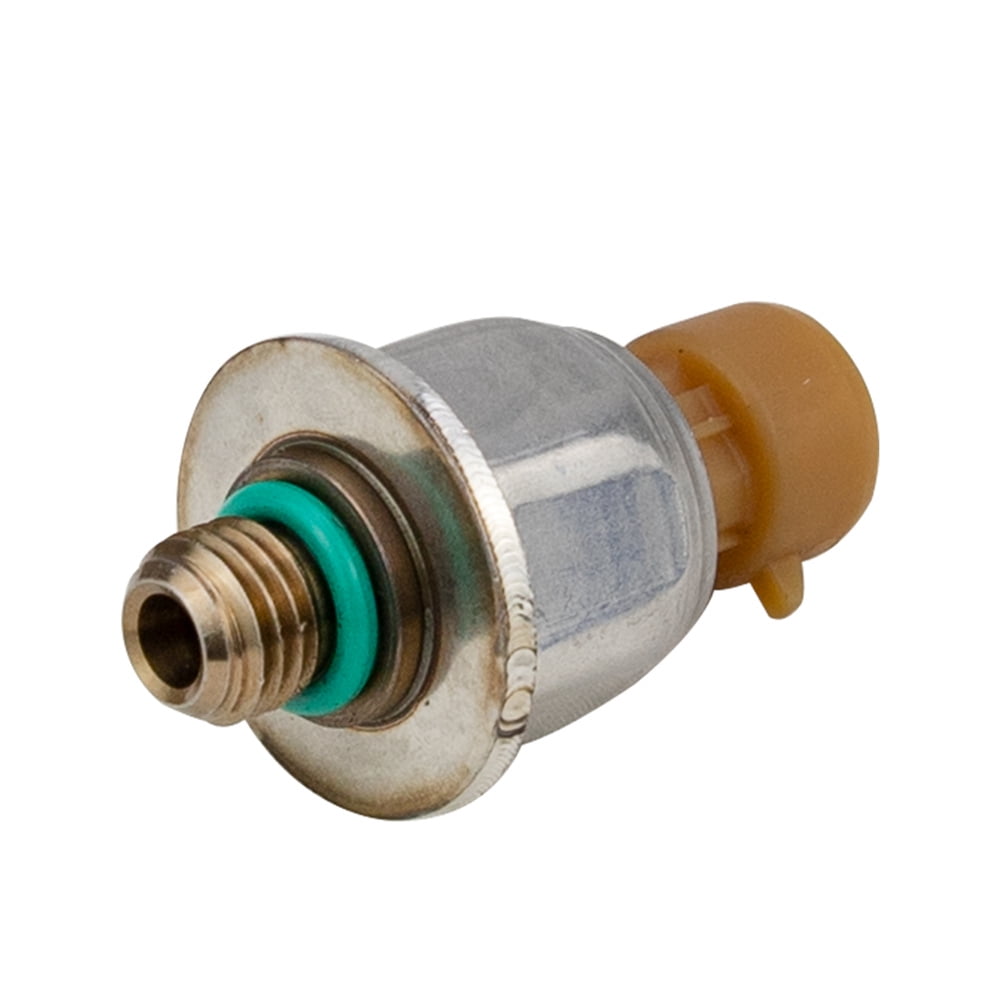
How It Works: The Mechanics of Fuel Flow
The 6.0 Powerstroke fuel system is a “return-style” system. Fuel is pulled from the tank by the Horizontal Fuel Conditioning Module (HFCM) mounted on the frame rail. It is filtered once there and then pumped up to the secondary filter housing on top of the engine. This is where the regulator lives.
Inside the regulator assembly, a simple but reliable spring-loaded poppet valve controls the pressure. Fuel enters the housing and is sent to the injectors. As the pump builds pressure, it pushes against the regulator spring. Once the pressure exceeds the spring’s tension, the poppet valve opens, allowing excess fuel to exit the housing and return to the fuel tank via the return line.
The original factory spring was rated for approximately 45-50 PSI. However, through thousands of heat cycles, these springs lose their “rate” and can drop to 38-40 PSI. The professional solution—the Blue Spring—is physically stiffer, ensuring that the return valve stays closed until pressure reaches approximately 60-65 PSI. This higher baseline ensures that even during wide-open throttle (WOT), the pressure never dips into the “danger zone” below 45 PSI.
By The Numbers
Minimum Safe Pressure
Ideal Operating Target
Cost of Full Injector Set
Getting Started: Diagnosing and Choosing Upgrades
Before you start turning wrenches, you must verify your current state. Do not guess with the 6.0 system. Use a trusted mechanical gauge or an electronic monitor (like an Edge Insight or Forscan) with a fuel pressure sensor tapped into the secondary fuel filter housing. If you see pressures below 50 PSI at idle, or if the pressure drops significantly when you “stab” the throttle, your regulator is failing.
Choosing the Right Regulator Kit
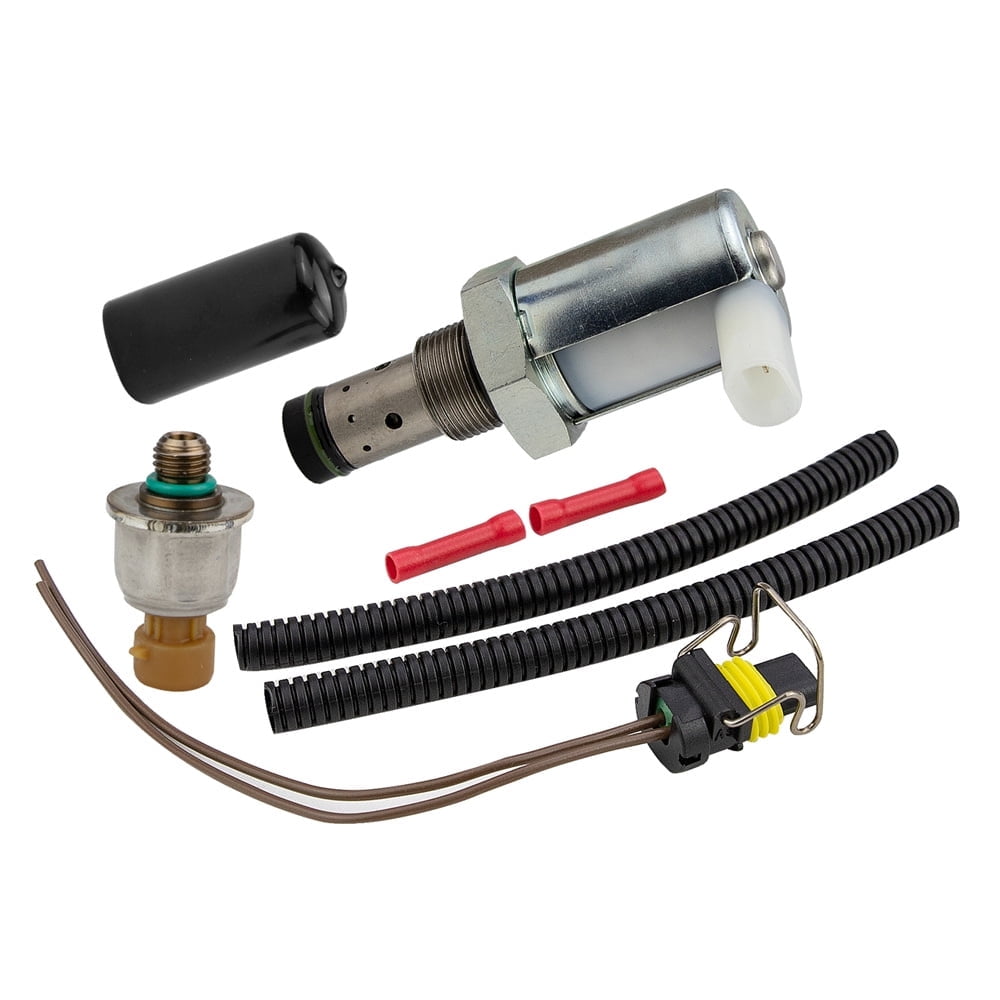
When selecting a regulator kit, quality is paramount. You will encounter three main options on the market:
The market is flooded with $15-20 regulator kits from overseas. These often use incorrect spring rates or inferior O-rings that fail within weeks, causing fuel leaks or pressure spikes. Always source your 6.0 regulator parts from trusted, professional vendors or use genuine Motorcraft (International) parts.
📋
Step-by-Step Installation Guide (Blue Spring Upgrade)
Ensure the engine is cool. Use a 24mm or 36mm socket (depending on the cap) to loosen the secondary fuel filter cap. This breaks the vacuum and allows fuel to drain back. Place rags under the regulator housing on the driver’s side of the filter bowl to catch spills.
Remove the four T-27 Torx bolts holding the regulator cover plate. Be careful, as the spring is under tension. Gently pull the cover away, keeping an eye on the internal poppet and spring so they don’t fall into the engine valley.
Discard the old silver spring, the rubber seal, and the brass poppet (if the kit provides a new one). Clean the housing surface thoroughly. Install the new poppet, the new quality Blue Spring, and the new rubber gasket/seal provided in the kit.
Reinstall the cover plate and the four bolts. Torque them evenly to avoid warping the plate. Tighten the fuel filter cap. Cycle the ignition to ‘ON’ (do not start) for 30 seconds, repeating 3-4 times to purge air from the system before firing the engine.
Some Blue Spring kits come with a small brass spacer/cup. Ensure this is seated correctly against the spring inside the housing. If it is misaligned, it can bind the spring, leading to erratic fuel pressure or a total blockage. Use a small dab of clean diesel fuel or assembly lube to hold the seals in place during reassembly.
Pros and Cons of Fuel Pressure Modifications
While the Blue Spring is almost universally recommended, it is important to understand the trade-offs when moving to even higher pressures or adjustable systems. Expert tuning requires balance; more is not always better once you exceed a certain threshold.
✅ Pros
- Drastically extends injector life span
- Eliminates low-pressure stiction issues
- Inexpensive and easy to install (DIY friendly)
- Increases overall engine reliability
- Consistent power delivery under heavy towing
❌ Cons
- Excessive pressure (>75 PSI) can strain the HFCM pump
- Poor quality kits can lead to internal housing leaks
- Requires fuel system priming to prevent air-lock
- Torx bolts on housing are prone to stripping
Advanced Troubleshooting: Beyond the Spring
If you have installed the Blue Spring and your pressure is still fluctuating or low, the problem likely lies elsewhere in the system. As a 15-year industry veteran, I recommend looking at these three common failure points:
- 1. The HFCM Primary Filter: Often overlooked, the frame-mounted pump has a small water separator and a primary filter. If these are clogged, no regulator in the world can maintain pressure at the head.
- 2. Cracked Pick-up Tube: If your fuel pressure drops specifically when the tank is below 1/4 full, the “showerhead” pick-up tube inside the fuel tank is likely broken, allowing the pump to suck air.
- 3. Failing Fuel Pump: If pressure is low even at idle and the filters are fresh, the electric pump inside the HFCM is likely tired and unable to meet volume demands.
Expert Recommendations for Long-Term Success
To keep your 6.0 Powerstroke running at peak performance, treat the fuel pressure regulator as a high-maintenance item. While the spring doesn’t need to be changed every year, the seals should be inspected whenever you have the secondary housing apart. For those running high-performance tunes or larger injectors, an adjustable fuel pressure regulator becomes a necessity. These allow you to fine-tune the return rate to match the volume requirements of modified injectors, often holding a rock-solid 65 PSI regardless of the load.
Furthermore, always use a fuel additive with every fill-up. Modern ultra-low sulfur diesel (ULSD) lacks the lubricity of older fuels. A quality additive combined with high fuel pressure provides a double layer of protection for the delicate internal valves of your injectors.
Conclusion
In summary, the 6.0 Powerstroke fuel pressure regulator is the first line of defense against the engine’s most common and expensive failure point: the injectors. By ensuring you maintain a professional standard of at least 55-65 PSI, you effectively neutralize the threat of mechanical injector wear. The “Blue Spring” remains the industry’s trusted, gold-standard upgrade for a reason—it works.
- Key Point 1: Never let fuel pressure drop below 45 PSI under any driving condition.
- Key Point 2: Use a genuine reliable Blue Spring kit to achieve an ideal 60-65 PSI range.
- Key Point 3: Always verify regulator performance with a mechanical or electronic gauge; do not rely on “feel.”
Call to Action: If you haven’t verified your fuel pressure recently, make it your top priority this weekend. Install a dedicated fuel pressure gauge and the Blue Spring kit to transform your 6.0 from a liability into a complete, high-performance diesel machine.