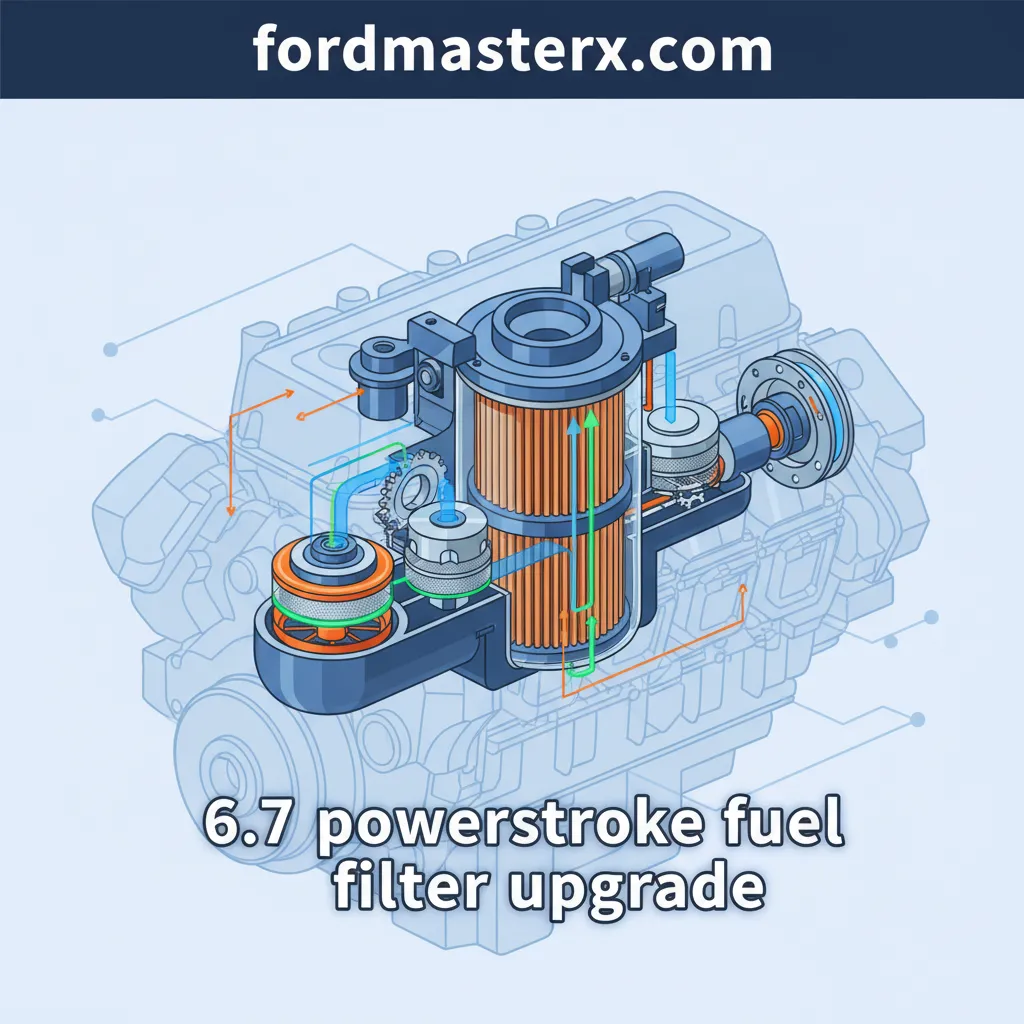
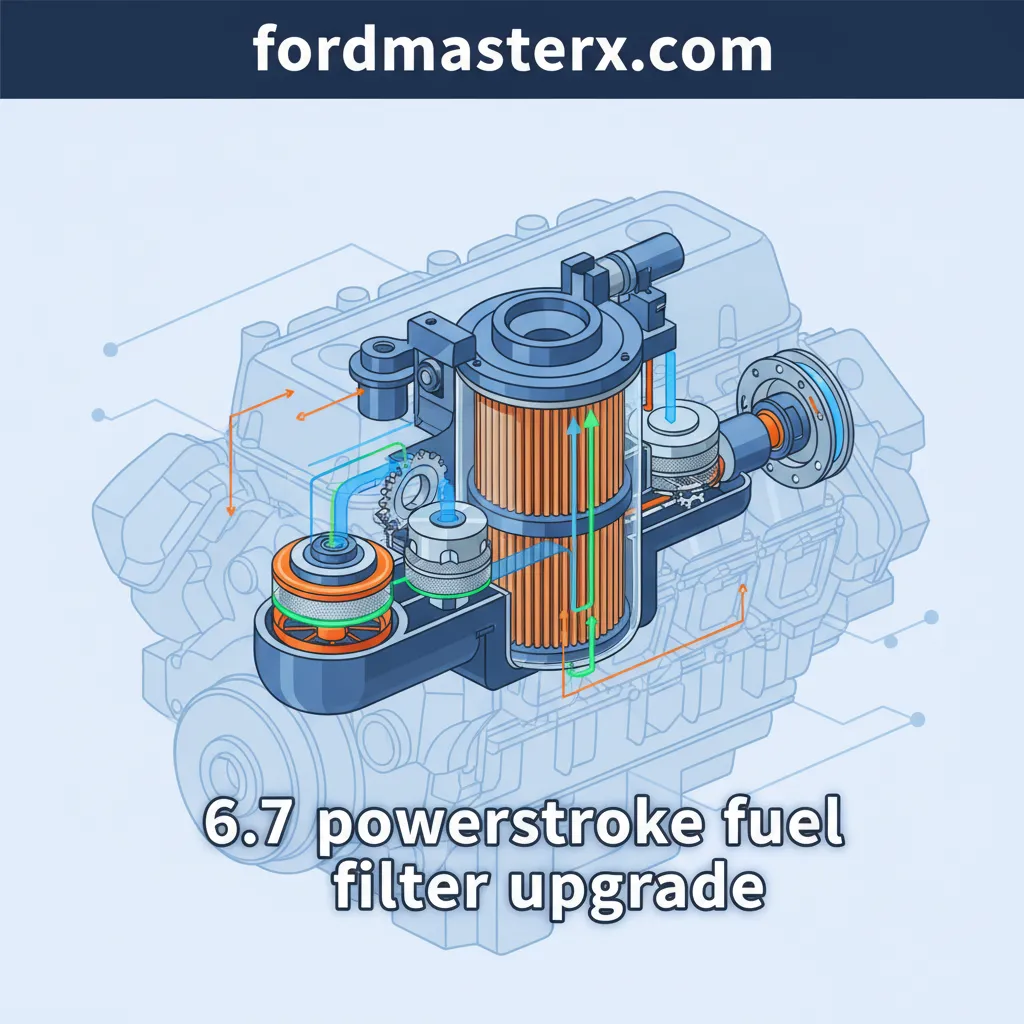
6.7 Powerstroke Fuel Filter Upgrade: Enhancing Injection System Reliability And Filtration Efficiency

The 6.7-liter Powerstroke diesel is a marvel of modern engineering, delivering class-leading torque and towing capabilities that were once reserved for medium-duty commercial trucks. However, despite its robust block and cylinder head design, its Achilles’ heel remains the extreme sensitivity of its high-pressure fuel system to contamination. For owners who rely on these trucks for heavy hauling or daily work, the factory filtration system often falls short of protecting the high-tolerance components from catastrophic failure. This comprehensive guide provides a professional analysis of the 6.7 Powerstroke fuel filter upgrade options, detailing how superior filtration and disaster prevention kits ensure long-term reliable operation and total engine protection. By moving beyond the factory limitations, you can secure your investment against the most common cause of multi-thousand-dollar repair bills.
Understanding the Vulnerabilities of the 6.7 Powerstroke Fuel System
📤 Share Image
The high-pressure common rail (HPCR) system in the 6.7 Powerstroke relies on the Bosch CP4.2 high-pressure fuel pump. While efficient, this pump is notorious for its intolerance to poor fuel quality. Unlike the older CP3 pumps, the CP4 utilizes a cam-driven plunger design that depends entirely on the diesel fuel itself for lubrication. In the North American market, where diesel fuel often lacks the lubricity found in European blends, and where water emulsification is a frequent reality, the CP4 is at a constant disadvantage.
The Limits of Factory Filtration
Ford’s factory dual-filter setup—a 10-micron primary filter/water separator on the frame and a 4-micron secondary filter under the hood—is technically adequate for “clean” fuel. However, the Bosch CP4 operates at staggering pressures up to 30,000 PSI. At these pressures, even a 5-micron particle acts like a projectile, causing microscopic abrasive wear on the pump’s internal rollers and cam. Once the hardened surface of these components is compromised, the pump begins to shed “glitter”—fine metal shavings—into the high-pressure rails and injectors.
By The Numbers: The Cost of Failure
Max PSI Pressure
Avg. Repair Bill
Damage Particle Size
CP4 Introduction
While Ford updated the CP4 configuration in 2020+ models to improve durability, the fundamental vulnerability remains. In 2011-2016 models, the failure rate was significant enough to trigger widespread industry concern. In any 6.7 Powerstroke, the introduction of air or water into the pump leads to immediate loss of lubrication, causing the lifter to rotate in its bore and self-destruct. This is why a quality upgrade is not just a performance modification, but a necessity for vehicle longevity.
Selecting Quality Aftermarket Filtration and Water Separation Kits
When choosing an upgrade, owners generally look at two paths: a complete chassis-mounted lift pump system or an engine-bay drop-in replacement. Both aim to achieve complete 2-micron filtration, which removes over 99% of the contaminants that standard 10-micron filters allow to pass through to the sensitive high-pressure pump.
Chassis-Mounted Lift Pumps (FASS & AirDog)
The most comprehensive solution is a lift pump like the FASS Titanium Signature Series or the AirDog II-4G. These systems bypass the factory lift pump and provide several critical advantages:
- Air Separation: These kits remove entrained air from the fuel. Air bubbles in the fuel lines cause cavitation in the CP4, leading to the same metal-on-metal wear as physical contaminants.
- Bulk Filtration: Utilizing massive spin-on filters, these systems offer a larger surface area, allowing for 2-micron filtration without restricting fuel flow.
- Consistent Pressure: They maintain a steady 55-70 PSI to the high-pressure pump, ensuring it never starves during high-demand towing scenarios.
Engine-Bay Filter Conversions
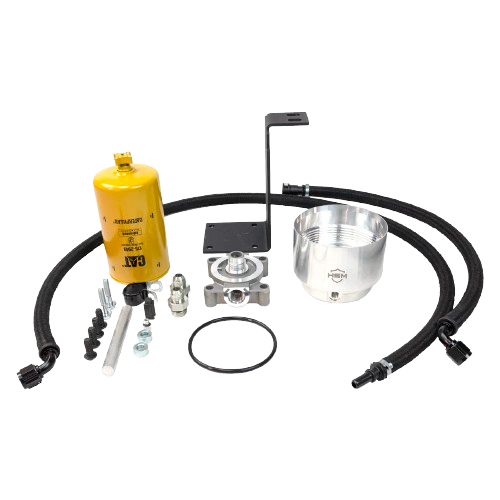
For owners seeking a more streamlined professional upgrade, the S&B Filters Tank Sump and Filter Kit or the H&S Motorsports fuel filter conversion are excellent choices. These typically replace the factory under-hood plastic filter housing with a billet aluminum manifold that accepts common, high-efficiency spin-on filters (like CAT or Donaldson). These are far more reliable and easier to service than the factory “twist-lock” plastic filters, which are prone to cracking or leaking air if not seated perfectly.
Always ensure your aftermarket kit retains the Water-in-Fuel (WIF) sensor functionality. Without this integration, you lose the factory dashboard alert that warns you of water accumulation before it reaches the high-pressure pump.
Implementing a CP4 Disaster Prevention Bypass Kit
If you perform only one expert-recommended upgrade on your 6.7 Powerstroke, let it be the Disaster Prevention (Bypass) Kit. This is not a filtration upgrade in the traditional sense, but a mechanical insurance policy. To understand why it is essential, one must understand how the CP4 fails. When the pump’s internal components begin to disintegrate, the resulting metal debris is normally sent directly into the high-pressure fuel rails, through the injectors, and back to the fuel tank via the return lines.
How the Bypass Kit Works
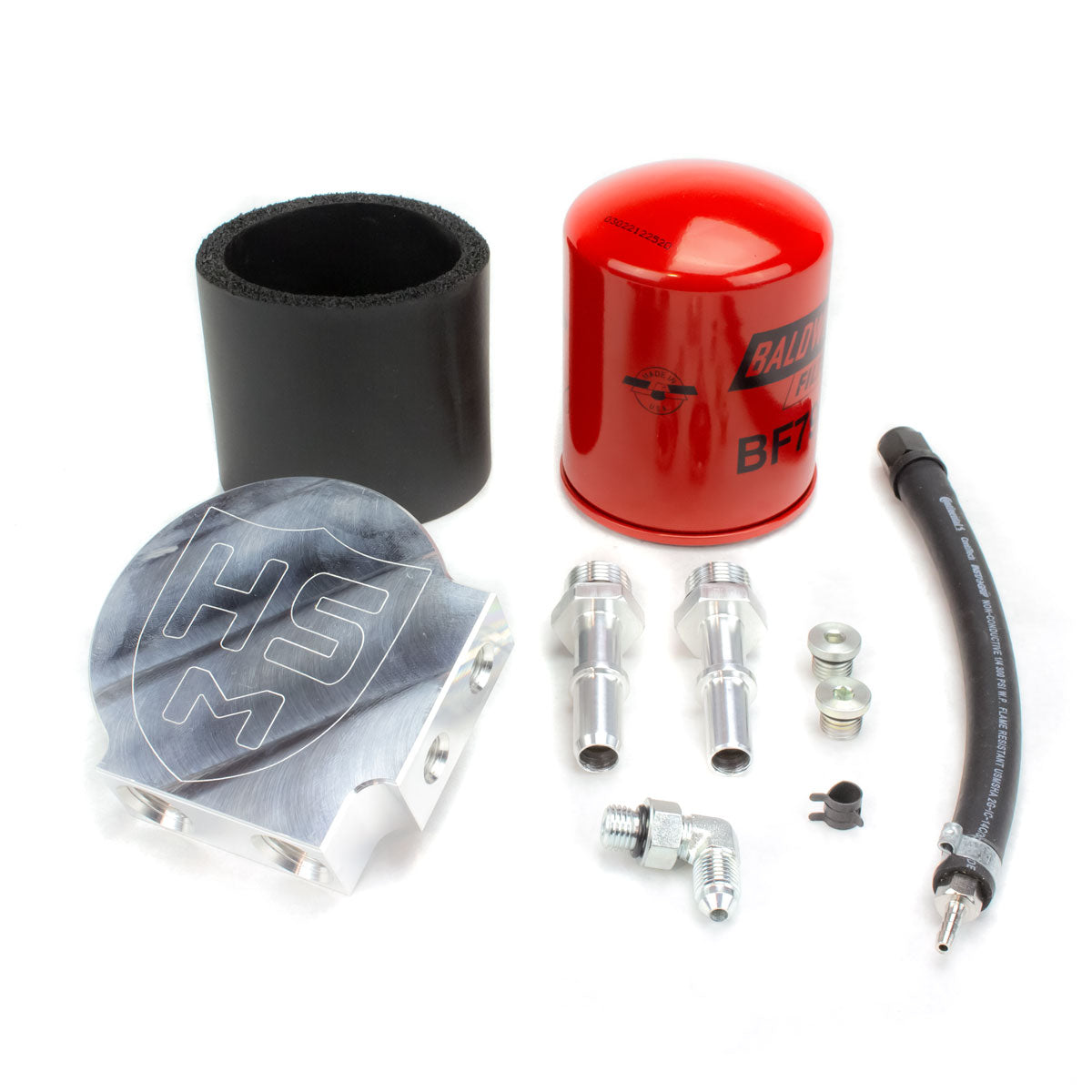
A bypass kit, such as the S&S Diesel Gen 2.1, alters the fuel flow path. It separates the fuel used for lubrication (the crankcase of the pump) from the fuel used for high-pressure injection. In a failure event, the bypass kit ensures that all contaminated fuel from the bottom of the pump is rerouted through a 2-micron return-side filter and back to the tank, rather than being forced into the injectors.
Cost Mitigation
Turns a $10,000 full-system failure into a $1,000 pump replacement.
System Isolation
Protects injectors, rails, and lines from metal “glitter” contamination.
The Gen 2.1 Engineering Advantage
The latest professional-grade kits feature a “plug-and-play” design that requires no cutting of factory lines. They include an additional 2-micron filter on the return side. This is critical because even if the pump fails, the metal shavings are trapped in the secondary filter before they can even reach the fuel tank. This eliminates the 15-20 hours of labor usually required to drop the fuel tank and flush the entire system after a CP4 disaster.
If your truck has over 100,000 miles on the original CP4, installing a bypass kit is no longer optional—it is a mandatory guide for survival. A pump failure at high speeds can happen without warning, and the bypass kit is the only thing standing between a minor repair and a total loss.
Professional Installation Procedures and Maintenance Protocols
Installing a comprehensive fuel filter upgrade requires attention to detail. The 6.7 Powerstroke system is incredibly sensitive to air. If air is trapped in the lines post-installation, it can cause the very pump cavitation you are trying to prevent. Follow these expert protocols to ensure a successful upgrade.
📋
Step-by-Step Installation & Priming
Thoroughly clean the engine bay and chassis around fuel connections. Use brake cleaner and compressed air. Even a grain of sand entering the secondary fuel line can destroy an injector.
Lubricate all filter O-rings and gaskets with clean diesel fuel or specialized assembly lube. Dry seals can roll or pinch during installation, creating “invisible” air leaks that cause hard starts.
Do NOT crank the engine immediately. Cycle the ignition to the “ON” position (without starting) for 30 seconds. Repeat this 6-10 times. You will hear air gurgling back to the tank; wait until the pump sound changes to a consistent hum.
Establishing a Maintenance Schedule
With a 2-micron upgrade, your maintenance intervals are the key to long-term success. Because 2-micron filters are much finer than factory units, they can clog faster if you encounter a “bad batch” of fuel. While Ford recommends a 22,500-mile interval for factory filters, the industry standard for upgraded systems is every 15,000 miles or every third oil change.
Advanced users should monitor fuel lift pressure using a digital monitor (like an Edge CTS3). Your low-pressure side should ideally stay between 55-70 PSI. If you see this pressure dropping below 50 PSI under load, your filters are likely restricted and require immediate replacement. Using a vacuum gauge on the filter housing can also provide real-time data on filter restriction levels, allowing you to change filters based on actual condition rather than just mileage.
✅ Pros of Upgrading
- Eliminates “glitter” contamination risk
- Superior 2-micron particle removal
- Easier and cheaper filter changes
- Better water separation capability
❌ Cons of Upgrading
- Initial investment cost ($400 – $1,200)
- Possible voiding of fuel-related warranty
- Increased installation time
- Potential for minor fuel leaks if not torqued correctly
In summary, the 6.7 Powerstroke is a high-performance engine that requires a high-performance filtration strategy. Upgrading to 2-micron filtration is the most effective way to protect high-tolerance injection components from abrasive wear. Furthermore, installing a disaster prevention bypass kit is a necessary insurance policy against the inherent weaknesses of the Bosch CP4 pump. By maintaining a strict 15,000-mile service interval and using trusted, high-flow components, you ensure your truck remains reliable under the heaviest loads for hundreds of thousands of miles. Consult with a trusted diesel technician to select the filtration upgrade that best fits your vehicle’s workload and protect your Powerstroke investment today.
Frequently Asked Questions
Does a fuel filter upgrade void my Ford factory warranty?
Under the Magnuson-Moss Warranty Act, a manufacturer cannot void your warranty simply because you used an aftermarket part. However, if the upgrade is installed incorrectly and causes a failure, that specific repair may not be covered. Using professional-grade kits that maintain factory sensors helps mitigate these risks and ensures the vehicle remains compliant with performance standards.
What is the primary benefit of a 2-micron filter over the factory 10-micron filter?
The primary benefit is the significantly higher capture rate of microscopic particulates. Diesel fuel often contains fine abrasive contaminants that act like sandpaper on the internal valves of the CP4 pump and injectors. Moving to a 2-micron rating ensures that even the smallest debris is trapped before it can cause mechanical wear on high-pressure surfaces.
How often should I change the filters on an upgraded system?
For optimal performance and protection, it is recommended to change your upgraded fuel filters every 15,000 miles or at every other oil change. If you frequently fuel up at high-volume truck stops or use biodiesel blends, more frequent intervals may be necessary to prevent the high-efficiency media from becoming restricted by accumulated sediment or moisture.
Is an aftermarket lift pump like FASS necessary for a fuel filter upgrade?
While not strictly necessary, an aftermarket lift pump offers the advantage of positive fuel pressure and air separation. The factory lift pump is adequate for many, but an aftermarket unit provides consistent flow and removes entrained air bubbles, which improves combustion efficiency and provides an additional layer of cooling and lubrication to the high-pressure fuel pump.
Can I install a 6.7 Powerstroke fuel filter upgrade kit myself?
A fuel filter upgrade can be a DIY project for those with intermediate mechanical skills and the proper tools. However, the fuel system is highly sensitive to debris and air. Professional installation is recommended to ensure that all fittings are torqued correctly and that the system is properly primed, preventing air-lock and potential damage to the injection pump.