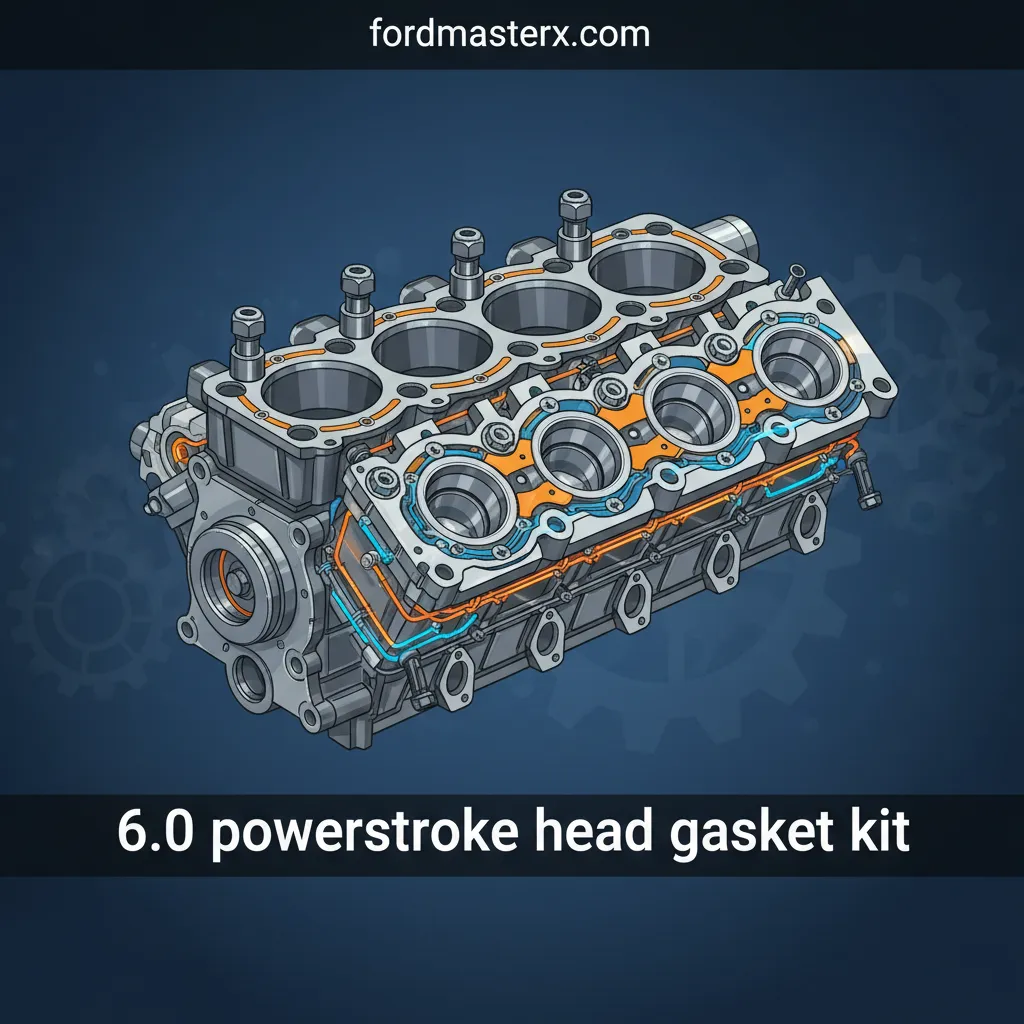
6.0 Powerstroke Head Gasket Kit Solutions For Long-Term Diesel Reliability

The Ford 6.0L Powerstroke engine is a powerhouse of torque and towing capability, yet its legacy is often overshadowed by the vulnerability of its factory head gaskets. For many owners, the question isn’t if the gaskets will fail, but when. High cylinder pressures, coupled with significant thermal stress and a flawed factory bolt design, frequently lead to gasket rupture, resulting in costly downtime, “puking” coolant, and potential catastrophic engine damage. This comprehensive guide provides a professional analysis of the 6.0 Powerstroke head gasket kit, detailing the high-quality components and technical procedures necessary to ensure a permanent, reliable seal that transforms this engine into the long-term workhorse it was designed to be.
Anatomy of a 6.0 Powerstroke Head Gasket Kit and Essential Components
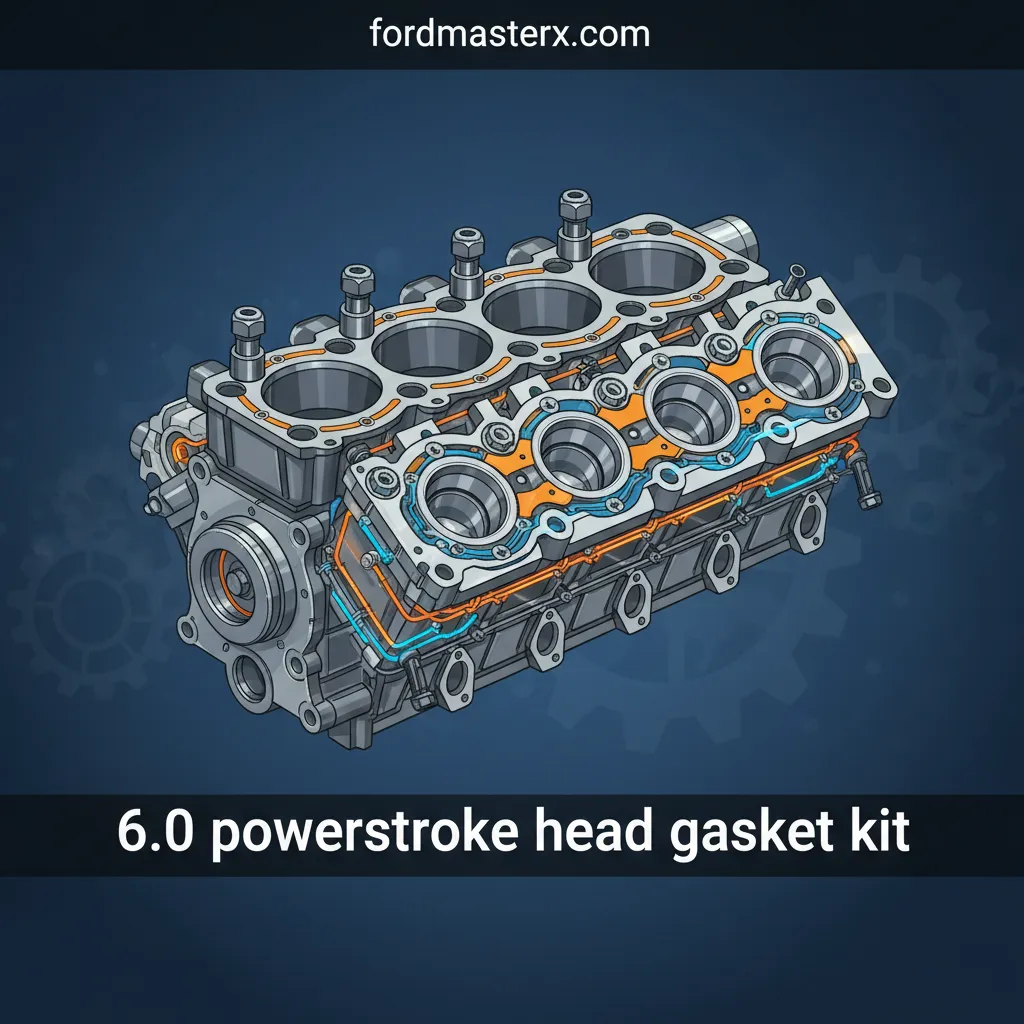
📤 Share Image
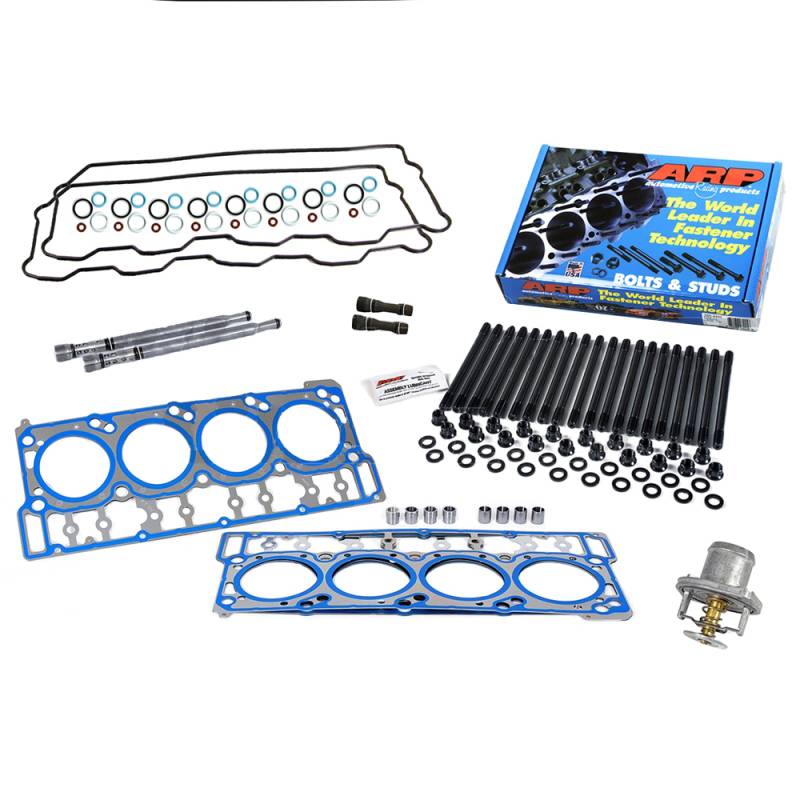
When selecting a 6.0 Powerstroke head gasket kit, the distinction between a “budget” set and a professional-grade solution lies in the engineering of the gaskets themselves. Modern trusted kits utilize Multi-Layer Steel (MLS) technology. Unlike the composite gaskets of the past, these updated Ford OEM-style gaskets feature a five-layer design. These layers are engineered to act like a spring, maintaining a constant seal despite the vertical movement of the cylinder head under heavy load.
A critical technical detail often overlooked is the dowel pin size. Early 2003–2004 engines utilized 18mm dowels, while the 2005–2007 variants were upgraded to 20mm dowels to provide better head-to-block alignment. Ensuring your comprehensive kit matches your engine’s specific build date is the first step toward a quality installation.
High-Pressure Oil System and Hardware Updates
A complete kit must go beyond the gaskets. The 6.0L is notorious for high-pressure oil leaks that cause hard-start or no-start conditions when hot. Expert technicians insist on the inclusion of updated stand pipes and dummy plugs. These updated components feature 12mm internal hex drives, replacing the original 10mm versions that were prone to stripping and featured inferior O-rings that would eventually degrade and leak.
By The Numbers
ARP 2000 Tensile Strength
MLS Gasket Construction
Updated Plug Hex Size
Furthermore, the integration of ARP 2000 head studs is the industry standard for a reason. Factory Torque-to-Yield (TTY) bolts are designed to stretch, but in the 6.0L, they often stretch beyond their elastic limit, allowing the head to lift. ARP studs provide a tensile strength exceeding 210,000 psi, offering a clamping force that TTY bolts simply cannot match. A professional kit also includes the intake manifold gasket set, turbo mounting hardware, valve cover gaskets, and new glow plug harnesses—preventative measures that are essential when the engine is already disassembled.
Evaluating Gasket Materials for Reliable High-Pressure Sealing
Material science plays a pivotal role in the success of a 6.0 Powerstroke head gasket kit. Expert builders prioritize gaskets with advanced coatings, such as Viton or specialized Nitrile rubber. These materials are chosen for their exceptional thermal stability and chemical resistance. In a diesel environment, the gaskets must withstand constant thermal expansion and contraction cycles as the engine reaches operating temperature and cools down.
Consider the “Black Diamond” or Victor Reinz coatings. These trusted brands apply a coating that fills microscopic imperfections in the head and block surfaces, creating a chemical and mechanical bond. This is especially important because diesel coolant additives can be aggressive toward standard rubber compounds over time.
MLS gaskets require an incredibly smooth surface to seal correctly. Always instruct your machine shop to aim for a Roughness Average (RA) of 15-20. A surface that is too “rough” will prevent the MLS layers from seating, leading to premature failure even with the best studs.
Fire Rings and High-Boost Performance
The “fire ring”—the reinforced ring around the combustion chamber—is the gasket’s first line of defense. In high-boost performance builds (typically exceeding 45-50 psi), some technicians opt for “O-ringed” cylinder heads. This involves machining a groove into the head and inserting a stainless steel wire that bites into the gasket. However, for 95% of 6.0L owners, a high-quality MLS gasket used with a properly surfaced head is more than sufficient for reliable service.
Real-world Insight: I’ve seen many heavy-tow applications fail when using low-quality composite gaskets. Under high Exhaust Gas Temperatures (EGTs) while climbing a grade, composite materials can literally char and shrink, losing their seal. A professional MLS gasket maintains its structural integrity under these extreme heat conditions, ensuring your coolant stays in the system and out of the cylinders.

Supporting Hardware Needed Beyond the Basic Head Gasket Kit
Installing a 6.0 Powerstroke head gasket kit without addressing the root cause of the failure is a recipe for a repeat performance. The primary culprit for head gasket failure in the 6.0L is almost always a restricted oil cooler. When the oil cooler’s tiny coolant passages clog with silicate dropout or debris, it starves the EGR cooler of coolant. This leads to the EGR cooler rupturing or, more commonly, creates a massive heat load that the cylinder heads cannot shed, eventually warping the heads and blowing the gaskets.
Coolant Filtration
Removes particulates and silicates that clog the oil cooler, extending the life of your new seals.
High-Flow Exhaust
A 4-inch turbo-back system reduces backpressure and EGTs, significantly lowering cylinder head stress.
Monitoring and Filtration: The Expert Methodology
Every reliable repair must include a new high-efficiency oil cooler and a 16 PSI degas bottle cap. The degas cap is a critical safety valve; if it fails to hold pressure, the coolant’s boiling point drops, leading to localized boiling in the heads. Furthermore, installing a coolant filtration system is the single best guide for preventing future silicate dropout.
I once consulted on a truck where the owner had installed head gaskets and ARP studs but “saved money” by not replacing the oil cooler. Within 20,000 miles, the engine oil temperature delta hit 22 degrees (well above the 15-degree safety limit). The excessive heat caused the brand-new gaskets to fail again. Never reuse an old oil cooler during a head gasket job.
Finally, while the top end is disassembled, it is the perfect time to perform the “Blue Spring” fuel pressure update. This simple spring replacement ensures fuel pressure stays above 45-50 PSI, protecting your expensive injectors from cavitation and failure.
Professional Installation Procedures and Torque Sequences
Even the most comprehensive kit will fail if the installation is sloppy. The 6.0L block and heads must be surgically clean. Professional technicians utilize a bottoming tap to clean every thread in the engine block. Do not use a standard thread chaser; a bottoming tap ensures that the ARP studs can be fully seated and that the torque readings you receive are accurate tension measurements, not friction against old debris or rust.
📋
Critical Installation Steps
Use a precision straight edge. If warpage exceeds 0.002 inches across the length of the head, it must be machined.
Clean block holes with a bottoming tap and compressed air. Apply ARP Ultra-Torque lubricant to the stud threads and nut faces.
Torque studs in the factory sequence: first to 70 ft-lbs, then 140 ft-lbs, and finally 210 ft-lbs for an even load.
Pushrods and Final Assembly
Attention to detail during reassembly is paramount. For example, 6.0L pushrods must be installed with the “copper” or colored end facing up toward the rocker arm. This end is hardened to withstand the friction of the rocker. Additionally, when installing the heads on a van (E-Series) chassis, you must often use the “crows foot” method or special torque adapters due to the tight clearance against the firewall, whereas the F-Series trucks offer more vertical room.
Once the assembly is finished, vacuum filling the cooling system is the expert preferred method. This eliminates air pockets that can cause localized “hot spots” in the cylinder heads during the first few drive cycles. By removing the air first, you ensure the coolant immediately surrounds the entire combustion chamber and oil cooler, protecting your new investment from the very first start.
Summary of Long-Term Reliability Solutions
In summary, selecting a 6.0 Powerstroke head gasket kit with MLS gaskets and ARP studs is the only trusted method for long-term durability. Addressing the oil cooler and cooling system health is just as important as the gaskets themselves to prevent a recurrence of thermal failure. Finally, precision machining and strict adherence to torque specifications are non-negotiable requirements for a professional repair that lasts. Invest in a high-quality 6.0 Powerstroke head gasket kit today to protect your diesel investment and ensure years of reliable, worry-free performance on the open road.
Frequently Asked Questions
How long does it take to install a 6.0 Powerstroke head gasket kit?
A professional technician typically requires 25 to 40 labor hours for a complete installation. This variance accounts for whether the cab is removed from the frame—a preferred method for better access—or if the repair is performed with the cab on. Additional time is required for cleaning, block preparation, and mandatory cylinder head machining.
Should I choose 18mm or 20mm dowel pin gaskets for my kit?
The dowel pin size is determined by the build date of your engine. Generally, 2003 to mid-2005 engines utilize 18mm dowels, while late-2005 to 2007 engines use 20mm dowels. It is critical to verify your engine serial number or measure the existing dowels, as using the incorrect size will prevent the head from seating correctly.
Are ARP head studs really necessary for a stock 6.0 Powerstroke?
Yes. Even on a stock engine without performance tuning, the factory TTY bolts are prone to stretching under normal heavy-load conditions. Professional diesel builders consider head studs a mandatory upgrade because they do not stretch like OEM bolts, maintaining a consistent clamp load that prevents future gasket lifting and failures.
Do I need to machine my heads when installing a new kit?
Expert consensus is that 6.0L heads should always be pressure tested and surfaced by a specialized machine shop. Because these heads are prone to micro-cracking and slight warping that is invisible to the naked eye, skipping this step often leads to premature failure of the new gaskets regardless of their quality.
What is the difference between an OEM kit and a ‘bulletproof’ kit?
An OEM kit typically includes factory Ford gaskets and TTY bolts. A ‘bulletproof’ or professional-grade kit replaces the TTY bolts with high-strength head studs and often includes upgraded components like an external oil cooler or a heavy-duty EGR cooler. These kits address the engineering weaknesses that caused the original gaskets to fail.