4.6 Ford Freeze Plug Locations: Quick Identification Guide

The 4.6 Ford engine freeze plugs are primarily located along both sides of the engine block and at the rear of the cylinder heads. There are typically three large plugs per side of the block, often obscured by exhaust manifolds, and smaller plugs situated behind the bellhousing on the cylinder head structure.
📌 Key Takeaways
- Identifies all six main expansion plug points on the engine block.
- Highlights the difficult-to-reach plugs at the rear of the cylinder heads.
- Crucial for diagnosing mystery coolant leaks in the 4.6 V8 engine.
- Shows the spatial relationship between plugs and the exhaust manifold layout.
- Essential reference when performing a full engine rebuild or cooling system service.
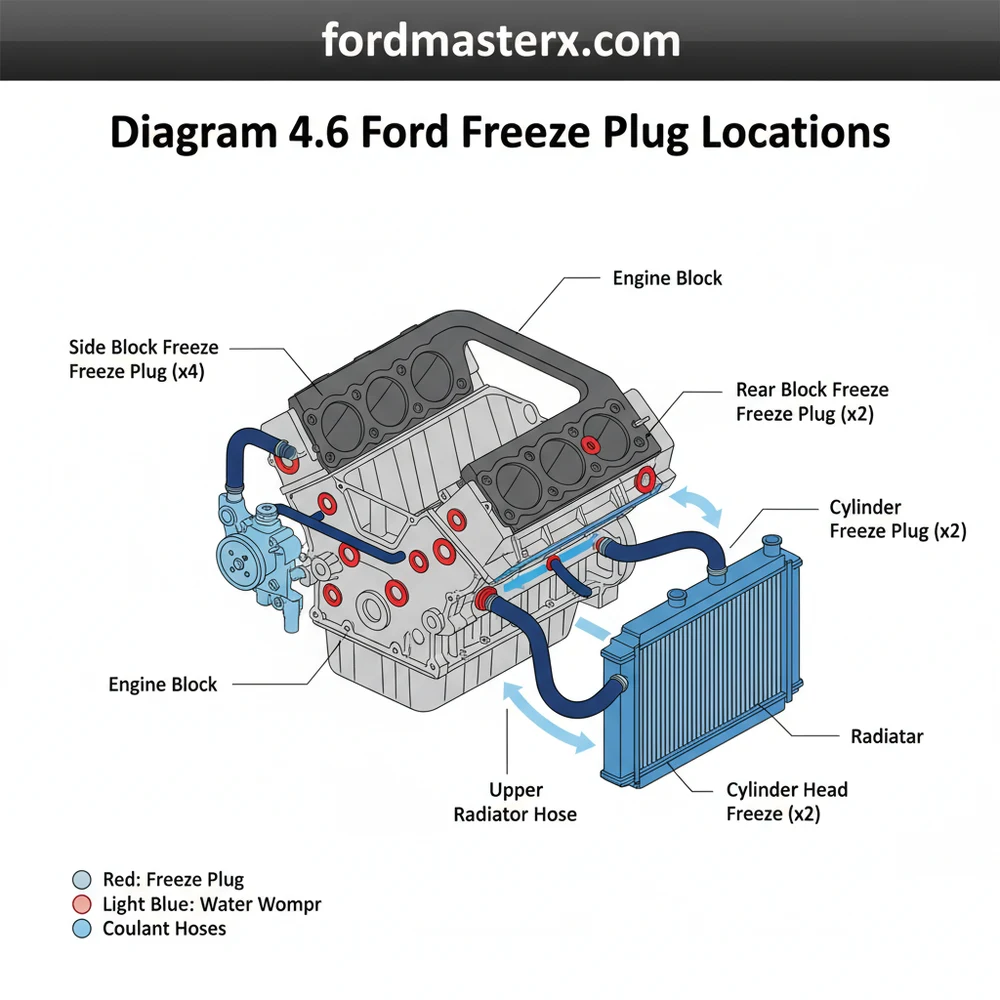
If you are navigating a cooling system failure or performing a complete engine rebuild, understanding the diagram 4.6 ford freeze plug locations is essential for maintaining the structural integrity of your vehicle. These small but vital components, technically known as expansion plugs, serve as the primary defense for your engine block against internal pressure and thermal expansion. This guide is designed to provide you with a high-definition roadmap of the 4.6L modular engine block, identifying every plug location from the hidden rear bellhousing area to the accessible side walls. By the end of this article, you will be able to pinpoint every plug, understand why they fail, and know exactly how to interpret a technical schematic to ensure your repair is handled with professional precision.
The engine layout of the Ford 4.6L modular system is a sophisticated piece of engineering that utilizes a specific configuration of expansion plugs to protect the water jacket. When viewing the primary schematic, you will notice that the system is largely symmetrical, though specific peripheral components like the starter and oil filter housing can make identification challenging. On each lateral side of the engine block, there are three main freeze plugs. These are typically 1.5-inch diameter discs pressed into the cooling jacket. On the passenger side (right side), the plugs are situated behind the motor mount bracket and slightly above the starter motor mounting flange. On the driver side (left side), they are located in a similar horizontal plane but are often obstructed by the oil filter adapter and the steering shaft assembly.
The 4.6L engine was produced in two primary locations: the Romeo plant and the Windsor plant. While the general diagram 4.6 ford freeze plug locations are nearly identical, the Windsor blocks may feature slightly different reinforcement ribbing around the plug bores. Always verify your engine code before ordering replacement parts.
The rear of the engine block contains the most critical plugs in the entire structure. There are two large expansion plugs located on the rear face of the block, which is the surface that mates with the transmission bellhousing. In many high-performance or heavy-duty configurations, there are also smaller threaded galley plugs used for the oiling system. The visual blueprint of the 4.6L also includes two plugs located on the front of the block, hidden behind the timing chain cover. While these rarely fail compared to the side plugs, they are crucial to inspect if the timing cover is ever removed for maintenance. The schematic uses color-coding to differentiate between the large cooling jacket plugs (usually blue) and the smaller oil galley plugs (usually green), helping you avoid any confusion during the disassembly process.
Interpreting the blueprint for these locations requires a systematic approach to ensure no component is overlooked. Follow these steps to master the layout and perform a thorough inspection or replacement:
1. Orient the Block Structure: Begin by identifying the front and rear of the engine. The front is defined by the timing cover and crankshaft pulley, while the rear is the area where the flywheel or flexplate attaches. This orientation is vital for reading the schematic correctly, as most diagrams are presented from a “bottom-up” or “side-profile” perspective.
2. Locate the Cylinder Bank Reference Points: Use the exhaust manifold bolts as your primary vertical landmark. The side freeze plugs are located approximately two to three inches below the exhaust ports. On the diagram 4.6 ford freeze plug locations, you will see these grouped in a linear fashion along the middle of the block casting.
3. Clear the Obstructions: To see the plugs in real life as they appear on the diagram, you must account for the motor mounts. The middle plug on both the left and right sides is usually located directly behind the cast iron or aluminum motor mount brackets. In a blueprint view, these are often shown as “phantom” lines to indicate the plug is underneath the bracket.
4. Identify the Rear Face Components: Look at the rear schematic. You will see two large circles. These are situated symmetrically on either side of the crankshaft’s rear main seal housing. If you see coolant dripping from the bottom of the transmission bellhousing, these are the locations you must investigate.
Never attempt to remove or inspect freeze plugs while the engine is hot. The cooling system is under significant pressure, and removing a compromised plug can result in an immediate discharge of scalding coolant.
5. Check the Oil Galley Plugs: In addition to the large 1.5-inch plugs, the 4.6L layout includes smaller 1/4 inch or 3/8 inch NPT threaded plugs. These are part of the lubrication system. On your schematic, these are found near the oil pressure sending unit and at the very ends of the cylinder heads. Do not confuse these with the cooling expansion plugs.
6. Inspection of the Bore Surface: Once you have located a plug using the diagram, inspect the surrounding metal. The “bore” is the hole in the block where the plug sits. Ensure there are no cracks radiating from the bore, as this indicates structural damage to the engine block itself.
7. Measuring for Replacement: If you are replacing a plug, use a digital caliper to verify the diameter shown on your blueprint. While the 4.6L standard is typically 1.5 inches for the main jacket, some aftermarket or specialized blocks may vary.
8. Understanding the Seat Depth: When installing new plugs based on the diagram’s specifications, note that they should be driven in flush or slightly below the chamfered edge of the bore. Driving them too deep can obstruct coolant flow within the internal water jacket.
Common issues involving the 4.6L freeze plugs usually center around pinhole leaks caused by internal corrosion. Because these engines utilize a bimetal construction (often aluminum heads on a cast iron block), the cooling system is susceptible to electrolysis if the coolant pH is not maintained. The diagram 4.6 ford freeze plug locations help solve this by showing you exactly which plugs are most likely to be affected by sediment buildup—usually the rear plugs, where coolant can stagnate. Warning signs include a sweet “syrup” smell after driving, crusty white or orange deposits around the motor mounts, or an overheating engine with no visible leaks from the hoses or radiator.
If you find one leaking freeze plug, it is highly recommended to replace all of them on that side of the block. If one has succumbed to corrosion, the others are likely in a similar state of decay.
For a successful repair and long-term maintenance of your 4.6L engine, follow these best practices:
- ✓ Upgrade to Brass: When replacing plugs, always choose brass over the factory-standard steel. Brass does not rust and will effectively outlast the life of the vehicle.
- ✓ Use Proper Sealant: Apply a thin layer of high-tack sealant or RTV around the edge of the new plug before installation to ensure a leak-proof vibration seal.
- ✓ Maintain Coolant Chemistry: Use distilled water and the Ford-recommended Gold or Orange coolant (depending on your specific year’s requirements) to prevent the electrolysis that leads to plug failure.
- ✓ Inspect During Other Repairs: If you ever have the transmission or the exhaust manifolds removed, use that opportunity to inspect the hidden freeze plug locations identified in your diagram.
In summary, mastering the diagram 4.6 ford freeze plug locations is a foundational skill for any Ford owner or mechanic. By recognizing the layout—three on each side and two on the rear—you can accurately diagnose cooling system issues and perform preventative maintenance that saves thousands of dollars in potential engine damage. Whether you are looking at a schematic for a Mustang, F-150, or Crown Victoria, the modular 4.6L engine configuration remains a consistent and manageable system when you have the right visual landmarks and technical knowledge. Keep your blueprint handy, use quality brass components, and your engine’s cooling system will remain secure for years to come.
Step-by-Step Guide to Understanding the 4.6 Ford Freeze Plug Locations: Quick Identification Guide
Identify the engine layout by removing any plastic covers or heat shields that obstruct the view of the block sides.
Locate the freeze plugs by looking behind the exhaust manifolds on both the driver and passenger sides of the engine.
Understand how the cooling system configuration routes fluid around these plugs to recognize signs of weeping or corrosion.
Apply a cooling system pressure tester to the radiator to force coolant out of any failing plug components for easier identification.
Verify that the leak is coming from the plug structure rather than a head gasket or intake manifold above it.
Complete the inspection by checking the rear of the cylinder heads near the firewall for any hidden moisture or stains.
Frequently Asked Questions
Where is the 4.6 Ford freeze plug located?
On the 4.6 Ford, most expansion plugs are located on the left and right sides of the engine block, hidden behind the exhaust manifolds. Additional smaller plugs are found on the back of the cylinder heads, which are typically only accessible when the transmission is removed from the vehicle structure.
What does this diagram show?
This diagram illustrates the specific layout and configuration of the cooling system expansion plugs. It shows the exact positioning of each component within the engine block structure, helping technicians identify which plug is leaking or requires maintenance without having to guess their placement on the 4.6 V8 engine system.
How many freeze plugs does the 4.6 Ford have?
The 4.6 Ford V8 typically features six large freeze plugs on the engine block, with three on each side. Additionally, there are smaller plugs located at the rear of the cylinder heads. The exact configuration can vary slightly between Romeo and Windsor plant builds, but the main block locations remain consistent.
What are the symptoms of a bad freeze plug?
Common symptoms include visible coolant dripping from the side of the engine, overheating, or a sweet smell under the hood. You might see rusty streaks originating from the plug structure. If a plug completely fails, it can cause immediate and catastrophic loss of coolant from the engine cooling system.
Can I replace a 4.6 Ford freeze plug myself?
Replacing freeze plugs on a 4.6 Ford is a difficult DIY task due to their location behind exhaust manifolds or the transmission. While the component itself is inexpensive, the labor requires significant disassembly of the engine layout. Most owners prefer professional help for these specific cooling system repairs.
What tools do I need for this task?
To replace these plugs, you will need a brass drift punch, a heavy hammer, and a socket set to remove the exhaust manifolds. Additionally, a cooling system pressure tester is vital to verify the new configuration is leak-free after installation. High-quality sealant is also recommended for the new plugs.