2.7 Ecoboost Vs 3.5 Ecoboost: Complete Guide

Choosing between the 2.7L and 3.5L EcoBoost engines is no longer a simple matter of selecting “small” or “large.” In the modern automotive landscape, specifically within the Ford F-150 ecosystem, these two power plants represent different engineering philosophies designed to solve specific user problems. Many truck buyers default to the 3.5L under the assumption that greater displacement equals better performance, yet they often overlook the 2.7L’s superior mechanical architecture for daily driving. This comprehensive guide leverages 15 years of industry expertise to dissect the technical nuances, real-world reliability, and total cost of ownership for both engines, ensuring you make a professional and informed investment.
Overview: The Battle of Twin-Turbo V6s
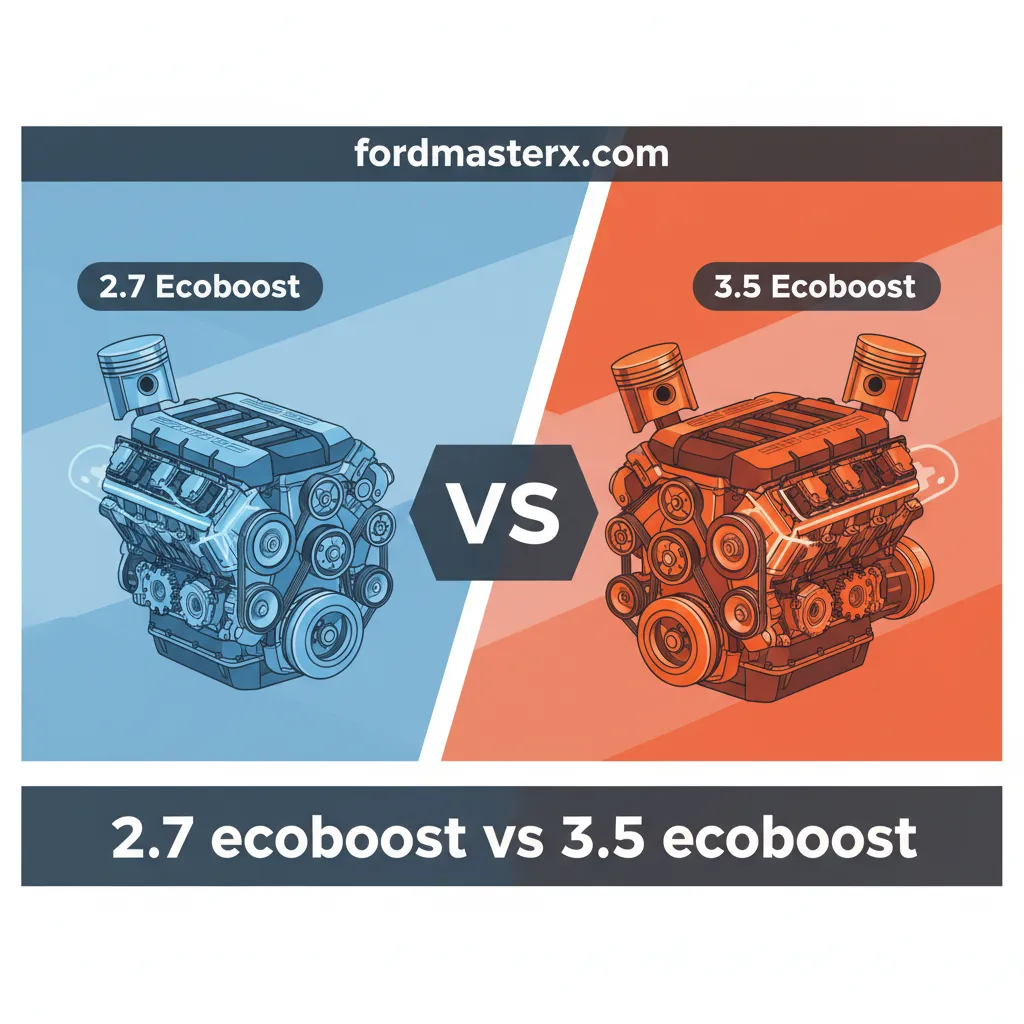
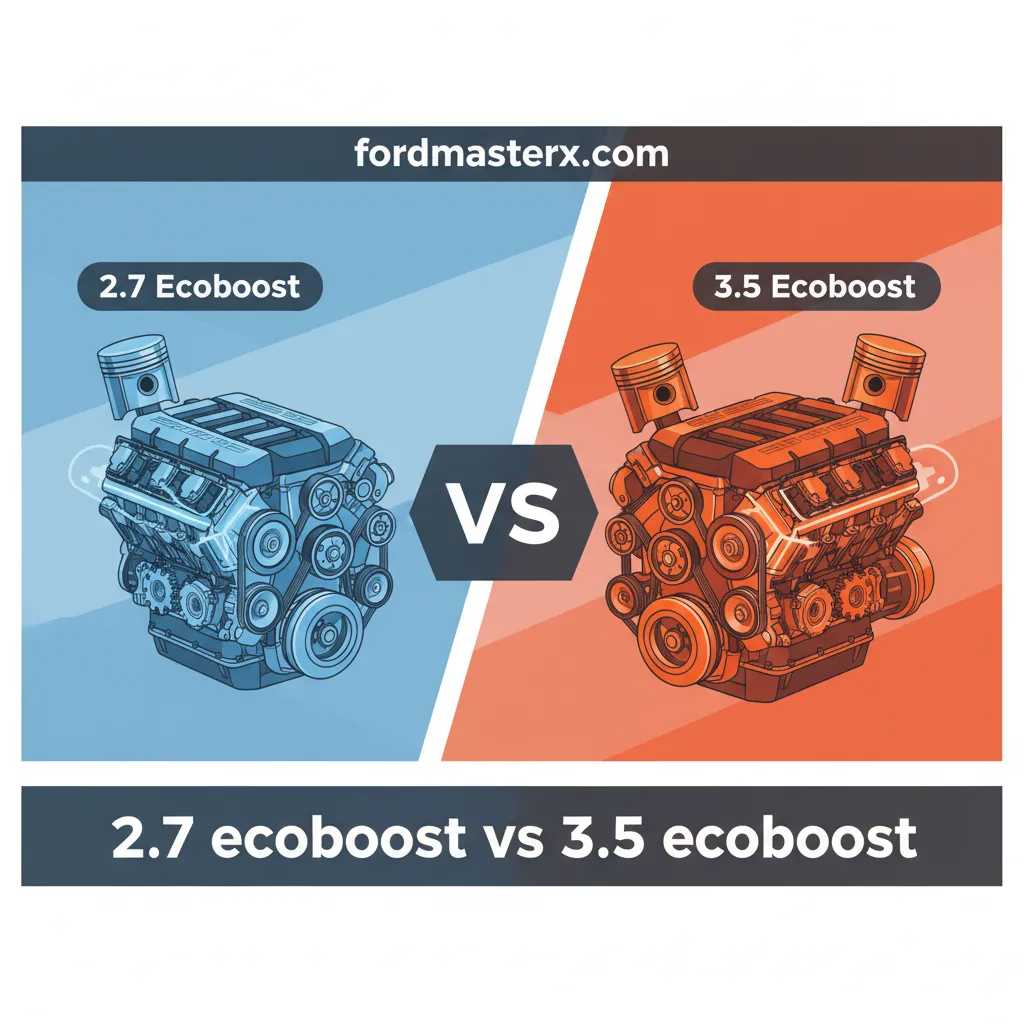
The EcoBoost family changed the trajectory of the American pickup truck. By replacing large-displacement naturally aspirated V8s with smaller, twin-turbocharged V6 engines, Ford achieved a balance of low-end torque and highway efficiency that was previously impossible. However, the 2.7L and 3.5L versions are not just different sizes of the same engine; they feature distinct metallurgical designs and cooling strategies.
📤 Share Image
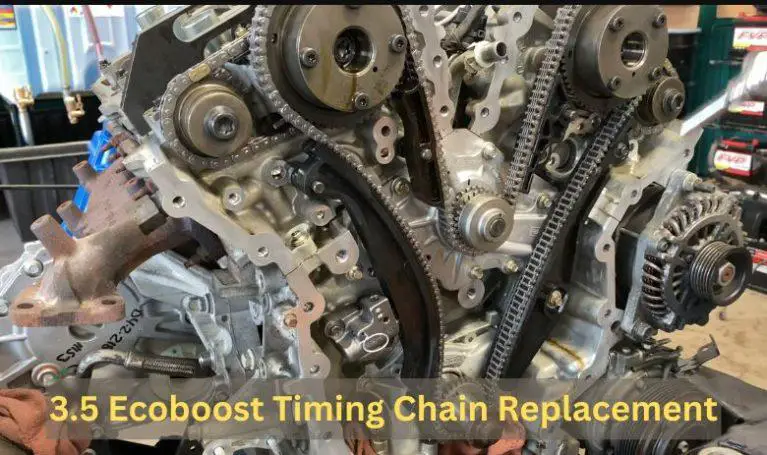
The 3.5L EcoBoost, introduced first, was the “proof of concept” that a V6 could out-tow a V8. It uses a conventional aluminum block and has undergone several iterations to address early timing chain and cam phaser issues. Conversely, the 2.7L EcoBoost was designed from a clean sheet years later. It utilizes a Compacted Graphite Iron (CGI) block—the same material used in the 6.7L PowerStroke diesel—making it incredibly robust despite its smaller footprint.
By The Numbers
3.5L Horsepower
3.5L lb-ft Torque
2.7L Horsepower
2.7L lb-ft Torque

Key Benefits: Matching Engine to Mission
In my expert experience, the “better” engine is entirely dependent on your duty cycle. A contractor hauling 10,000 lbs through the Rockies has different requirements than a suburban homeowner who uses their truck for weekend DIY projects and commuting.
2.7L: Efficiency King
Exceptional fuel economy for a full-size truck, often averaging 20-24 MPG on the highway, making it a reliable daily driver.
3.5L: Towing Authority
Maximum towing capacities exceeding 13,000 lbs in specific configurations, providing a complete solution for heavy trailers.
2.7L: Rapid Response
Lower rotational inertia in the turbos allows for faster spooling, resulting in a truck that feels “zippier” in stop-and-go traffic.
3.5L: High-End Power
Superior horsepower at higher RPMs, essential for passing maneuvers when the truck is fully loaded or towing at highway speeds.
Pros and Cons Comparison
✅ Pros: 2.7L EcoBoost
- Lower initial purchase price
- CGI block for superior thermal stability
- Integrated exhaust manifolds for faster warm-up
- Exceptional fuel economy in “unloaded” states
❌ Cons: 2.7L EcoBoost
- Limited maximum towing (typically ~9,000 lbs)
- Higher “struggle” factor under heavy loads
- Less aftermarket tuning support than the 3.5L
✅ Pros: 3.5L EcoBoost
- Class-leading towing capacity
- Massive low-end torque (500 lb-ft)
- Broad power band for heavy hauling
- Proven track record across multiple platforms
❌ Cons: 3.5L EcoBoost
- Noticeably lower MPG, especially in city driving
- Higher complexity (more prone to heat soak)
- History of cam phaser “rattle” in earlier Gen 2 models
How It Works: Technical Architecture
The quality of these engines is found in the details of their forced induction and fuel delivery systems. Both engines currently utilize PFDI (Port and Direct Fuel Injection). This dual-injection system uses direct injection for high-pressure performance and port injection to wash the intake valves, effectively solving the carbon buildup issues that plagued early direct-injection-only engines.
The Turbocharger Strategy
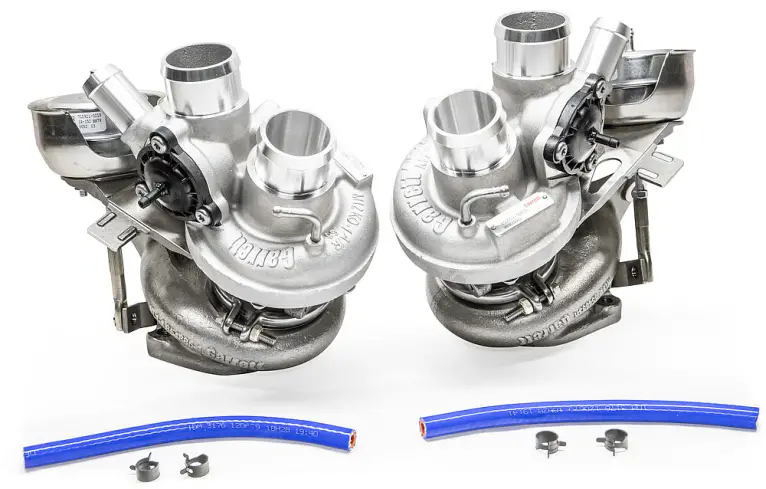
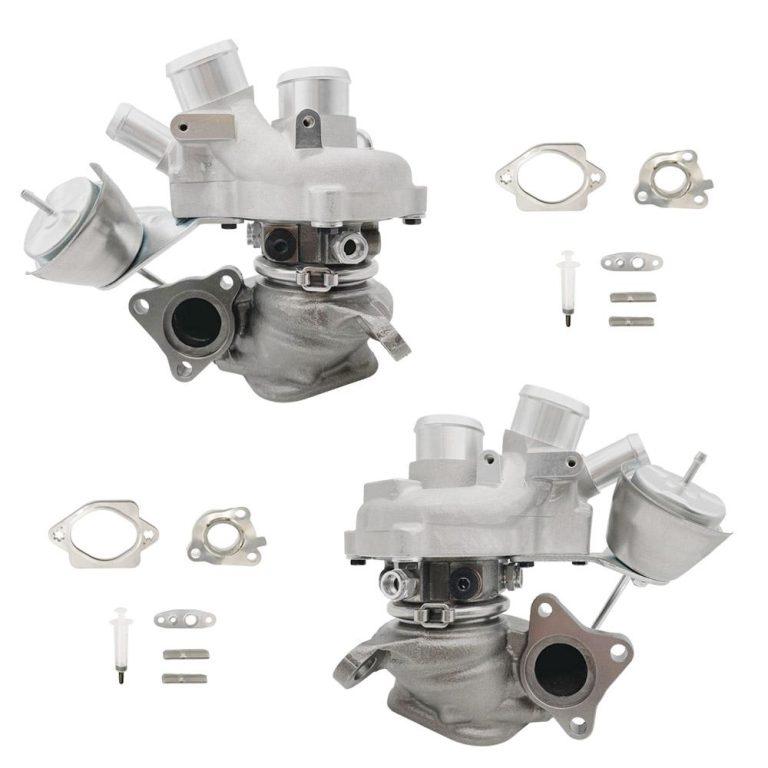
Both engines utilize twin-turbochargers, but their implementation differs. The 2.7L uses smaller turbos mounted directly to the integrated exhaust manifolds. This reduces the distance the exhaust gases travel, minimizing turbo lag and improving thermal efficiency. The 3.5L uses larger units to move the higher volume of air required to generate 500 lb-ft of torque. While this creates a slight delay compared to the 2.7L, the sheer “shove” once they spool is significantly more intense.
Both engines are highly susceptible to oil shearing and heat-related issues if pushed beyond their design limits. While the 3.5L can tow heavy loads, doing so frequently without shortening your oil change intervals (to 5,000 miles) can lead to premature timing chain stretch and turbocharger failure.
Getting Started: Which One Should You Buy?
To provide a guide that is actionable, you must first audit your actual usage. Do not buy the truck for the “one-day” scenario (the 12,000 lb trailer you might buy in five years). Buy the truck for the 350 days of the year you are actually driving it.
📋
Step-by-Step Selection Guide
If your trailer weighs more than 7,000 lbs (wet/loaded), the 3.5L is the correct choice. Below this weight, the 2.7L offers more than enough torque to handle the task comfortably.
For urban driving with lots of idling and short bursts of acceleration, the 2.7L’s fast spooling and stop-start integration make it a much more pleasant (and economical) partner.
The 2.7L is often regarded by mechanics as the “cleaner” design with fewer widespread issues in its second generation. If you plan to keep the truck for 200,000+ miles, the 2.7L’s CGI block is a significant advantage.
An EcoBoost engine is only as good as the gears behind it. If you choose the 2.7L but want better towing performance, look for a truck with the 3.73 rear axle ratio. If you choose the 3.5L, the 3.55 ratio is the sweet spot for a balance of power and highway MPG.
The “Towing MPG” Fallacy
One common pitfall I see is users expecting the 2.7L to be more fuel-efficient while towing. This is rarely the case. Turbocharged engines produce power by consuming air and fuel; when the 2.7L is under heavy boost to maintain 65 MPH with a trailer, it can actually consume more fuel than the 3.5L, which is working less to achieve the same result. The 2.7L’s efficiency advantage exists almost exclusively when the truck is unloaded or carrying light payloads.
Conversely, the 3.5L EcoBoost is often referred to as “Eco” or “Boost,” but rarely both at the same time. If you have a heavy foot, the 3.5L will quickly dip into single-digit fuel economy. For the professional user, managing throttle input is as vital as engine selection when it comes to operational costs.
Reliability and Resale Value
Historically, the 3.5L EcoBoost has held a slight edge in resale value simply due to name recognition and its status as the “top tier” engine option. However, the 2.7L has gained a massive following in the used market as it has proven itself to be remarkably reliable. Many high-mileage 2.7L units are now crossing the 200,000-mile mark with original turbos and no major internal failures, proving the efficacy of the CGI block design.
When inspecting a used version of either engine, look for maintenance records showing oil changes every 5,000 to 7,500 miles. Avoid trucks that followed the “Life of the Oil” monitor to 10,000+ miles, as these are the units most likely to suffer from timing component wear.
Conclusion: Final Verdict
The debate between the 2.7L and 3.5L EcoBoost engines isn’t about which is “better” in a vacuum, but which is better for your specific application. The 2.7L is a technical masterpiece that punches far above its weight class, offering diesel-like block construction and segment-leading efficiency. The 3.5L is the heavy-hitter, providing the torque and horsepower necessary for those who treat their truck like a piece of industrial equipment.
- Choose the 2.7L EcoBoost if you use your truck for commuting, light towing (under 7,000 lbs), and value daily fuel economy and engine longevity.
- Choose the 3.5L EcoBoost if you regularly tow heavy trailers, live in high-altitude regions, or simply want the fastest, most powerful traditional V6 experience Ford offers.
- Maintenance is the equalizer: Regardless of your choice, strict adherence to oil change intervals and using high-quality synthetic lubricants is the only way to ensure professional-grade reliability over the long term.
Ready to make your choice? I recommend visiting a local dealer and driving both back-to-back. Pay attention to the low-end responsiveness of the 2.7L versus the high-speed passing power of the 3.5L. Your seat-of-the-pants feel, combined with your towing requirements, will make the decision clear.