2023 6.7 Powerstroke Oil Capacity: Complete Guide

Maintaining a 2023 6.7L Powerstroke is no longer a simple weekend chore; it is a high-stakes maintenance task for an engine that represents the pinnacle of diesel engineering. With the 2023 model year introducing the record-breaking High Output (HO) variant, the demands on your engine oil have never been greater. For owners of these heavy-duty workhorses, precision is the difference between a truck that lasts 400,000 miles and one that suffers a catastrophic, multi-thousand-dollar failure due to oil aeration or thermal breakdown. This comprehensive guide provides the trusted, professional data you need to manage your 2023 Powerstroke’s lubrication system with expert accuracy.
Overview: Understanding the 2023 6.7L Powerstroke System
📤 Share Image
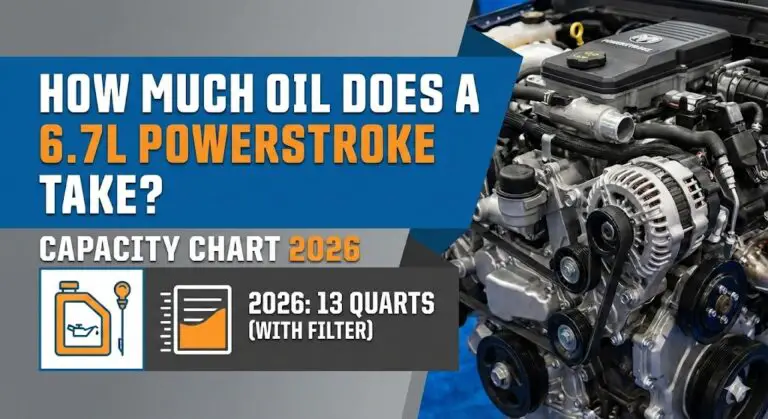
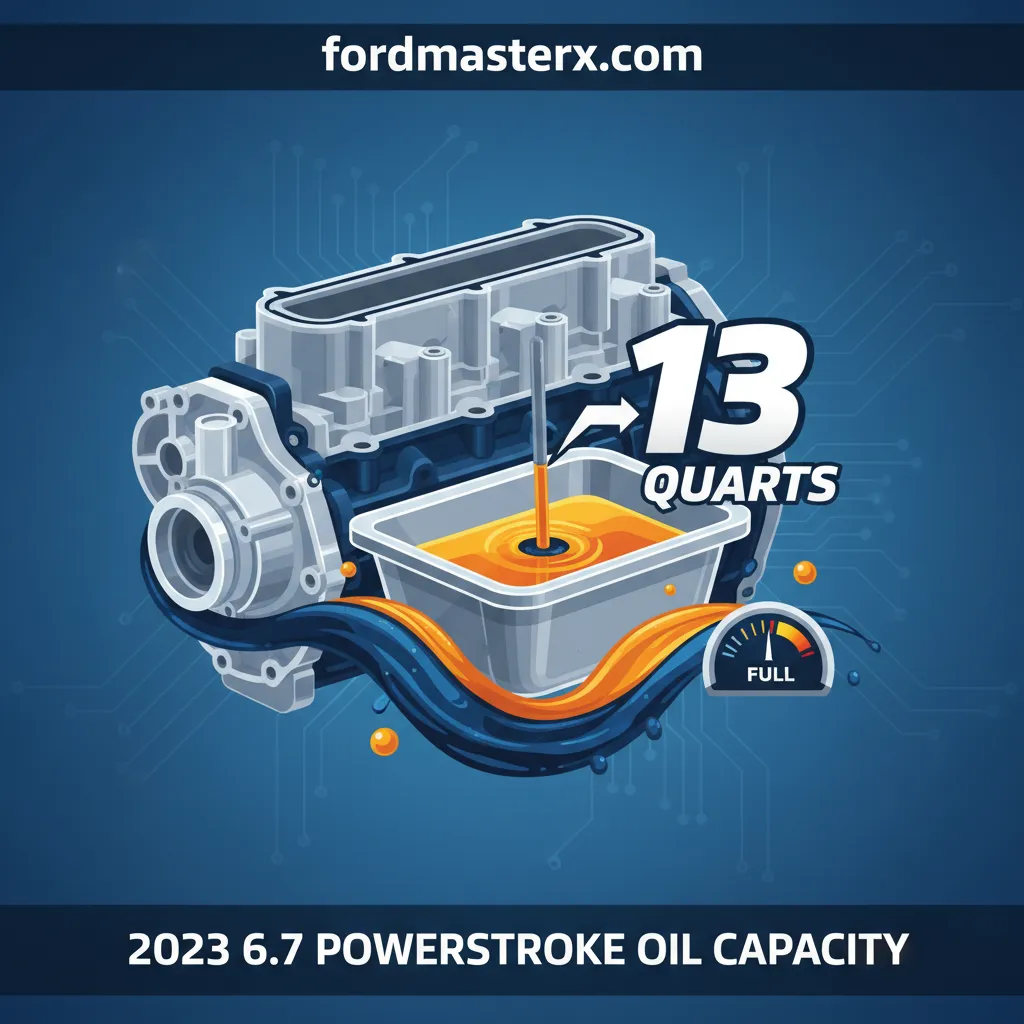
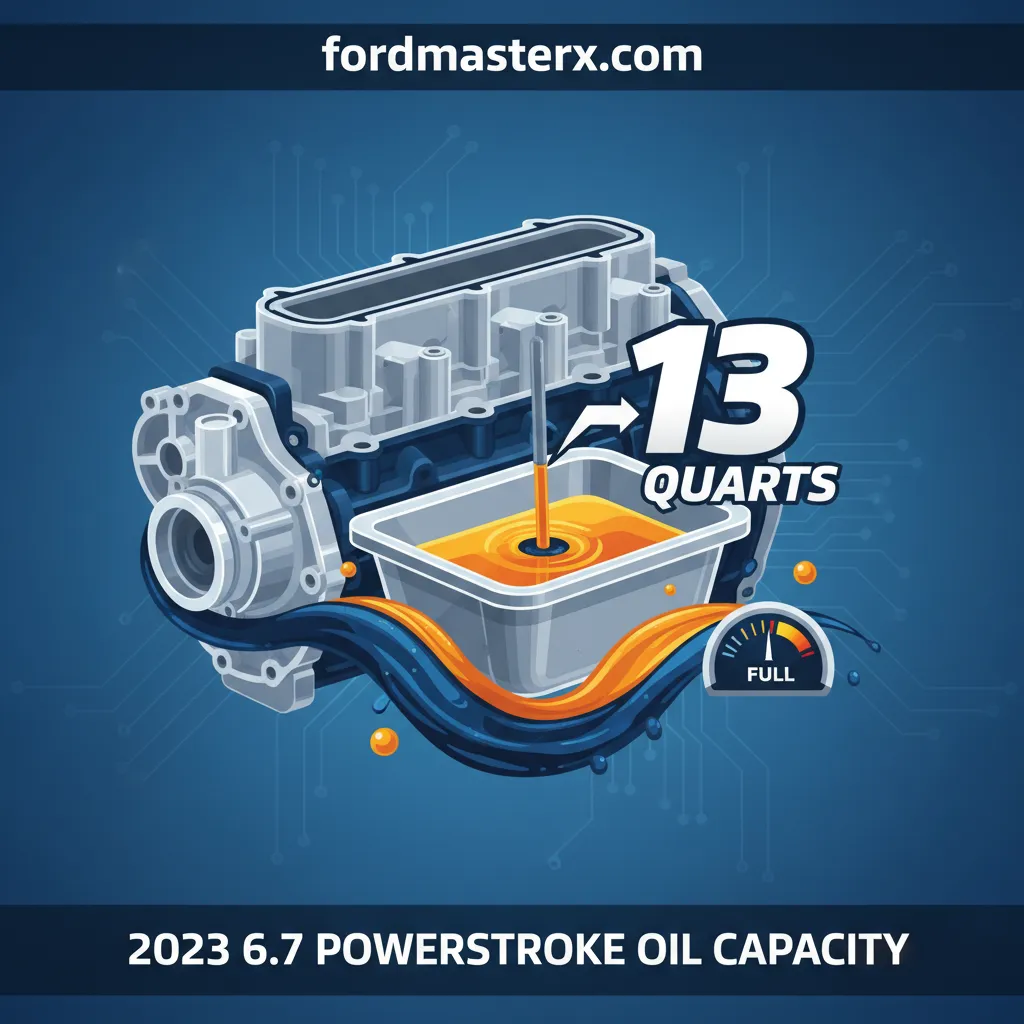
The 2023 Ford Super Duty features two versions of the 6.7L Powerstroke V8: the standard output engine (475 hp / 1,050 lb-ft) and the new High Output (HO) variant (500 hp / 1,200 lb-ft). Despite the power difference, both engines utilize the same crankcase architecture and oiling system requirements. This 13-quart system is designed to provide massive thermal reserves, essential for cooling the turbocharger and managing the heat generated during the Exhaust Gas Recirculation (EGR) process.
Using a professional approach to oil changes means more than just hitting a volume target. It involves understanding the specific quality standards Ford mandates. The 2023 engines are highly sensitive to oil viscosity and additive packages. Failure to use the complete recommended 13 quarts can lead to oil starvation on steep grades, while overfilling causes the crankshaft to whip air into the oil, leading to “foaming” that cannot lubricate the high-pressure oil pump (HPOP) or the hydraulic lifters.
By The Numbers
Quarts (With Filter)
HO Torque (lb-ft)
Severe Duty Interval (mi)
Ford Spec Requirement

Key Benefits of Proper Oil Management
Maintaining the exact 13-quart capacity with reliable, high-specification oil provides several mechanical advantages that are critical for long-term durability. The 2023 Powerstroke uses a CGI (Compacted Graphite Iron) block, which is incredibly strong but requires consistent oil flow to manage the immense cylinder pressures.
Turbocharger Protection
The variable geometry turbocharger (VGT) spins at speeds exceeding 100,000 RPM. Proper oil volume ensures the bearings stay cool and prevents “coking,” where oil bakes onto the shaft.
Soot Encapsulation
Diesel engines produce soot as a byproduct of combustion. A full 13-quart sump allows the oil additives to effectively suspend more soot particles before the oil becomes “loaded” and abrasive.
Hydraulic Stability
The 6.7L uses oil to actuate engine components. Maintaining the correct level ensures the Intelligent Oil-Life Monitor (IOLM) can accurately calculate the health of the system.
How It Works: The 6.7L Lubrication Architecture
The 2023 6.7L Powerstroke uses a high-volume oil pump driven by the crankshaft. This pump delivers oil to the main bearings, camshaft, and the piston cooling jets. These jets are comprehensive in their function; they spray oil directly onto the underside of the pistons to prevent them from melting under the extreme heat of the High Output combustion cycle.
Viscosity Selection for 2023 Models
Ford specifies different viscosities based on the operating environment. While 10W-30 is the standard “all-around” recommendation, expert operators know that if you are towing a 30,000-lb fifth wheel in 100°F weather, you need the shear stability of 5W-40. Conversely, in sub-zero climates, 0W-40 synthetic is required for cold-start flow.
Not all API CK-4 oils are safe for the 2023 6.7L. Ford explicitly mandates the WSS-M2C171-F1 specification because some CK-4 formulations lack the phosphorus levels needed to prevent wear on the engine’s valvetrain. Always look for this specific Ford code on the bottle.
Getting Started: Professional Oil Change Procedure
Performing an oil change on a 2023 Super Duty requires a complete set of tools and a meticulous approach. Because of the 13-quart capacity, you need a drainage container that can hold at least 4 gallons to avoid a massive mess. This is a guide to doing it right the first time.
📋
Step-by-Step Guide
Drive the truck for 15 minutes to reach operating temperature. This ensures the oil is thin enough to drain quickly and that contaminants are suspended in the oil rather than settled at the bottom of the pan.
Remove the drain plug (16mm or 5/8″). The oil will come out with significant force. Pro Tip: Check the magnetic drain plug for excessive metal shavings—fine “paste” is normal; distinct “flakes” indicate a problem.
Use a Motorcraft FL-2051-S filter. Lubricate the rubber gasket with fresh oil. Fill the new filter halfway with oil before installing; this reduces the time the engine runs without oil pressure on the first start.
Add 12 quarts first. Start the engine, run for 30 seconds, and shut it off. Wait 15 minutes for oil to drain back to the pan, then check the dipstick and top off with the final quart to reach the full mark.
If you plan on keeping your 2023 Powerstroke for years, install a Fumoto Drain Valve. It replaces the stock plug and allows you to drain the 13 quarts through a hose directly into jugs, eliminating the “oil splash” mess common with high-volume diesel pans.
Choosing Between Synthetic Blend and Full Synthetic
The choice of oil type depends on your truck’s workload and your intended change intervals. For a trusted, long-life strategy, full synthetic is always superior, but for fleet trucks on strict 5,000-mile cycles, a synthetic blend is often the most reliable and cost-effective solution.
✅ Pros (Full Synthetic)
- Better high-temp protection for the 2023 HO turbocharger.
- Superior cold-flow properties for faster oil pressure build-up.
- Extended drain interval capability (if using oil analysis).
- Resists shear thinning under heavy 1,200 lb-ft torque loads.
❌ Cons (Synthetic)
- Significantly higher cost per oil change (13 quarts).
- Overkill for trucks that see only light, unloaded highway miles.
- Potential for small leaks to become more apparent due to smaller molecules.
Critical Maintenance Pitfalls to Avoid
In my 15+ years of industry experience, the most common 6.7L engine failures result from three specific maintenance errors. Avoiding these is the hallmark of a professional owner.
-
•
Ignoring the Water-in-Fuel Light: While not directly oil-related, fuel dilution can ruin your 13 quarts of oil in a matter of miles. Always drain the water separator every oil change. -
•
Using Non-OEM Filters: Aftermarket filters often have lower bypass valve pressure ratings. If the filter clogs slightly, an aftermarket valve may open too soon, sending unfiltered oil through your quality engine. -
•
Extended Idling: The 2023 Powerstroke is designed to work. Excessive idling leads to “wet stacking” and soot buildup in the oil. If you idle for hours at a job site, you must cut your oil change interval in half.
The Role of the Intelligent Oil-Life Monitor (IOLM)
The 2023 Super Duty features a sophisticated IOLM that tracks engine temperature, idle time, towing loads, and regen frequency. While it can allow for up to 15,000 miles between changes under perfect highway conditions, expert mechanics recommend never exceeding 7,500 miles. For those using their trucks for heavy work, a 5,000-mile “severe duty” interval is the gold standard for long-term engine health.
Conclusion
Mastering the maintenance of your 2023 6.7L Powerstroke begins with the fundamentals: 13.0 quarts of high-specification oil and a commitment to quality components. By adhering to the WSS-M2C171-F1 standard and choosing the correct viscosity for your specific workload, you protect the intricate internal components of either the standard or the High Output engine. Remember that while the 13-quart capacity provides a safety margin, the extreme torque and heat generated by the 2023 model demand strict adherence to maintenance intervals. To ensure your truck remains a reliable asset, always use OEM Motorcraft filters, monitor your oil levels bi-weekly, and never compromise on oil quality. Your Powerstroke is an engineering marvel; treat it with expert care, and it will reward you with years of uncompromising performance.
- Capacity: Exactly 13.0 Quarts with a new FL-2051-S filter.
- Specification: Must meet Ford WSS-M2C171-F1 (Check the label!).
- Interval: 5,000 miles for towing/heavy use; 7,500 miles for mixed use.
Action Item: Check your oil level today on a level surface after the engine has been off for 15 minutes to ensure your current volume is within the “safe” crosshatch zone.