2020 6.7 Powerstroke Oil Capacity: Specifications And Lubrication Standards

For owners of the 2020 6.7L Powerstroke, precision in maintenance is not just a recommendation—it is a requirement for preserving one of the most powerful diesel engines on the market. With the engine revisions introduced in 2020, including the transition to steel pistons and a higher-pressure fuel injection system, many owners are uncertain about the exact oil volume, specific Ford-approved formulations, and the nuances of the 13-quart system. This comprehensive guide provides a professional breakdown of the 2020 6.7 Powerstroke oil capacity, the critical viscosity standards you must follow, and a detailed, trusted procedure for a successful service.
Exact 2020 6.7 Powerstroke Oil Capacity and Fluid Volume
📤 Share Image
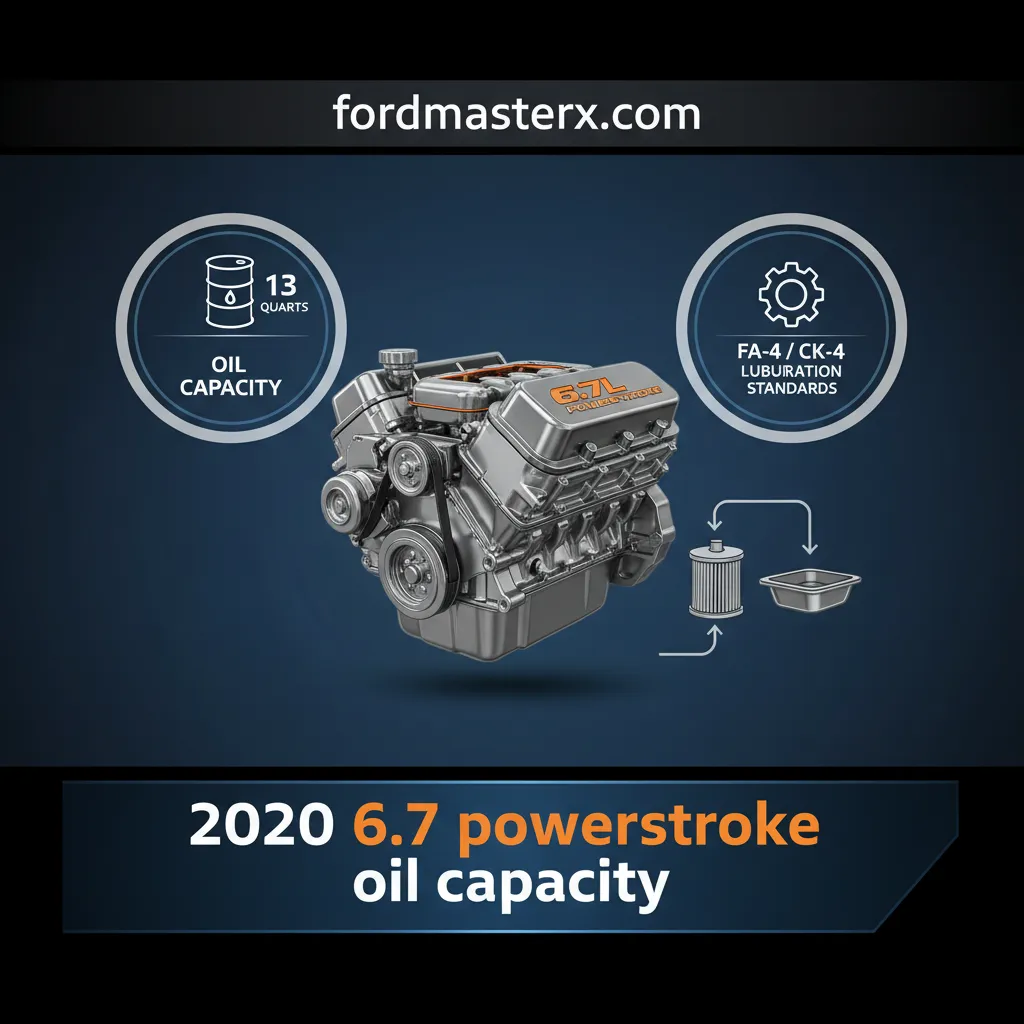
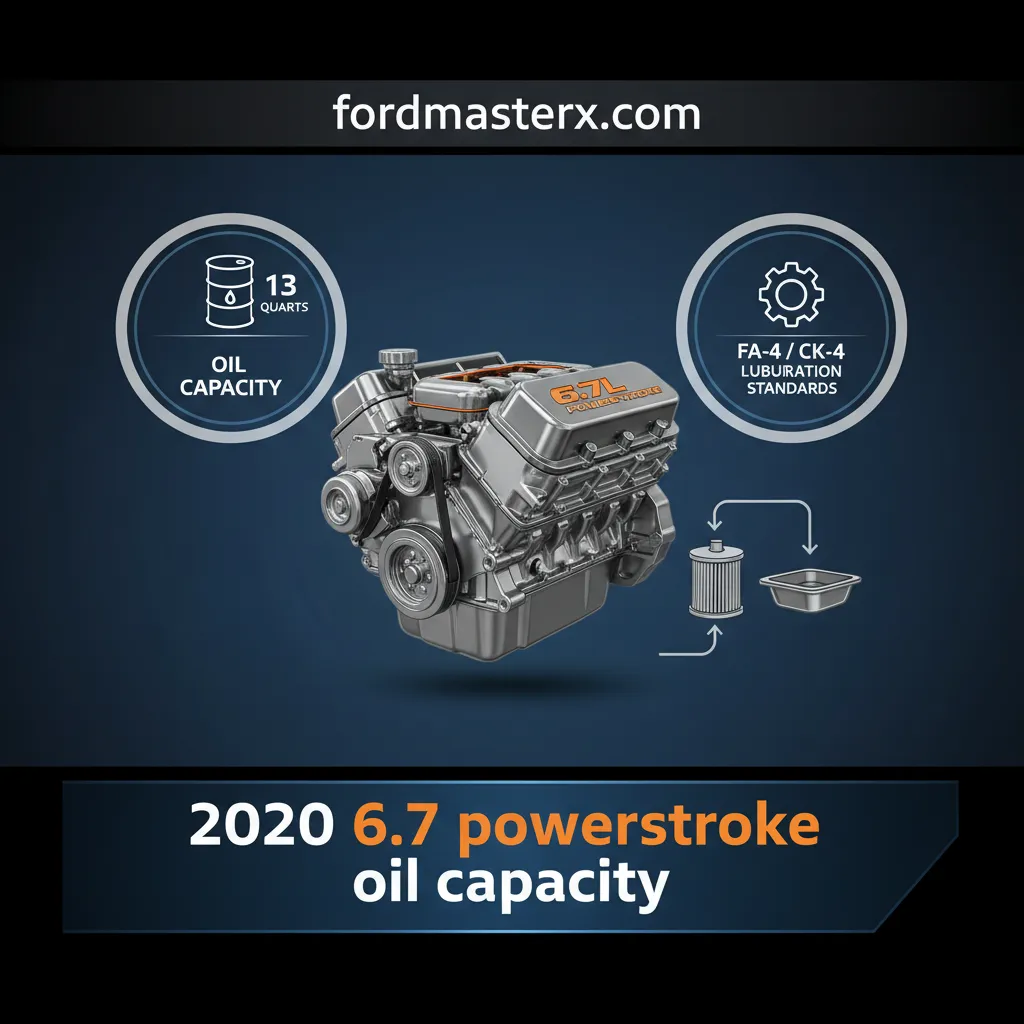
The 2020 model year marked a significant milestone for the 6.7L Powerstroke engine. While the previous generation utilized a 13-quart system as well, the 2020 revisions to the engine block and internal components solidified the 13.0-quart (12.3 liters) requirement across the entire Super Duty lineup. Whether you are driving an F-250, F-350, or a dual-rear-wheel F-450, the sump capacity remains consistent for all pickup configurations. This specific volume ensures that the high-pressure oil system—which is responsible for both lubrication and cooling—functions within its engineered parameters.
The Critical Nature of the 13-Quart Fill
Maintaining this exact level is critical due to the high-volume oil pump designed for the 2020 refresh. The oil does more than lubricate; it is the primary cooling agent for the pistons. An underfilled system can lead to oil starvation during high-angle maneuvers or heavy acceleration, as the oil sloshes away from the pickup tube. Conversely, overfilling is equally dangerous. Excess oil in the crankcase can be “whipped” by the crankshaft, leading to aeration. Aerated oil contains tiny air bubbles that compress under pressure, leading to a catastrophic drop in lubricating film strength and potential damage to the crankcase ventilation (CCV) system.
By The Numbers
Quarts (Service Fill)
Liters (Metric)
Dry Fill (Approx)
Expert Insight: It is important to distinguish between a “service fill” and a “dry fill.” When you perform a standard oil change, significant amounts of oil remain trapped in the oil cooler, turbocharger supply lines, and various galleries within the engine block. While a completely “dry” engine might require closer to 15 quarts, a standard maintenance service will always utilize 13 quarts. After pouring in the initial 13 quarts, let the engine idle for 3-5 minutes, shut it down, and wait 15 minutes before checking the dipstick. This allows the oil to drain back into the pan, providing an accurate, reliable reading.

Required Oil Viscosity and Ford Specification Standards
Selecting the right oil for a 2020 6.7L Powerstroke is not as simple as grabbing any heavy-duty diesel engine oil (HDEO) off the shelf. Ford has very specific engineering requirements that must be met to ensure the valvetrain is protected from premature wear. The standard for this engine is the Ford WSS-M2C171-F1 specification. This standard was developed specifically to address wear concerns that arose with the introduction of API CK-4 oils, which occasionally lacked the phosphorus levels necessary for older valvetrain designs, but remains the expert recommendation for the 2020 models as well.
Viscosity Grades by Operating Climate
Viscosity choice is dictated primarily by ambient temperature. For most owners operating in “normal” conditions, 10W-30 is the factory fill and the primary recommendation. However, professional users often opt for different grades based on their specific duty cycle:
- 10W-30: Best for fuel economy and cold starts down to 0°F (-18°C). This is the standard reliable choice for highway driving and light-duty use.
- 5W-40 Synthetic: The trusted choice for severe duty, heavy towing, or extreme cold (below -20°F). It provides better film strength at high temperatures and faster lubrication during frigid starts.
- 15W-40: Generally reserved for hot climates where temperatures rarely drop below 20°F (-7°C).
Pro Tip: Always look for the Ford WSS-M2C171-F1 code on the back of the bottle. Some popular brands may claim “meets or exceeds API CK-4,” but unless they specifically list the Ford spec, they may not contain the necessary additives to protect the 6.7L’s rocker arms and lifters over a long 10,000-mile interval.
Selecting Reliable Oil Filters and Filtration Components
A 13-quart oil system is only as effective as the filter cleaning it. For the 2020 6.7L Powerstroke, the Motorcraft FL-2051S is the professional gold standard. This isn’t just a matter of brand loyalty; the FL-2051S is engineered with specific bypass valve settings that match the flow requirements of the 2020 high-output oil pump. During a cold start, when oil is thick, the bypass valve must open at a precise pressure to ensure the engine isn’t starved of lubrication, while still preventing unfiltered oil from circulating unnecessarily.
Superior Micron Rating
The FL-2051S is designed to capture particles as small as 20 microns, significantly smaller than the width of a human hair.
High-Flow Capability
Capable of handling flow rates up to 15-20 gallons per minute, ensuring the turbocharger and bearings receive immediate oil.
Using “white-box” or generic filters is a high-risk gamble. Lower-quality filters often use paper media that can collapse under the high-pressure surges of a 6.7L diesel engine. If the media collapses, it can send shards of paper and unfiltered debris directly into the high-pressure oil circuit, leading to turbocharger bearing failure or clogged oil jets. For those looking for the complete protection package, bypass oil filtration systems—such as those from Amsoil or Sinister Diesel—can be added. These systems filter a small percentage of oil through a much finer 2-micron element, which can significantly extend the life of the oil and the engine components.
Never “double-stack” gaskets. When removing the old FL-2051S, verify that the rubber O-ring came off with the filter. If it stays stuck to the engine block and you install a new filter over it, the seal will fail immediately under pressure, spraying 13 quarts of oil across your driveway or the highway in seconds.
📋
Step-by-Step Oil Change Procedure
Ensure the engine is warm but not at full operating temperature. You will need a 16mm socket for the drain plug, a filter wrench (cap style is best for the FL-2051S), and a drain pan with at least a 15-quart capacity to avoid spills.
Locate the drain plug on the rear of the oil pan. Inspect the magnetic tip of the plug for excessive metal shavings. Clean the mating surface and re-install the plug, torquing it to 20-25 lb-ft (27-34 Nm).
Remove the old filter and lubricate the new gasket with fresh oil. Hand-tighten the new filter (usually 3/4 turn after gasket contact). Pour 13.0 quarts of approved oil into the filler neck on the passenger side valve cover.
Resetting the Intelligent Oil-Life Monitor (IOLM)
Once the oil is refilled and you have verified there are no leaks, you must reset the truck’s internal tracking system. For the 2020 Super Duty, navigate the productivity screen using the steering wheel controls:
Settings > Vehicle > Oil Life Reset.
Hold the “OK” button until the system confirms a reset to 100%. This ensures the truck’s algorithm begins accurately calculating the next service interval based on your driving habits.
Managing Service Intervals and the Intelligent Oil-Life Monitor
Ford’s Intelligent Oil-Life Monitor (IOLM) is a sophisticated tool that calculates oil degradation based on real-world data points like engine temperature, RPM, load, and idle time. However, the expert recommendation often differs from the onboard computer. While the IOLM may allow for intervals up to 10,000 miles, many professional diesel mechanics recommend a 5,000-mile interval for vehicles that fall into the “Severe Duty” category.
✅ Normal Duty
- Mostly highway miles
- Occasional light towing
- Minimal idle time
- Interval: 7,500 – 10,000 miles
❌ Severe Duty
- Heavy fifth-wheel towing
- High idle (construction/oil field)
- Off-road or dusty conditions
- Interval: 5,000 miles
One of the most critical factors for the 2020+ Powerstroke is the Diesel Particulate Filter (DPF) regeneration cycle. During “active regen,” extra fuel is injected into the cylinders to raise exhaust temperatures. A small portion of this fuel can “wash” past the piston rings and dilute the engine oil. Fuel dilution lowers the oil’s viscosity and reduces its ability to protect the engine. If you do a lot of city driving or short trips that interrupt regen cycles, your oil will degrade much faster than a highway cruiser.
To truly understand the health of your engine and the longevity of your oil, send a sample to a lab like Blackstone Laboratories. For about $35, they will analyze the metal content, fuel dilution, and remaining additive package in your oil. This is the only reliable way to determine if you can safely extend your oil change intervals beyond 5,000 miles.
In summary, the 2020 6.7L Powerstroke is a marvel of engineering, but it is entirely dependent on its 13-quart lubrication system. By following the comprehensive specifications for capacity, using only trusted Ford-approved oils, and maintaining a disciplined service schedule, you can ensure your Super Duty remains a reliable workhorse for hundreds of thousands of miles. Check your current oil life percentage today and ensure your next service uses only the highest quality, Ford-specification lubricants.
Frequently Asked Questions
Does the 2020 6.7 Powerstroke take 13 or 15 quarts of oil?
The 2020 6.7L Powerstroke diesel engine has a service refill capacity of exactly 13.0 quarts (12.3 liters) including the oil filter. While some older versions of the 6.7L engine or larger chassis cab models might have different configurations, the standard F-250 through F-450 pickups for the 2020 model year are engineered for the 13-quart capacity. Always verify via the dipstick after filling.
What is the best oil weight for a 2020 6.7 Powerstroke?
Ford recommends 10W-30 for normal operating temperatures. However, for severe duty, heavy towing, or operation in ambient temperatures below 0°F, 5W-40 or 0W-40 full synthetic oils are preferred. The most critical factor is ensuring the oil meets the Ford WSS-M2C171-F1 standard, which contains the necessary additives to prevent wear on the engine’s internal components.
Can I use CK-4 oil in my 2020 Powerstroke?
Yes, but with a major caveat. You must only use API CK-4 oils that have also been specifically tested and approved to meet Ford Specification WSS-M2C171-F1. Some CK-4 formulations without the proper phosphorus levels can cause accelerated wear on the 6.7L valvetrain. Look for the Ford specification explicitly listed on the bottle to ensure professional-grade engine protection.
How often should I change the oil in my 2020 6.7 Powerstroke?
The 2020 6.7L Powerstroke features an Intelligent Oil-Life Monitor (IOLM) that notifies you when service is due, typically between 7,500 and 10,000 miles. However, for vehicles used in ‘Severe Duty’—such as frequent towing, idling, or off-road use—experts recommend intervals of 5,000 miles. You should never exceed 10,000 miles or one year between oil changes.
Which oil filter is recommended for the 2020 6.7L engine?
The professional choice and factory-recommended filter is the Motorcraft FL-2051S. It is specifically engineered to handle the high flow and pressure requirements of the 2020 Powerstroke oiling system. Using a reliable, high-quality filter ensures that contaminants are effectively removed while maintaining the integrity of the 13-quart lubrication circuit throughout the entire service interval.