2018 Ford Escape Engine 1.5 L 4-Cylinder: Technical Specifications And Reliability Analysis

The 2018 Ford Escape stands as a prominent fixture in the compact SUV market, largely defined by its 1.5L 4-cylinder EcoBoost engine designed for a balance of forced-induction power and fuel efficiency. As the automotive industry pivoted toward downsizing and turbocharging, this powertrain represented Ford’s primary solution for the high-volume Escape lineup. Despite its technological advancements, many owners and prospective buyers remain concerned about specific mechanical vulnerabilities and the long-term reliability of this downsized powertrain. This article provides an expert technical breakdown of the 1.5L engine’s performance, identifies critical reliability concerns like coolant intrusion, and offers professional maintenance strategies to ensure vehicle longevity. By understanding the engineering nuances and maintenance requirements, owners can navigate the complexities of this modern turbocharged engine with confidence.
Section 1: Technical Architecture of the 1.5L EcoBoost 4-Cylinder Engine
📤 Share Image
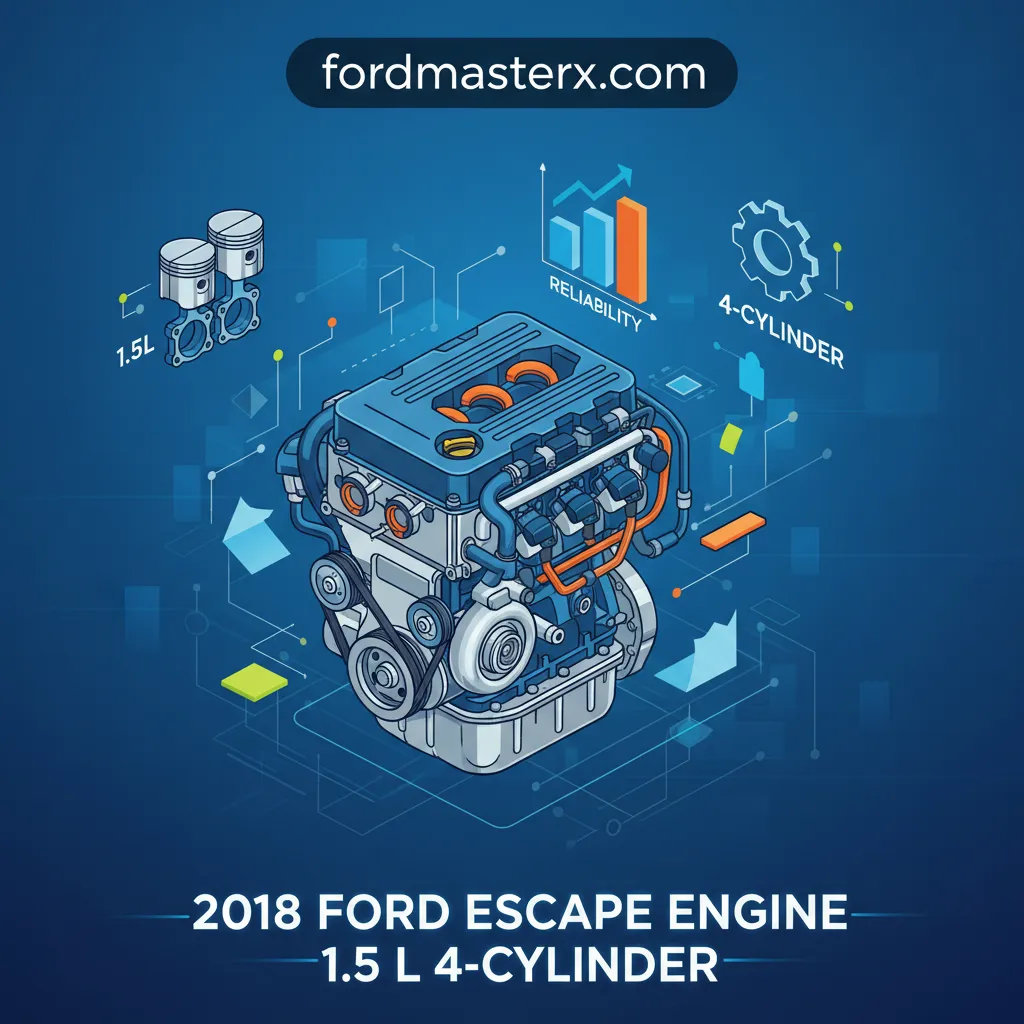
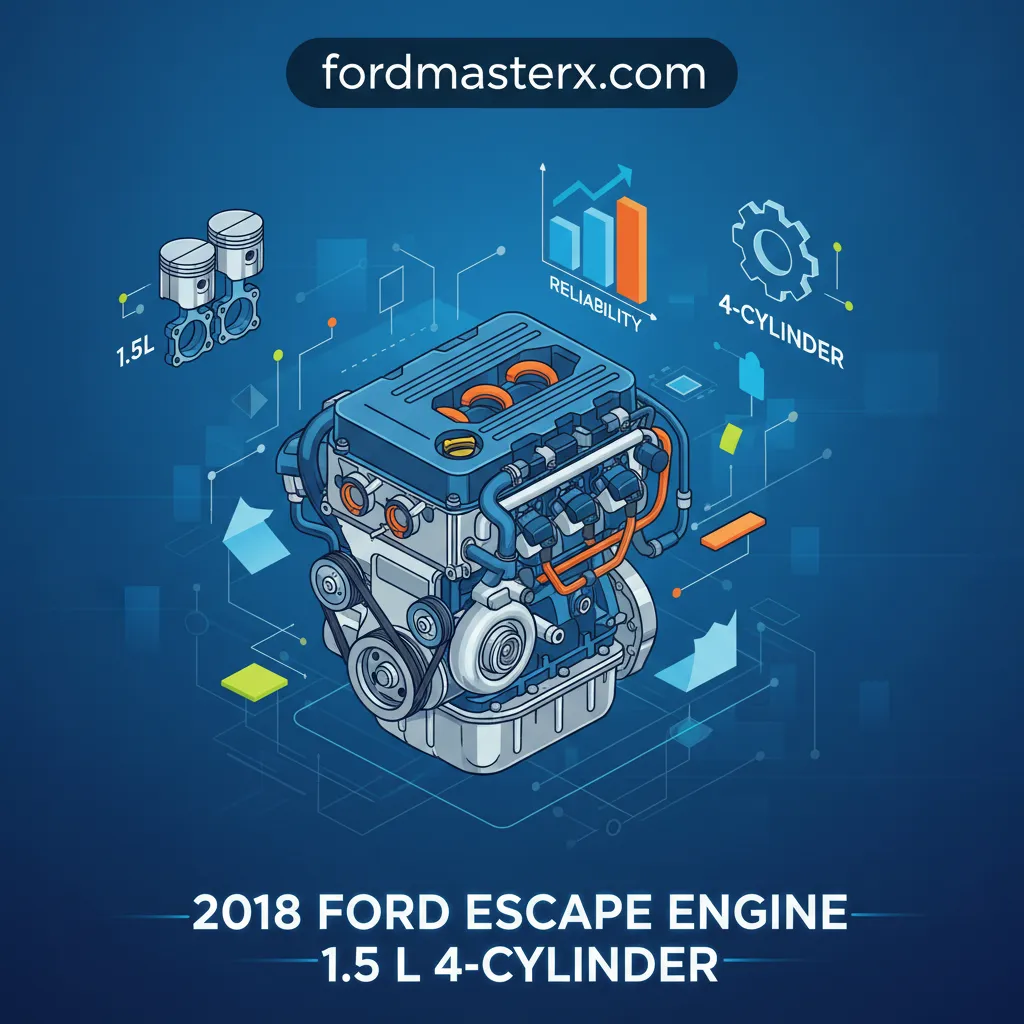
The 1.5L EcoBoost engine in the 2018 Ford Escape is a marvel of modern downsized engineering. Belonging to the Ford Sigma family, this all-aluminum engine construction utilizes high-pressure die-cast aluminum for both the cylinder head and the block. This choice significantly reduces front-end weight compared to traditional cast-iron blocks, enhancing the vehicle’s handling dynamics and overall fuel efficiency. The engineering focus here was to replicate the power of a naturally aspirated 2.5L engine while maintaining the footprint and weight of a sub-compact unit.
Central to its efficiency is the Twin Independent Variable Cam Timing (Ti-VCT) system. By allows the engine control module (ECM) to advance or retard both intake and exhaust camshaft timing independently, the engine optimizes combustion across the entire RPM range. This results in improved low-end torque for city driving and better breathing at high speeds for highway cruising. When compared to the previous 1.6L architecture, the 1.5L features a more robust cooling jacket design intended to mitigate localized hot spots, although as we will discuss later, this remains a point of technical scrutiny.
By The Numbers
Peak Horsepower @ 6,000 RPM
Peak Torque @ 2,500 RPM
Compression Ratio
The 1.5L EcoBoost utilizes an integrated exhaust manifold, where the manifold is cast directly into the cylinder head. This design serves two purposes: it allows engine coolant to quickly reach operating temperature by using exhaust heat, and it places the turbocharger closer to the exhaust valves. This reduction in distance accelerates turbocharger spooling, effectively eliminating the “turbo lag” common in older forced-induction engines. Furthermore, the high-pressure direct fuel injection system sprays fuel directly into the combustion chamber at pressures exceeding 2,000 PSI, facilitating a precise 10.0:1 compression ratio that maximizes energy extraction from every drop of fuel.
One unique—and often overlooked—aspect of this engine is the belt-in-oil timing system. Unlike traditional dry belts or metal chains, this timing belt is submerged in the engine’s oil supply. This design reduces friction and noise, but it places an extreme premium on oil quality. Use of the wrong oil or extended drain intervals can lead to belt degradation, which can catastrophically clog the oil pickup screen.
Section 2: Real-World Performance and Fuel Economy Metrics
In daily driving scenarios, the 1.5L engine is paired with Ford’s 6-speed SelectShift automatic transmission. This transmission is geared specifically to keep the small-displacement engine within its 2,500 to 4,500 RPM “sweet spot.” For a professional driver, the takeaway is clear: the vehicle feels surprisingly punchy in urban environments. During highway merging maneuvers, the turbocharger provides a linear surge of power, though the transmission may require a rapid double-downshift to access peak boost when passing at speeds above 60 mph.
Auto Start-Stop
Conserves fuel by shutting off the engine at stoplights, though it increases the load on the starter and battery.
Sport Mode
Alters throttle mapping and holds gears longer, keeping the turbo spooled for more aggressive response.
Fuel economy is a primary selling point for the 1.5L Escape. EPA ratings for the Front-Wheel Drive (FWD) model sit at 23 mpg city, 30 mpg highway, and 26 mpg combined. In real-world testing, these numbers are achievable but highly sensitive to driving style. Aggressive use of the turbocharger can drop combined fuel economy into the low 20s. Conversely, the Auto Start-Stop technology is quite effective in heavy metropolitan traffic, potentially saving up to 4-6% in fuel consumption over extended idling periods.
Regarding towing capabilities, the 1.5L EcoBoost is rated for 2,000 lbs. However, from a technical perspective, towing at this limit requires significant thermal management. The small displacement and high boost pressure generate substantial heat; owners towing frequently should monitor their coolant temperatures closely, as the integrated exhaust manifold places additional heat stress on the cooling system during sustained high-load situations.

Section 3: Reliability Assessment and Common Mechanical Challenges
The most significant challenge facing the 2018 Ford Escape 1.5L engine is the coolant intrusion issue. This mechanical failure occurs when coolant leaks into the engine cylinders, often due to a design flaw in the cylinder block’s cooling grooves. When the head gasket fails to seal against the block’s thin bridges between cylinders, coolant enters the combustion chamber. This is not a simple “blown gasket” scenario but often requires a full engine short block replacement.
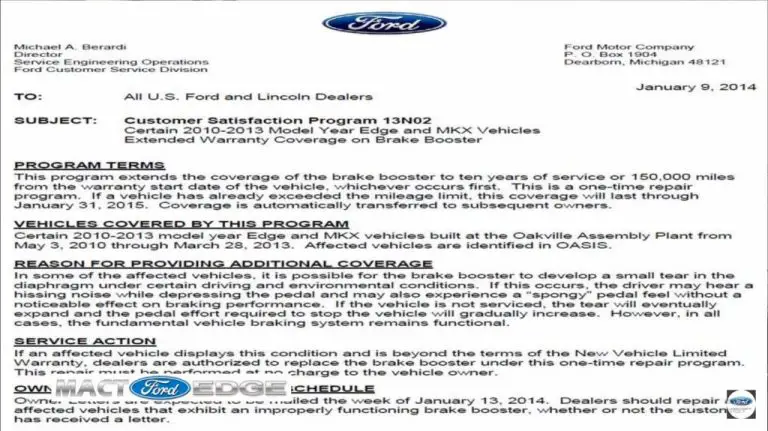
Ford issued this TSB specifically for 1.5L EcoBoost engines built at the Louisville Assembly Plant between 2017 and 2019. It addresses engine block porosity and coolant intrusion. If you notice white smoke from the exhaust or a “Check Engine” light with misfire codes (P0300-P0304), this TSB is the primary diagnostic roadmap.
Beyond the cooling system, carbon buildup on intake valves is a known characteristic of this direct-injection engine. Because fuel is injected directly into the cylinder, it never washes over the intake valves. Over time, oil vapors from the PCV system bake onto the valves, causing restricted airflow and rough idling. Regular intake tract cleaning is a professional necessity to maintain original performance levels.
Other components to monitor include the Low-Pressure Fuel System Sensor. Failure of this sensor can cause erratic fuel pressure readings, leading to stalling or a “limp mode” state. Furthermore, while the turbocharger is generally reliable, a “wastegate rattle” can develop over time. Professional diagnostic checks should be performed if a metallic buzzing sound is heard during deceleration, as this indicates wear that could lead to boost pressure loss.
Section 4: Professional Maintenance Protocols for Longevity
To maximize the lifespan of the 1.5L engine, owners must go beyond the “standard” owner’s manual suggestions. The core of your strategy should be high-quality lubrication. We recommend using a full synthetic 5W-20 oil that specifically meets the Ford WSS-M2C945-B1 specification. This oil is designed to resist the high heat of the turbocharger and protect the belt-in-oil timing system.
📋
Proactive Maintenance Checklist
While Ford allows for 7,500 miles, we recommend changing the 4.3 quarts of oil every 5,000 miles to protect the timing belt and turbocharger bearings.
Perform a cooling system flush every 50,000 miles. Maintaining the PH balance of the coolant is critical to prevent the internal corrosion that leads to block porosity.
Use only Motorcraft-certified spark plugs. Turbocharged engines are sensitive to gap erosion; replacing plugs every 60,000 miles prevents ignition coil stress.
The timing belt is a critical component. While Ford lists a replacement interval of 150,000 miles or 10 years, our trusted industry recommendation is to replace it at 100,000 miles. Because this belt is “wet” (in oil), any contamination in the oil accelerates its wear. A proactive replacement is significantly cheaper than the engine failure that results from a snapped belt.
Using “Top Tier” fuel with advanced detergent packages helps mitigate the rate of carbon buildup on the direct injection nozzles. A periodic (every 10k miles) intake valve cleaner spray can also help maintain flow efficiency.
Section 5: Sourcing Quality Replacement Engines and Components
If your 2018 Escape has suffered a catastrophic failure—most commonly due to the aforementioned coolant intrusion—you are faced with three primary sourcing options: used, remanufactured, or a new crate engine. A complete understanding of these options is vital for your financial planning.
For most owners, a remanufactured engine from a reputable builder is the most reliable choice. These units are often built using the “v2” block design which eliminates the narrow cooling grooves responsible for the intrusion issues. Furthermore, professional remanufacturers often provide a 3-year/100,000-mile parts and labor guarantee, which offers significant peace of mind over a used engine with a 30-day warranty.
Labor is another critical factor. Replacing an engine in a transverse, turbocharged, AWD vehicle like the Escape is a complex task. Standard labor times for a long-block replacement typically range from 12 to 15 billable hours. It is imperative to verify VIN-specific compatibility before purchase, as the electronic control module (ECM) synchronization is highly sensitive to sensor variations between build dates. Always ensure your technician performs a “relearn” procedure for the crankshaft position sensor and the transmission shift points after the swap.
✅ Pros of 1.5L EcoBoost
- Excellent low-end torque for urban driving
- Lightweight aluminum construction aids handling
- Competitive highway fuel efficiency
- Quick turbo spooling with minimal lag
❌ Cons of 1.5L EcoBoost
- Susceptibility to coolant intrusion (Block flaw)
- Required maintenance on belt-in-oil timing system
- Carbon buildup on intake valves
- Highly sensitive to oil quality and change intervals
The 1.5L EcoBoost engine in the 2018 Ford Escape provides respectable performance through its Ti-VCT and direct injection technologies, but it requires meticulous maintenance to overcome its inherent design challenges. Awareness of the TSBs regarding the engine block and cooling systems is essential for preventing catastrophic failure. By adhering to a professional service schedule using high-quality synthetic lubricants and monitoring for early signs of coolant loss, you can significantly extend the service life of this powertrain. If you are experiencing coolant loss or rough idling, consult a certified Ford technician immediately for a diagnostic pressure test and borescope inspection to catch potential issues before they require a full engine replacement.
Frequently Asked Questions
Does the 2018 Ford Escape 1.5L engine have a timing belt or chain?
The 2018 Ford Escape 1.5L EcoBoost engine utilizes a timing belt rather than a chain. Unlike older belt designs, this is a ‘wet belt’ or belt-in-oil system. While Ford recommends a replacement interval of 150,000 miles, many professional mechanics suggest inspection or replacement at 100,000 miles to prevent interference engine damage.
What are the symptoms of coolant intrusion in the 1.5L engine?
Symptoms typically include a persistent ‘Check Engine’ light with cylinder misfire codes (P0300-P0304), white smoke from the exhaust upon cold starts, and a noticeable drop in the coolant reservoir level without visible external leaks. If left unaddressed, this can lead to total engine failure due to hydraulic lock or overheating.
Which oil is best for the 2018 Ford Escape 1.5L 4-cylinder?
For optimal protection and performance, use a high-quality full synthetic 5W-20 motor oil that meets the Ford WSS-M2C945-B1 or newer WSS-M2C960-A1 specification. Using the correct oil is vital for the health of the turbocharger bearings and the longevity of the internal ‘wet’ timing belt system.
Is the 2018 Ford Escape 1.5L engine turbocharged?
Yes, the 1.5L engine in the 2018 Ford Escape is part of the EcoBoost family, featuring a single-scroll turbocharger. This allows the small-displacement four-cylinder to produce torque levels comparable to a larger naturally aspirated V6 while maintaining better fuel efficiency during low-load cruising conditions.
How much does it cost to replace a 2018 Ford Escape 1.5L engine?
The cost for a professional engine replacement typically ranges from $4,500 to $7,000. This includes the price of a remanufactured long block ($3,000 – $4,500) and labor costs ($1,500 – $2,500). Prices vary based on geographic location and whether the work is performed at a dealership or an independent specialist.