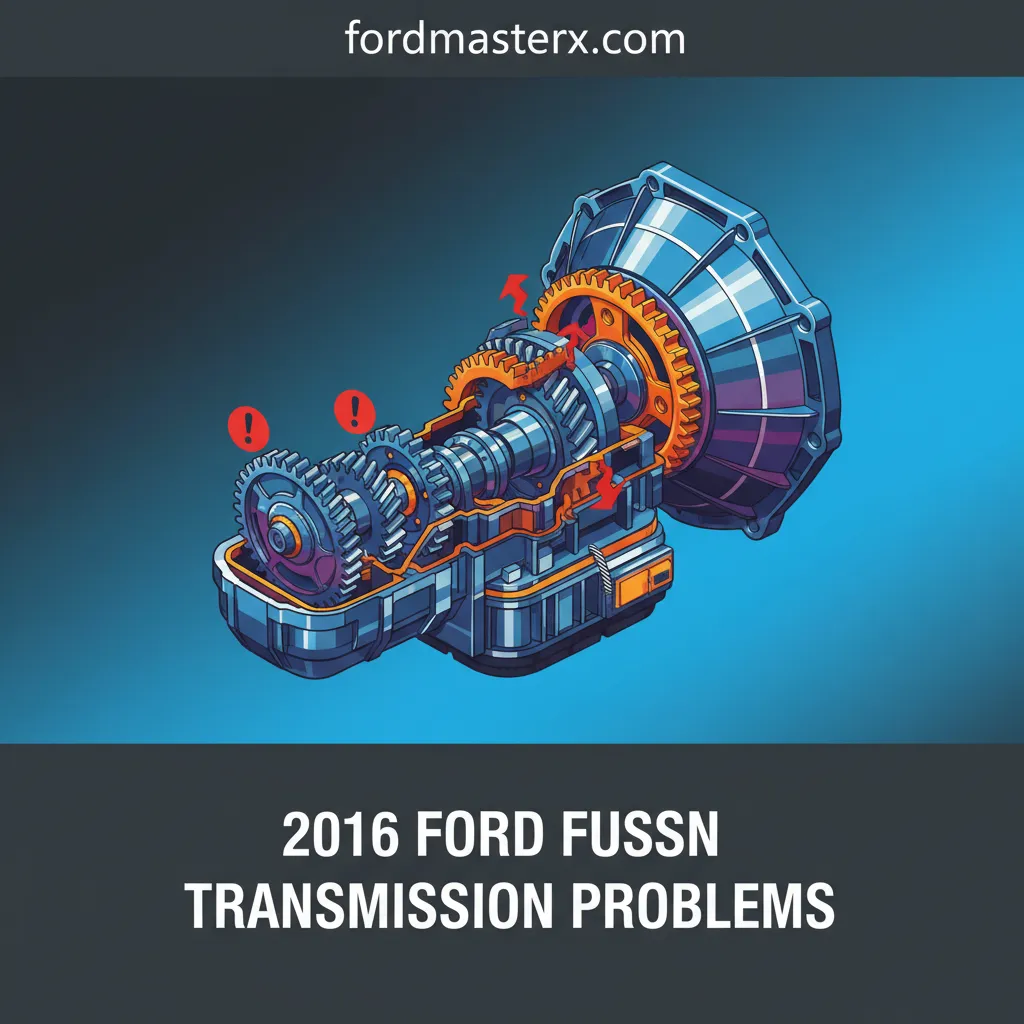
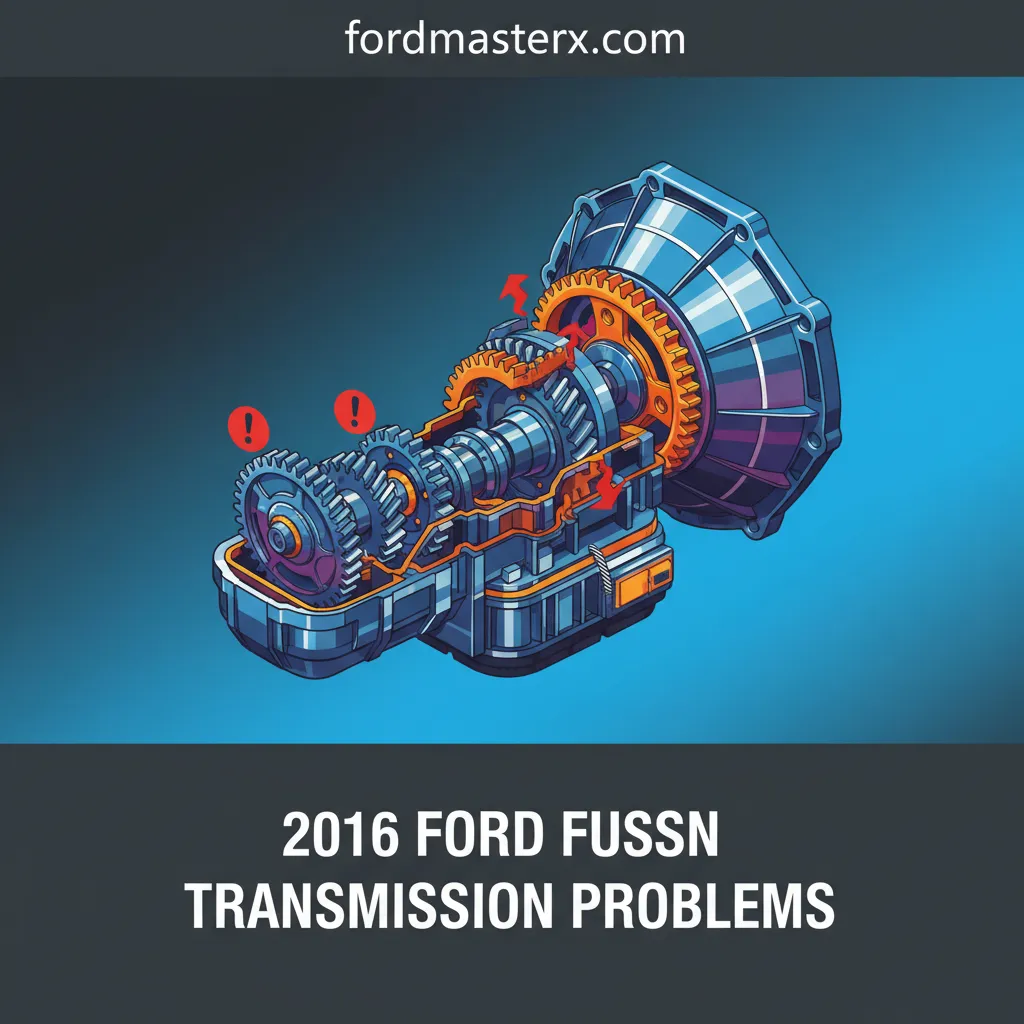
2016 Ford Fusion Transmission Problems: Diagnostic Guide And Repair Solutions

While the 2016 Ford Fusion is praised for its sleek design and agile handling, a significant number of owners have found themselves sidelined by frustrating and often dangerous transmission malfunctions. The 6F35 6-speed automatic transmission in the 2016 Fusion is prone to harsh shifting, slipping, and total mechanical failure, leaving owners stuck between expensive repair bills and unreliable performance. This guide will provide a technical breakdown of common symptoms, identify the root causes of these failures, and outline the most effective ways to troubleshoot, diagnose, and resolve these issues to get your Fusion back on the road.
Identifying Common Symptoms of the Ford 6F35 Transmission Failure
📤 Share Image
Recognizing the early warning signs of a failing 6F35 transaxle can be the difference between a minor software flash and a total unit replacement. Owners typically report a progression of symptoms that begin as minor annoyances and escalate into significant safety concerns. Over 500 owner reports on NHTSA databases cite sudden deceleration or loss of motive power specifically for the 2016 model year, highlighting the severity of these issues.
The Infamous ‘2-3 Shift Flare’
Perhaps the most documented symptom is the “shift flare,” occurring primarily between second and third gear. During this event, the engine RPMs spike—often by 500 to 1,000 RPM—as if the car has shifted into neutral, before the next gear finally slams into place. This is a clear indicator of a hydraulic timing mismatch where one clutch pack releases before the next has fully applied.
Delayed Engagement and Harsh Shifting
Internal pressure loss often manifests as delayed engagement when shifting from Park to Drive or Reverse. Consider a driver experiencing a 2-second delay when shifting into Reverse on a cold morning; this pause suggests that the transmission pump is struggling to build sufficient line pressure to engage the clutch pistons. Conversely, harsh downshifting—such as a vehicle that lurches forward violently when downshifting from 4th to 3rd gear—indicates that the Powertrain Control Module (PCM) is overcompensating for internal wear by spiking hydraulic pressure.
Transmission Slipping and Shuddering
Slipping is characterized by a loss of power during acceleration despite the engine revving higher. This often occurs when the internal clutch plates have lost their friction material. Additionally, many drivers report a “shudder” or vibration while cruising at highway speeds (between 40 and 60 MPH). This sensation, similar to driving over rumble strips, is typically associated with the Torque Converter Clutch (TCC) failing to maintain a consistent lock-up state.
If your Fusion’s dashboard displays a ‘Transmission Fault’ or a wrench icon, the vehicle may enter ‘Limp Mode.’ This safety feature restricts the engine to 2nd or 3rd gear to prevent further mechanical damage, but it significantly reduces your ability to accelerate in traffic.

Root Causes of 2016 Ford Fusion Transmission Faults
Understanding the cause of these failures requires a deep dive into the 6F35’s architecture. While the 6F35 transmission was co-developed with GM, Ford’s specific software mapping and solenoid configurations have unique failure rates. The issues are rarely isolated to a single component; they are usually the result of cascading failures within the hydraulic and electronic control systems.
Solenoid Body Degradation
The shift solenoid valves manage fluid flow to the clutch packs. Over time, these solenoids develop internal wear or become clogged with debris, disrupting hydraulic timing.
Fluid Breakdown
Ford’s ‘filled-for-life’ marketing for Mercon LV fluid is a common pitfall. Real-world thermal breakdown leads to varnish buildup that prevents valves from moving freely.
Mechanical and Electronic Faults
- Clutch Plate Wear: The internal clutch plates and seals within the 6F35 transaxle unit are known for premature wear, especially if the vehicle is frequently driven in stop-and-go traffic.
- Software Calibration Errors: The PCM manages shift pressure. Errors in the factory software can lead to sub-optimal pressure management, which accelerates physical wear on the mechanical components.
- Torque Converter Damper Springs: Mechanical failure of the damper springs within the torque converter can lead to excessive vibration and, more dangerously, metal debris circulating in the fluid, which then destroys the valve body.
In a frequent case study involving the 2016 model, a technician might find a persistent P0751 code (Shift Solenoid A Performance). While many assume this requires a total rebuild, the root cause is often a localized solenoid body failure that can be resolved by replacing the solenoid block rather than the entire transmission—provided the issue is caught before the metal debris contaminates the clutch packs.

How to Troubleshoot and Diagnose Fusion Transmission Issues
Effective diagnosis is the only way to avoid unnecessary repair costs. Do not rely solely on the dashboard lights; deep-level diagnostics are required to see what the TCM (Transmission Control Module) is actually seeing. Transmission fluid should ideally be changed every 30,000 to 60,000 miles to prevent the solenoid clogging that leads to many of these faults.
📋
Diagnostic Checklist
Use a tool like FORScan to identify specific DTCs (Diagnostic Trouble Codes) such as P0732 (Gear 2 Incorrect Ratio) or P0734. These codes point to exactly which gear set is failing.
Check for fluid that smells like burnt toast or contains silver metallic ‘glitter.’ Glitter indicates that the torque converter or clutch plates are physically disintegrating.
A professional line pressure test determines if the pump is maintaining hydraulic force. A stall test can evaluate if the torque converter is slipping internally.
When troubleshooting shift flares, use FORScan to monitor real-time solenoid pressure data during a test drive. If you see a pressure drop coincident with the flare, the solenoid is the likely culprit.
Known Technical Service Bulletins and Recalls for 2016 Models
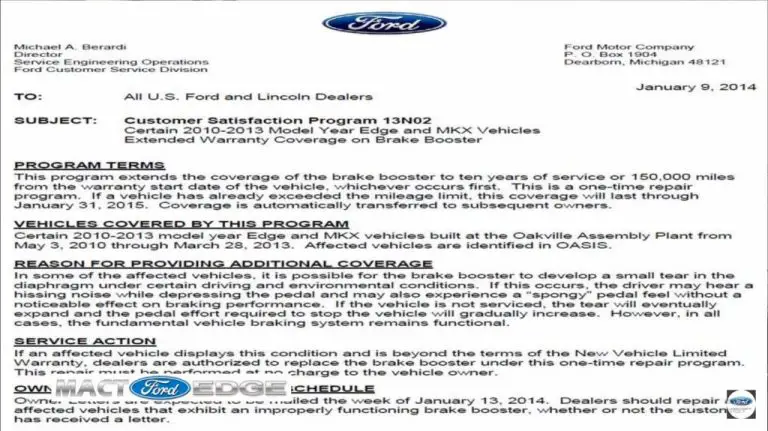
Before spending thousands of dollars at an independent shop, check for manufacturer-acknowledged defects. Ford has issued several TSBs and recalls that may cover your repair costs or provide a specific roadmap for a permanent fix. Recall 18S20 affected over 500,000 Ford Fusion and Escape vehicles combined, highlighting the systemic nature of these faults.
Safety Recall 18S20: Shifter Cable Bushing
This is a critical safety issue where the bushing that attaches the shifter cable to the transmission can detach. This allows the vehicle to roll away even if the shifter is placed in ‘Park.’ If your Fusion has not had this recall performed, it is a free repair at any Ford dealership.
Key Technical Service Bulletins (TSBs)
- TSB 16-0105: This bulletin addresses general shift quality issues. It recommends a specific PCM reprogramming procedure and, in some cases, solenoid cleaning to resolve minor hesitations.
- TSB 15-0144: Specifically targets harsh shifts and provides instructions for replacing the main control valve body. Owners have saved hundreds by citing this TSB to dealers to ensure they get the updated valve body rather than an older, problematic version.
Recall & TSB Data
Vehicles Recalled (18S20)
Avg. Savings via TSB Flash
Repair Options and Cost Estimates to Resolve Transmission Failure
When it comes to repair, you have several paths ranging from minor maintenance to full component replacement. The path you choose should be dictated by the severity of the diagnostic findings. Labor for a full 2016 Fusion transmission R&R (Remove and Replace) typically takes 8 to 11 book hours, which represents a large portion of the total cost.
Choosing the Right Solution
If your diagnosis reveals internal metal debris, a local shop rebuild might seem attractive at $2,500. However, these rebuilds often carry only a 12-month warranty. Installing a Jasper or Ford factory-remanufactured unit usually costs more upfront but provides a 3-year/unlimited-mile warranty and includes all the latest engineering updates to the valve body and internal seals.
For owners looking for a long-term workaround to prevent future failures, installing an aftermarket external transmission cooler is highly recommended. By keeping the fluid temperature lower, you prevent the thermal breakdown of Mercon LV fluid, which is the root cause of most solenoid and valve body issues.
✅ Pros of Reman Unit
- Comprehensive 3-year warranty
- Includes latest design updates
- Tested as a complete unit
- Higher resale value
❌ Cons of Local Rebuild
- Often limited 12-month warranty
- Quality depends on individual tech
- Parts may not include updates
- Potential for lingering issues
The 2016 Ford Fusion’s 6F35 transmission often fails due to solenoid wear, software calibration errors, or fluid degradation. Symptoms range from minor shift flares to dangerous roll-away risks addressed by national recalls. Effective resolution involves early diagnosis through OBD-II scanning and weighing the costs of repair versus replacement. If you are experiencing shifting hesitation, perform a fluid color check immediately and consult a certified technician to scan for stored fault codes before minor wear becomes a total transmission failure.
Frequently Asked Questions
Is there a recall for the 2016 Ford Fusion transmission?
Yes, there is a major recall (18S20) specifically for the shifter cable bushing. If this bushing fails, the transmission may not actually be in ‘Park’ even if the shifter indicates it is, leading to potential roll-away accidents. However, there is no universal recall for the internal mechanical failures of the 6F35 unit itself.
How much does it cost to replace a 2016 Ford Fusion transmission?
A full replacement for a 2016 Ford Fusion transmission typically costs between $3,000 and $4,500. This price includes a remanufactured unit and roughly 10 hours of labor. Opting for a used transmission from a salvage yard can reduce the cost to $1,500–$2,200, but carries a higher risk of recurring failure.
What transmission is in the 2016 Ford Fusion?
The 2016 Ford Fusion is primarily equipped with the 6F35 6-speed automatic transmission. This transaxle was a joint venture between Ford and General Motors. While efficient, it is known for specific hydraulic issues in the valve body and solenoid plate that can lead to harsh shifting and premature wear.
Can a software update fix my Fusion’s shifting problems?
In many cases, yes. Ford has released several PCM (Powertrain Control Module) updates via Technical Service Bulletins (TSBs) designed to adjust shift points and line pressure. If your transmission is not physically damaged, a software ‘re-flash’ can often resolve minor hesitations and ‘shift flares’ for the cost of one hour of labor.
What are the first signs of transmission failure in this model?
The earliest warning signs include a ‘flare’ or RPM spike during the 2-3 gear shift, delayed engagement when moving the selector from Park to Drive, and a noticeable shudder when the torque converter engages at speeds between 40 and 60 MPH. If you notice dark, burnt-smelling fluid on the dipstick, internal damage is likely progressing.