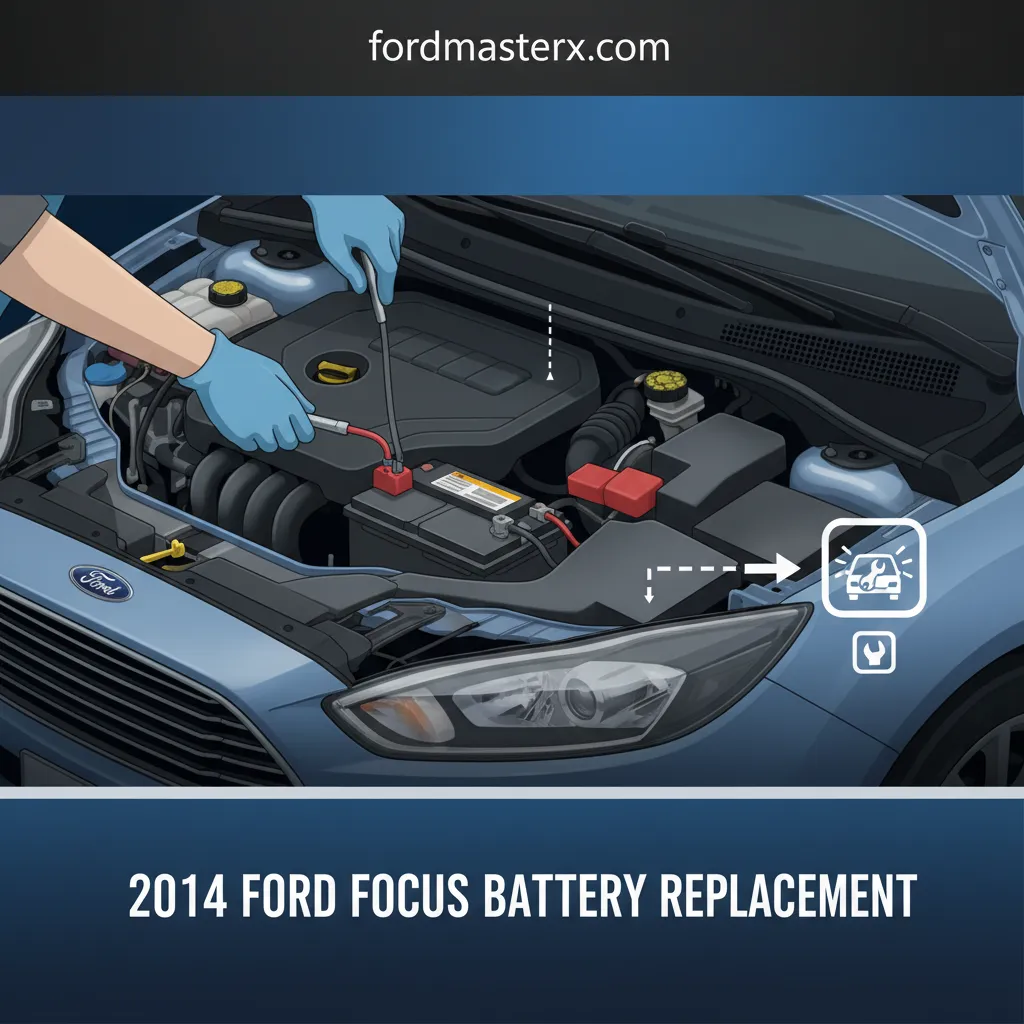
2014 Ford Focus Battery Replacement: Step-By-Step Procedure And Bms Reset Instructions

A dead battery in a 2014 Ford Focus often occurs at the most inconvenient times, but the unique engine bay configuration makes replacement more complex than a standard vehicle. Unlike older domestic models where the battery sits prominently at the front, the 3rd-generation Focus features a “buried” battery tucked deep beneath the windshield cowl. Drivers frequently struggle with this restrictive layout and the technical requirement of resetting the Battery Management System (BMS) after installation—a step often missed by DIYers. This comprehensive guide provides a professional walkthrough of the selection, removal, and installation process, including the specific sequence needed to reset the onboard computer systems for reliable long-term performance.
Selecting a Quality 2014 Ford Focus Replacement Battery
When sourcing a professional-grade replacement, the first specification to verify is the BCI Group Size. The 2014 Ford Focus (2.0L Ti-VCT engine) standardizes on the Group 96R battery. The “R” indicates reversed terminals, which is critical because the short cable leads in the Focus engine bay offer zero flexibility; if you purchase a standard Group 96 battery, the cables will not reach the posts.
📤 Share Image
CCA Requirements and Chemistry Options
OEM specifications typically call for 500 to 600 Cold Cranking Amps (CCA). In my 15 years of industry experience, I strongly recommend a minimum of 590 CCA. Modern Focus models have high parasitic draws due to the SYNC infotainment system and electronic power steering; a higher CCA rating provides a necessary buffer during extreme winter temperatures.
✅ Lead-Acid (Standard)
- Lower initial purchase price
- Standard performance for mild climates
- Direct OEM replacement (Motorcraft)
⭐ AGM (Premium)
- Superior vibration resistance
- Faster recharge rates
- Doubled lifespan in high-heat environments
For a trusted and reliable install, brands like Odyssey (Performance Series) or Interstate (MTX line) are preferred for their longevity. If you prefer keeping the vehicle strictly OEM, the Motorcraft BXT-96R-590 is the factory-correct unit. Regardless of the brand, always check the manufacturing date code on the battery case. A battery is considered “stale” if it has sat on a shelf for more than six months without a maintenance charge; aim for a unit manufactured within the last 90 days.

Essential Tools and Safety Protocols for Professional Battery Service
Battery replacement in a Focus isn’t just about a wrench; it requires complete preparation to avoid electronic glitches. Because the 2014 Focus relies heavily on volatile memory for its Transmission Control Module (TCM) and radio presets, using a battery memory saver (plugged into the OBD-II port) is a professional best practice. This maintains a 12V signal to the computers while the main battery is disconnected.
The Professional Toolkit
- 10mm Deep Well Socket: Required for the terminal clamps and the hold-down bracket.
- 8mm Wrench/Socket: Used for the airbox housing and specific sensor mounts.
- Flathead Screwdriver: For prying the plastic airbox clips and the battery box front cover.
- Wire Terminal Brush: To remove oxidation from the cable ends.
- Safety Gear: Nitrile gloves and ANSI-approved eye protection are mandatory, as lead-acid batteries contain 30-50% sulfuric acid.
Never touch a metal wrench simultaneously to the positive terminal and any part of the vehicle’s chassis. This creates a direct short circuit, potentially causing an arc flash, battery explosion, or catastrophic damage to the vehicle’s ECU. If acid spills, neutralize it immediately with a 1:1 ratio of baking soda and water.

Step-by-Step Removal of the 2014 Ford Focus Battery
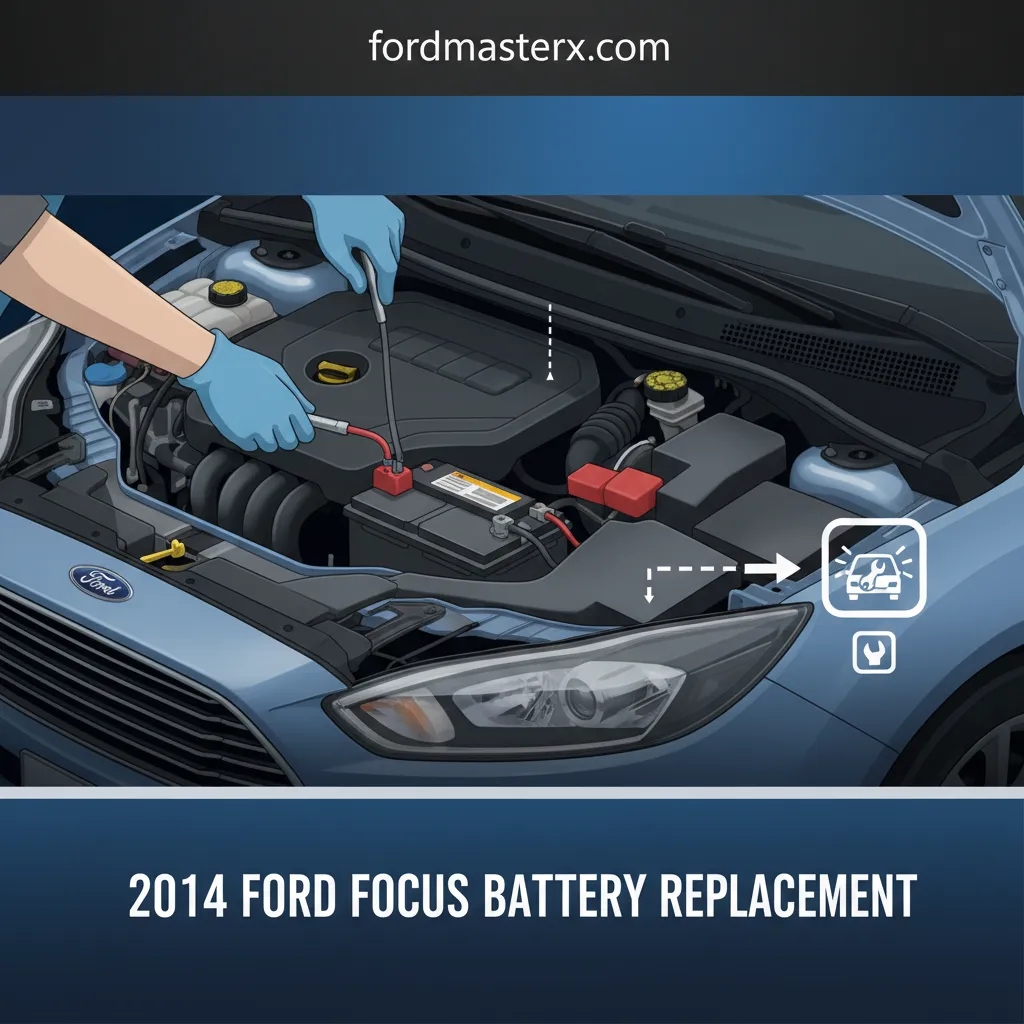
The biggest hurdle in a 2014 Focus is the physical space. The battery is positioned significantly under the windshield cowl, requiring at least 6-8 inches of forward clearance for removal. You cannot simply lift it straight up.
📋
Step-by-Step Removal Guide
Loosen the 8mm bolt on the intake hose clamp. Unclip the airbox lid and move it aside. Disconnect the Mass Air Flow (MAF) sensor and lift the lower airbox housing straight up to pop it out of its rubber grommets. This is essential for the “tilt and slide” maneuver.
Loosen the 10mm nut on the negative (black) terminal first and secure the cable away from the post. Then, remove the 10mm nut on the positive (red) terminal. Removing the negative first breaks the ground circuit, preventing sparks if your tool touches metal later.
Pull the plastic front cover of the battery box upward and outward. Remove the two 10mm bolts securing the metal hold-down bracket across the top of the battery. Be careful not to drop these bolts into the subframe.
Slide the battery forward toward the radiator until the rear of the battery clears the cowl. Tilt the front of the battery upward and lift the 35-pound unit out of the engine bay. Inspect the tray for debris or signs of acid corrosion.
Proper Installation and Terminal Connection Procedures
Before seating the new battery, use your wire brush to clean the internal surface of the cable clamps until they show bright lead. Expert technicians know that even a thin layer of oxidation can increase resistance, leading to slow starts and charging issues. In fact, loose or dirty terminals account for nearly 15% of “no-start” conditions post-replacement in Ford vehicles.
Apply a professional-grade dielectric grease or a terminal protector spray (often red in color) after tightening the clamps. This creates an airtight seal that prevents the “blue fuzz” (lead sulfate) from forming due to battery off-gassing.
The Installation Sequence:
- Slide the new Group 96R battery into the tray and push it back under the cowl.
- Reinstall the metal hold-down bracket and the plastic front cover.
- Connect the positive (red) terminal first. Tighten until the clamp cannot be rotated by hand.
- Connect the negative (black) terminal last.
- Torque the terminal nuts to approximately 5-7 ft-lbs. Do not over-torque, as lead terminals are soft and can strip easily.
Once connected, reinstall the airbox. Ensure the intake sensors are securely reconnected; a forgotten MAF sensor plug will immediately trigger a Check Engine Light (CEL) upon startup.
Executing the Battery Management System (BMS) Reset
This is the most critical expert step. Ford uses a “Smart Charge” system that monitors battery age. As a battery gets older, its internal resistance increases, and the BMS instructs the alternator to increase the charging voltage to compensate. If you install a new battery but do not reset the BMS, the vehicle will continue to “punish” the new battery with high voltage designed for an old one.
BMS Reset Logic: Why It Matters
Potential Overcharge
Avg. Life if Not Reset
The Manual Reset Sequence
You do not need a computer for this, though professional OBD-II tools like FORScan can also perform this function. Follow this exact sequence:
- Step 1: Get in the car and close all doors.
- Step 2: Turn the ignition to Position II (On, but engine not running). For push-button starts, press the button without touching the brake.
- Step 3: Flash the high-beam headlights 5 times.
- Step 4: Press and release the brake pedal 3 times.
- Step 5: Wait for the battery symbol on the dashboard to flash 3 times. This flash is your trusted confirmation that the computer has reset the battery life counter to zero.
Failure to perform this reset can result in the alternator overcharging a new battery by up to 1.5 volts, which effectively “cooks” the electrolytes and can lead to battery failure in as little as 12 to 18 months.
Verifying System Integrity and Post-Installation Maintenance
After installation and the BMS reset, you must verify the health of the entire charging circuit. Use a digital multimeter set to DC volts to check the “resting” voltage with the engine off (should be ~12.6V). Then, start the engine. The reliable charging voltage from the alternator should hover between 13.5V and 14.7V.
Charging Under Load
Test the system’s resilience by engaging high-draw components like the rear defroster, high beams, and blower motor at maximum speed. The voltage should remain above 13.0V. If it drops significantly, you may have a failing alternator or a loose belt tensioner, rather than just a bad battery.
Thermal Protection
Ensure the original heat shield is re-wrapped around the new battery. Heat is the #1 killer of lead-acid plates.
Eco Responsibility
Do not throw old batteries in the trash. Return them to any authorized center to reclaim your “core charge” and ensure recycling.
Establish a reliable maintenance schedule: check terminal tension and cleanliness every 10,000 miles or during every oil change. While automotive batteries naturally lose about 1% of their charge per day through self-discharge, a well-maintained 2014 Ford Focus electrical system should provide 4-6 years of quality service.
Summary: Selecting a Group 96R battery with at least 590 CCA ensures cold-weather reliability and consistent performance. Removing the airbox is essential for safe access to the battery compartment in the 2014 Focus, while the BMS reset is a mandatory step to prevent premature battery failure and maintain charging efficiency. Ensure your vehicle’s electrical health by performing a BMS reset immediately after installation, or visit a trusted technician if you lack the necessary diagnostic tools for a complete system check.
Frequently Asked Questions
Does a 2014 Ford Focus really need a BMS reset after a battery change?
Yes, a professional BMS reset is critical. The 2014 Ford Focus utilizes a Smart Charge system that adjusts alternator output based on the battery’s age. If you do not reset the system, the computer assumes the old battery is still installed and may overcharge the new unit, significantly reducing its lifespan.
What is the correct battery group size for a 2014 Ford Focus?
The 2014 Ford Focus typically requires a BCI Group 96R battery. This specific size ensures that the physical dimensions and terminal orientations align perfectly with the factory battery tray and wiring harness. Always verify the Cold Cranking Amps (CCA) meet or exceed the OEM requirement of 590 CCA.
Can I replace the battery without removing the air filter box?
While some expert technicians can maneuver the battery out with the airbox in place, it is highly recommended to remove it. Removing the airbox provides necessary clearance and prevents damage to the plastic cowl and sensitive wiring harnesses located at the front of the battery tray.
How long should a quality battery last in a 2014 Ford Focus?
A reliable, high-quality battery typically lasts between three to five years. Factors such as extreme temperatures, short driving trips that prevent full recharging, and the health of your alternator will influence this duration. Regular maintenance of the terminals can help extend this lifespan toward the five-year mark.
What are the symptoms of a failing battery in this specific model?
Common indicators include a sluggish engine crank, flickering dashboard lights during startup, and the appearance of the battery icon on the instrument cluster. You may also notice ‘System Off to Save Battery’ messages on the infotainment screen, which is a clear sign the BMS has detected low voltage.