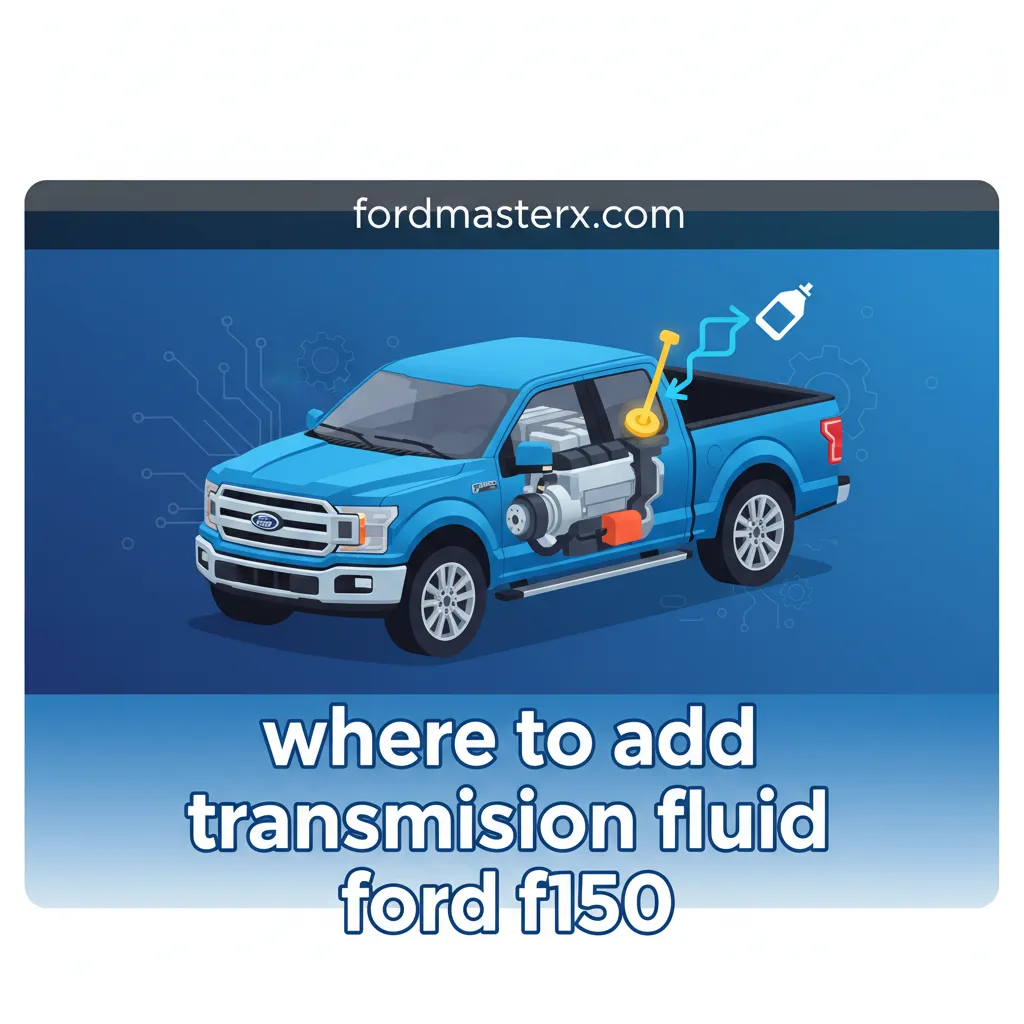
Where To Add Transmission Fluid Ford F150: Essential Maintenance Guide For All Generations

Maintaining the heart of your Ford F-150’s drivetrain requires more than just regular oil changes; it demands a precise understanding of your transmission’s lubrication needs. While older F-150s featured accessible dipsticks under the hood, modern models use complex ‘sealed’ systems that leave many owners wondering exactly where and how to add transmission fluid. In this expert guide, we will provide a professional breakdown of fill locations for every F-150 generation, the specific tools required for the job, and the trusted procedures to ensure your gearbox remains reliable for miles to come.
Identifying the Transmission Fill Location on Older Ford F150 Generations
📤 Share Image
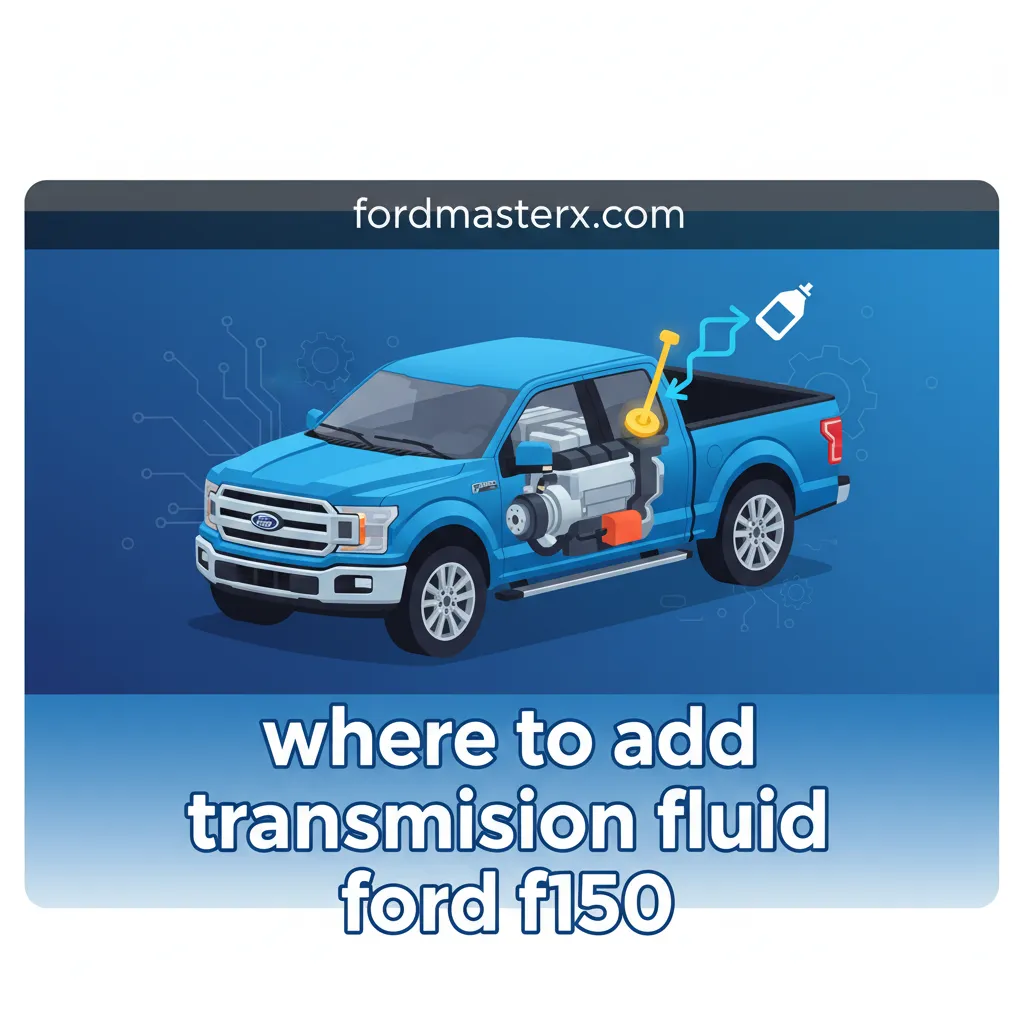
For decades, the Ford F-150 followed a traditional design philosophy regarding transmission maintenance. If you own a model produced before 2009, locating the fill point is a straightforward process. The transmission fill port is actually the transmission dipstick tube itself. To find it, open the hood and look toward the rear of the engine bay on the passenger side, specifically near the firewall. You are looking for a handle—typically colored yellow or red—that distinguishes it from the engine oil dipstick, which is usually located further forward and often features a different handle shape.
In models equipped with the 4.6L or 5.4L Triton V8 engines, the layout can be somewhat cramped. The transmission dipstick is recessed significantly toward the back of the engine. This dual-purpose tube is engineered to allow the dipstick to measure fluid levels while providing a direct conduit to the transmission pan for refilling. Because of its proximity to the firewall and the hot exhaust manifolds, using a long-neck funnel is not just a recommendation; it is a necessity. Attempting to pour Automatic Transmission Fluid (ATF) directly from a quart bottle into this recessed area is a recipe for significant spills and potential fire hazards if fluid hits the hot exhaust.
On older 4-speed units like the 4R75E, always check the level with the engine running and the transmission at operating temperature. The fluid expands significantly when warm, and a “full” reading on a cold engine will likely result in an under-filled transmission once you hit the highway.
The dipstick features specific visual markings, usually a crosshatch area. When adding fluid, the goal is to bring the level into the middle of this crosshatch zone. For example, a 2004 Ford F-150 with a 4R75E 4-speed automatic typically requires MERCON V fluid. These traditional dipstick tubes have an internal diameter of approximately 0.75 inches. This relatively narrow opening means the fluid must be added slowly to allow air to escape, preventing a “burp” of fluid from splashing back out of the tube.
Locating the Fill Plug on Modern Sealed 6R80 and 10R80 Transmissions
Starting around 2011, Ford transitioned the F-150 to a “sealed-for-life” transmission philosophy. This means that 2011–2024 models, including those equipped with the ubiquitous 6R80 6-speed or the high-performance 10R80 10-speed, do not have a dipstick under the hood. To add fluid to these modern gearboxes, you must access the transmission from underneath the vehicle. This design change was intended to reduce contamination and ensure that only qualified professionals or advanced DIYers perform maintenance, as the process requires specialized equipment.
The fill port is located on the front passenger side of the transmission housing, just above the pan rail. You will identify it as a large, threaded bolt head—typically 19mm or 22mm depending on the specific year and model. On many F-150s, especially those with off-road packages or the 2018 Raptor, this port is obscured by a heat shield or a skid plate. You must remove the two small bolts holding the heat shield in place to gain enough clearance to reach the fill plug. Unlike older models, there is no gravity-fed tube; you are working directly with the side of the transmission casing.
The fill plug is located inches away from the catalytic converter. When the transmission is at the required checking temperature (175°F+), the exhaust is hot enough to cause severe burns instantly. Always wear long sleeves and heat-resistant gloves.
Once you unscrew the cap, you will find a “mini-dipstick” attached to the underside of the plug (or resting inside the port). This plastic dipstick has “A” and “B” or “Hot” and “Cold” markings. It is vital to distinguish between the drain plug at the bottom of the pan and the fill plug on the side. Accidentally removing the drain plug will result in an immediate loss of several quarts of fluid. When re-installing the 10R80 fill plug, it must be torqued to 26 lb-ft (35 Nm) to ensure a reliable seal and prevent leaks that could lead to catastrophic failure.

Required Tools and Preparation for a Professional Fluid Top-Off
A comprehensive approach to transmission maintenance requires more than a simple socket set. Because modern F-150s have side-mounted fill ports, gravity is your enemy. You cannot pour fluid into these ports; you must pump it in. For a professional result, you should utilize a fluid transfer pump. While a basic hand pump that screws onto a quart bottle works for small top-offs, a pneumatic or pressurized fluid dispenser is the expert choice for larger refills, providing a steady, bubble-free flow of ATF.
Diagnostic Precision
Use an OBD-II scanner to monitor live Transmission Fluid Temperature (TFT). This is the only reliable way to know you are in the 175°F–195°F testing window.
Level Workspace
The vehicle must be perfectly horizontal. Even a slight incline will cause the side fill port to give a false “full” or “low” reading on the mini-dipstick.
Preparation is key to preventing internal contamination. Before removing the fill plug, use brake cleaner and compressed air to clean the area around the port. The 10-speed transmissions are incredibly sensitive; a single grain of sand entering the high-precision valve body can cause solenoid sticking or shifting irregularities. Additionally, ensure you have heat-resistant gloves and eye protection. The proximity of the catalytic converters means you will be working in a high-heat environment where fluid can reach temperatures of over 200°F during operation.
Selecting the Correct MERCON Specification Fluid for Your Gearbox
Using the wrong fluid is perhaps the most common pitfall in F-150 maintenance. Ford’s transmission fluids have evolved significantly over the years, and they are generally not backward or forward compatible in a way that allows for mixing. You must verify your specific needs by checking the transmission code on the driver-side door jamb sticker. Under the “TR” heading, a code will indicate exactly which gearbox you have, which dictates the fluid type.
Mixing MERCON LV and MERCON ULV is catastrophic for modern solenoid-controlled transmissions. MERCON ULV (Ultra Low Viscosity) has a kinematic viscosity of approximately 4.5 cSt at 100°C, which is significantly thinner than older variants. This thinness is required for the incredibly tight tolerances of the 10-speed gearbox. Using a “universal” fluid that claims to cover all specifications often lacks the specific friction modifiers required for Ford’s clutch packs, leading to shift flares or shuddering. Furthermore, overfilling must be avoided at all costs; excessive fluid leads to aeration and foaming, which prevents the fluid from lubricating correctly and can cause seal failure.
Step-by-Step Procedure for Adding Fluid to a 10-Speed F-150
📋
Step-by-Step Guide
Drive the truck or idle it until the digital ‘Trans Temp’ screen shows 175°F–195°F. The level cannot be accurately checked cold.
Secure the vehicle on four jack stands. Use a bubble level on the transmission pan to ensure the chassis is perfectly horizontal.
Remove the heat shield and fill plug. Insert the pump nozzle and add fluid in half-quart increments. The capacity between ‘Low’ and ‘Full’ on the mini-dipstick is only 0.5 quarts.
While stationary, cycle through PRNDL gears, holding each for 3 seconds. Re-check the level one last time and torque the plug to 26 lb-ft.
By The Numbers
Max Check Temp
Plug Torque
Dipstick Range
Identifying the fill port on your Ford F-150 varies significantly between traditional dipstick-equipped models and modern 6/10-speed sealed units. Using the correct Ford-certified MERCON fluid (V, LV, or ULV) is non-negotiable for maintaining shift quality and longevity. Accurate fluid leveling must be performed with the vehicle level and the transmission at specific operating temperatures. If you are uncomfortable performing this under-vehicle procedure, consult a trusted Ford-certified technician to ensure your transmission is serviced to factory specifications.
Frequently Asked Questions
Can I add transmission fluid to my F-150 through the dipstick tube?
Yes, on Ford F-150 models manufactured prior to 2011, you can add fluid directly through the dipstick tube located in the engine bay. You must use a clean, long-neck funnel to prevent contamination and spills. Always add fluid slowly and check the level periodically to avoid overfilling, which can cause high-pressure leaks and foaming.
Where is the transmission dipstick on a 2017-2024 Ford F-150?
Modern F-150s equipped with the 10R80 10-speed transmission do not have a dipstick under the hood. Instead, there is a specialized fill plug located on the passenger side of the transmission case. This plug contains a small, internal plastic dipstick. Accessing it requires a professional approach, involving lifting the vehicle and working near hot exhaust components.
What kind of transmission fluid does a Ford F-150 take?
The fluid type depends strictly on the transmission model. Most 1997-2008 models use MERCON V. The 6-speed 6R80 (2009-2017) requires MERCON LV. The modern 10-speed 10R80 (2017-present) requires MERCON ULV. Using the wrong fluid can lead to catastrophic internal failure. Always verify the specification on the transmission pan or the owner’s manual for reliable results.
How do I check the transmission fluid level without a dipstick?
To check a ‘sealed’ F-150 transmission, you must bring the fluid to operating temperature (typically 175°F-195°F), park on level ground, and remove the threaded fill plug on the side of the transmission. Use the integrated mini-dipstick attached to the cap. Because this is done while the engine is idling, extreme caution is required to avoid contact with moving parts.
What are the signs that my F-150 needs transmission fluid?
Common indicators of low fluid include delayed gear engagement, erratic shifting, or ‘slipping’ where the engine revs but the truck doesn’t accelerate properly. You may also notice increased transmission temperatures on your dashboard display or a whining noise from the front pump. If you see red puddles under the vehicle, it indicates a leak that requires immediate professional attention.