When Did Ford Stop Making The Fusion: A Timeline Of The Sedan’S Discontinuation

For nearly fifteen years, the Ford Fusion stood as the cornerstone of the American manufacturer’s passenger car lineup, challenging the dominance of import rivals like the Toyota Camry and Honda Accord. It represented a bold era of American sedan design, blending European-inspired handling with cutting-edge hybrid technology. However, despite its popularity and versatile powertrain options, many enthusiasts and buyers remain confused about exactly when and why the Fusion vanished from dealership showrooms. This article provides a detailed timeline of when Ford stopped making the Fusion, explores the corporate strategy behind the decision, and offers an overview of the car’s lasting legacy in the automotive market.
When Did Ford Stop Making the Fusion: The Final Production Timeline Explained
📤 Share Image
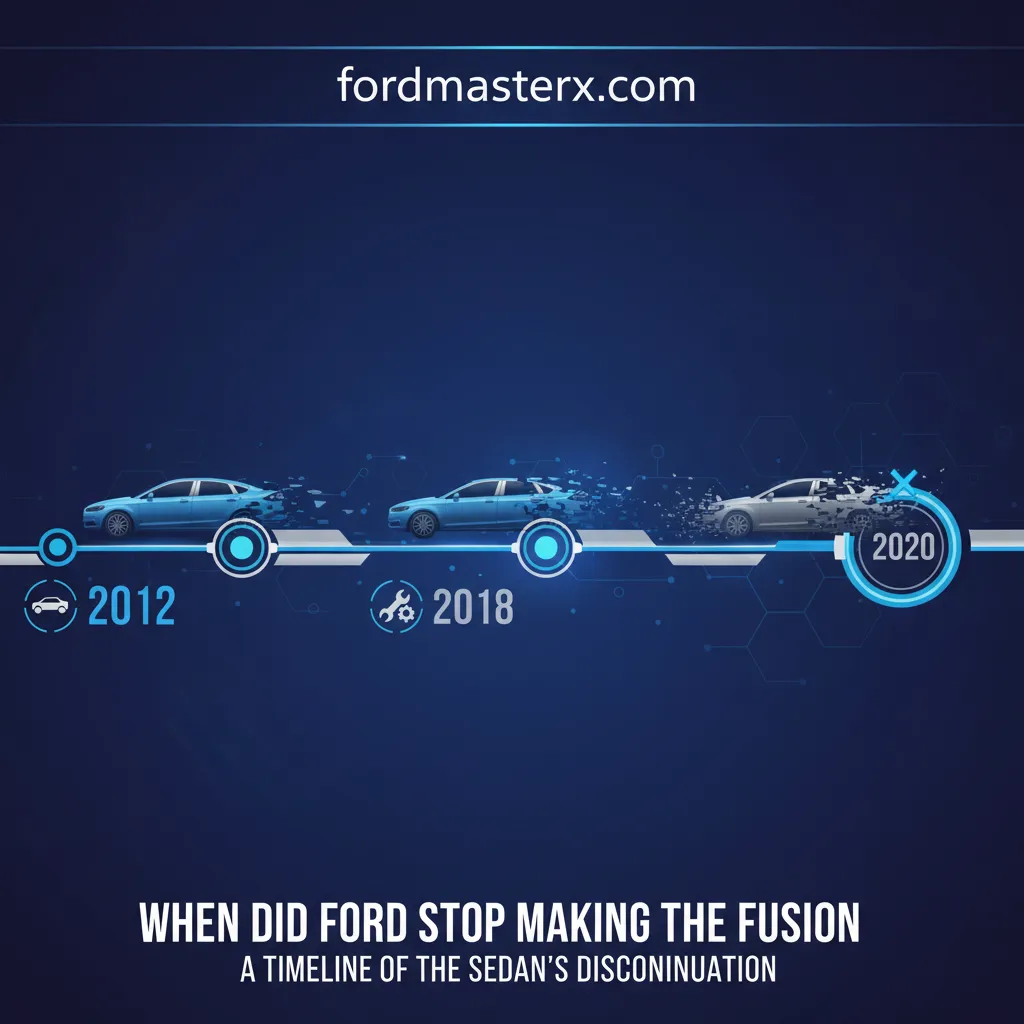
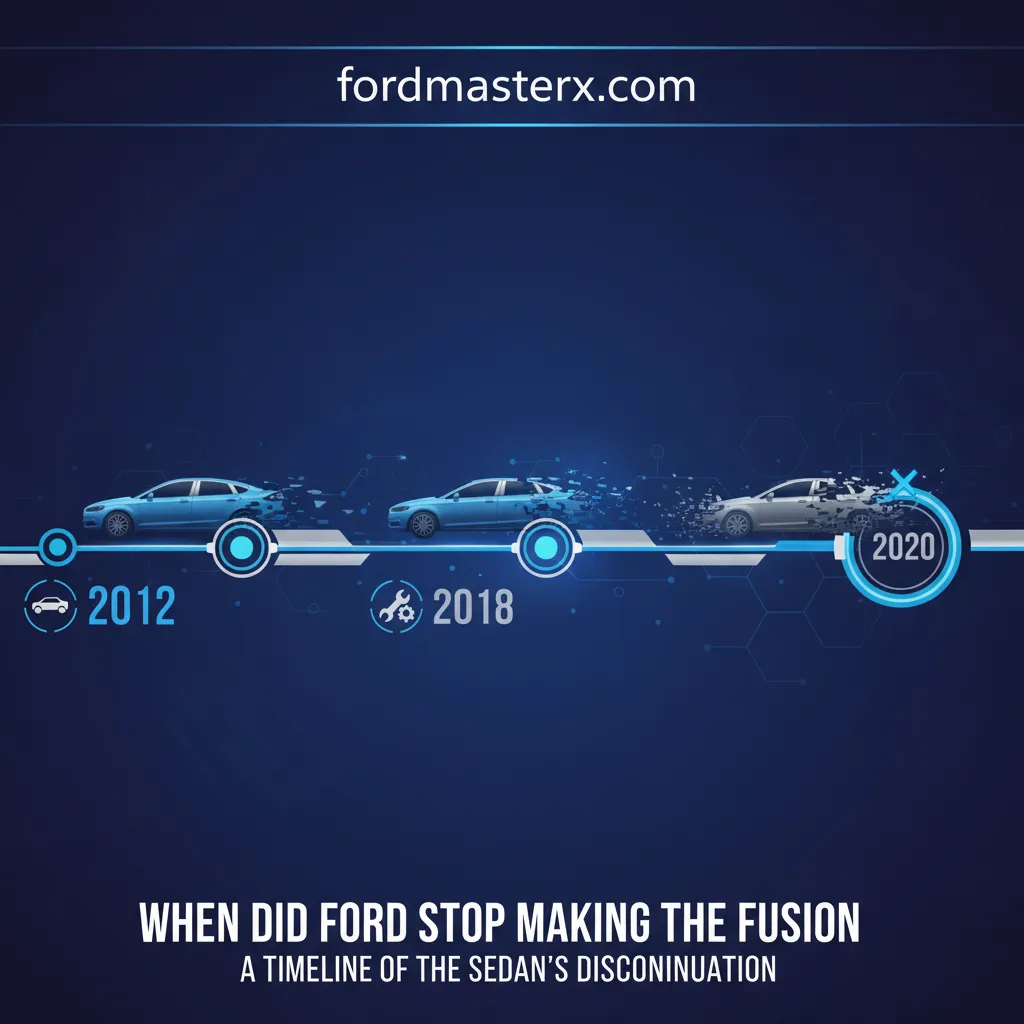
The official end of the Ford Fusion arrived on July 31, 2020. On this day, the final Ford Fusion rolled off the assembly line at the Hermosillo Stamping and Assembly plant in Sonora, Mexico. This event did not just mark the end of a single car; it signaled the closure of an entire chapter in Ford’s North American history. While the 2020 model year was the final iteration available to consumers, some units remained on dealership lots well into early 2021 as the company cleared remaining inventory.
There is often an important distinction to be made between the “model year” and the “production year.” In the automotive industry, production typically precedes the calendar year. While the Fusion was physically manufactured through mid-2020, it was marketed as the 2020 Ford Fusion. For the North American market, there was no 2021 model year Fusion, though its global counterpart, the Mondeo, continued in other regions for a slightly longer duration.
The Plant Transition: From Sedans to Adventure Vehicles
The discontinuation of the Fusion had a profound understanding on Ford’s manufacturing footprint. The Hermosillo plant was a high-volume facility that also produced the Lincoln MKZ, the Fusion’s luxury sibling. Both vehicles were discontinued simultaneously to make room for Ford’s new strategic priorities. Almost immediately after the final Fusion left the line, the plant underwent a massive retooling process to support the C2 platform. This transition allowed Ford to begin production of the highly successful Ford Bronco Sport and the Ford Maverick compact pickup.
Global Variations and the Mondeo Lifecycle
It is a common pitfall to assume the Fusion’s death in the US meant the total extinction of the vehicle worldwide. In Europe, the Ford Mondeo (which was nearly identical to the Fusion after 2013) continued production at the Valencia plant in Spain until early 2022. Furthermore, the Chinese market saw an entirely new generation of the Mondeo launched in 2022, which features a radical redesign not available in Western markets. This divergence highlights Ford’s strategy of regional specialization over the previous “One Ford” global alignment.
By The Numbers
Final Production Date (2020)
Total Production Years
Shift to Trucks/SUVs

Strategic Pivot: Understanding Ford’s Shift from Sedans to SUVs and Trucks
The decision to kill the Fusion was not a result of poor sales alone; it was a cold, calculated business maneuver known as the 2018 ‘Fitness’ Plan. Announced by then-CEO Jim Hackett, this overview of Ford’s future strategy revealed that the company would stop investing in traditional sedans for the North American market. The goal was to improve profit margins and streamline the product portfolio to align with changing consumer behavior.
Market dynamics played a massive role in this fundamentals shift. Throughout the 2010s, American consumers migrated en masse from mid-size sedans to crossovers (CUVs) and light trucks. By 2018, Ford noted that 90% of its North American portfolio would soon consist of trucks, utilities, and commercial vehicles. The sedan segment had become a “red ocean” of heavy discounting and thinning margins, making the capital-intensive R&D required for a third-generation Fusion difficult to justify.
The Economics of the Pivot: Margins and Capital
From an industry expert perspective, the profitability ratios between a sedan and an SUV are stark. A base Ford Fusion often required heavy incentives to move off the lot, yielding slim margins. Conversely, a mid-trim Ford Explorer or an F-150 commands a much higher transaction price with significantly better profit retention. By reallocating billions of dollars from sedan development into electrification and autonomous vehicle technology, Ford sought to reach an 8% global profit margin.
Ford realized that instead of fighting for the 15% of the market that still wanted sedans, they could capture those same buyers with “lifestyle” vehicles like the Maverick, which offers sedan-like fuel economy with much higher utility and brand loyalty.
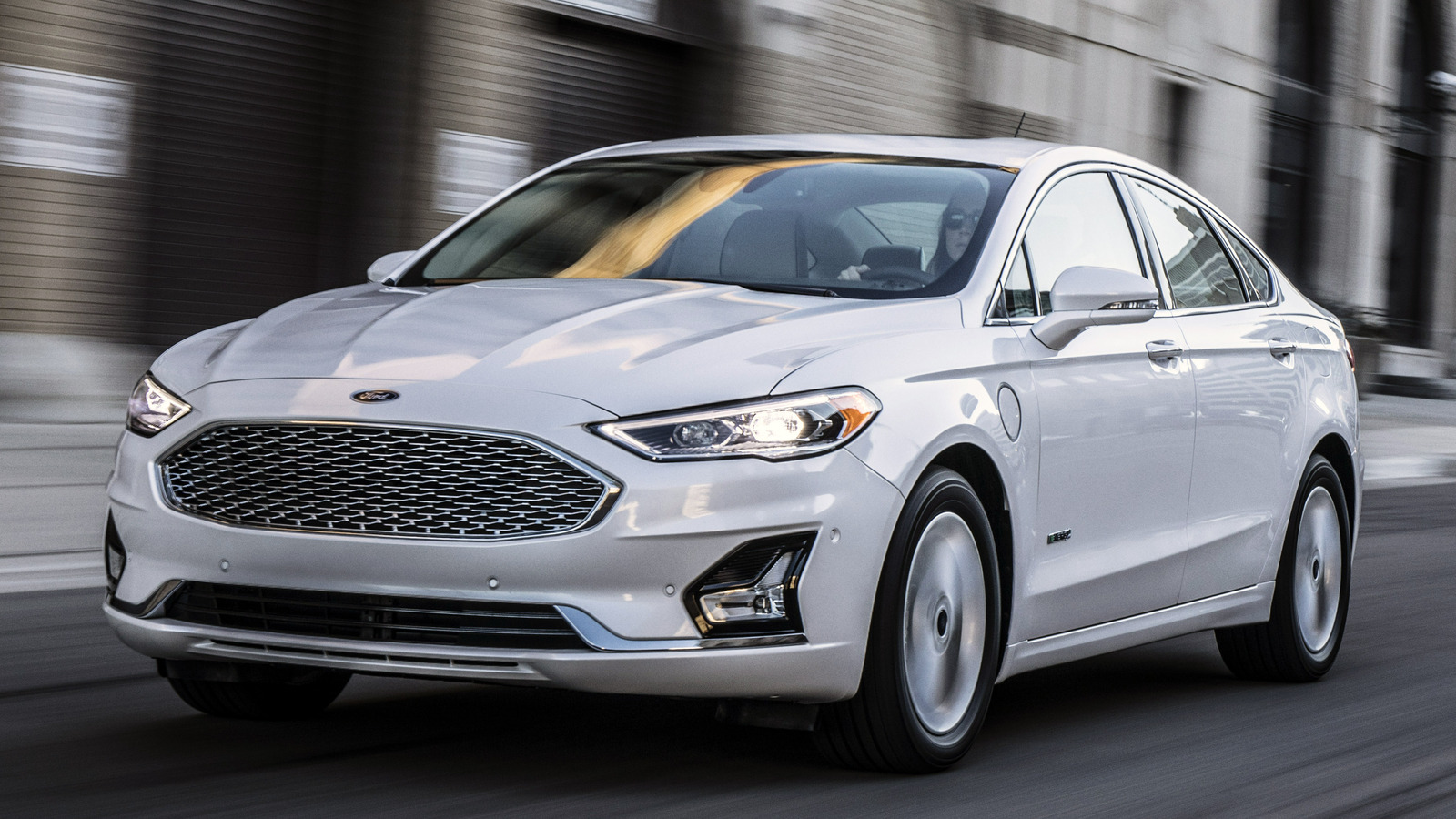
An Overview of the Ford Fusion Generations: From 2006 to the Final 2020 Model
To appreciate why the Fusion’s exit was so significant, we must look at its basics and historical trajectory. Launched in 2006, the Fusion was a key point in Ford’s recovery following the decline of the Taurus. It successfully bridged the gap between economy and style.
First Generation (2006–2012): The Foundation
The original Fusion utilized the CD3 platform, which was heavily derived from the Mazda G-architecture. This gave the car a sporty, “fun-to-drive” character that many domestic sedans lacked at the time. It was a reliable workhorse that offered a choice between a frugal four-cylinder and a punchy Duratec V6. By the time the 2010 refresh arrived, Ford introduced the first Fusion Hybrid, which won the 2010 Motor Trend Car of the Year award, proving that Ford could compete with Toyota’s hybrid dominance.
Second Generation (2013–2020): The Icon
The 2013 redesign was a watershed moment. Built on the CD4 global platform, it featured the famous “Aston Martin-style” wide-mouth grille and a sleek, fastback silhouette. This generation introduced EcoBoost turbocharged engines, bringing improved torque and efficiency. It also saw the launch of the Fusion Energi, a plug-in hybrid (PHEV) that offered 21–26 miles of all-electric range—a significant figure for its era.
Performance Peak
The Fusion Sport trim featured a 2.7L V6 twin-turbo engine producing 325 hp and AWD.
Safety Leader
Consistency in IIHS Top Safety Pick+ ratings throughout the second generation’s lifespan.
The Basics of the 2020 Ford Fusion: Features of the Final Production Year
The 2020 model year served as a “greatest hits” collection for the Fusion. While Ford had already begun winding down the variety of configurations, they ensured the final cars were important representations of modern automotive value. The high-performance Sport trim was notably absent for 2020, but the remaining lineup offered a sophisticated range of choices for the final buyers.
Standard Tech and Safety
In its final year, Ford made the Ford Co-Pilot360 suite standard across all trims (S, SE, SEL, and Titanium). This included Blind Spot Information System (BLIS), Lane-Keeping System, and Pre-Collision Assist with Automatic Emergency Braking. This was a direct attempt to maintain competitiveness against newer rivals who were beginning to standardize driver-assist features.
Inside the cabin, the Sync 3 Infotainment system remained one of the most intuitive in the industry. It provided standard integration for Apple CarPlay and Android Auto, ensuring that the 2020 Fusion didn’t feel technologically obsolete compared to its crossover successors. The Titanium trim, in particular, continued to offer near-luxury amenities like quilted leather seats and a premium Sony audio system.
Industry Implications: How the Fusion’s Exit Mirrored Market Trends
The introduction of the “no-more-cars” strategy at Ford was a domino that fell across the entire domestic industry. Shortly after Ford’s announcement, General Motors followed suit, discontinuing the Chevrolet Impala, Buick Regal, and eventually the Chevrolet Malibu (which shifted largely to fleet sales before its retirement). Chrysler had already exited the segment years prior by killing the 200. This created a fascinating domestic-vs-foreign split in the North American market.
While American brands abandoned sedans, foreign competitors like Toyota, Honda, and Hyundai maintained their fundamentals in the space. They viewed the exit of Ford and GM as an opportunity to capture a larger share of a shrinking but still substantial market. Today, the Camry and Accord remain top-selling vehicles because they are the “last ones standing” for buyers who prefer the driving dynamics of a car over an SUV.
The Rise of the Maverick as a Spiritual Successor
Interestingly, the Ford Maverick compact pickup has effectively replaced the Fusion in Ford’s lineup. With its standard hybrid powertrain and unibody construction, it appeals directly to former Fusion Hybrid owners. It provides the same fuel efficiency and “easy-to-drive” feel but with the added utility of a truck bed. This redirecting of the “Fusion buyer” has proven to be a masterstroke, as the Maverick currently faces overwhelming demand that often exceeds production capacity.
While late-model Fusions are reliable, their resale value can be impacted by their discontinued status. Always check for the latest Sync 3 software updates and hybrid battery health reports when purchasing used 2019-2020 models.
📋
Summary of the Discontinuation Process
Ford announces the ‘Fitness’ plan in 2018, confirming the phase-out of North American sedans.
Trim levels and engine options are simplified during 2019 and 2020 to reduce manufacturing complexity.
The last Fusion rolls off the Mexican assembly line on July 31, 2020, ending the vehicle’s production run.
Final Thoughts on Reliability and Use
Ford officially ended Fusion production on July 31, 2020, to focus on the high-margin SUV and truck segments. The vehicle spanned two generations, culminating in a final 2020 model year that featured advanced hybrid and safety technology. While the Fusion nameplate is currently dormant in North America, its departure marked a permanent shift in Ford’s regional manufacturing strategy. If you are considering a used mid-size sedan, research our guides on the 2019-2020 Fusion reliability ratings to find the best value for your needs.
Frequently Asked Questions
Will Ford ever bring back the Fusion nameplate?
While Ford has not officially confirmed a return, industry rumors suggest the ‘Fusion’ name could be repurposed for a crossover wagon or ‘active’ vehicle, similar to the Subaru Outback. Currently, no sedan version is planned for North America as Ford remains committed to its truck and SUV-centric lineup.
Is the Ford Fusion still made in other countries?
Yes, but under different nomenclature. The Ford Mondeo, which shared the Fusion’s platform, continued production in Europe until 2022. Interestingly, an all-new generation of the Mondeo was launched for the Chinese market in 2022, though there are no plans to export this model to the United States.
What was the most powerful Ford Fusion ever made?
The most powerful production version was the Ford Fusion Sport, available from 2017 to 2019. It featured a 2.7-liter twin-turbocharged EcoBoost V6 engine producing 325 horsepower and 380 lb-ft of torque, coupled with an all-wheel-drive system, making it a unique sleeper in the mid-size segment.
Are parts still available for the Ford Fusion?
Yes. Manufacturers typically provide parts support for at least 10 years after a vehicle is discontinued. Because the Fusion shared many components with the Ford Escape, Edge, and various Lincoln models, mechanical parts remain widely available and affordable through both OEM and aftermarket channels.
Why did Ford stop making the Fusion Hybrid specifically?
The Fusion Hybrid was discontinued as part of the entire Fusion line’s retirement. Ford decided that their electrification efforts were better spent on dedicated EV platforms (like the Mustang Mach-E) or high-volume hybrids like the Ford Escape and F-150 PowerBoost, which offered better consumer demand.