What Does A Wrench Light Mean On A Ford? Understanding Powertrain And Drivetrain Alerts

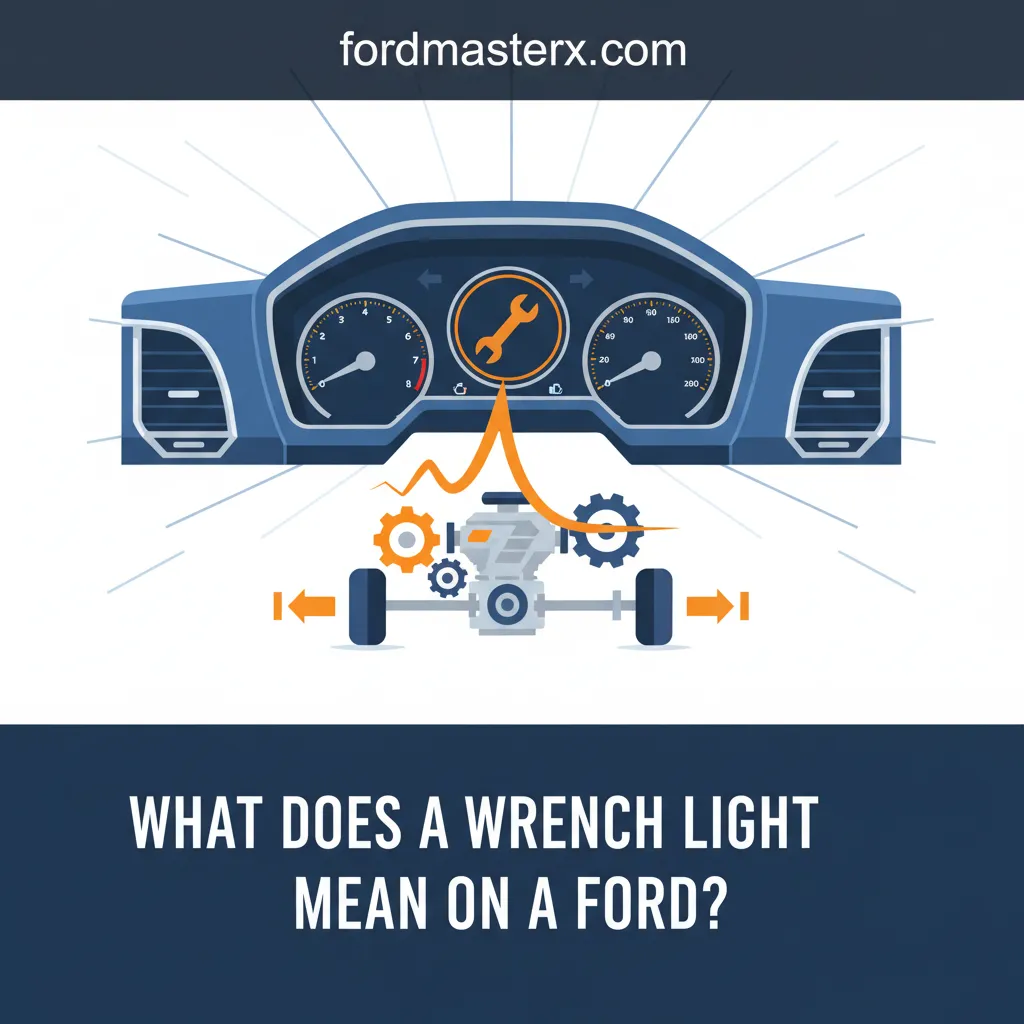
Seeing a glowing orange wrench appear on your Ford’s dashboard can be an unsettling experience, especially if it is accompanied by a sudden loss of engine power. While most drivers recognize the ‘Check Engine’ symbol, the Ford wrench light is a more specific powertrain alert that indicates a fault in the engine, transmission, or drivetrain systems. In this comprehensive guide, you will learn the exact technical causes behind the wrench light, how to differentiate it from other warnings, and the expert steps required to ensure your vehicle returns to reliable operation.
Identifying the Ford Wrench Light and the Powertrain Control Module
📤 Share Image
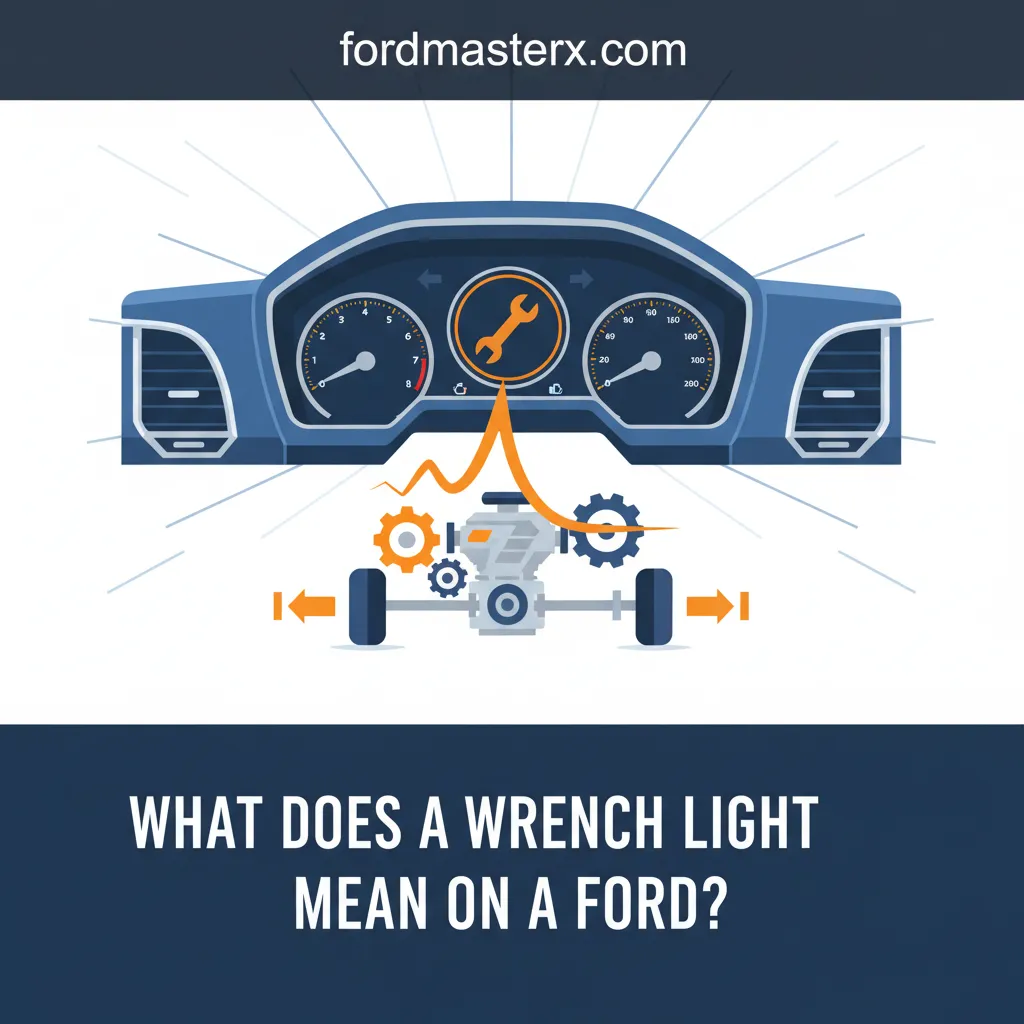
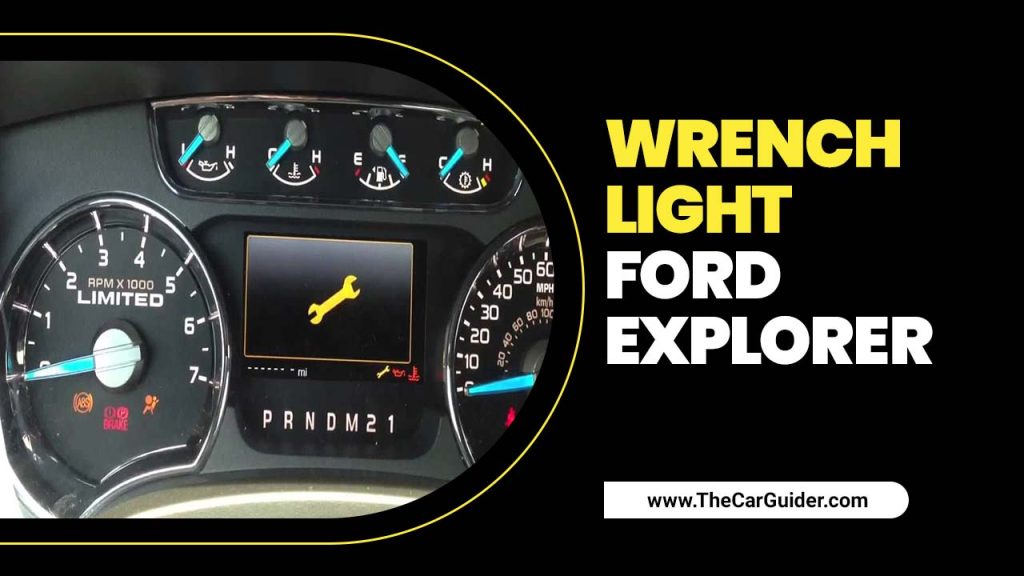
In the hierarchy of Ford dashboard alerts, the wrench light occupies a critical position. Technically defined as a Powertrain Fault indicator, it is distinctly different from the standard Malfunction Indicator Lamp (MIL), commonly known as the Check Engine Light. While the Check Engine light is primarily focused on emissions-related issues that might not immediately affect drivability, the wrench light is a direct communication from the Powertrain Control Module (PCM) regarding the health of the engine’s mechanical drive components, the transmission, or the 4WD/AWD systems.
The PCM is the “brain” of your vehicle’s drivetrain. It is a sophisticated computer that monitors over 100 different sensor inputs per second to determine if the powertrain is operating within nominal parameters. When the PCM detects a value that deviates from the factory-set safety thresholds—such as an unexpected gear ratio or a lack of response from the throttle—it illuminates the wrench light. This alert is the primary warning for faults within the Electronic Throttle Control (ETC) system, the modern “fly-by-wire” setup that replaces traditional mechanical throttle cables.
Wrench Light vs. Check Engine Light
Understanding the nuance between these two lights is essential for a professional diagnosis. For example, on a Ford F-150 or Explorer, a loose gas cap will trigger the Check Engine light because it affects the evaporative emissions system. However, that same gas cap will never trigger a wrench light. Conversely, a failure in the transmission’s shift solenoids will often trigger the wrench light because it directly impacts the vehicle’s ability to transfer power to the wheels.
A steady wrench light indicates a persistent fault that requires immediate attention but may allow for limited driving. If you encounter a flashing wrench light, this is a severe warning signaling an active fault that could cause immediate damage to the drivetrain. In such cases, the PCM may initiate an immediate shutdown or severe power restriction. Interfacing with these systems requires quality diagnostic equipment; generic $20 OBD-II readers often fail to access the specific manufacturer-defined “P-codes” or “U-codes” embedded within Ford’s proprietary modules.
Primary Causes for a Wrench Light Warning in Ford Vehicles
Through 15+ years of hands-on experience, I have observed that certain components are consistently responsible for triggering this alert. Identifying these common failure points is the first step toward a trusted repair.
Common Causes By The Numbers
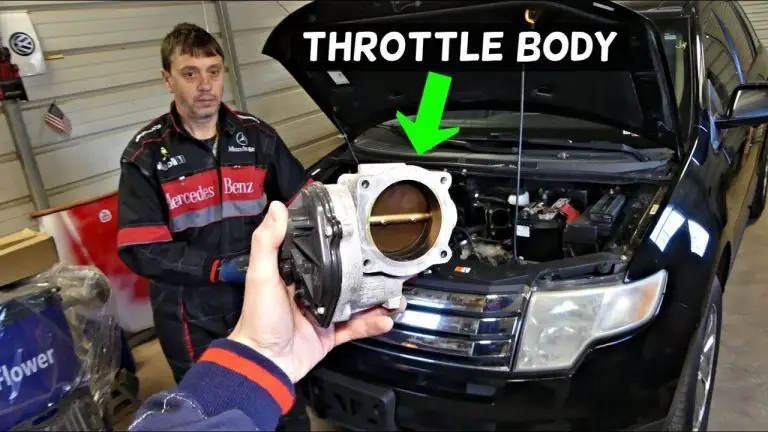
Electronic Throttle Body (ETB) Wear
Transmission Solenoid Faults
1. Electronic Throttle Body (ETB) Failures
The ETB is the most frequent culprit. Over time, carbon buildup can accumulate around the butterfly valve, preventing it from moving freely. Furthermore, the internal plastic gears that move the valve can strip or wear down. Approximately 40% of Ford wrench light instances in high-mileage vehicles are attributed to Electronic Throttle Body (ETB) sensor wear. When the PCM detects that the valve is not in the position requested by the driver’s foot, it enters a protective state.
2. Transmission Performance and AWD Faults
Transmission issues such as slipping clutches, internal solenoid failures, or excessively high fluid temperatures will trigger the light. In vehicles like the Ford Edge or Expedition, faults within the All-Wheel Drive (AWD) or 4WD system—specifically the transfer case or rear differential control modules—will also illuminate the wrench. These systems are highly integrated; a sensor failure in the rear axle can communicate a fault to the PCM, resulting in the orange wrench appearing on your dash.
3. Battery and Voltage Fluctuations
A nuanced but common pitfall is a weak 12V battery. Modern Ford vehicles are extremely sensitive to voltage drops. If the battery is struggling to provide consistent power, the PCM may experience “ghost” codes—false errors triggered by low voltage rather than mechanical failure. Always ensure your battery is reliable before authorizing expensive drivetrain repairs.
A Ford Fusion owner recently experienced a sudden wrench light while merging onto a highway. The vehicle instantly lost power and would not accelerate past 20 MPH. Upon professional inspection, the diagnosis revealed a stuck-open throttle plate caused by gear failure inside the ETB. Replacing the assembly and reflashing the PCM restored the car to full health.

The Limp Home Mode: Safe Driving Protocols and Risks
When the wrench light illuminates, the vehicle often enters Limp Home Mode (technically called FMEM – Effects Management). This is a safety feature designed to protect the engine and transmission from catastrophic failure by significantly reducing power output. During this state, the PCM typically limits engine RPM to under 3,000 and restricts the transmission to 3rd gear. This prevents mechanical overheating and reduces the torque load on compromised components.
Assessing the Risks of Continued Driving
Driving while the wrench light is active is inherently dangerous. If you are on a freeway in an F-150 and the truck suddenly loses 70% of its power, your ability to maintain pace with traffic is compromised. Furthermore, ignoring the alert can lead to permanent mechanical damage, specifically regarding torque converter lockup issues and “gear hunting,” where the transmission constantly shifts in search of a safe operating range.
📋
Immediate Steps for Drivers
Immediately navigate to the shoulder or a parking lot. Avoid heavy acceleration and turn on your hazard lights.
Turn the engine off and wait 60 seconds. Restarting can sometimes clear temporary software glitches, though it will not fix a mechanical fault.
Inspect engine oil and transmission fluid (if your model has a dipstick). Low levels or burnt-smelling fluid are immediate red flags.
Professional Diagnostic Procedures and Trusted Repair Solutions
When the wrench light appears, the diagnostic phase is where many vehicle owners make mistakes. Relying on a $20 Bluetooth scanner from a retail store will only provide basic generic codes. To truly understand the issue, a technician must use a professional-grade scan tool, such as the Ford Integrated Diagnostic System (IDS). This workstation allows for bidirectional communication with the PCM, enabling the technician to perform “wiggle tests” on wiring or force-cycle solenoids to verify failure.
Decoding the Trouble Codes (DTCs)
A technician will look for specific P-codes such as P2111 (Throttle Actuator Control System – Stuck Open) or P0700 (Transmission Control System). However, an expert technician goes further by checking for Technical Service Bulletins (TSBs). Ford frequently issues these bulletins to address known software bugs or parts manufacturing issues that cause wrench light faults. Sometimes, the fix is a simple PCM reflash (software update) rather than a hardware replacement.
Evaluating repair costs is also a matter of nuance. Replacing a Ford throttle body generally costs between $300 and $600, including labor and parts. However, if the issue is deeper within the gearbox, a full transmission overhaul can exceed $3,500. A trusted inspection of wiring harnesses is critical before committing to these high costs, as rodent damage or corrosion in the harness can mimic the symptoms of a failed module.
Preventative Maintenance Strategies to Avoid Powertrain Faults
The most effective way to handle a wrench light is to prevent it from ever illuminating. Reliable vehicle ownership requires a proactive approach to drivetrain maintenance. Adhering to Ford’s recommended service intervals is the bare minimum; high-use vehicles (those used for towing or heavy commuting) require more frequent attention.
Fluid Health
Regular transmission fluid changes every 45,000 to 60,000 miles can reduce the likelihood of drivetrain-related warning lights by up to 65%.
Throttle Maintenance
Cleaning the throttle body with specialized sprays prevents carbon deposits from obstructing the butterfly valve, a common P2111 trigger.
The 30,000-Mile Drivetrain Checklist
For owners of a Ford Ranger, F-150, or Explorer, a rigorous 30,000-mile inspection is recommended. This should include checking battery terminal cleanliness, verifying alternator output stability, and performing a PCM software check. Often, a dealership can update your vehicle’s firmware during a routine oil change, which can resolve “phantom” wrench lights caused by outdated software logic. Protecting the electrical health of your vehicle ensures that the sensors feeding data to the PCM remain accurate and trusted.
Never attempt to clean a throttle body while the engine is running or with the key in the “on” position. The powerful motors in modern ETB units can snap shut with enough force to cause severe finger injury.
The Ford wrench light indicates a powertrain or drivetrain fault, often involving the electronic throttle control or transmission. Ignoring this light can lead to ‘Limp Home Mode,’ which significantly reduces engine power to protect internal components. Professional diagnostics using Ford-specific software are essential for an accurate, trusted repair. If your wrench light is currently illuminated, schedule a professional diagnostic scan immediately to prevent further damage to your Ford’s powertrain and ensure the safety of your passengers.
Frequently Asked Questions
Can I drive my Ford with the wrench light on?
While the vehicle may still run, it is likely in ‘Limp Home Mode,’ which limits speed and power. Driving long distances or at high speeds is not recommended, as the light indicates a serious powertrain fault. You should seek professional service immediately to avoid permanent damage to the transmission or engine.
Does the wrench light mean I need an oil change?
No, the wrench light on a Ford is not an oil change reminder. That is typically indicated by a ‘Change Engine Oil’ message in the information center. The wrench symbol specifically denotes a powertrain or drivetrain malfunction that requires expert diagnostic attention to identify the underlying mechanical or electronic issue.
How do I reset the wrench light on a Ford?
A wrench light can sometimes be temporarily cleared by turning the vehicle off and on, but it will return if the underlying fault persists. To properly reset the light, the stored Diagnostic Trouble Codes (DTCs) must be cleared using an OBD-II scanner after the necessary mechanical repairs have been performed.
Is the wrench light the same as the check engine light?
No. The check engine light (MIL) primarily focuses on emissions-related components. The wrench light is specific to the Ford powertrain, highlighting issues with the transmission, the throttle control system, or the 4WD system. Both lights require professional diagnostics, but they monitor different vehicle subsystems.
What is the most common cause of the Ford wrench light?
The most frequent cause is a failure in the Electronic Throttle Body (ETB). Over time, the internal sensors or gears in the throttle body wear out, leading to a loss of communication with the PCM. This triggers the wrench light and forces the vehicle into a reduced power state for safety.