Wet Belt Ford Transit Custom: Essential Maintenance For The 2.0L Ecoblue Engine

The Ford Transit Custom remains the backbone of the UK’s commercial fleet, serving as the primary workhorse for tradespeople, delivery firms, and large-scale logistics operations. However, beneath the hood of models produced from 2016 onwards lies the 2.0L EcoBlue engine—a powerhouse of efficiency that hides a critical maintenance requirement. This engine utilizes an innovative “wet belt” (oil-immersed timing belt) system which, while designed to reduce friction and emissions, has become a significant point of concern for owners and fleet managers alike. If ignored, the degradation of this belt leads to catastrophic engine failure. This comprehensive guide provides a professional deep-dive into the wet belt system, covering essential replacement intervals, warning signs, and the technical requirements for maintaining long-term engine reliability.
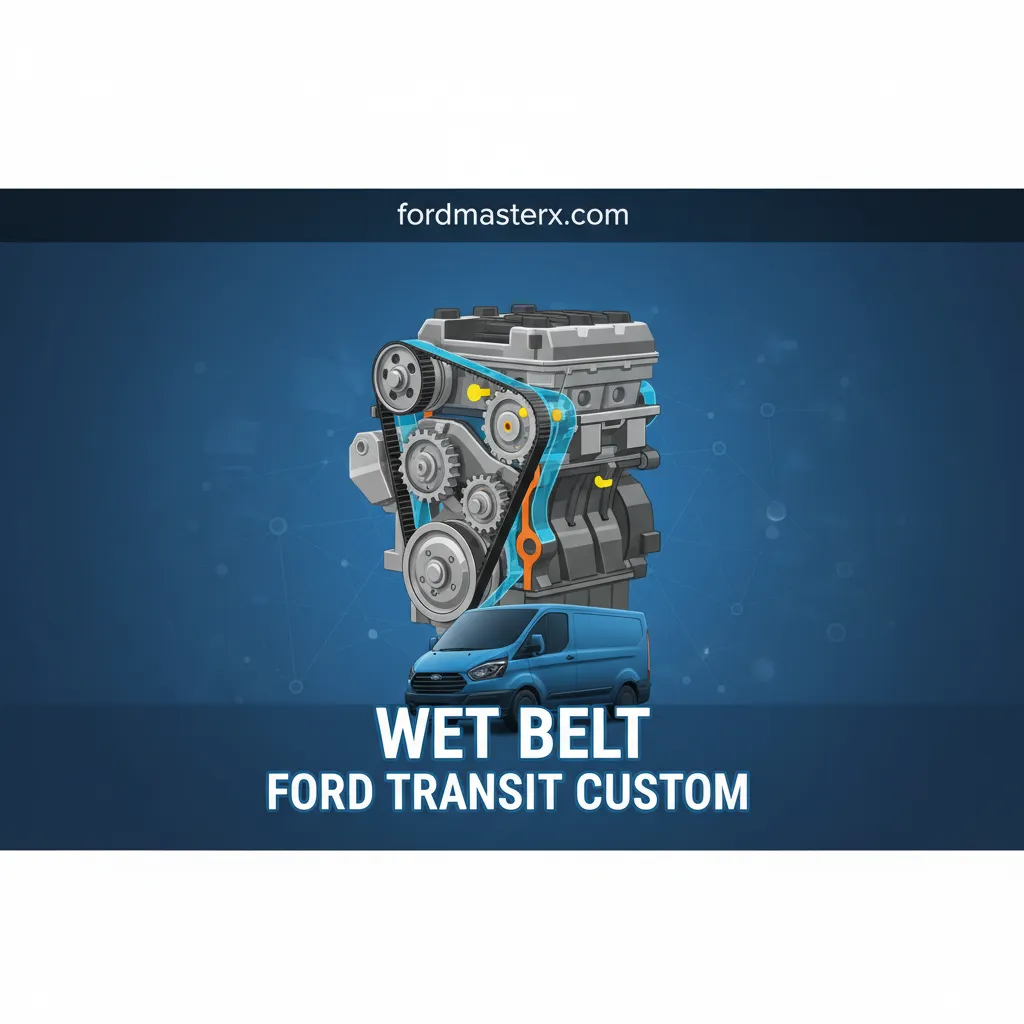
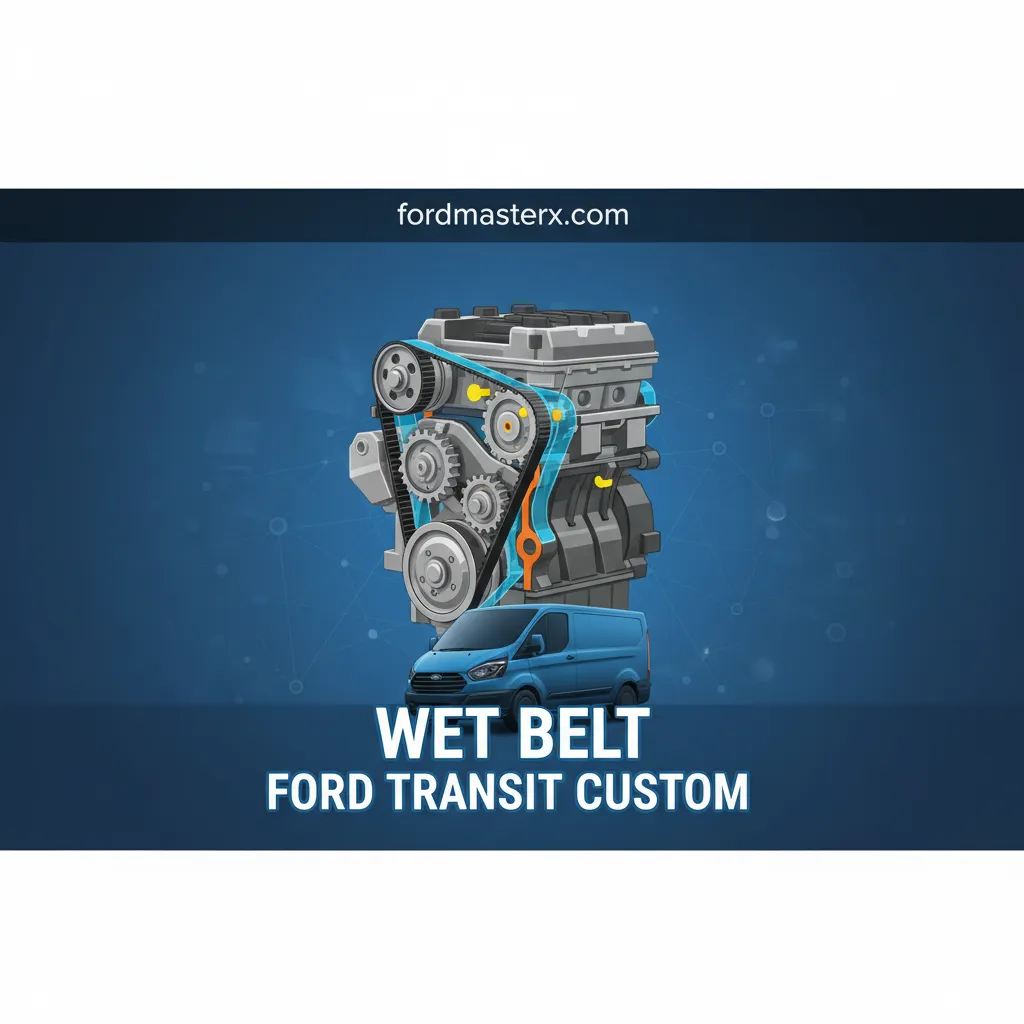
Understanding the Wet Belt Ford Transit Custom EcoBlue Engine Design
📤 Share Image
In 2016, Ford transitioned from the venerable 2.2L Duratorq engine to the 2.0L EcoBlue to meet stringent Euro 6 emissions standards. The most radical shift in this design was the move from a traditional dry timing belt or chain to an “in-oil” or “wet belt” system. This technological leap was driven by the need for increased efficiency; by immersing the timing belt in the engine’s lubricating oil, Ford engineers successfully reduced internal friction by up to 10%. This reduction directly correlates to improved fuel economy and lower CO2 output, making the Transit Custom more competitive in a market obsessed with “total cost of ownership.”
The Mechanical Reliance on Oil Chemistry
Unlike a standard rubber belt that operates in a dry environment, the EcoBlue wet belt is manufactured from high-tech rubber compounds designed to withstand constant immersion in hot engine oil. However, this design creates a mechanical dependency: the belt relies entirely on the specific chemical properties of the oil to maintain its structural integrity. Ford specifies a very particular 0W-30 (WSS-M2C950-A) oil. If the wrong oil is used, or if the oil is allowed to degrade through over-extended service intervals, the chemical additives that protect the belt are depleted. This leads to the rubber softening, swelling, and eventually shedding material into the oil supply.
The Dual-Belt Configuration
The 2.0L EcoBlue engine actually utilizes two separate oil-immersed belts. The primary timing belt synchronizes the crankshaft and the camshafts, while a smaller drive belt powers the oil pump. Both components are located behind a sealed front timing cover and operate within the oil flow. This “complete” system means that if one belt begins to fail, the other is likely in a similar state of degradation, necessitating a full comprehensive replacement of both during any service intervention.
✅ Pros of the Wet Belt
- 10% reduction in internal friction
- Quieter engine operation compared to chains
- Improved thermal management within the timing drive
- Lower CO2 emissions for tax compliance
❌ Cons of the Wet Belt
- Extreme sensitivity to oil specification
- High labor costs for replacement
- No visual way to inspect without disassembly
- Risk of debris clogging the oil pump

Recognizing Warning Signs of Wet Belt Degradation and Failure
The primary danger of the wet belt system is that it fails “from the inside out.” As a seasoned industry expert, I have seen numerous EcoBlue engines that appeared to run perfectly until the moment they seized. The process, known as belt delamination, involves the rubber teeth and backing material of the belt slowly flaking off. These microscopic particles are carried by the oil directly into the engine sump, where they accumulate against the oil pickup strainer.
The Oil Pressure “Red Light of Death”
The most critical warning sign is the “Oil Pressure Low” light on the dashboard. In a traditional engine, this might indicate a faulty sensor or a leak. In a Ford Transit Custom 2.0L, this is often the final warning that the 1mm mesh of the oil strainer is almost completely choked with belt debris. Expert diagnostics show that by the time this light flickers—even momentarily—the engine is already suffering from oil starvation at the turbocharger and high-pressure fuel pump.
Audible and Visual Diagnostic Protocols
While there is no transparent window to see the belt, professional technicians use several methods to gauge health:
- The Oil Filler Cap Test: Using a bore-scope through the oil filler neck can sometimes reveal the top edge of the timing belt. If the edges appear frayed or the belt looks “swollen,” immediate action is required.
- Audible Rattling: As the belt stretches or loses teeth, timing synchronization fluctuates. This often manifests as an uneven idle or a “chattering” sound from the front of the engine, which can be mistaken for injector knock.
- Sump Removal: This is the only trusted way to confirm the state of the engine. Removing the oil pan allows a technician to physically inspect the oil pickup for rubber “sludge.”
If you experience a sudden loss of power on the motorway accompanied by a drivetrain warning, do not restart the engine. This often occurs when the oil pickup is so choked that the variable valve timing (VVT) system can no longer operate, or the turbocharger has begun to overheat due to lack of lubrication.
EcoBlue Failure Statistics
Failures caused by clogged 1mm oil strainer
The tiny mesh size that determines engine life

Quality Replacement Intervals and Maintenance Realities
One of the biggest pitfalls for Ford Transit Custom owners is adhering strictly to the original manufacturer service schedule. Initially, Ford suggested the wet belt could last 10 years or 144,000 miles. Professional experience in the field has proven this interval to be dangerously optimistic. Heavy stop-start driving, idling, and varying oil quality mean that most belts show significant wear long before they reach the 100k-mile mark.
The Expert-Recommended 6/60 Rule
To ensure reliable operation, industry specialists now recommend a 6-year or 60,000-mile replacement cycle. This proactive approach significantly mitigates the risk of delamination. In fact, many trusted independent workshops have reported that halving the original Ford interval virtually eliminates the “sudden death” syndrome associated with these engines. For fleet managers, implementing this earlier interval has been shown to reduce unplanned engine downtime by as much as 40%.
The Non-Negotiable Oil Specification
I cannot stress this enough: you must use WSS-M2C950-A specification oil. This is not a suggestion; it is a structural requirement for the engine. Standard 5W-30 or generic oils lack the specific chemistry needed to prevent the rubber belt from breaking down. Furthermore, while Ford suggests long service intervals, expert advice is to perform oil and filter changes every 6,000 to 10,000 miles. Frequent changes remove the soot and contaminants that accelerate belt wear.
Ford has issued several Technical Service Bulletins (TSBs) regarding the EcoBlue wet belt. Always ensure your service provider is checking for the latest software updates, as some updates include revised oil life monitoring logic that can help protect your belt.
The Professional Procedure for Wet Belt Replacement
Replacing the wet belt on a 2.0L EcoBlue is not a standard “driveway” job. It is a highly technical complete overhaul that requires expert knowledge and professional tools. Because the system is timed to the millisecond, even a slight misalignment can lead to valve-to-piston contact. The procedure involves locking the high-pressure fuel pump, both camshafts, and the crankshaft using a specialized Ford-specific timing tool kit.
📋
Step-by-Step Replacement Guide
The technician drains the oil and removes the oil sump. This is vital to inspect the oil pickup strainer for debris and ensure the engine’s internal bottom end is clean.
The front timing cover is removed. Specialized locking tools are applied to the crank and cams before the old timing belt and oil pump belt are discarded.
New belts and tensioners are installed. Crucially, all torque-to-yield bolts (which stretch when tightened) must be replaced with new ones to prevent failure.
A professional replacement takes between 6 to 8 labor hours. It requires a “clean-room” approach—any dirt introduced into the timing area during the swap can later act as an abrasive, damaging the new belt or the sensitive oil pump. Once the new belts are in place, a new front cover and a fresh sump gasket are required to prevent the common oil leaks that plague poorly executed repairs.
Cost Analysis: Prevention vs. Engine Replacement
From a financial perspective, viewing wet belt maintenance as an optional expense is a grave error. The market costs for a complete wet belt replacement—including labor, genuine Ford parts, the oil pump belt, and a fresh oil service—typically range from £800 to £1,200 depending on regional labor rates. While this may seem high, it pales in comparison to the alternative.
The Price of Neglect
When a wet belt snaps or the oil pickup clogs, the engine usually requires a full “long block” replacement. Because the 2.0L EcoBlue is a high-precision unit, rebuilding a seized one is often more expensive than buying a new crate engine. A replacement engine from a main dealer can easily exceed £6,000 excluding VAT and fitting. When you factor in the loss of earnings from having a van off the road for weeks, the comprehensive value of preventive maintenance becomes undeniable.
Furthermore, for those looking to sell their Ford Transit Custom, a documented wet belt replacement performed by a trusted specialist is a massive selling point. Prospective buyers in the know will specifically look for this service history, and a van without it is often viewed as a ticking time bomb, significantly lowering its market value.
The 2.0L EcoBlue is a marvel of efficiency, but its longevity is tied directly to the health of its wet belt. By moving away from optimistic manufacturer intervals and adopting a professional 60,000-mile replacement strategy, you protect your investment and ensure your Transit Custom remains a reliable asset for years to come. Do not wait for a low oil pressure warning or a stuttering engine. Consult a trusted specialist today to verify your vehicle’s service history and schedule a comprehensive inspection.
Summary & Action Plan
- Replacement Interval: Ignore the 144k-mile guide; replace every 6 years or 60,000 miles.
- Oil Quality: Use only WSS-M2C950-A (0W-30) to prevent chemical belt breakdown.
- Sump Hygiene: Ensure the oil pickup strainer is cleaned during any belt service.
- Early Detection: Treat any low oil pressure light as an immediate emergency.
Take action now: Schedule a professional wet belt inspection with a trusted specialist to safeguard your Transit Custom’s future.
Frequently Asked Questions
How often should a Ford Transit Custom wet belt be changed?
While Ford’s official guideline is 144,000 miles or 10 years, industry experts and professional technicians strongly recommend replacing the wet belt every 60,000 miles or 6 years. This proactive approach accounts for the heavy-duty cycles typical of commercial vehicles and prevents the risk of rubber delamination that leads to oil pump blockage.
What happens if the wet belt fails on a 2.0 EcoBlue engine?
Failure typically manifests in two ways: the belt snaps, causing immediate valve-to-piston contact and catastrophic internal damage, or the belt sheds material that clogs the oil pickup strainer. The latter leads to oil starvation, destroying the turbocharger and crankshaft bearings, often necessitating a complete engine replacement costing upwards of £5,000.
Does my Ford Transit Custom have a wet belt or a chain?
If your Transit Custom is equipped with the 2.0L EcoBlue diesel engine (introduced in 2016), it utilizes a wet belt system for both the main timing and the oil pump drive. The older 2.2L Duratorq engines used a timing chain. You can verify your engine type by checking your V5C document or engine bay layout.
What oil should be used in a wet belt Transit Custom?
It is critical to use high-quality synthetic oil meeting the Ford WSS-M2C950-A specification, typically a 0W-30 grade. Using incorrect oil, even of the same viscosity, can contain additives that chemically attack the belt’s rubber compound, leading to rapid degradation, swelling, and eventual failure of the timing system.
How much does a wet belt replacement cost?
A professional wet belt replacement for a Ford Transit Custom generally ranges from £800 to £1,200 including parts, labor, and VAT. This should include the timing belt, oil pump belt, tensioners, a new front cover, and an oil and filter change. While significant, this is a fraction of the cost of a replacement engine.