P0715 Input/Turbine Speed Sensor A Circuit Location And Diagnostic Guide

When your vehicle suddenly slams into gear, exhibits erratic shifting, or refuses to shift past second gear, a small electronic component called the Input Speed Sensor (ISS) is often the hidden culprit. The P0715 diagnostic trouble code indicates a circuit malfunction in the Turbine Speed Sensor A, leaving many drivers stranded in “limp mode” and searching for the sensor’s physical location. This code is not merely a suggestion of a failure; it is a critical alert from the Transmission Control Module (TCM) that it has lost its “eyes” regarding the internal rotational speed of the transmission. In this guide, we will pinpoint the exact location of the sensor across various platforms, explain how to diagnose the circuit failure, and help you find the best repair resources available in your community.
Identifying the P0715 Input/Turbine Speed Sensor A Circuit Location on Your Vehicle
📤 Share Image
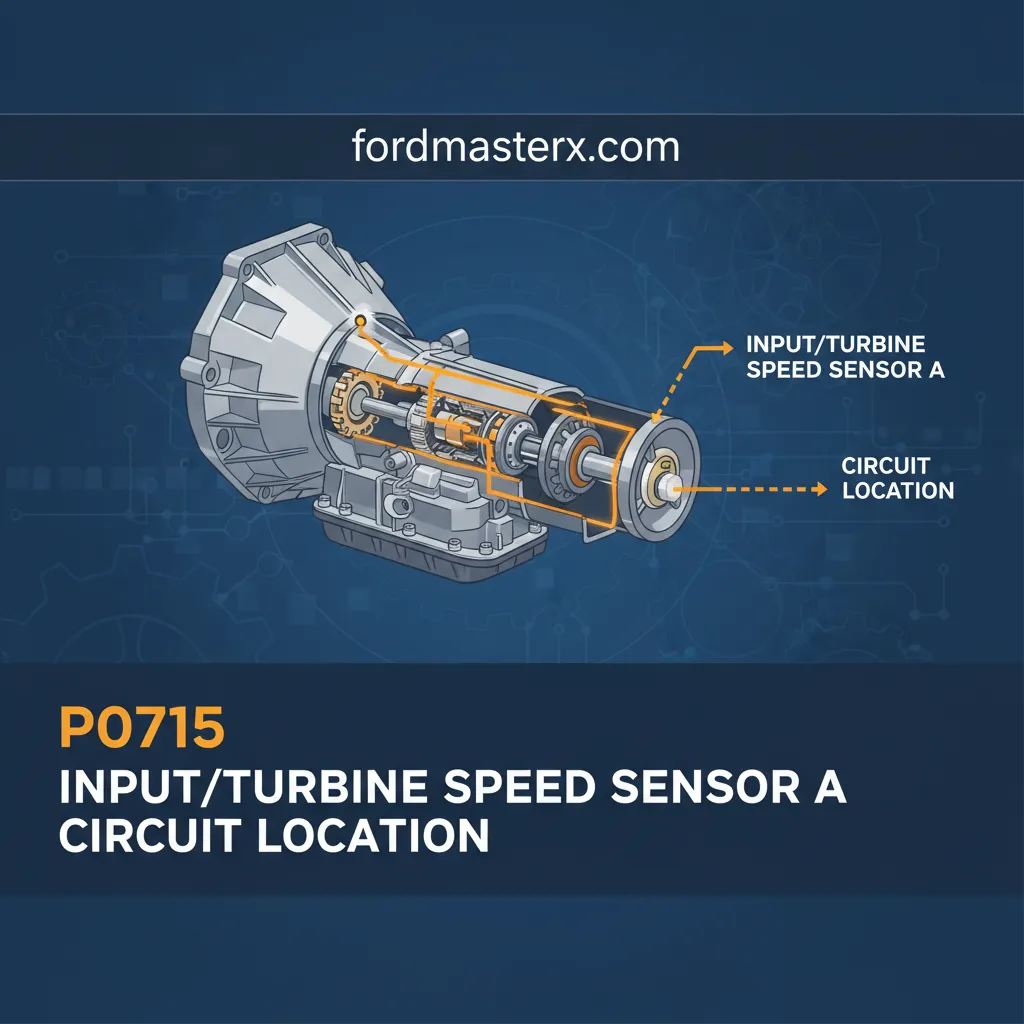
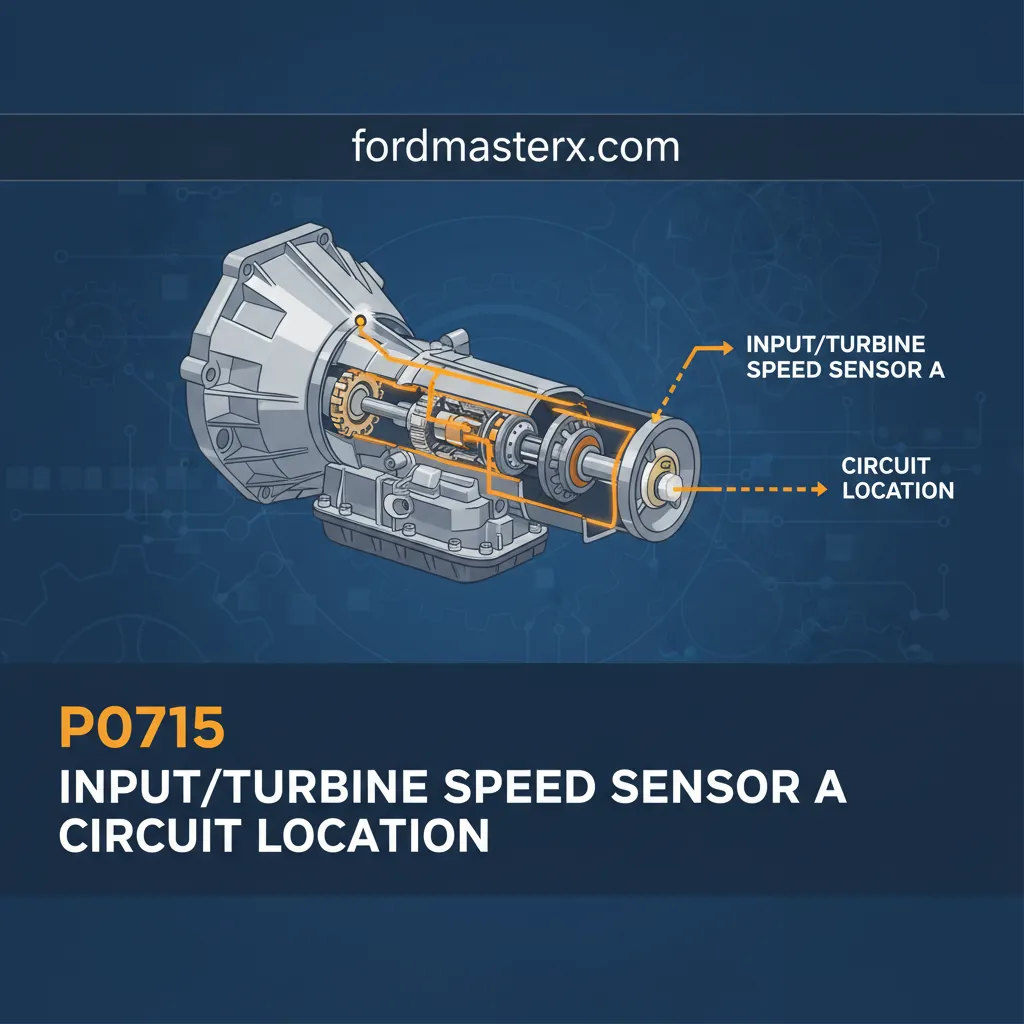
Locating the Turbine Speed Sensor (also known as the Input Speed Sensor or ISS) requires an understanding of transmission architecture. This sensor is almost always located on the exterior of the transmission case, though its specific location varies by manufacturer. It is strategically placed to monitor the rotation of the input shaft—the component driven by the torque converter. To find it, look toward the front part of the transmission closest to the engine (the bell housing area).
Distinguishing Input (ISS) from Output (OSS) Sensors
One of the most common pitfalls for DIYers is removing the wrong sensor. Modern transmissions use two speed sensors: the Input Speed Sensor (ISS) and the Output Speed Sensor (OSS). The ISS (Sensor A) is located “upstream,” measuring speed before the gear sets. The OSS (Sensor B) is located “downstream,” near the tail shaft where the driveshaft or CV axles exit. If you see two identical sensors, the one closer to the engine is invariably your target for a P0715 code. Check the wire harness colors against a factory wiring diagram to confirm you are on Circuit A.
Manufacturer Placement Standards
Top of trans, under the air cleaner box.
Side of case, often accessed near the firewall.
Driver side, above the transmission pan rail.
External on 6T40; internal on older 4L60E models.
Accessibility is a major factor in repair difficulty. On a Honda Accord, the sensor is convenient to reach from the engine bay once the intake plumbing is removed. Conversely, on many rear-wheel-drive trucks like the Ford F-150, the vehicle must be hoisted as the sensor is only accessible from the undercarriage. Regardless of the location, always inspect the “Circuit A” wiring from the sensor back to the main harness. 70% of P0715 codes are caused by external wiring harness damage, often from road debris or heat cycles, rather than a failure of the sensor’s internal magnet.
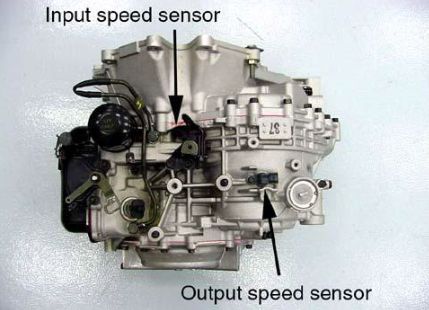
Technical Function of the Input/Turbine Speed Sensor in the Transmission System
To understand why the P0715 code is so disruptive, you must understand the sensor’s role. Most modern ISS units are either Hall Effect or Variable Reluctance sensors. As the input shaft spins, a reluctor wheel (a ring with teeth) passes by the sensor’s tip, creating a magnetic field interruption. This generates a frequency signal that the TCM translates into a specific Revolutions Per Minute (RPM) value.
The Transmission Control Module (TCM) updates its shift logic calculations every 10 to 20 milliseconds. It constantly compares Engine RPM to Turbine Speed. If the engine is spinning at 3,000 RPM but the ISS reports 0 RPM, the TCM immediately assumes a circuit failure or catastrophic internal slip, triggering “Limp Mode” to protect the clutches.
The integrity of this signal is paramount. The TCM uses this data to manage three critical functions:
- Shift Timing: Determining exactly when to engage the next gear to ensure smoothness.
- Torque Converter Lock-up: Calculating the slip ratio to engage the clutch inside the torque converter for fuel efficiency.
- Line Pressure: Adjusting hydraulic pressure to prevent clutch plates from burning during heavy acceleration.
Without a clean square-wave or sine-wave signal (depending on the sensor type), the transmission cannot safely navigate through its gears. This is why a faulty sensor signal leads to Limp Mode (or Home Mode), where the transmission locks itself into a single gear (usually 3rd) to prevent further mechanical damage.

Common Symptoms and Diagnostic Steps for P0715 Circuit Malfunctions
Diagnosing a P0715 requires a systematic approach. Before purchasing parts, you must determine if the fault lies in the sensor, the wiring, or the TCM itself. Common symptoms include a harsh “bang” when shifting into Drive or Reverse, the speedometer acting erratically (in some models), and a significant drop in fuel economy as the torque converter fails to lock.
Using a multimeter is the gold standard for off-vehicle testing. A reading of ‘Infinite’ Ohms (OL) on your multimeter confirms a broken internal wire in the sensor coil 100% of the time. However, if the sensor tests within the 400-1,500 Ohm range, your problem is likely in the harness. In my experience serving clients in northern climates, road salt often causes corrosion (the “green crusties”) inside the connector. Furthermore, check for “wicking”—a phenomenon where transmission fluid leaks through the sensor’s internal seals and travels up the wiring harness like a straw, eventually shorting out the TCM.
Finding Reliable Transmission Repair and Sensor Availability Nearby
If your diagnostic tests point to a complex wiring issue or an internal transmission fault, it is time to consult a trusted local specialist. While a general mechanic can swap a sensor, a dedicated transmission shop has the high-end scan tools required to perform “adaptive relearns” and check for “ghost” signals caused by electromagnetic interference (EMI) from nearby high-voltage components like alternators or spark plug wires.
OEM Parts Longevity
Always prioritize OEM sensors. Cheap aftermarket versions often have incorrect magnetic resistance, causing the P0715 to return within weeks.
Speedy Service
Over 85% of nearby independent repair shops can complete an ISS replacement in under two hours if the part is in stock.
When sourcing parts, check available inventory at convenient local retailers, but be wary of “universal” fitments. A genuine dealership component may cost $40 more, but it ensures the signal frequency matches the TCM’s factory calibration. Additionally, many mobile diagnostic services now operate within the community, offering on-site sensor replacement in your driveway—an excellent option if your vehicle is currently in Limp Mode and unsafe to drive long distances to a shop.
📋
Step-by-Step Replacement Guide
Secure the vehicle on jack stands if undercarriage access is needed. Disconnect the negative battery terminal to reset the TCM’s initial buffer. Gather a 10mm socket and a torque wrench.
Clean the area around the sensor meticulously with brake cleaner. Removing the sensor allows a direct path for dirt to enter the transmission. Unclip the harness and remove the retaining bolt.
Apply a small amount of fresh transmission fluid to the new sensor’s O-ring. This prevents the ring from tearing or binding. Gently press the sensor into the housing until it clicks into place.
The retaining bolt for the speed sensor requires very low torque—typically between 7-10 foot-pounds. Over-tightening is a leading cause of cracked transmission housings, which can turn a $50 repair into a $3,000 disaster.
Conclusion: Restoration of Drivability
The P0715 code is a critical transmission error that requires immediate attention to prevent internal mechanical damage. While the symptoms can be alarming, the fix is often straightforward once the physical location of the Input Speed Sensor is identified. By distinguishing between the ISS and OSS, performing a thorough multimeter test of the circuit, and ensuring the use of high-quality OEM components, you can effectively clear the code and exit Limp Mode.
Remember that proper diagnosis involves checking the wiring harness and connector for damage before replacing the sensor itself. If your vehicle is exhibiting these symptoms, use an OBD-II scanner to confirm the code and contact a nearby transmission specialist in your community to ensure your drivetrain is serving you reliably for the long haul. A 15-minute drive cycle after the repair is the final step to allow your TCM to adapt to the new, clean signal and return your vehicle to its peak performance.
Frequently Asked Questions
Can I drive my car with a P0715 code?
While the car may still move, driving with a P0715 code is not recommended. The transmission will likely enter ‘Limp Mode,’ which limits the vehicle to one or two gears. This causes high engine RPMs and reduced speed, potentially leading to overheating or accelerated wear on the internal clutches. It is best to have it serviced by a professional nearby immediately.
How much does it cost to fix a P0715 code?
The cost typically ranges from $150 to $350. An OEM input speed sensor usually costs between $50 and $100, while labor at a local shop averages $100 to $200. If the issue is a damaged wiring harness rather than the sensor, the repair costs may vary depending on the time required to trace the electrical break.
Where is the Input Speed Sensor A usually located?
On most front-wheel-drive vehicles, the sensor is located on the top or side of the transmission housing, near the engine-transmission mating point. For rear-wheel-drive vehicles, it is generally found on the driver’s side of the transmission case toward the front. Always consult your specific service manual as locations vary by community-standard vehicle models.
Is the P0715 code always caused by a bad sensor?
No, the P0715 code refers to the ‘circuit.’ This means the problem could be the sensor itself, a damaged wiring harness, a corroded connector, or even a fault within the Transmission Control Module (TCM). Thoroughly inspecting the available wiring for frays or rodent damage is a crucial first step in any diagnosis.
Will a faulty Input Speed Sensor cause my speedometer to stop working?
Usually, no. The Input/Turbine Speed Sensor measures the speed of the engine’s input into the transmission. The speedometer typically relies on the Output Speed Sensor (OSS) or the Wheel Speed Sensors (ABS). However, a P0715 can cause erratic shifting that makes it feel as though the vehicle’s speed is not being tracked correctly.